Digital Clones and Proxy Media: How Russian Disinformation Impersonates European Regional Outlets
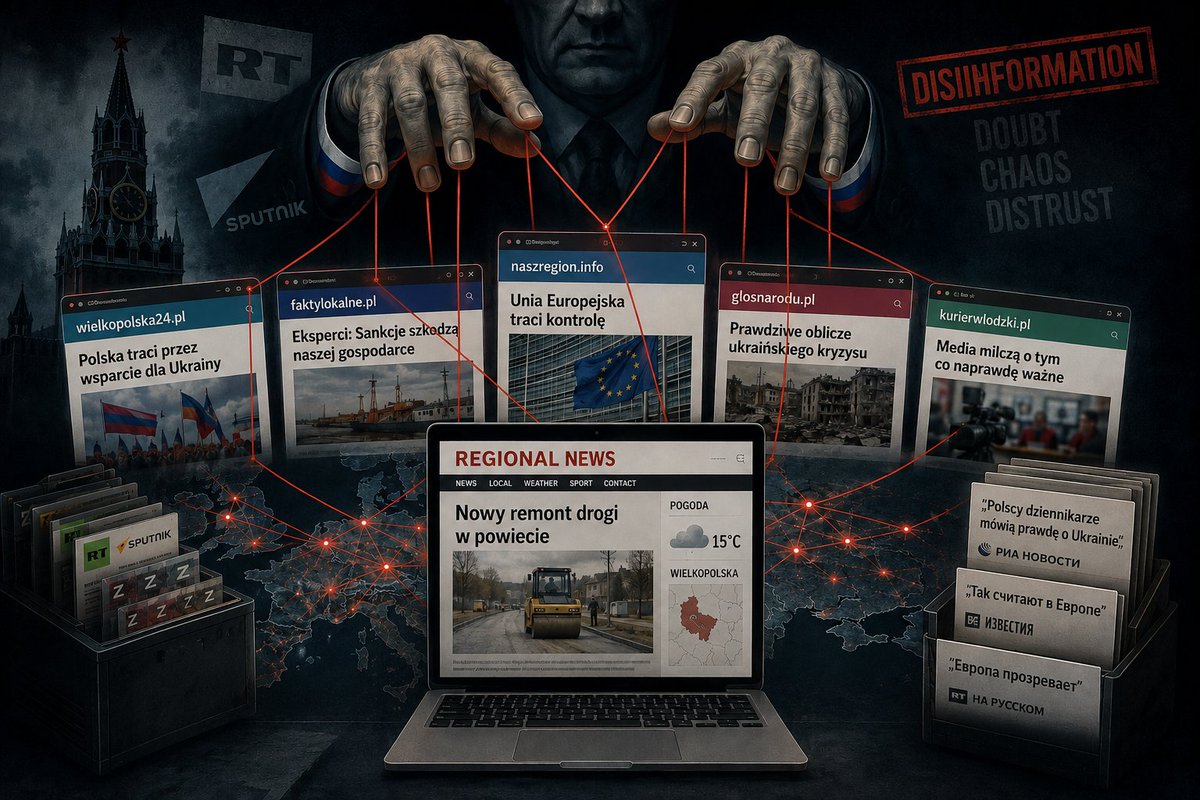
EU sanctions targeting the Russian state-run outlets RT and Sputnik have failed to dismantle the Kremlin’s disinformation apparatus, forcing it instead to adapt. Russia’s information ecosystem has shifted towards a network of proxy media outlets, cloned domains and localised websites posing as independent European news platforms.
France’s anti-disinformation agency VIGINUM uncovered the "Portal Kombat" network, linked to the Crimean internet provider TigerWeb. The network expanded from 193 websites in February 2024 to 224 by April, spanning nearly every EU member state. Its operational model relies on a closed loop: Russian propaganda is amplified by local platforms in Europe — such as Hungary’s Mandiner or Slovakia’s https://t.co/1CGusyEWFH — before being laundered back into Russian media as genuine expressions of Western public opinion. The network also employs typosquatting. In Poland, the domain https://t.co/bsRnld0FNz impersonates the legitimate regional news portal https://t.co/Q6SKkMUtfP.
Read our full analysis of Kremlin tactics, a comprehensive breakdown of Central European proxy outlets and case studies of digital manipulation on https://t.co/9NWrLeZdPo:
https://t.co/h1u9F9eCXp
@Viginum_Gouv@mandiner@KremlinRussia@KremlinRussia_E@InformNapalm@rnbo_gov_ua@ServiceSsu@DI_Ukraine@ABW_GOV_PL@AWgovPL
#Disinformation #Russia #VIGINUM #PortalKombat #OSINT #BlackSky #Media #EuropeanUnion #Poland #Lawlessness
A severe humanitarian crisis is escalating in Oleshky, Kherson Oblast. Occupied since early 2022 and geographically isolated by the Dnipro River and extensive minefields, the town traps over 2,000 civilians, including approximately 50 children and numerous bedridden residents.
Following four months of near-total isolation, essential supply lines for food and medicine have been severed. Humanitarian organizations and witness accounts report extreme starvation, with unverified claims that desperate residents are resorting to eating foliage and tree bark ahead of winter.
Key factors compounding the crisis:
▪️ Document Deprivation: The 2023 destruction of the Nova Kakhovka dam continues to paralyze civilian mobility. Floodwaters destroyed the identity documents of hundreds of residents, leaving them unable to clear Russian military checkpoints to exit the occupation zone.
▪️ Kinetic Threats to Evacuation: Overland escape routes remain heavily mined. Multiple reports indicate Russian forces regularly deploy FPV drones against unauthorized movement within the town, actively targeting pedestrians and civilian vehicles attempting to relocate.
▪️ Aerial Resupply Efforts: With overland routes severed, Ukrainian forces reportedly utilized UAVs as a substitute delivery mechanism. Official statements claim an operation on September 27 deployed approximately 100 drones to drop 4,000 kg of food parcels into Oleshky.
[Editor's Note: The logistical claim of delivering 4,000 kg of cargo using 100 drones warrants technical scrutiny. This implies an average payload of 40 kg per drone, which significantly exceeds the maximum carrying capacity of standard heavy-lift tactical multicopters (typically 12–15 kg, such as the 'Vampire' or 'Baba Yaga' platforms) deployed by Ukrainian forces. This figure likely represents a cumulative payload delivered over multiple sustained sorties, rather than a single coordinated airlift.]
▪️ Diplomatic Stasis: Ukrainian Human Rights Commissioner Dmytro Lubinets and EU High Representative Kaja Kallas have formally requested the establishment of a humanitarian corridor. However, the NGO Skhid SOS notes that without actionable, enforced security guarantees from Moscow, diplomatic appeals remain operationally void.
Russian occupation authorities continue to enforce isolation through movement restrictions and kinetic deterrence. Absent a secure corridor, the onset of winter will predictably drive a sharp increase in civilian mortality.
Detailed accounts from occupied Oleshky and an analysis of evacuation obstacles are available on Blacksky:
https://t.co/erlJqpSnXL
@ZelenskyyUa@kajakallas@MFA_Ukraine
#Ukraine #Oleshky #Kherson #warcrimes #Russia #humanitarianaid #geopolitics
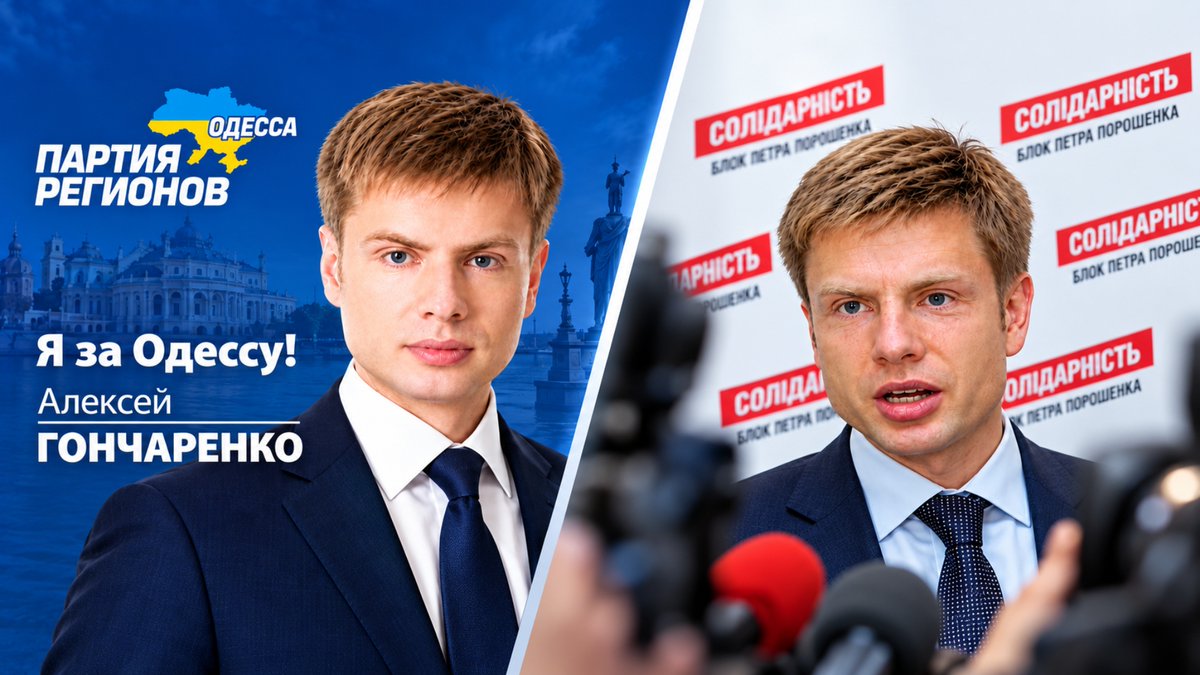
**A room with a view for the aggressor.** The Ukrainian political scene has been thrown into turmoil following a post by Oleksiy Honcharenko, a member of the Verkhovna Rada from the European Solidarity faction, who, under the banner of ‘new realism’ and saving the state, presented a concept involving far-reaching concessions to Moscow.
The politician, whose party has for years built much of its identity around the slogan ‘Army! Language! Faith!’, outlined a package that has provoked a sharp reaction in Kyiv:
▪️ **Sanctions in exchange for limiting the war:** Honcharenko proposes supporting the lifting of some Western sanctions against Russia in exchange for Moscow halting long-range strikes, unblocking the Black Sea and restricting military operations to the Donbas. His reasoning is that sanctions will erode over time anyway, so it would be better to use them now as a bargaining chip.
▪️ **The Donbas as a zone where the war could continue:** Under this proposal, the Donbas would effectively become a designated area in which hostilities could continue, provided the rest of the country was spared. The concept also includes stepping away from the path towards NATO — ‘sacrificing the country for the alliance is absurd’ — concessions on language policy and a return to tolerating structures linked to the Russian Orthodox Church.
▪️ **Faith in a lasting agreement with Moscow:** The MP argues that a durable arrangement with the Kremlin is possible, citing, among other things, prisoner exchanges and the Russian withdrawal from Kyiv in 2022, which he presents — contrary to the established military circumstances of the withdrawal — as part of ‘arrangements’ rather than a defeat for the invading forces.
▪️ **Pressure on critics:** Honcharenko seeks to frame opponents of his proposal as advocates of fighting ‘to the last Ukrainian’, while invoking his political camp’s experience with the Minsk agreements.
The reaction within his own party was immediate. MP Volodymyr Viatrovych rejected his colleague’s manifesto in unequivocal terms:
‘This is not negotiation, but a plea for mercy, voluntarily offering one’s throat to the murderer’s knife. That’s how it was a hundred years ago. It will never happen again!’
The central question left unanswered by Honcharenko’s proposal is what mechanism would prevent Moscow — after sanctions relief and renewed access to export revenues — from resuming large-scale attacks once it had restored its capabilities.
That is the fundamental weakness of the equation: Russia would receive tangible and immediate benefits, while Ukraine would depend on the durability of commitments whose enforcement mechanisms remain unclear.
@GoncharenkoUa@KremlinRussia@viatrovych@Euro_Solidarity@verkhovna_rada
#Ukraine #Goncharenko #politics #sanctions #Russia #geopolitics #war #Donbas
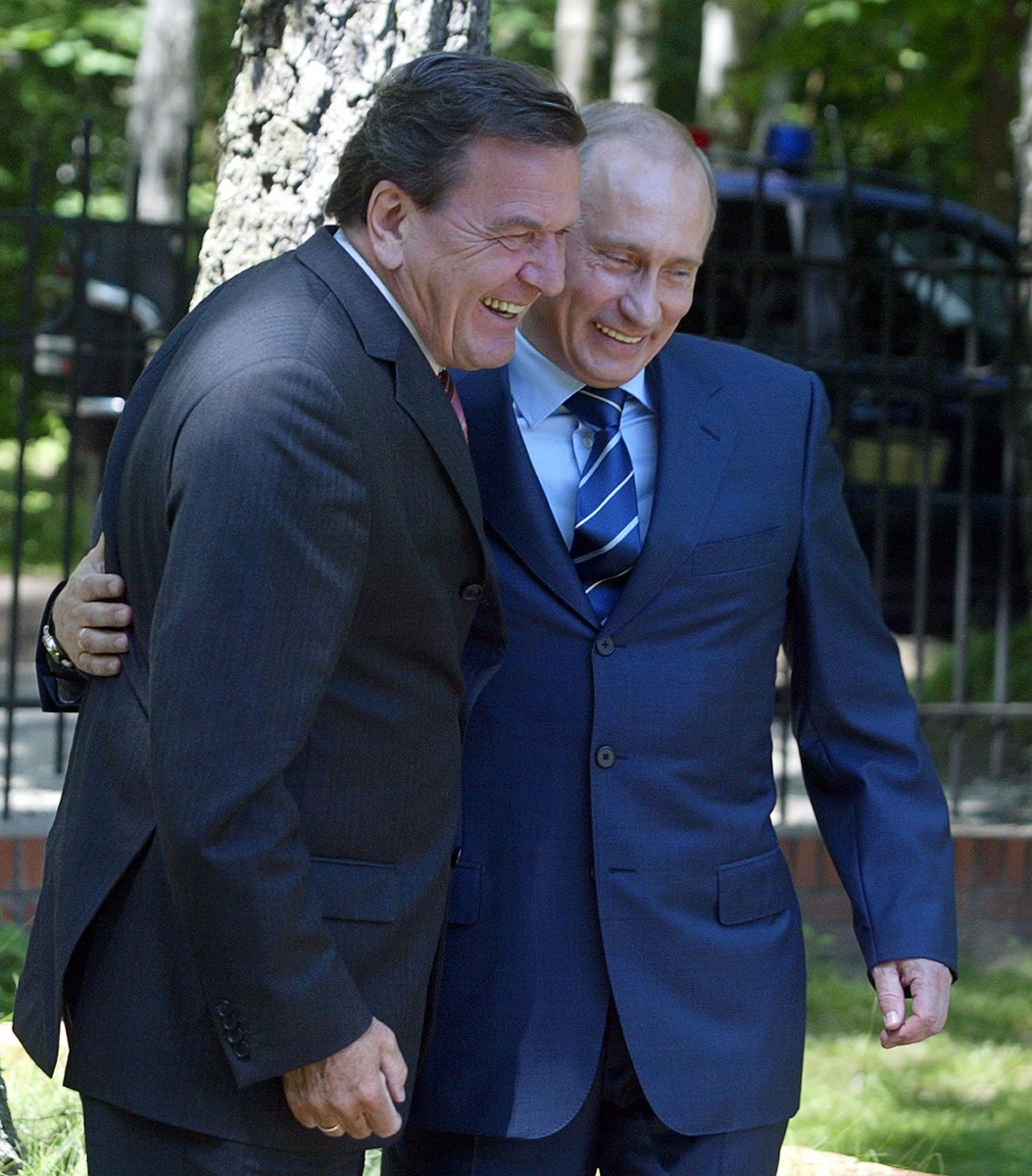
Gerhard Schröder Has Found a New Job in Russia. This Time It’s Not a Gas Pipeline, But a Hypermarket.
From pipelines beneath the Baltic Sea and positions in Kremlin-linked energy giants to shopping trolleys on the outskirts of Moscow. Gerhard Schröder—the retired German chancellor and long-standing advocate of close ties with Vladimir Putin—has taken on a new role in Russia.
The former German chancellor has joined the supervisory board of the Russian hypermarket chain Hyperglobus, where he will support the company's "strategic development".
At first glance, the retail sector appears politically innocuous. However, in the context of Putin’s Russia, now in its fifth year of a full-scale war, large-scale business operations and politics are deeply intertwined.
▪️ In early 2025, Hyperglobus formally separated from the German Globus holding company, declaring legal and operational independence under the ownership of Thomas Bruch, the former head of Globus. The chain operates 22 stores across eight Russian regions while retaining the Globus brand. According to the Russian SPARK database, the company has also participated in tenders organized by the Kremlin food-service operation linked to the Presidential Administration of the Russian Federation.
▪️ The chain’s owner, Thomas Bruch, stated that Schröder was brought onto the board due to his extensive experience in Russian political and economic affairs. Bruch noted that Schröder would help the company maintain a “dialogue-oriented approach”.
▪️ The appointment of a high-profile former foreign leader to a corporate board in Russia is widely viewed as a form of political insurance. The former chancellor—whom Moscow has repeatedly promoted as a potential interlocutor with Europe over Ukraine—is expected to provide the retail chain with an added layer of political capital in its dealings with Russian authorities.
Earlier this year, Vladimir Putin proposed Schröder as his preferred interlocutor for discussions on European security architecture—a suggestion swiftly rejected by Berlin. Today, the 82-year-old former leader of Europe’s largest economy will instead oversee the strategic development of a hypermarket chain operating around Moscow.
The scale of the enterprise may be smaller than his previous energy sector roles, but the underlying logic remains consistent: a prominent Western political name lends credibility and political access to a business navigating the Russian state apparatus.
It is a development worth noting whenever advocates of "pragmatism" call for a rapid return to "business as usual" with Moscow.
@dw_russian@dw_polski@dwnews
#Schröder #Germany #Russia #business #geopolitics #Putin #war #sanctions
The Wartime Duma: 349 Seats for United Russia and the First Deputies from Occupied Ukrainian Territories
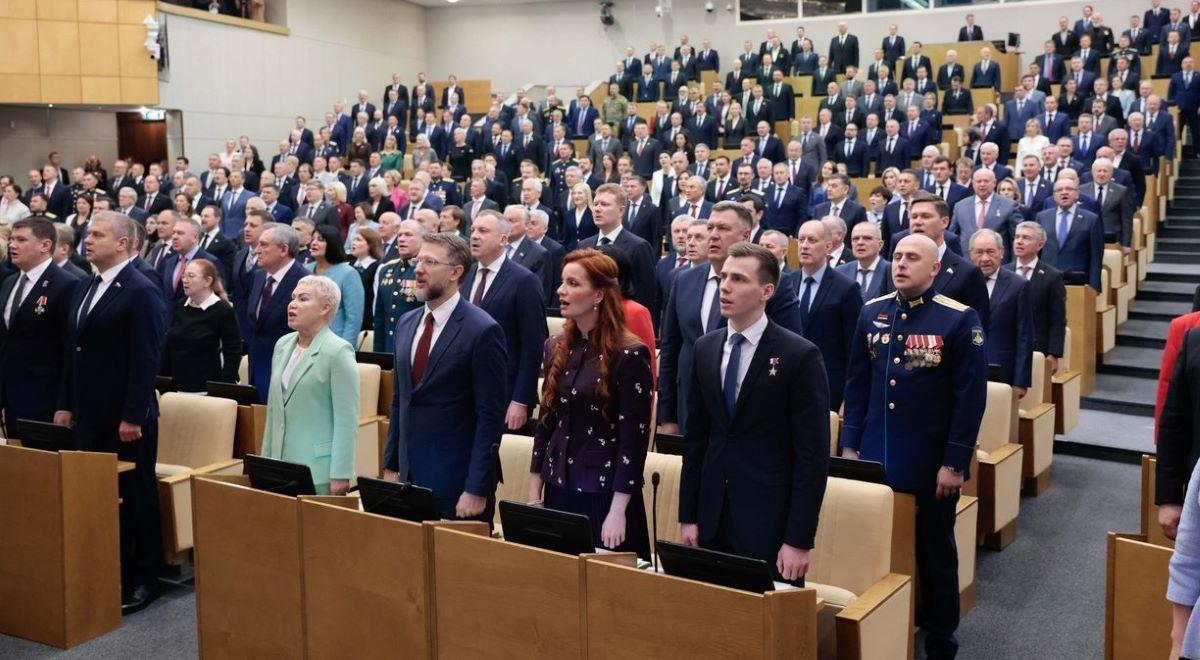
The State Duma of the 9th convocation convened on September 30, ten days after voting concluded—the shortest interval between an election and the inaugural parliamentary session in modern Russian history. While the Russian Constitution specifies the 30th day for an opening sitting, Vladimir Putin exercised presidential prerogative to convene the chamber ahead of schedule.
United Russia secured a historic record of 349 out of 450 seats, cementing a dominant constitutional supermajority. For the first time, deputies elected from the Russian-occupied territories of Donetsk, Luhansk, Zaporizhzhia, and Kherson oblasts took seats in the federal assembly. All represent the ruling party.
Serhiy Arbuzov, who served as Ukraine's acting prime minister during the Euromaidan protests in early 2014, secured a seat on the A Just Russia list. Arbuzov remains on Ukraine's wanted list in connection with the large-scale misappropriation and embezzlement of state funds.
The reported volume of combatants entering the legislature shifted repeatedly until faction rosters were finalized. The secretary of United Russia’s General Council initially cited 86 participants, later revising the count to 49. The party ultimately certified 50 participants of the "special military operation" within its faction, while the Central Election Commission logged 46 participants and veterans. An investigation by independent outlet Meduza revealed that multiple candidates framed by the ruling party as front-line veterans were career civil servants, incumbent deputies, and regional politicians with non-combatant status.
Systemic anti-war opposition was systematically suppressed. Yabloko, which campaigned on a peace platform, was barred from fielding a federal party list following a Supreme Court ruling. On September 29, police drafted an administrative offense protocol against party chairman Nikolai Rybakov for "petty hooliganism" after he wrote slogans including "For peace" and "For a ceasefire agreement" on his ballots. He faces a financial penalty or up to 15 days of administrative detention.
For comprehensive analysis—including the 57 mandate withdrawals from United Russia's federal slate, among them Foreign Minister Sergei Lavrov and Moscow Mayor Sergei Sobyanin—see the full report on Blacksky:
https://t.co/Dn7tYzljKV
@KremlinRussia@KremlinRussia_E@dumagovru
#Russia #Duma #Putin #elections #propaganda #war #Ukraine #geopolitics
"It Shouldn't Have Been Done." Putin Is No Longer Addressing Kyiv. He Is Addressing the West.
At Valdai, Vladimir Putin spoke about Ukraine once again. But in this speech, Ukraine was merely the backdrop, not the intended audience. The intended audience was you. He was addressing Western societies—societies that elect their governments, fund their defense, and have spent more than four years wondering whether this war is really any of their business.
Putin is no longer explaining his war to the West. He is presenting it with a bill. And attached to that bill is a set of rules: what should not have been done, what must not be done now, and what will happen if you refuse to comply.
On October 1, at a plenary session of the Valdai Club, Putin declared that it was not Russia that had started the war, but that war had been waged against Russia. He then read out a list of grievances:
"You should not have spent years fueling aggressive nationalism and Russophobia in Ukraine in order to turn it into a tool for fighting Russia. NATO should not have begun the military build-up in our historic territories or planned bases there. The radicals in Kyiv should not have been pushed into staging a coup, and the illegitimate regime should not have been supplied with offensive weapons afterwards. Plans for concentration camps for the inhabitants of the Donbas and Crimea should not have been drawn up. (…) There are still many more such ‘should not have’s’."
Such language explains nothing. It simply asserts a claim: anyone who says "should not have" about the decisions of sovereign states assumes a right to approve or reject those decisions.
The mechanism is an old one, and that is precisely why it is effective: all that is required is to reverse cause and effect. Aggression becomes a reaction. Ukraine ceases to be an actor and becomes a tool. Admitting a state that itself seeks membership is transformed into "reclaiming historical territories." Aid to the victim of an attack becomes war with Russia, while sanctions become an attack in themselves, rather than a consequence.
In this version of history, the aggressor becomes the victim. Very convenient. The neighbor clearly should have been more careful about where it lived.
The war did not begin on February 24, 2022. It began in February 2014, when soldiers without insignia occupied the buildings of the Crimean parliament. Putin himself later described what happened: in a film broadcast in March 2015, he recalled how, in the early hours of February 23, 2014, he ordered "work to begin on the return of Crimea."
Then came the Donbas, the Russian "holidaymakers," Ilovaisk, and Debaltseve. Then came the full-scale invasion. None of these dates requires interpretation. A calendar is enough.
And what of the "inciting" West? According to the transcript of the meeting of Ukraine’s National Security and Defense Council on February 28, 2014, foreign partners were urging Kyiv not to take action. Oleksandr Turchynov recalled receiving calls asking him to cancel mobilization because Ukraine was allegedly "provoking Russia."
Ukraine, when it was attacked in 2014, had a non-aligned status enshrined in law, adopted in 2010 under Yanukovych. The Verkhovna Rada abandoned that status in December 2014, while the course towards NATO membership was written into the constitution in 2019.
First came the annexation. Then came NATO—not the other way around.
At Valdai, Putin referred to Ukraine’s 1990 Declaration of State Sovereignty, which proclaimed an intention to become permanently neutral. He overlooked one small detail: Russia attacked a neutral Ukraine.
And NATO? Ukraine did not receive a Membership Action Plan in Bucharest in 2008—Germany and France opposed it—or at any point thereafter. No administration in Washington, from Obama through Trump to Biden, pursued a fast-track accession process. Formally, the "open-door" policy remained in place. In practice, Ukraine was left in a waiting room with no visible end.
The argument about "historical territories" presupposes something that appears in no treaty: a Russian right of veto over the foreign policy choices of neighboring states. Russia itself signed documents stating precisely the opposite, from the 1994 Budapest Memorandum to the 1999 OSCE Istanbul Charter for European Security, which affirms every state’s freedom to choose its own security arrangements.
Once again, Moscow is telling sovereign states how they should exercise their sovereignty.
"Offensive weapons"? Before February 24, 2022, Western supplies consisted primarily of American Javelin anti-tank missiles, delivered from 2018 onwards after the Obama administration had refused to provide lethal weapons. Added to these were British NLAWs and Stingers from the Baltic states, which arrived in late January and early February 2022, when Russian formations were already massed along Ukraine’s borders.
Germany, meanwhile, offered 5,000 helmets.
The West did not agree to supply Western-designed main battle tanks until January 2023, after months of political wrangling. For what was supposedly a long-standing conspiracy to launch an offensive against Russia, the arsenal was remarkably heavily weighted towards weapons designed to stop tanks and shoot down aircraft.
"Aggressive nationalism"? In 2019, 73 percent of Ukrainians voted for a Russian-speaking comedian from Kryvyi Rih, from a Jewish family, who campaigned on a promise to end the war.
Zelenskyy revived the Normandy format and prisoner exchanges, oversaw the disengagement of forces near Zolote and Petrivske, and agreed to the Steinmeier formula, despite protests in Kyiv and elsewhere.
Three years later, Russian television was portraying him as the face of a "Nazi regime."
Russophobia that elects a Russian-speaking peace candidate is a peculiar form of Russophobia indeed.
Donbas: Figures Versus Rhetoric
Putin speaks of tanks, missiles, aircraft, and people being burnt alive. The UN figures are less dramatic.
The Office of the UN High Commissioner for Human Rights (OHCHR) recorded 25 civilian deaths in 2021—the lowest annual figure since the conflict began. That number covers both sides of the contact line and includes victims of landmines and unexploded ordnance.
In total, between 2014 and 2021, the OHCHR recorded 3,106 civilian deaths, the vast majority of them in 2014 and 2015, during the most intensive phase of the fighting.
Each of those deaths is a tragedy, and there is no reason to minimize any of them. But genocide is something else.
Since February 24, 2022, the UN has verified more than 17,000 civilian deaths and acknowledges that the real figure is higher. In Hroza in October 2023, a single missile killed 59 people gathered for a wake. In Sumy on Palm Sunday 2025, two ballistic missiles killed 35 people.
A state whose president insists that its forces do not initiate attacks on civilian targets is capable, in a single strike, of exceeding the entire civilian death toll recorded in the Donbas in 2021.
And what of the "concentration camps"? At Valdai—or anywhere else—Putin provided no document, order, or location. Nor has such evidence surfaced over the years.
Another system, however, is well documented: Russian "filtration."
In 2022, Yale University’s Humanitarian Research Lab identified at least 21 locations in and around Donetsk Oblast where Russia and its affiliated forces screened and detained Ukrainians.
On one side, an accusation without evidence. On the other, documented evidence.
A classic case of projection.
Minsk: At What Stage, Mr. Putin?
The most revealing section concerned the Minsk agreements.
Putin claimed that the essence of some of their provisions was that south-eastern Ukraine would have the right to secede if the country joined NATO. He admitted that this was a "very blunt" way of putting it and referred to "Article 9".
So let us check.
The Package of Measures of February 12, 2015, endorsed by UN Security Council Resolution 2202, contains 13 points. The word "NATO" does not appear once.
Point 9 concerns the restoration of full Ukrainian government control over the state border throughout the conflict zone.
Point 11 concerns constitutional reform involving decentralization and permanent legislation on the special status of certain areas. The accompanying footnote refers, among other things, to amnesty, language rights, the "people’s militia," and cross-border cooperation with Russian regions.
There is no right to secession.
There is no NATO clause.
There is, however, a declaration by the leaders attached to the package—endorsed by Putin himself—affirming full respect for Ukraine’s sovereignty and territorial integrity.
To be fair, special status was viewed in Kyiv as a potential Trojan horse: a mechanism through which Moscow-controlled enclaves could obstruct the political direction of the entire state. That was presumably part of Moscow’s calculation.
But an expectation is not a written provision.
If that was the true "meaning" of the agreements, in which clause was it stated?
In the document Russia endorsed, point 9 returns the border to Ukrainian control.
The conclusions of the Normandy Format summit in Paris on December 9, 2019, also published on the Kremlin’s own website, refer to special status and the incorporation of the Steinmeier formula into Ukrainian law. There is not a single reference to NATO.
Zelenskyy’s position was clear: no elections under machine-gun barrels. Security, disengagement, and border control had to come first.
The Minsk process was finally buried by Moscow’s decision on February 21, 2022, to recognize the "DPR" and "LPR", three days before the full-scale invasion.
According to Putin, it was Kyiv and its "Western sponsors" who threw the agreements in the bin.
Except that the bin was in the Kremlin.
What Is the Purpose of This Entire Performance?
In my view, it is not aimed at Ukrainians. They know who is firing at them.
It is aimed at Europeans and Americans, who are supposed to absorb three propositions: that the war is a reaction rather than a decision; that support for Ukraine amounts to complicity; and that the price of that complicity may eventually reach them personally.
That same evening, Putin said that Ukraine could not exist independently and that its neutrality remained one of Russia’s objectives.
Russia accuses the West of seeking its "strategic defeat" while, in the same breath, denying its neighbor the right to exist as a fully independent state.
It was not Kyiv that published an essay in July 2021 about the "historical unity" of Russians and Ukrainians.
Putin did.
Half a year later, he sent in the army to enforce that "unity."
"We must not set ourselves the goal of Russia’s strategic defeat, if, of course, we want to live."
Note the wording: "we want", not "you want".
Putin immediately added that everyone wants to live and appealed for harmony. Taken on its own, the sentence is not an explicit nuclear threat. It is a statement about shared consequences—albeit one made by the man who controls one side of that equation.
The previous day, Reuters reported on an informal document—a non-paper—that Russia had handed to NATO. According to the agency, Moscow warned that it was prepared to use its entire arsenal, including nuclear weapons, if the Alliance attempted to isolate Kaliningrad Oblast, and to strike decision-making centers in NATO member states from the outset of a conflict.
NATO confirmed that it had received the document and responded that it is a defensive alliance and that none of its exercises pose a threat to Russia.
The Russian Embassy in Ireland, quoted by TASS, publicly referred to the entire arsenal, including nuclear weapons, and to the possibility of early strikes against the Alliance’s decision-making centers.
At Valdai, Putin insisted that the Foreign Ministry statement and the letters sent out were not intended as intimidation, but as a response to an attempt to intimidate Russia. He said that they contained no mention of nuclear weapons and warned that the West would "take this out of context".
"We are not threatening anyone; we are simply saying that we do not have that many defense tools," he said.
A moment later, he added that if a direct attack on Russia were to occur—"in this case, we are talking about Kaliningrad, but perhaps other territories as well"—the question of using all the weaponry available to Russia would arise inevitably and immediately.
He then reminded his audience that no other country possesses destructive capabilities comparable to Russia’s.
"We have few tools, but they are unique."
Then came Chekhov: if a gun hangs on the wall at the beginning of a play, it must eventually go off.
"We must avoid this," Putin added.
He also warned that the moment when nothing can be changed may arrive suddenly—for everyone.
The previous day, Foreign Ministry spokeswoman Maria Zakharova, asked about Poland’s plans to produce missiles for the Patriot system, said that factories in Europe manufacturing weapons for Ukraine were potential military targets for Russia.
At Valdai, Putin clarified that he was not saying Russia intended to strike them, but acknowledged that this amounted to a threat and said Moscow was monitoring the situation closely.
Finally, he assured his audience that Russia had no intention of attacking anyone in 2029, 2030, or 2050.
Putin insists that Russia has no intention of attacking anyone.
Moments later, he reminds everyone what Russia could attack them with.
A contradiction? More likely a method.
Denying the threat is part of the threat: it allows Moscow to generate fear while simultaneously accusing anyone who notices that fear is being generated of "taking things out of context".
For the record: in mid-February 2022, Zakharova herself invited Western media to publish the timetable of "our invasions" for that year so that she could plan her holiday.
Just over a week later, Russian columns were advancing towards Kyiv.
The dates 2029, 2030, and 2050 are best read with that calendar close at hand.
A Warm Bath
The most comfortable answer to Valdai is that it is theater.
He is scaremongering because he has to. He is speaking to a domestic audience. He is posturing ahead of negotiations.
Perhaps.
But the question today is no longer whether the West believes Putin. The question is whether it listens to how he himself defines the conflict.
And he is defining it with increasing clarity: as a confrontation with the West in which Ukraine is the front line, not the final objective.
The "warm bath" is the belief that the war will remain confined to Ukraine. That Russia will go no further. That every warning is a bluff. That Europe’s security exists independently of how this war ends. And that avoiding escalation is, by itself, enough to ensure that escalation never comes.
This is not a call for war.
It is a call to listen.
Because if something looks like a duck, swims like a duck, and quacks like a duck, it is probably a duck.
Putin is addressing the West as though it were already a party to the conflict.
You are still checking whether he has the wrong address.
Get out of the bath.
Not to go to the front line.
But to see what is hanging on the wall.
Artur Żak
@NATO@KremlinRussia@KremlinRussia_E
#Russia #Putin #TheWest #NATO #Ukraine #geopolitics #Valdai #security #propaganda
Russian munitions are striking dangerously close to nuclear infrastructure in the Ukrainian capital. Following a recent drone attack on the National Academy of Sciences (NASU) Presidium, a second Russian drone crashed on September 30 onto the grounds of the NASU Institute for Nuclear Research in Kyiv—the facility housing the VVR-M research reactor.
Key operational and security assessments of the incident:
▪️ Impact and Damage: The drone struck the institute's grounds at 18:18 local time, missing the primary reactor structure. Emergency crews quickly extinguished the resulting fire. Authorities reported no casualties.
▪️ Facility Status: The VVR-M reactor and its safety-critical systems sustained no damage. Environmental radiation measurements remain strictly within normal parameters at 0.16–0.20 μSv/h, matching natural background levels.
▪️ Reactor Profile: The 10 MW pool-type VVR-M, commissioned in 1960, operates exclusively as a neutron source for scientific research rather than power generation. Facility operators shut down the reactor in February 2022 and completely unloaded all nuclear fuel from its core to mitigate wartime radiation risks.
▪️ Regulatory Response: Ukraine’s State Nuclear Regulatory Inspectorate condemned the strike as an extension of Russian "nuclear terror." The regulator stressed that attacking a peaceful scientific installation violates fundamental international radiation-safety principles and constitutes a war crime.
Even with the reactor shut down and defueled, routing kinetic strike assets into the immediate perimeter of a nuclear facility tests the limits of the international nuclear-safety regime. Moscow consistently demonstrates its willingness to leverage the threat of a radiological incident to exert psychological pressure, treating global nuclear security as an expendable variable.
@iaeaorg@ZelenskyyUa@rafaelmgrossi
#Kyiv #Ukraine #Russia #security #nuclear #IAEA #war #geopolitics #NASU
On the morning of October 1, a Russian attack drone—identified in preliminary reports as a jet-powered Shahed-type unmanned aerial vehicle—struck a four-story school in Kyiv’s Solomianskyi district.
The strike occurred during active school hours, with 104 students and approximately 60 staff members on the premises. Mass casualties were averted through strict adherence to air-raid protocols and a critical munitions failure.
▪️ Evacuation: Following the air-raid alert, staff successfully evacuated all students to the facility's designated shelter. Minutes later, the incoming munition impacted the structure.
▪️ Impact and Ordnance Failure: The UAV struck the facade at the third-floor level, breaching the exterior wall and igniting a localized fire. State Emergency Service (SESU) crews subsequently extinguished the blaze. Critically, the drone’s primary warhead failed to detonate upon impact. The payload pierced the structural flooring and came to rest on the second level, requiring extraction by police explosive ordnance disposal (EOD) teams.
▪️ Status: No injuries were reported among students or staff. Following EOD clearance, authorities safely released the children to their parents. The same facility sustained blast damage last year when a nearby explosion shattered its windows.
Ukrainian President Volodymyr Zelenskyy condemned the strike, characterizing it as a deliberate attack on civilian educational infrastructure. "Russia must be held clearly accountable for this and face a response to its attacks," he stated, reiterating demands for increased international pressure and enhanced military support packages.
The Solomianskyi incident was part of a larger coordinated Russian air assault involving over 100 UAVs, deploying a mix of jet-powered variants and decoy drones designed to saturate Ukrainian air defenses.
@ZelenskyyUa@Vitaliy_Klychko@SESU_UA
#Kyiv #Ukraine #Russia #Shahed #war #terror #security #Zelenskyy
Washington Exits GRECO: Only Moscow and Minsk Have Taken This Path Before
The United States is withdrawing from the Council of Europe’s Group of States against Corruption (GRECO). The official justification asserts that the membership fee "does not provide tangible benefits to US national security". The decision removes Washington from a peer-review mechanism that subjects domestic institutions to external scrutiny.
Key timeline and context:
▪️️ The US formally notified the Council of Europe of its withdrawal on September 28, 2026. The Council announced the decision on September 29, followed by State Department confirmation.
▪️ Only two other nations have withdrawn from the body: Russia on July 1, 2023, and Belarus in May 2024. Both departures followed their denunciations of Council of Europe anti-corruption conventions.
▪️ The United States had maintained GRECO membership since 2000.
▪️ The withdrawal follows a recent OSCE report noting that Washington declined to invite international observers for the upcoming November congressional elections, breaking established precedent.
The State Department declared that "the era of writing blank checks to international bureaucracies is over". Washington intends to substitute structural participation with unilateral punitive measures, prioritizing visa restrictions, sanctions, and targeted foreign assistance for investigations aligning with US security interests.
While unilateral sanctions project power outward, GRECO operates internally. It functions as a mutual evaluation framework where member states audit each other’s parliaments, courts, and prosecutorial bodies. The withdrawal allows Washington to retain the punitive stick while discarding the institutional mirror.
The diplomatic context differs from previous exits. Moscow and Minsk withdrew while actively dismantling their adherence to European anti-corruption conventions. The US justifies its departure entirely on budgetary and bureaucratic efficiency, with no current indication it plans to exit the underlying treaties.
The geopolitical optics, however, remain unambiguous. The exclusive list of nations abandoning Europe's premier anti-corruption watchdog now comprises Russia, Belarus, and the United States.
The Council of Europe issued a measured response, characterizing the US as a "valued participant" and leaving the door open for future cooperation. The GRECO exit aligns with a broader administrative policy of institutional disengagement, following recent withdrawals from the World Health Organization and the UN Human Rights Council.
The refusal to host OSCE election observers and the departure from GRECO share a defining strategic throughline: both maneuvers systematically insulate US domestic institutions from international oversight.
https://t.co/klM4fKcMwH
@coe@StateDept@AP@OSCE
#GRECO #USA #corruption
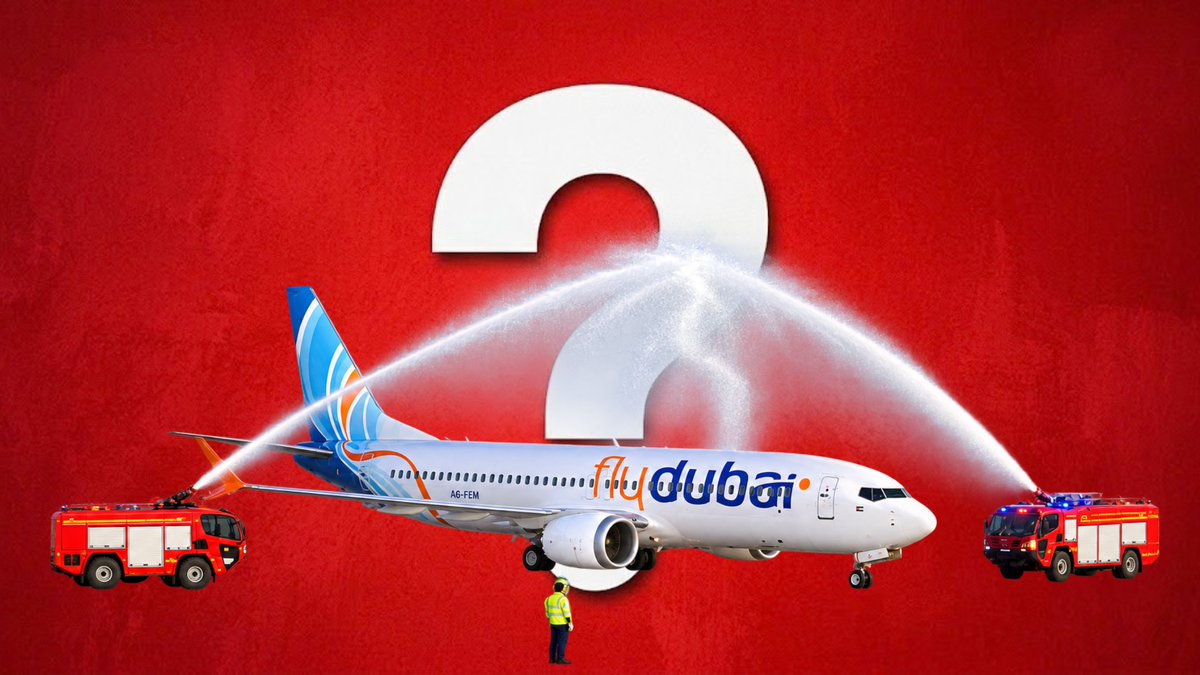
A narrow escape from an unimaginable tragedy in the skies. Prime Minister Benjamin Netanyahu and Defence Minister Israel Katz have described the dramatic incident on board a Flydubai flight bound for Israel as a foiled terrorist attack.
According to the Israeli account, as the aircraft approached Israeli airspace, the co-pilot attacked the captain with a knife and sent the aircraft into a steep dive, allegedly attempting to crash the plane and kill everyone on board. Disaster was averted by an extraordinary sequence of events and the composure of those on board:
▪️ One Israeli passenger, together with a member of the cabin crew, managed to force open the cockpit door and overpower the knife-wielding attacker, who was allegedly attempting to damage the flight controls.
▪️ Two professional pilots happened to be travelling on board as passengers. They immediately took control of the aircraft, stabilised it and carried out an emergency landing at Tabuk Airport in Saudi Arabia.
The captain, who suffered stab wounds, was taken to a Saudi hospital, while the alleged attacker was detained and is being questioned by the authorities in Riyadh.
The incident immediately triggered a major security and procedural controversy. Defence Minister Israel Katz explicitly described the attacker’s actions as an ‘attempted jihadist attack’, while Transport Minister Miri Regev sharply criticised the UAE-based airline.
Preliminary reports indicate that the detained co-pilot is an Omani national. Under Israel’s strict aviation security regulations, flights to and from Israel may only be operated by nationals of countries that maintain official diplomatic relations with Israel — a category that does not include Oman.
Had it not been for the presence of two pilots among the passengers and the swift intervention in the cockpit, the incident could have resulted in one of the most shocking aviation disasters in the region’s recent history.
@netanyahu@Israel_katz@regev_miri@flydubai
#Israel #Flydubai #safety #aviation #terrorism #SaudiArabia #MiddleEast
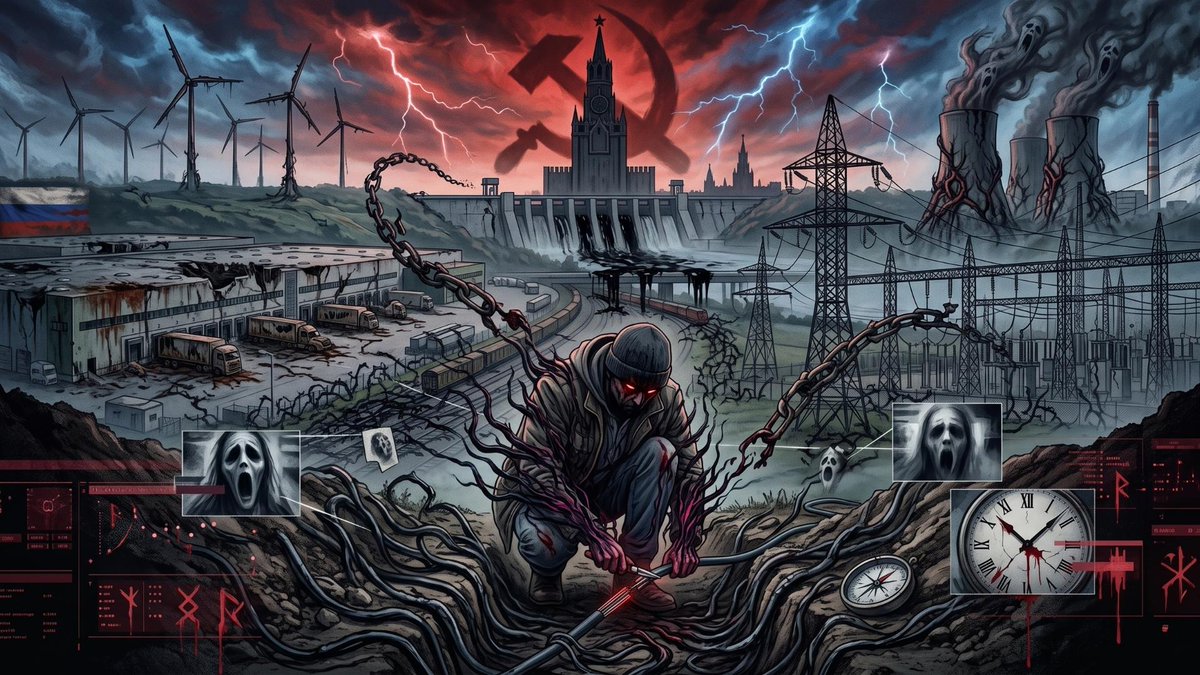
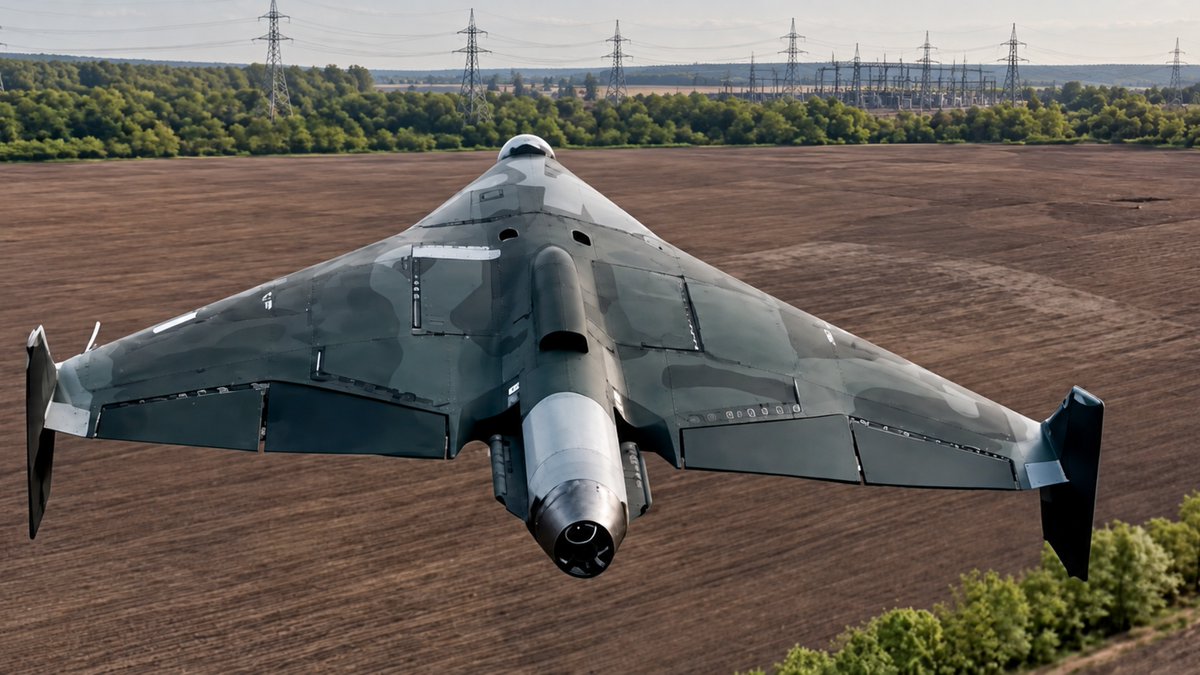
Russian forces have introduced a highly specialized drone payload engineered specifically to sever heavy steel infrastructure across Ukraine.
According to Ukrainian military technology expert Serhiy "Flash" Beskrestnov, Moscow has integrated a cumulative-cutting warhead (KRSN) onto a jet-powered strike drone for the first time. The munition’s architecture features a 40-kilogram primary warhead augmented by four secondary striking modules.
Unlike conventional area-effect or fragmentation payloads, this configuration is strictly designed to shear through structural steel. The technical specifications indicate a targeted tactical shift aimed at the precision degradation of Ukraine's critical logistics and energy networks, with the payload optimized to destroy high-voltage transmission pylons and bridge supports.
@mod_russia@DefenceU@GeneralStaffUA@CinC_AFU@KpsZSU
#Ukraine #Russia #war #drones #energy #infrastructure #security #technology
The Family of Nations, or Potash in Exchange for Hostages
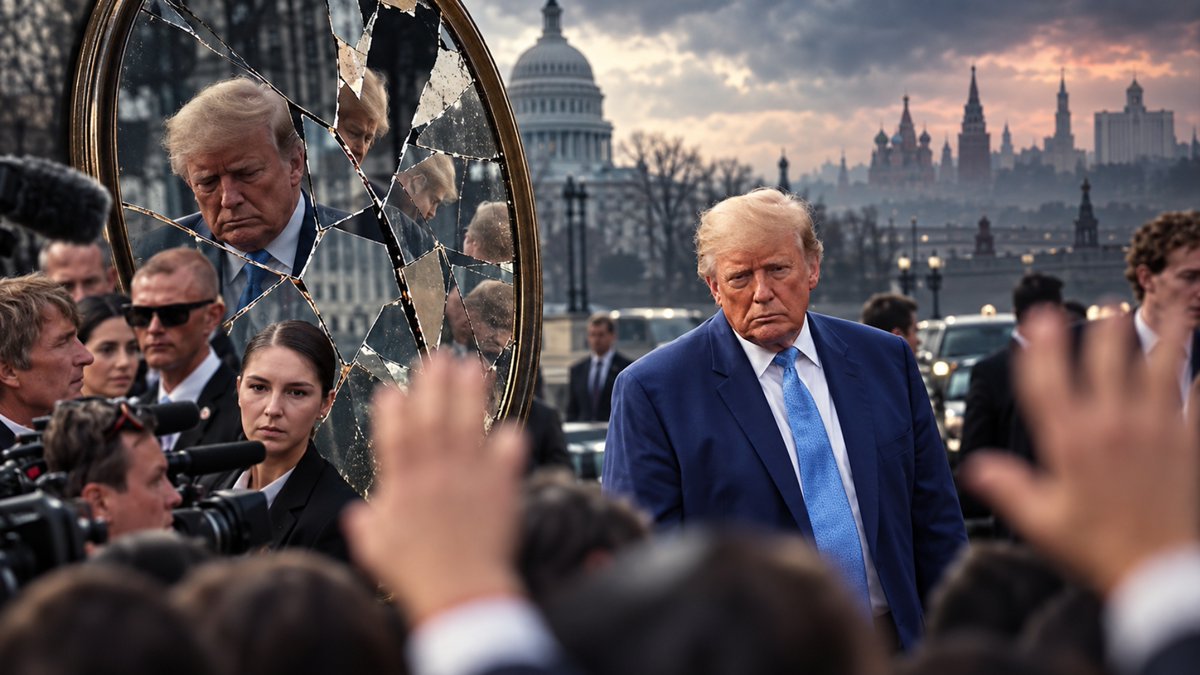
Washington is reportedly exploring a framework to reintegrate Russia into the global economy by linking the release of political prisoners to targeted sanctions relief. According to a September 29 report by Simon Shuster in The Atlantic, John Coale—Donald Trump’s special envoy for Belarus—architected the initiative, which has already received preliminary backing from the US president.
Key elements of the proposed strategy:
▪️ The Belarusian Model: Shuster reports the plan is modeled on recent diplomatic backchannels with Minsk, where Alexander Lukashenko released approximately 500 political prisoners in exchange for the lifting of Western sanctions on Belarusian potash exports.
▪️ Russian Application: Coale envisions applying this transactional template to Moscow, offering partial sanctions relief—potentially involving oil, diesel, and rare-earth metals—and the resumption of select business operations in exchange for Russian political dissidents.
▪️ Institutional Positioning: Coale’s recent White House nomination as the President’s Special Envoy for Hostage Affairs signals administrative momentum for utilizing hostage negotiations as a mechanism for broader geopolitical realignment.
The initiative remains conceptual and faces resistance within the administration from officials who argue that any sanctions relief must be contingent upon a formalized ceasefire in Ukraine. Ukrainian President Volodymyr Zelenskyy has publicly vowed to oppose any dilution of the sanctions regime before the war concludes.
The underlying logic of the Coale framework relies on historical analogies regarding statecraft. Coale reportedly cites the Reagan-Gorbachev dynamic, where Washington successfully secured the release of Soviet dissidents through direct dialogue.
[Editor's Note: Coale's historical comparison omits critical structural context. Gorbachev's concessions occurred while the Soviet economy faced systemic collapse under sustained Western pressure. Additionally, Moscow's isolation is not externally imposed; Putin self-directed Russia's exit from the international mainstream via the 2014 annexation of Crimea and the 2022 full-scale invasion.]
Recent empirical data contradicts the premise that such concessions curb state-sponsored detentions. While Belarus released 500 prisoners, human rights organizations estimate nearly 900 remain incarcerated, establishing a revolving-door mechanism where political arrests reliably generate diplomatic currency. Similarly, following the August 2024 exchange that freed Western journalists in return for convicted FSB assassin Vadim Krasikov, the Kremlin's domestic crackdowns continued unabated. The operational lesson authoritarian states derive from these exchanges is that hostage-taking yields high-value returns.
With US congressional elections scheduled for November 3, attempting to dismantle the Russian sanctions architecture carries substantial political risk, particularly if control of the House or Senate shifts. However, the advancement of the Coale framework indicates Washington is increasingly willing to treat hostage diplomacy as a transactional commodities market.
Read the full report at The Atlantic:
https://t.co/4UGXow0IuK
@TheAtlantic@shustry@ZelenskyyUa
#USA #Russia #sanctions #diplomacy #geopolitics #hostages
✈️🚨 Flydubai FZ1073: Hijacking Code, Fighter Jets, and Conflicting Pilot Nationality Claims
Flydubai flight FZ1073 from Dubai to Tel Aviv was not hijacked. Beyond that, the reported physical altercation in the cockpit—and allegations involving a knife—remain unverified claims rather than established facts.
▪️ On September 30, a Flydubai Boeing 737 MAX 8 (flight FZ1073, registration A6-FKF, carrying approximately 174 passengers) transmitted squawk code 7700 (general emergency), followed by 7500 (unlawful interference). The aircraft executed a rapid descent, aborted its route over Jordan, and diverted to Tabuk, Saudi Arabia.
▪️ Israel scrambled fighter jets in response.
▪️ Flydubai confirmed only an "incident" and a safe landing. The airline reported no passenger injuries and dispatched a replacement aircraft.
▪️ An Israeli official, speaking to Reuters, ruled out a hijacking, attributing the squawk sequence to a physical altercation between the pilots.
🟢 Confirmed Facts
Flight data, including the route, aircraft type, and transponder sequence, align with public tracking records. Flydubai confirmed the Tabuk diversion and passenger safety. An Israeli government source confirmed the cockpit altercation via Reuters. Flydubai and Saudi authorities have yet to corroborate this detail.
🟡 Unverified Claims
▪️ Israel’s Channel 12 reported the pilots were Russian and Ukrainian—a claim amplified by The Times, NEXTA, BILD, and regional media. Flydubai, the UAE, and Saudi Arabia have not confirmed this. Reuters omitted nationality details.
▪️ A competing narrative identifies the suspect pilot as an Omani national and the co-pilot as Emirati. The accounts are mutually exclusive.
▪️ Passenger accounts and Israeli media describe a knife, visible blood, an intentional steep dive, and passengers forcing the cockpit door open.
▪️ Israeli media assert authorities are investigating a potential terror motive, though no official statement supports this.
🔴 Working Hypothesis
The motive remains undetermined. Investigators have established no evidence of ethnic conflict, terrorism, or psychological breakdown.
Within hours, the "Russian-Ukrainian cockpit brawl" narrative dominated social media, despite no official investigative link between pilot nationalities and the incident. The narrative provides a readymade template for Russian disinformation networks, which have systematically weaponized tropes of "aggressive Ukrainians" since 2022. Should Channel 12’s reporting prove false, subsequent corrections will fail to reach the initial viral audience.
Authorities have ruled out a hijacking, and pilot nationalities remain unverified. Definitive conclusions require formal statements from Flydubai or aviation authorities in the UAE and Saudi Arabia, not viral screenshots.
#Flydubai #FZ1073 #disinformation
@flydubai@Reuters@thetimes@nexta_tv@BILD
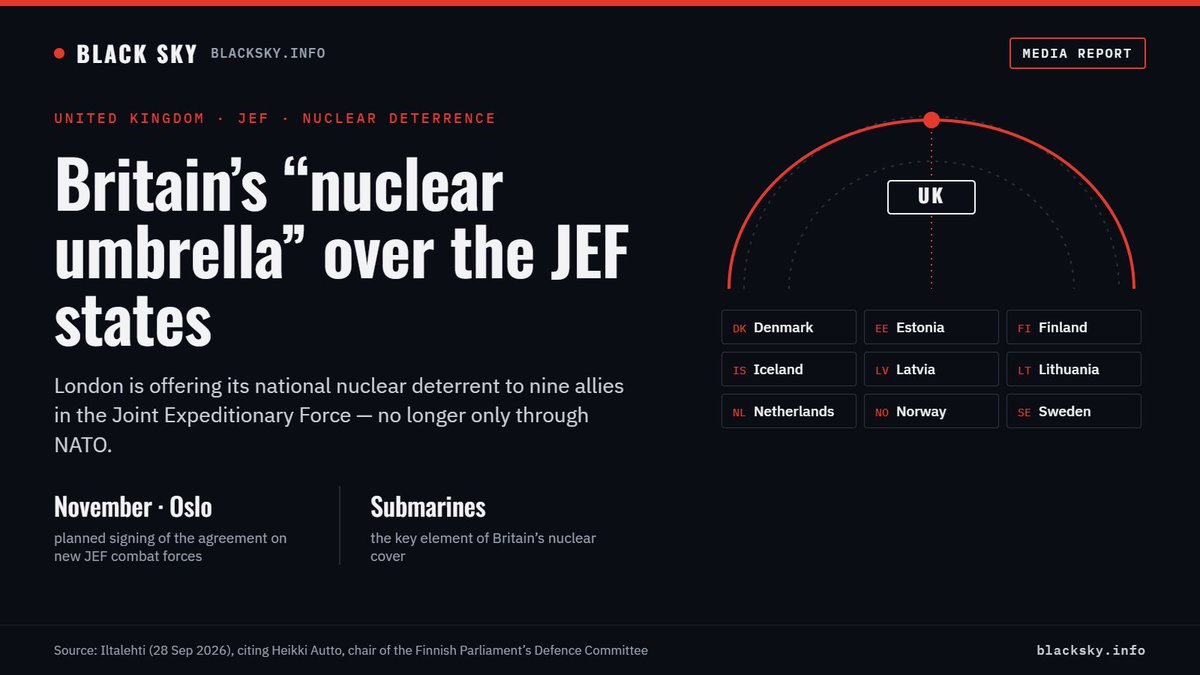
The UK’s nuclear deterrent is set to extend its protection to Europe’s northern and eastern flanks. The United Kingdom has offered to extend its national nuclear deterrent to the nine other members of the Joint Expeditionary Force (JEF): Denmark, Estonia, Finland, the Netherlands, Iceland, Lithuania, Latvia, Norway and Sweden, according to the Finnish daily Iltalehti.
The information was confirmed in Helsinki by the Chief of the Royal Navy, General Sir Gwyn Jenkins, who stated explicitly that Finland is already covered by Britain’s strategic deterrent, guaranteed by nuclear-powered ballistic-missile submarines maintaining continuous patrols in the Atlantic.
The new defence arrangements are expected to be formalised in November at a summit in Oslo, where the allies are due to sign an agreement establishing new combat structures and deepening military integration. In practice, this would create a regional nuclear-deterrence mechanism within the JEF, operating alongside and complementing NATO’s broader deterrence framework.
Against the backdrop of Russian nuclear coercion and persistent questions over the durability of US security guarantees, London is taking on a more prominent role as a guarantor of security in the Baltic Sea region and the High North. From the Kremlin’s perspective, the risks associated with any military provocation in the region would consequently increase.
@RoyalNavy@DefenceHQ@NATO
#UnitedKingdom #JEF #deterrence #security #NATO #geopolitics #Finland #BalticSea
A Russian Aerospace Forces Tu-95MS strategic bomber crashed near Krasnoyarovo in the Far Eastern Amur Oblast. Initial reports mistakenly identified the aircraft as a Defense Ministry Tu-154 passenger plane.
Emergency services confirmed at least six fatalities among the seven people on board—four crew members and three passengers. The bomber operated from the Ukrainka airbase, a primary staging ground for Russia’s strategic aviation and mass cruise missile strikes targeting Ukrainian civilian and energy infrastructure.
For Moscow, the loss is irreplaceable. The Tu-95MS "Bear" is out of production, leaving the active fleet susceptible to progressive structural wear and mounting technical failures. The crash further depletes Russia’s strategic aviation capacity, compounding attrition from Ukrainian drone strikes on the Engels airbase this summer that critically damaged at least two bombers of the same type.
@mod_russia
#Russia #Tu95 #aviation #war #Ukraine #security #Amur
The apparent decline in Russian sabotage operations across the West is a statistical illusion driven by "attribution lag."
Of more than 300 suspected Russian-linked sabotage incidents across NATO, the EU, and North America since February 2022, investigators have established a definitive evidentiary chain to Moscow in roughly 40 cases: 29 in 2024, six in 2025, and just one in 2026. This sharp decline does not signal de-escalation. It reflects the timeline Western counter-intelligence requires to trace digital subcontractors back to GRU or FSB handlers.
Under Moscow's "sabotage-as-a-service" doctrine, Russian intelligence recruits disposable proxies via encrypted platforms. Building robust legal cases against this decentralized model takes up to two years. Twenty months elapsed between the July 2024 ignition of a GRU-dispatched parcel at Leipzig Airport and Eurojust’s formal attribution. Judicial verdicts remain pending.
Consequently, recent kinetic operations exist in legal limbo. Early September alone saw an armed drone intercepted over Lithuania, an airspace lockdown at Luxembourg’s Findel Airport, and a wave of fires at defense manufacturing facilities and warehouses across Skarżysko-Kamienna, Lublin, and Snina. While Western agencies continue dismantling Russian espionage networks—recently in the US, UK, Romania, and Moldova—formal attribution for these immediate physical strikes remains unfinalized.
The Kremlin systematically exploits this structural delay. It executes kinetic destabilization in the present, calculating that by the time Western legal frameworks finalize indictments, the geopolitical news cycle will have moved on.
A detailed analysis of Russian sabotage network structures and investigation timelines is available on Blacksky:
https://t.co/JZko6e7T58
@Eurojust
#Russia #sabotage #diversion #security #counterintelligence #hybridwar #GRU #NATO
US Ambassador to China David Perdue disclosed that President Donald Trump directly offered to sell American weaponry to the Chinese military during recent bilateral talks with Xi Jinping in Washington. Speaking on Fox News, Perdue recounted the exchange between the two leaders.
According to the ambassador’s account, Trump highlighted global US arms exports before explicitly asking if Beijing would be interested in a purchase. Perdue provided no operational specifics, leaving the exact timeline, the proposed equipment class, and Xi’s response undisclosed.
The prospect of arming Washington’s primary strategic rival triggered immediate administrative damage control. The State Department issued a categorical denial, asserting the US maintains no operational plans or formal proposals to export arms to Beijing.
The exchange exposes the friction between a strictly transactional foreign policy doctrine and structural geopolitical constraints. As Washington and Beijing navigate an escalating military and technological rivalry, US defense commitments to Taiwan remain a core bilateral flashpoint. Against this backdrop, an informal overture to arm the Chinese military represents a severe deviation from established security protocols.
@realDonaldTrump@StateDept@FoxNews@USAmbChina@MFA_China@MFA_CPC
#USA #China #geopolitics #Trump #XiJinping #diplomacy #security
Nothing confirms the Kremlin’s declarations of ‘openness to the peace process’ more emphatically than the signing of yet another decree expanding the army. For the fourth time this year — and the seventh since the start of the full-scale invasion — Vladimir Putin has decided to increase the authorised strength of the Armed Forces of the Russian Federation, adding a further 15,500 posts.
Under the new decree, the total authorised strength of the Russian armed forces will stand at 2,441,630 personnel, including 1,550,500 active-duty military personnel. The military bureaucracy in Moscow has had little respite: the authorised strength was increased in March, again in June by 10,000, and in July by a further 25,000 posts, under the pretext of expanding military engineering and construction units.
While tens of thousands are killed or wounded on the front line every month, and talk of a lasting resolution to the conflict continues in the halls of the UN and behind the scenes at the G20, the Kremlin’s arithmetic seeks to offset the losses by decree. The imperial appetite shows no sign of abating; only the pace at which the manpower figures on the balance sheet must be replenished is changing.
@KremlinRussia@mod_russia
#Russia #Putin #army #war #Ukraine #Kremlin #geopolitics
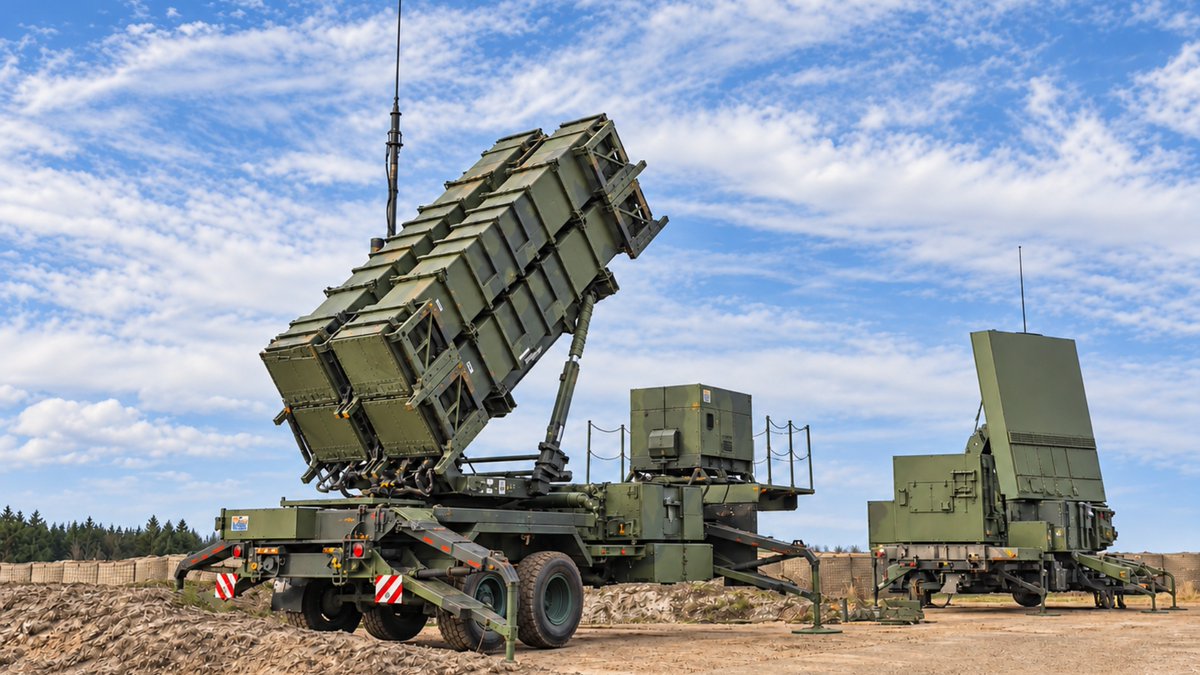
At the EU Defence Council meeting, member states failed to secure an agreement on immediate Patriot missile deliveries for Ukraine. While Russian jet-powered drones strike the Academy of Sciences in central Kyiv and detonate hundreds of meters from the Polish border, European defense strategy remains tethered to delayed procurement cycles. The Council instead approved €28.3 billion in future arms procurement plans.
EU High Representative Kaja Kallas acknowledged the structural lag between US production timelines and Ukraine's immediate operational requirements. The proposed stopgap relies on member states drawing down existing domestic stockpiles. In exchange, Brussels offers deferred reimbursement financed by a €90 billion EU loan—primarily scheduled for 2027—and the remaining €20 billion available under the SAFE instrument. The mechanism requires national governments to degrade their own immediate air defense capacity for future financial compensation.
The EU announced preparations for another sanctions package against Russia. The operational impact of such measures remains demonstrably limited; Western microelectronics continue to surface in the wreckage of Russian munitions. The Council also outlined prospective humanitarian aid for occupied Oleshky.
Brussels continues to counter immediate kinetic threats with long-term financial architecture. The disparity between European administrative procedures and frontline realities leaves Kyiv to absorb the current air campaign without sufficient interceptor volume.
@kajakallas@eu_eeas@EUCouncil@GeneralStaffUA@KpsZSU
#EU #Ukraine #Patriot #defence #Kallas #security #Russia #geopolitics


![BlackSkyINFO's tweet photo. A severe humanitarian crisis is escalating in Oleshky, Kherson Oblast. Occupied since early 2022 and geographically isolated by the Dnipro River and extensive minefields, the town traps over 2,000 civilians, including approximately 50 children and numerous bedridden residents.
Following four months of near-total isolation, essential supply lines for food and medicine have been severed. Humanitarian organizations and witness accounts report extreme starvation, with unverified claims that desperate residents are resorting to eating foliage and tree bark ahead of winter.
Key factors compounding the crisis:
▪️ Document Deprivation: The 2023 destruction of the Nova Kakhovka dam continues to paralyze civilian mobility. Floodwaters destroyed the identity documents of hundreds of residents, leaving them unable to clear Russian military checkpoints to exit the occupation zone.
▪️ Kinetic Threats to Evacuation: Overland escape routes remain heavily mined. Multiple reports indicate Russian forces regularly deploy FPV drones against unauthorized movement within the town, actively targeting pedestrians and civilian vehicles attempting to relocate.
▪️ Aerial Resupply Efforts: With overland routes severed, Ukrainian forces reportedly utilized UAVs as a substitute delivery mechanism. Official statements claim an operation on September 27 deployed approximately 100 drones to drop 4,000 kg of food parcels into Oleshky.
[Editor's Note: The logistical claim of delivering 4,000 kg of cargo using 100 drones warrants technical scrutiny. This implies an average payload of 40 kg per drone, which significantly exceeds the maximum carrying capacity of standard heavy-lift tactical multicopters (typically 12–15 kg, such as the 'Vampire' or 'Baba Yaga' platforms) deployed by Ukrainian forces. This figure likely represents a cumulative payload delivered over multiple sustained sorties, rather than a single coordinated airlift.]
▪️ Diplomatic Stasis: Ukrainian Human Rights Commissioner Dmytro Lubinets and EU High Representative Kaja Kallas have formally requested the establishment of a humanitarian corridor. However, the NGO Skhid SOS notes that without actionable, enforced security guarantees from Moscow, diplomatic appeals remain operationally void.
Russian occupation authorities continue to enforce isolation through movement restrictions and kinetic deterrence. Absent a secure corridor, the onset of winter will predictably drive a sharp increase in civilian mortality.
Detailed accounts from occupied Oleshky and an analysis of evacuation obstacles are available on Blacksky:
https://t.co/erlJqpSnXL
@ZelenskyyUa @kajakallas @MFA_Ukraine
#Ukraine #Oleshky #Kherson #warcrimes #Russia #humanitarianaid #geopolitics](https://pbs.twimg.com/media/HTyfZtAWUAETPpY.jpg)

![BlackSkyINFO's tweet photo. The Family of Nations, or Potash in Exchange for Hostages
Washington is reportedly exploring a framework to reintegrate Russia into the global economy by linking the release of political prisoners to targeted sanctions relief. According to a September 29 report by Simon Shuster in The Atlantic, John Coale—Donald Trump’s special envoy for Belarus—architected the initiative, which has already received preliminary backing from the US president.
Key elements of the proposed strategy:
▪️ The Belarusian Model: Shuster reports the plan is modeled on recent diplomatic backchannels with Minsk, where Alexander Lukashenko released approximately 500 political prisoners in exchange for the lifting of Western sanctions on Belarusian potash exports.
▪️ Russian Application: Coale envisions applying this transactional template to Moscow, offering partial sanctions relief—potentially involving oil, diesel, and rare-earth metals—and the resumption of select business operations in exchange for Russian political dissidents.
▪️ Institutional Positioning: Coale’s recent White House nomination as the President’s Special Envoy for Hostage Affairs signals administrative momentum for utilizing hostage negotiations as a mechanism for broader geopolitical realignment.
The initiative remains conceptual and faces resistance within the administration from officials who argue that any sanctions relief must be contingent upon a formalized ceasefire in Ukraine. Ukrainian President Volodymyr Zelenskyy has publicly vowed to oppose any dilution of the sanctions regime before the war concludes.
The underlying logic of the Coale framework relies on historical analogies regarding statecraft. Coale reportedly cites the Reagan-Gorbachev dynamic, where Washington successfully secured the release of Soviet dissidents through direct dialogue.
[Editor's Note: Coale's historical comparison omits critical structural context. Gorbachev's concessions occurred while the Soviet economy faced systemic collapse under sustained Western pressure. Additionally, Moscow's isolation is not externally imposed; Putin self-directed Russia's exit from the international mainstream via the 2014 annexation of Crimea and the 2022 full-scale invasion.]
Recent empirical data contradicts the premise that such concessions curb state-sponsored detentions. While Belarus released 500 prisoners, human rights organizations estimate nearly 900 remain incarcerated, establishing a revolving-door mechanism where political arrests reliably generate diplomatic currency. Similarly, following the August 2024 exchange that freed Western journalists in return for convicted FSB assassin Vadim Krasikov, the Kremlin's domestic crackdowns continued unabated. The operational lesson authoritarian states derive from these exchanges is that hostage-taking yields high-value returns.
With US congressional elections scheduled for November 3, attempting to dismantle the Russian sanctions architecture carries substantial political risk, particularly if control of the House or Senate shifts. However, the advancement of the Coale framework indicates Washington is increasingly willing to treat hostage diplomacy as a transactional commodities market.
Read the full report at The Atlantic:
https://t.co/4UGXow0IuK
@TheAtlantic @shustry @ZelenskyyUa
#USA #Russia #sanctions #diplomacy #geopolitics #hostages](https://pbs.twimg.com/media/HTdYqbuX0AA5JzD.jpg)