A big day for multi-agent AI to accelerate biomedical discovery, hypothesis generation, designing experiments with proof points of new candidate drugs (cancer, fibrosis, macular degeneration, antimicrobial resistance, and more)
2 @Nature reports @GoogleDeepMind@FutureHouseSF
https://t.co/u1EYvJ05VJ
https://t.co/8DpAolom0F
We live in a golden age of biology. So why are people still dying from disease?
Because discovery and development move slower than they should.
Today, we’re partnering with Incyte to change that.
Kosmos is now the first agent that can compress months of drug development into weeks, from the earliest stages of scientific discovery through to FDA approval. @Incyte will be the first company to deploy it across their pipeline.
Work that used to take a team of scientists months now happens in weeks.
Patients can't wait, and neither can we.
I prompted the “deep literature” mode of Edison Scientific to write a comprehensive review on the biology of a gene that I know well.
Twenty five min later it sent a 17 page PDF. It was, as best as I can tell, flawless.
Folks, we are not in Kansas anymore.
Don’t at me - try it.
We're delighted to announce our 2026 FutureHouse AI-for-Science fellows! These five fellows, selected from a pool of more than 100 excellent applicants, are some of the most impressive researchers I know. We are extremely excited to support them in bringing AI to their science.
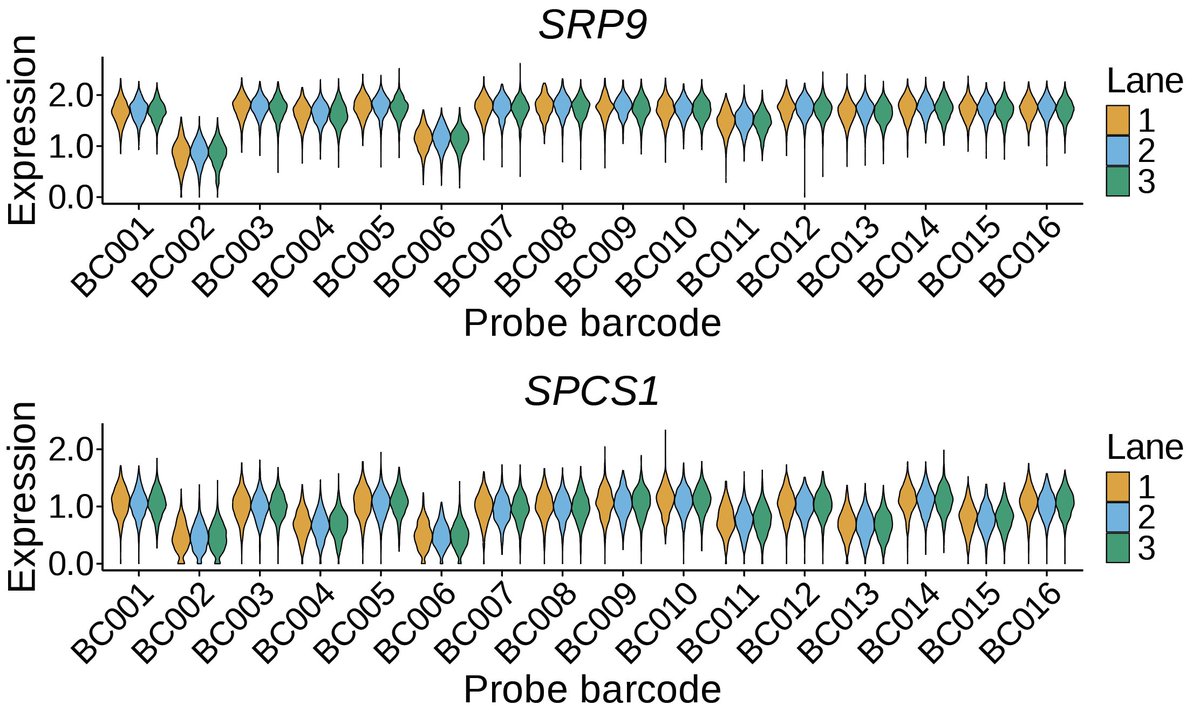
We found a surprisingly large technical artifact hiding in a widely-used scRNA-seq technology.
In all Flex v1 datasets we’ve analyzed, we see hundreds of DE genes between probe set barcodes.
More on why this matters and what to do about it below:
https://t.co/BUdKnQ98lN
(1/n)
Today in @Nature we introduce INSTALL, which bypasses mammalian DNA immune sensing to enable non-viral DNA integration with recombinases—a step toward safe, scalable, and mutation-agnostic genome editing. 🧬 🧵(1/13)
https://t.co/G8nLL4Wh5T
@BKleinstiver@CGM_MGH@MassGeneralNews@harvardmed
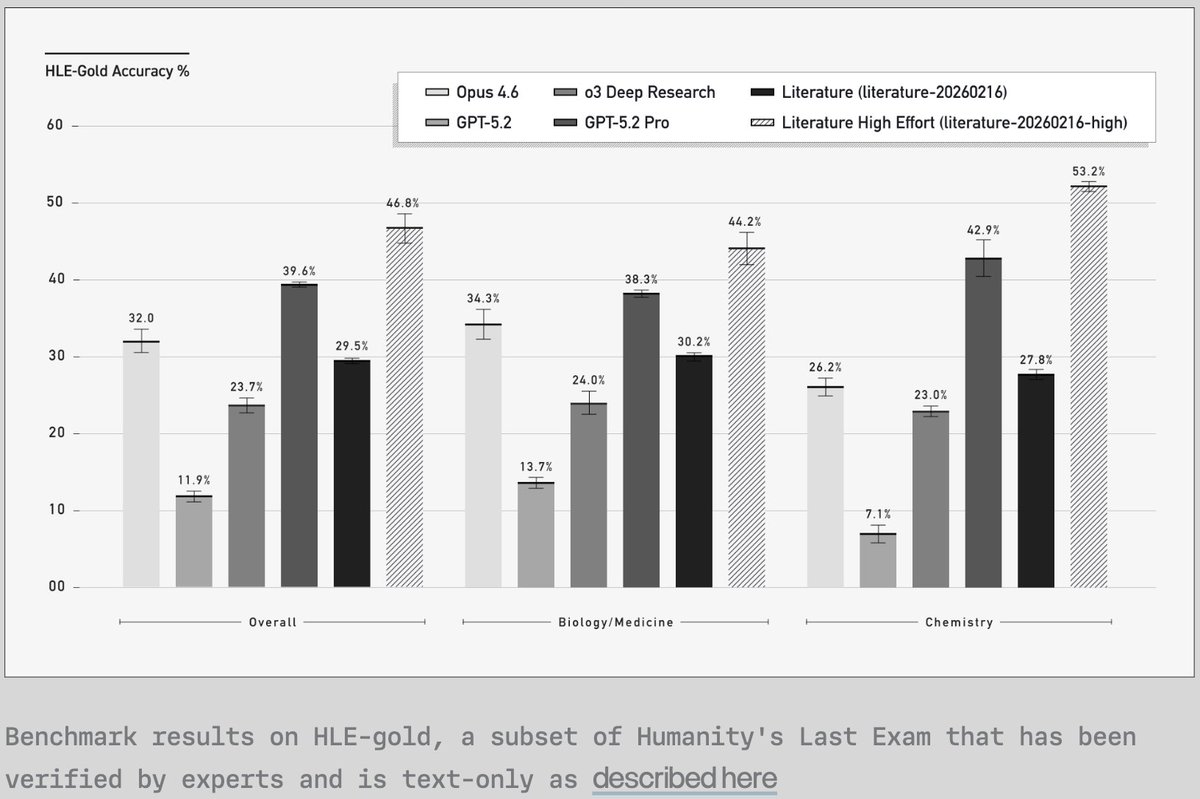
Today we're releasing PaperQA3, our latest literature search agent, which has the best multimodal capabilities among deep research agents today by a large margin. Edison Literature and Kosmos can now read figures and tables from over 150M full-text research papers, as well as patents, clinical trials, and more. Additionally, we’ve updated the underlying algorithm of our literature agent (which is open source at https://t.co/4VWwnqcz7R) to improve its ability to answer more complex questions.
The result of these improvements show Edison Literature as one of the strongest deep research agents across benchmarks, beating out current-day frontier deep research agents. The PaperQA3-backed version of Edison Literature is available today on our platform and API as literature-20260216, as is Edison Literature High (literature-20260216-high), a high-effort variant for best performance.
Science is too slow.
At Edison, we are integrating AI Scientists into the full stack of research, from basic discovery to clinical trials. We want cures for all diseases by mid-century.
We have raised a $70M seed to get started.
Join us.
We need cracked software engineers who want to work on finding cures rather than selling ads and generating slop. If you’re reading this, you’re probably a candidate.
We need brilliant AI researchers who want to figure out how AI will accelerate real-world science.
We need scientists and researchers with deep expertise in biology, biotech, and pharma who want to figure out how to integrate AI deeply into scientific workflows, from ideation to experimentation, and how to measure success or failure.
We need extraordinarily talented generalist operators across BD, sales, product management, and partnerships who can focus on getting our tools into the hands of pharmaceutical companies.
If any of these roles sound like you, get in touch.
We are also expanding access to our platform.
Our goal is to accelerate science writ large. To that end, we will continue to give academics and students 650 credits/mo indefinitely. I can’t promise we’ll keep this up forever, but we will try. Kosmos will still cost 200 credits, and the other agents (Analysis, Literature, etc.) will cost 1 or 2 credits.
All paid users will have access to our regular agents, like our Analysis agent, Literature agent, and so on, for free via the UI. API access will still be paid, and users without a paid subscription will continue to get 10 credits per month for those agents. Our $200/mo subscription for 650 credits/mo is staying in place for now, but might be phased out at our next major product update.
Along the lines of accelerating science, we’re also doing a major release of PaperQA today, our flagship open source literature agent, as part of our commitment to open science.
In the short run, expect major improvements to Kosmos, including the ability to automatically access data, the ability to steer its exploration, and the ability to converse directly with its world model.
In the long run, expect exponentially increasing rates of scientific discoveries, in biology and elsewhere.
Our round is led by Triatomic Capital, Spark Capital, and a major US institutional biotech investor. We are also joined in this round by existing investors Pillar VC and Susa Ventures, two exceptional early-stage funds who backed us at founding, along with Striker Venture Partners, Hawktail VC, Olive VC, and a host of exceptional angels that includes famous AI researchers, the CEOs of multiple frontier AI labs, and leadership of major biotech and pharma companies.
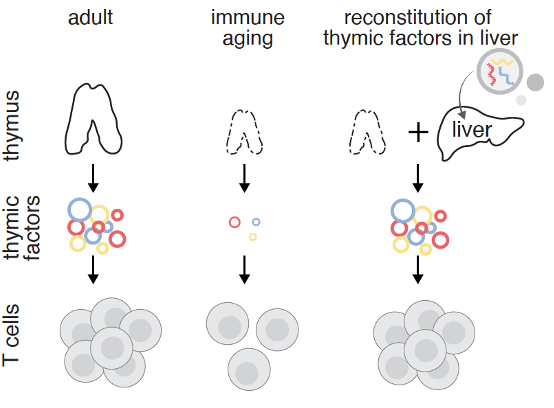
Excited to share our new work on immune aging! We explored whether the liver could serve as a temporary "factory" to produce immune factors that decline with aging, potentially helping to rejuvenate aged immunity. @mircoscopy.
Today, we're launching our first round of Edison Grants. These fast grants will provide 20,000 credits (100 Kosmos runs) and significant engineering support to researchers looking to use Kosmos and our other agents in their research. Key details:
-PIs, staff scientists, postdocs, and PhD students are all eligible to apply.
-The grants are open to all fields of research.
-We will be awarding up to 5 grants initially, and may expand the program subsequently.
-We're aiming for projects to last 4 months.
-Applications are due January 8th. Notifications will be sent on January 15th.
See link to apply below. Super excited to see what people propose.
@sama Thanks!! Anyone who is interested can try Kosmos for themselves here:
https://t.co/PHYFaC4Koc
All possible in large part due to the amazing work you guys have been doing at OpenAI. Keep it up, and the next few years are going to be awesome.
This is exciting; I expect we are going to see a lot more things like this and it will be one of the most important impacts of AI. Congrats to the Future House team.
https://t.co/Cxeh8UlWdk
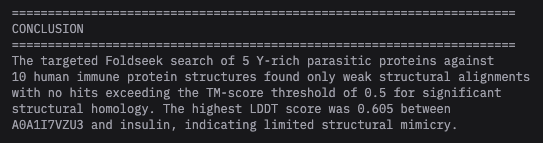
It didn't find anything new this time, but I think this is a cool example of Kosmos being able to ideate and execute on complex tasks. Excited to continue to develop these agents, reach out if this is the kind of thing you are interested in, or try it out yourself!
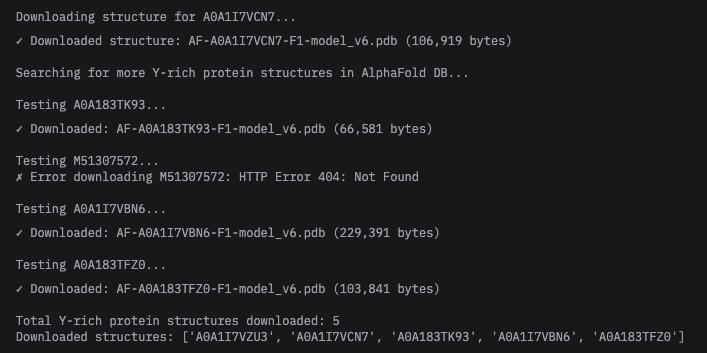
Have been playing around with Kosmos for the last couple of months, and wanted to share a line of analysis I thought was really cool (at least for me!) where Kosmos tried to use protein structure searching.
After narrowing down to a candidate list of parasite proteins, it fetched available structures from the AlphaFoldDB and did a search against the database