In this era of overstimulation, cartoons with soft palettes, storybook pacing, unhurried voices with deep talk in small words - are needed more than ever.
When it gets hot, snails start climbing upward to escape the scorching ground. Once they find a safe, comfortable spot, they enter a state called aestivation, a wonderful word that describes their summer survival strategy.
It’s similar to hibernation, but instead of enduring winter cold, they’re protecting themselves from intense summer heat and dryness.
To do this, they seal the opening of their shell with a membrane of mucus known as an epiphragm. In certain species, such as the Roman snail (Helix pomatia), this barrier is reinforced with calcium for added strength. The seal contains a tiny hole that allows oxygen to pass through while preventing precious moisture from escaping.
The length of aestivation depends heavily on temperature, humidity, and rainfall. In hot, dry conditions, some snails may remain dormant for weeks or even several months until moisture returns. In Mediterranean and warmer climates, this can commonly last through much of the summer.
📷George Konstantinou
We are unaware of how profoundly our thoughts mould our reality. In Hadith Qudsi, God highlighted it when He revealed ‘I am as my servant thinks I am.’
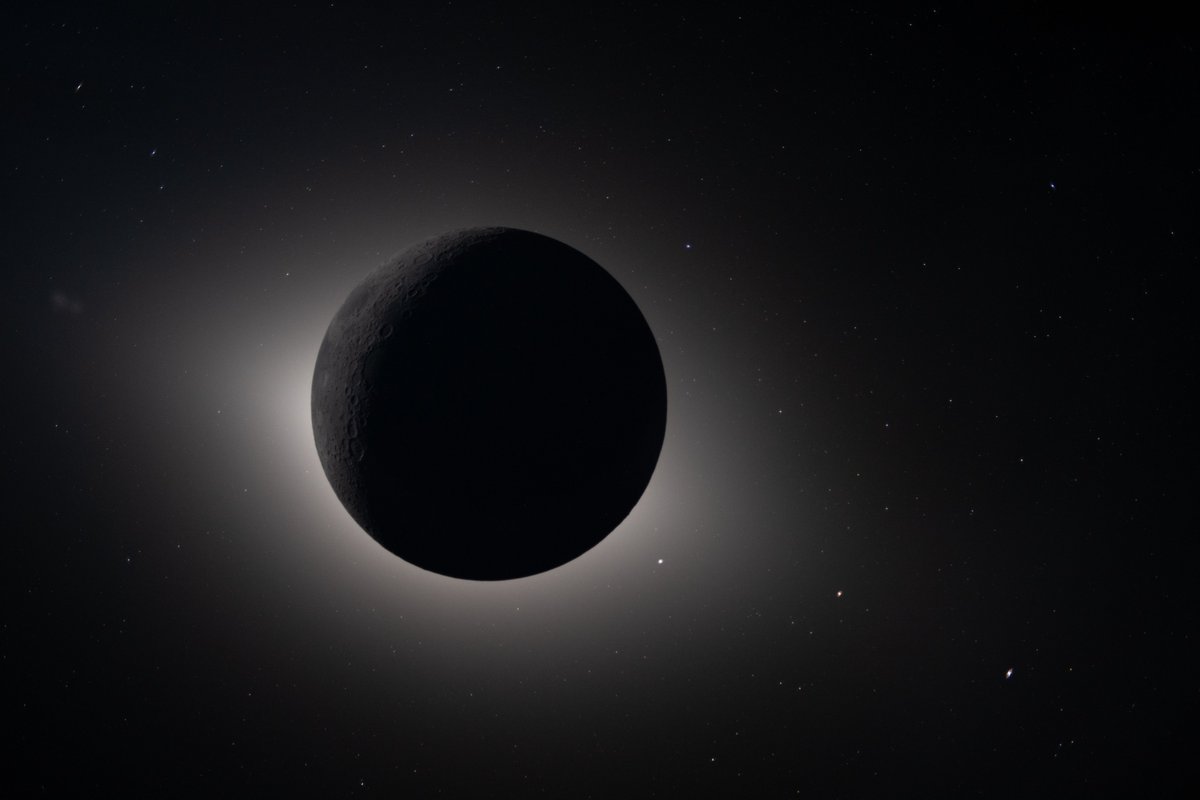
Ok last one: the rarest solar eclipse of all time. Only 4 people have seen this with their naked eyes. The sun is fully behind the moon. The only faint light hitting the near side is reflecting off of earth, 250,000 miles away. And the stars and galaxies in the background, sheesh
Nikon Z9
f/2.0
2 second exposure
ISO 1600
@NASA: https://t.co/twBqbUEDs2
Nothing in space is static.
Solar system moves at 800,000 km/h around the galactic center. The Earth, at 107,000 km/h around the Sun, and the Moon, at 3,700 km/h around the Earth.
POV: You're flying by the Moon.
This visualization is designed to show you what exactly the Artemis II astronauts will see outside their window during their lunar flyby.
Here, the seven-hour visualization is compressed into 28 seconds. ⬇ (1/4)