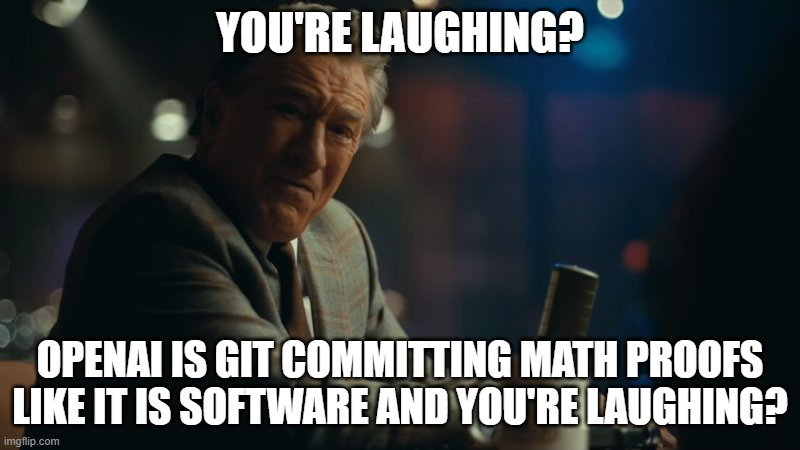
@sokrypton@TuXinming so for protein design, it seems like memorizing all data in existence with no regard to train-test split (i.e. LLM training) is the way to go to get the best results
seems like it is impossible to do any sort of controlled comparison to these LLMs for protein design
Can an LLM check an experimental result, revise its plan, and test the revision?
In our rainbow demo, PEARL compares camera evidence with its predictions. When a color is off, it changes the mixture, performs further actions, and checks whether the goal is met. (1/7)
Can LLMs use experiments to test expectations and revise their plans?
Given "Make a rainbow in the well-plate," PEARL plans mixtures and checks camera evidence. When a color differs from its prediction, it revises the mix, performs further mixing, and checks again.
What if we could use LLMs to drive lab robotic systems?🤖🧪
The newest method, PEARL, from the @romerolab1 and @jasonkeem8652 does just this
LLMs control our robots, incorporate assay feedback, and even diagnose tricky experimental issues
Check it out! https://t.co/Ca5MYM8piE
Can LLMs use experiments to test expectations and revise their plans?
Given "Make a rainbow in the well-plate," PEARL plans mixtures and checks camera evidence. When a color differs from its prediction, it revises the mix, performs further mixing, and checks again.
Highly recommend applying for the opportunity to work with world-class researchers at the intersection of machine learning and biology, in the heart of Cambridge, MA.
One of my favorite experiences of all time!
Are you a PhD student interested in the intersection of machine learning and biology or healthcare?
Come do an internship with the BioML Group at MSR!
Make sure you submit a research statement!
https://t.co/I38IhTb11i
@sokrypton@mmbronstein@MartinPacesa seems like it isn't possible. I wonder if there is a way to mathematically prove it though.
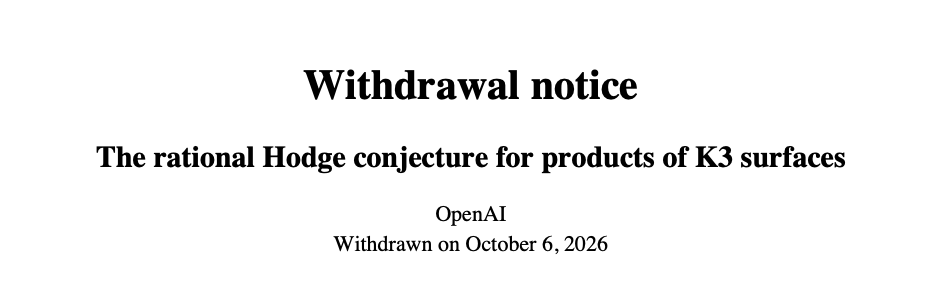
maybe OpenAI can throw $10 million in compute at it to figure it out
Incredible.
If the key argument for watermarking proteins is biosecurity, it is a weak argument in my opinion.
If there is another argument for watermarking proteins outside of biosecurity, I'd love to hear it
Biosecurity is too important for security theater.
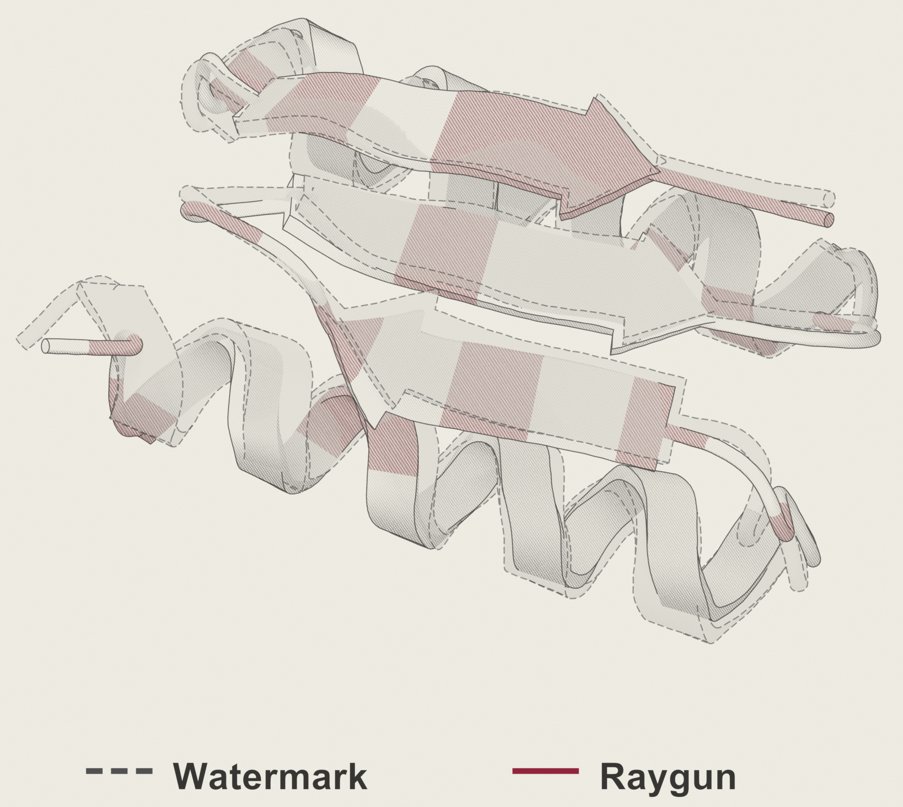
In a quick test with Raygun, we found that DeepMind's SynthIDBio watermark signal could be washed out while preserving the predicted structure.
We don’t think protein sequence watermarks buy much biosecurity.
Today we are announcing Topos-2, our next-generation model for generating the full range of shapes a protein can take, across the order-disorder spectrum.
We are also previewing Topos-Bind: to our knowledge, the first generative model to capture the range of shapes for disordered proteins bound to small molecules.
Read the technical blog post here: https://t.co/BLAXHAgsH4
(1/7)
Use your favorite LLM inside PyMol to manipulate molecules with a cool new tool from the Romero lab💻🧪
All you need is an API key!🔑
Check it out and send us feedback here! https://t.co/JJYArbGpOs
Have you ever wanted to talk to your molecules? Now you can with Chat with PyMOL!
We built this in the Romero Lab to make PyMOL more accessible to our BME undergrads, but quickly found it’s simply a better way to interact with molecular structures. (1/2)