The Senate just voted to put a salary cap on college sports.
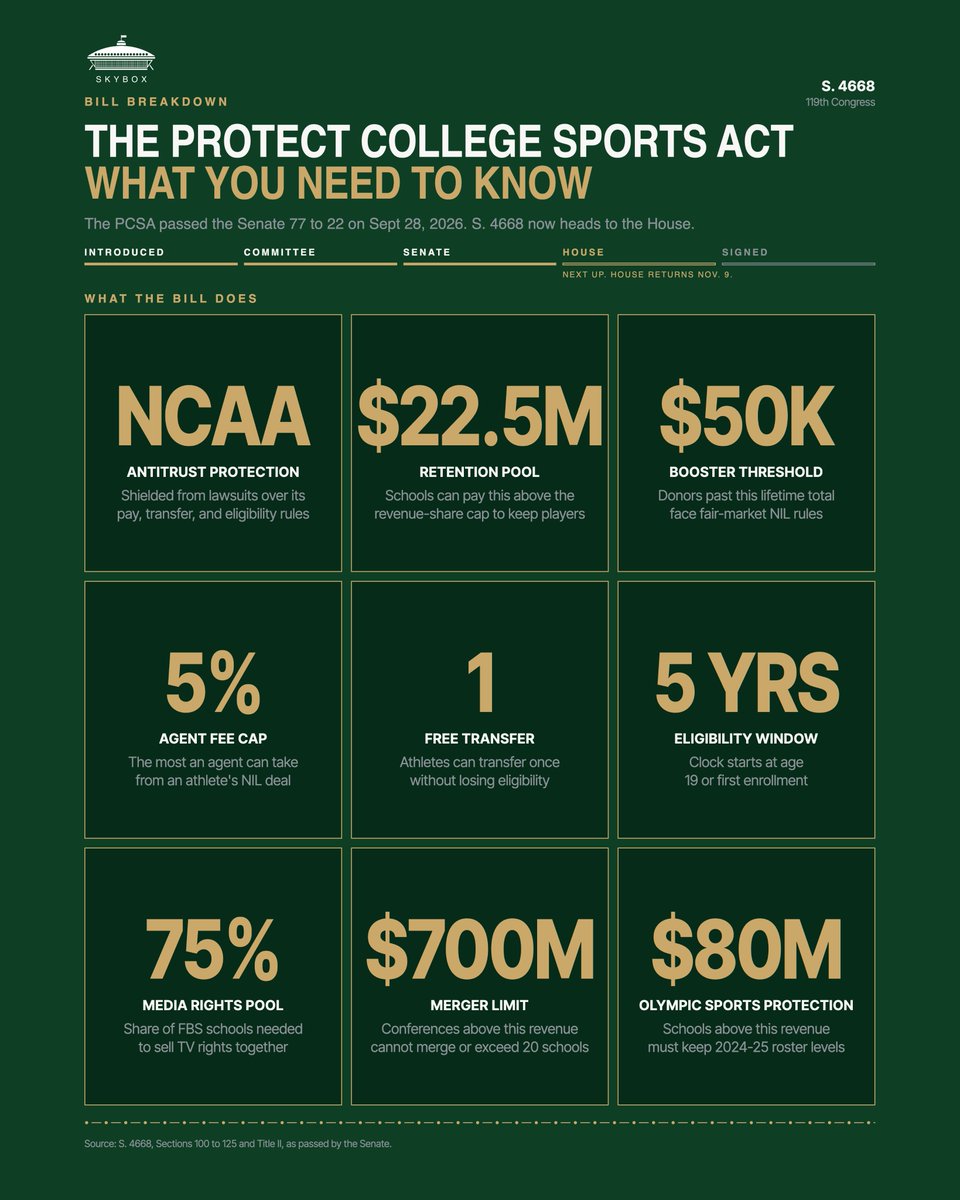
Last night, the Protect College Sports Act passed the Senate 77 to 22.
Back in July, I sat down with Dary Stone, one of the key architects of the bill.
His message then: "This is our one shot."
Dary is a former Baylor board chair and sits on the board of Saving College Sports, the group founded by Cody Campbell (@CodyC64) that brought together trustees, donors, and presidents from 60+ schools to push this bill to the floor.
He walked me through how it came together, including the call that put 33 conference commissioners on the line with Senators Cruz and Cantwell.
His read on the stakes:
→ "Right now nobody's in charge of college sports."
→ The NBA draws half of college football's viewership and gets paid twice as much. Pooled media rights are built to close that gap.
→ Without guardrails, the money and the power concentrate in a handful of schools.
The bill now heads to the House.
This graphic breaks down the key things that change if it becomes law.
An hour on the Protect College Sports Act with one of the men who built the coalition behind it, Dary Stone.
We recorded most of this yesterday afternoon.
Then big progress came out of a two-hour call that ran past midnight last night -- senators, conference commissioners, Notre Dame's AD, the Yankees' president, and Cody Campbell all on the line.
So we jumped back on today for a real-time update, with an aggressive push now underway for a Senate floor vote next week.
Dary's framing of the stakes is blunt. When the NCAA lost its NIL case, no guardrails came with the ruling, so a system meant to let athletes profit from their name, image, and likeness collapsed into an uncapped, pay-for-play free-for-all with no parity, no authority, and nobody in charge.
The bill puts real rules on transfers and eligibility, grants the NCAA antitrust protection to end the endless lawsuits, and lets schools pool their media rights.
He believes that alone could double the revenue reaching universities, which is what keeps women's and Olympic sports alive.
Dary is the former chairman of the board of Baylor and a board member of Saving College Sports. He's run campaigns for governors and presidents, chaired the Texas Banking Commission, and built and sold a real estate company to Cousins Properties before running it.
Today he sits at the center of a coalition of donors, board chairs, and university presidents -- now 60-plus schools -- racing to move this before the August recess.
We discuss:
· Why "the Wild West" undersells it -- it's pro sports with no commissioner
· The 1961 law that could double college sports revenue
· Where the power actually sits: donors, commissioners, media partners
· Why the SEC and Big Ten held out -- and what finally moved them
· Inside the numbers: the rev-share cap, the retention pool, the $51M question
· Private equity circling every athletic department -- and when to say no
· Why it's now or never before the August 7 recess
TIMESTAMPS
0:00 Intro
0:50 Who Is Dary Stone
2:25 What the Protect College Sports Act Does
5:04 How the Bill Came Together
8:14 Nobody's in Charge
12:17 Where the Power Actually Sits
15:47 Cantwell, Cruz, and Midnight Calls
19:25 The 1961 Law That Could Double Revenue
20:54 SEC & Big Ten vs. Everyone Else
23:28 Private Equity Comes Knocking
28:39 Leadership Lessons
41:05 The Live Situation
45:37 Breaking Update: The Holdouts Come In
52:39 Inside the $51M Cap
56:16 The Bill vs. Trump's Executive Order
@CodyC64@RossDellenger@Brett_McMurphy@bmarcello@slmandel
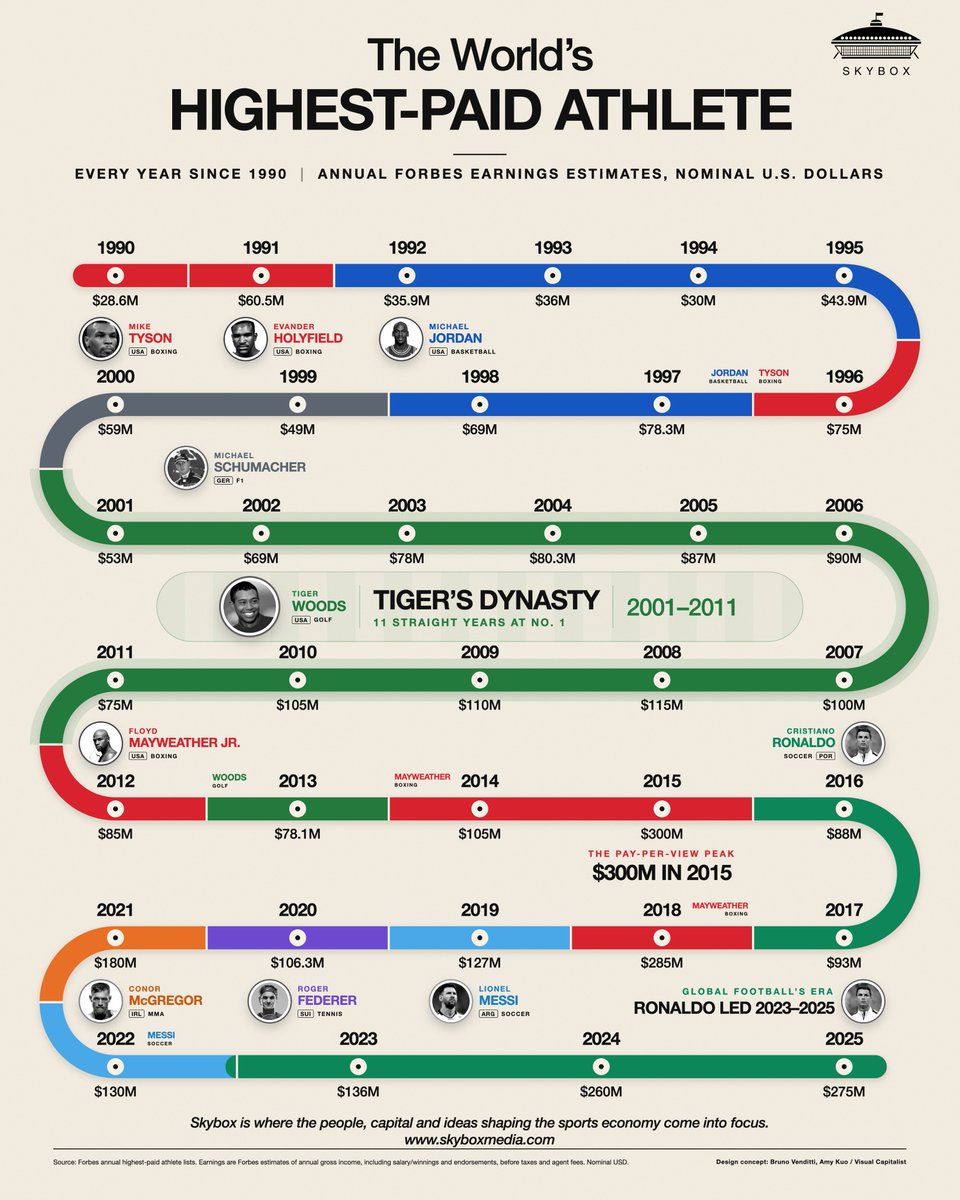
It's unbelievable how much money Floyd Mayweather made in 2015.
$424 million adjusted for inflation.
Nobody comes close, except for 2018 Mayweather ($380M).
Nick Ralston was cut by the Cowboys in 2022.
Jerry Jones-backed Blue Star Innovation Partners hired him in as an investor in 2023, and he spent the next three years talking to founders every single day.
He had the realization that a pro athlete is a business without an operating system. No website, no CRM, no newsletter, often no LinkedIn, and almost always no operating team.
He was a practice squad fullback, and yet he has built out what might be the best rolodex of any professional athlete I've ever spoken with.
Now he's building AthleteOS to give every athlete the system that sets them up for success in the second career.
New Under The Number with @NickRalston22:
THE JET LAG BOWL:
~8,000 miles from Los Angeles, the Rams and 49ers played in front of the 7th-largest regular season crowd in NFL history.
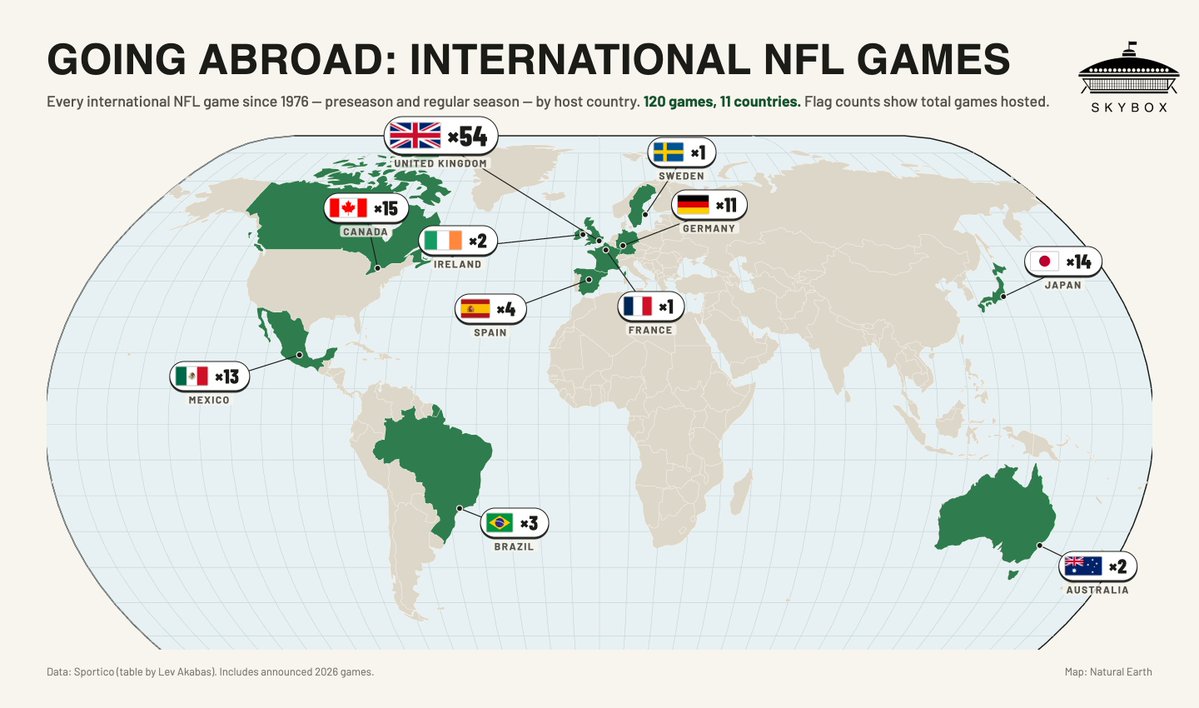
Since 1976, the NFL has played (+ scheduled) 120 games outside the U.S. across 11 countries, counting preseason and regular-season contests. The U.K. accounts for 54 of them, or 45% of the total.
For decades, international meant London, with periodic stops in Canada, Japan and Mexico. Germany is the only recent market with real scale, reaching 11 total games this season, including six regular-season matchups since 2022.
Now the league is adding its next layer of regular-season markets.
Last night's game in Melbourne was Australia's second ever, and its first since 1999.
In the US, most of the media, sponsorship and ticketing value of each NFL game is already understood and priced. A game in Melbourne, São Paulo, Madrid or Paris creates new local inventory: fans, sponsors, corporate hospitality, destination-marketing partners and year-round club activation.
The NFL says it has 6.6 million fans in Australia. The Melbourne Cricket Ground packed in 100,021 fans last night, and the city is committed to hosting more games over the next several years.
Nine international games in 2026 is a new record for the league.
Shoutout to @LevAkabas for the inspiration to make this map
People like Sam Altman, Josh Kushner, and Ari Emanuel keep pointing to the Anti-AI bet.
"The better AI gets, the more some businesses that have nothing to do with AI will be a lot harder to compete with because we'll really want these authentic, non-technological experiences. We'll care more about sports teams."
I've been writing about this trend for months and have published multiple Skybox essays on it.
From my April essay, "Visceral Capital":
"The most AI-pilled people on the planet are the ones making these moves. Sideline Group’s Founder Greg Mazlin, who spent nine years as a partner at Tiger Global, is building his whole thesis on the Offline Economy and is ‘Long Offline, Long Humans, and Long Friday.’
When intelligence becomes abundant and content becomes infinite, the assets that can’t be synthesized get repriced up. The barbell hardens, the middle gets crushed. In visceral categories, a 100-year head start is the moat. The closer you are to the AI frontier, the clearer this bet becomes."
My conversation with Sam Altman (@sama), co-founder & CEO of @OpenAI.
0:00 Tobi Lütke, AI-Native Companies & Why Adoption Moves Slowly
5:45 Sam's Own Resistance to AI & the Missing iPhone Moment
10:00 Models, Compute, Power Laws & Non-Consensus Talent
18:37 From AI-Obsessed Kid to Founder, Investor & Back Again
23:19 Impossible Problems, Scientific Discovery & Human Connection
30:16 AI's Two Biggest Risks: Loss of Control & Centralized Power
33:09 Iterative Deployment, AI Safety & Learning From Reality
40:27 Why People Fear AI & the Coming Small-Business Boom
46:13 Context, Memory & the Next Way We Will Work With AI
49:17 OpenAI's Platform Strategy & Killing Good Ideas
53:20 Peter Thiel, Paul Graham & the Value of Nonlinear Thinkers
1:00:42 How Y Combinator Changed Startups & Shaped OpenAI
1:04:03 Learning More From Success & the Power of Repetition
1:09:45 Building OpenAI Without Customers, a Product or a Playbook
1:15:57 Letters to His Son & Preserving the Story
Includes paid partnerships.
Kushner and Iger’s $12.5 billion Lakers deal is bigger than the five largest franchise deals of the 2010s combined.
Add up:
- Joe Tsai’s Nets ($2.35 billion)
- David Tepper’s Panthers ($2.275 billion)
- Tilman Fertitta’s Rockets ($2.2 billion)
- Mark Walter’s Dodgers ($2.15 billion)
- Steve Ballmer’s Clippers ($2 billion)
and you get roughly $11 billion.
The biggest transaction of the 2010s doesn't even sniff the top ten of the 2020s so far.
The Buss family achieved a 148x MOIC on the Lakers. As of this morning, Marc Lore and A-Rod clocked a ~24.6% IRR on the Timberwolves & Lynx.
"The Roaring '20s" Skybox essay on major franchise transactions went out last night.
This morning, news broke that Marc Stad is buying the Timberwolves, giving us another row for the table.
These are durable, scarce, uncorrelated assets that keep getting repriced in one direction.
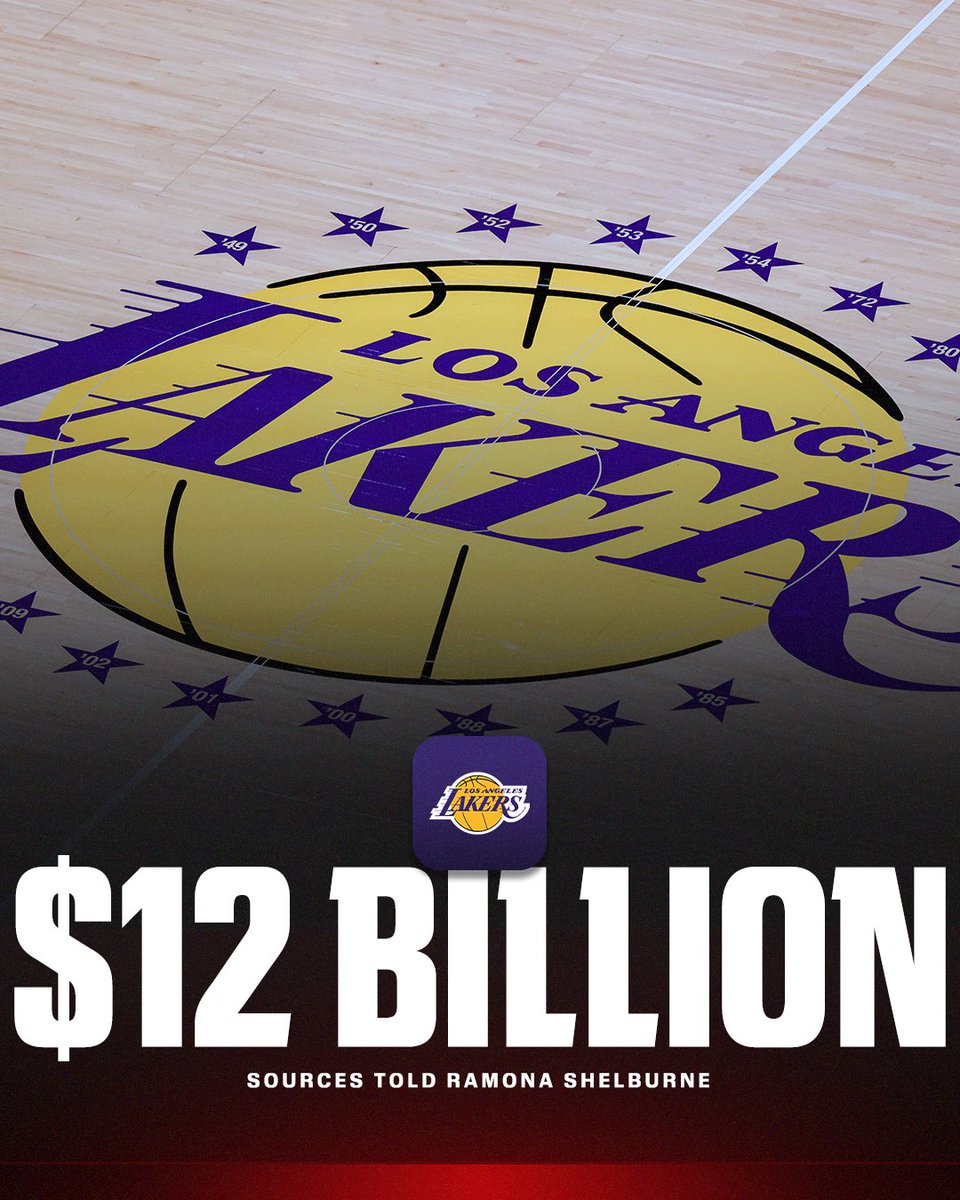
The Lakers are being sold to American businessman Josh Kushner and Bob Iger for over $12 billion, a record-breaking price, multiple sources told @ramonashelburne.
@CodyC64@bigten@SEC For those who want to better understand what’s in the PCSA and how its coalition came together, check out this conversation with one of the bill’s architects, Dary Stone:
https://t.co/VBYN1PP5Vb
An hour on the Protect College Sports Act with one of the men who built the coalition behind it, Dary Stone.
We recorded most of this yesterday afternoon.
Then big progress came out of a two-hour call that ran past midnight last night -- senators, conference commissioners, Notre Dame's AD, the Yankees' president, and Cody Campbell all on the line.
So we jumped back on today for a real-time update, with an aggressive push now underway for a Senate floor vote next week.
Dary's framing of the stakes is blunt. When the NCAA lost its NIL case, no guardrails came with the ruling, so a system meant to let athletes profit from their name, image, and likeness collapsed into an uncapped, pay-for-play free-for-all with no parity, no authority, and nobody in charge.
The bill puts real rules on transfers and eligibility, grants the NCAA antitrust protection to end the endless lawsuits, and lets schools pool their media rights.
He believes that alone could double the revenue reaching universities, which is what keeps women's and Olympic sports alive.
Dary is the former chairman of the board of Baylor and a board member of Saving College Sports. He's run campaigns for governors and presidents, chaired the Texas Banking Commission, and built and sold a real estate company to Cousins Properties before running it.
Today he sits at the center of a coalition of donors, board chairs, and university presidents -- now 60-plus schools -- racing to move this before the August recess.
We discuss:
· Why "the Wild West" undersells it -- it's pro sports with no commissioner
· The 1961 law that could double college sports revenue
· Where the power actually sits: donors, commissioners, media partners
· Why the SEC and Big Ten held out -- and what finally moved them
· Inside the numbers: the rev-share cap, the retention pool, the $51M question
· Private equity circling every athletic department -- and when to say no
· Why it's now or never before the August 7 recess
TIMESTAMPS
0:00 Intro
0:50 Who Is Dary Stone
2:25 What the Protect College Sports Act Does
5:04 How the Bill Came Together
8:14 Nobody's in Charge
12:17 Where the Power Actually Sits
15:47 Cantwell, Cruz, and Midnight Calls
19:25 The 1961 Law That Could Double Revenue
20:54 SEC & Big Ten vs. Everyone Else
23:28 Private Equity Comes Knocking
28:39 Leadership Lessons
41:05 The Live Situation
45:37 Breaking Update: The Holdouts Come In
52:39 Inside the $51M Cap
56:16 The Bill vs. Trump's Executive Order
@CodyC64@RossDellenger@Brett_McMurphy@bmarcello@slmandel
An hour on the Protect College Sports Act with one of the men who built the coalition behind it, Dary Stone.
We recorded most of this yesterday afternoon.
Then big progress came out of a two-hour call that ran past midnight last night -- senators, conference commissioners, Notre Dame's AD, the Yankees' president, and Cody Campbell all on the line.
So we jumped back on today for a real-time update, with an aggressive push now underway for a Senate floor vote next week.
Dary's framing of the stakes is blunt. When the NCAA lost its NIL case, no guardrails came with the ruling, so a system meant to let athletes profit from their name, image, and likeness collapsed into an uncapped, pay-for-play free-for-all with no parity, no authority, and nobody in charge.
The bill puts real rules on transfers and eligibility, grants the NCAA antitrust protection to end the endless lawsuits, and lets schools pool their media rights.
He believes that alone could double the revenue reaching universities, which is what keeps women's and Olympic sports alive.
Dary is the former chairman of the board of Baylor and a board member of Saving College Sports. He's run campaigns for governors and presidents, chaired the Texas Banking Commission, and built and sold a real estate company to Cousins Properties before running it.
Today he sits at the center of a coalition of donors, board chairs, and university presidents -- now 60-plus schools -- racing to move this before the August recess.
We discuss:
· Why "the Wild West" undersells it -- it's pro sports with no commissioner
· The 1961 law that could double college sports revenue
· Where the power actually sits: donors, commissioners, media partners
· Why the SEC and Big Ten held out -- and what finally moved them
· Inside the numbers: the rev-share cap, the retention pool, the $51M question
· Private equity circling every athletic department -- and when to say no
· Why it's now or never before the August 7 recess
TIMESTAMPS
0:00 Intro
0:50 Who Is Dary Stone
2:25 What the Protect College Sports Act Does
5:04 How the Bill Came Together
8:14 Nobody's in Charge
12:17 Where the Power Actually Sits
15:47 Cantwell, Cruz, and Midnight Calls
19:25 The 1961 Law That Could Double Revenue
20:54 SEC & Big Ten vs. Everyone Else
23:28 Private Equity Comes Knocking
28:39 Leadership Lessons
41:05 The Live Situation
45:37 Breaking Update: The Holdouts Come In
52:39 Inside the $51M Cap
56:16 The Bill vs. Trump's Executive Order
@CodyC64@RossDellenger@Brett_McMurphy@bmarcello@slmandel
An hour on the Protect College Sports Act with one of the men who built the coalition behind it, Dary Stone.
We recorded most of this yesterday afternoon.
Then big progress came out of a two-hour call that ran past midnight last night -- senators, conference commissioners, Notre Dame's AD, the Yankees' president, and Cody Campbell all on the line.
So we jumped back on today for a real-time update, with an aggressive push now underway for a Senate floor vote next week.
Dary's framing of the stakes is blunt. When the NCAA lost its NIL case, no guardrails came with the ruling, so a system meant to let athletes profit from their name, image, and likeness collapsed into an uncapped, pay-for-play free-for-all with no parity, no authority, and nobody in charge.
The bill puts real rules on transfers and eligibility, grants the NCAA antitrust protection to end the endless lawsuits, and lets schools pool their media rights.
He believes that alone could double the revenue reaching universities, which is what keeps women's and Olympic sports alive.
Dary is the former chairman of the board of Baylor and a board member of Saving College Sports. He's run campaigns for governors and presidents, chaired the Texas Banking Commission, and built and sold a real estate company to Cousins Properties before running it.
Today he sits at the center of a coalition of donors, board chairs, and university presidents -- now 60-plus schools -- racing to move this before the August recess.
We discuss:
· Why "the Wild West" undersells it -- it's pro sports with no commissioner
· The 1961 law that could double college sports revenue
· Where the power actually sits: donors, commissioners, media partners
· Why the SEC and Big Ten held out -- and what finally moved them
· Inside the numbers: the rev-share cap, the retention pool, the $51M question
· Private equity circling every athletic department -- and when to say no
· Why it's now or never before the August 7 recess
TIMESTAMPS
0:00 Intro
0:50 Who Is Dary Stone
2:25 What the Protect College Sports Act Does
5:04 How the Bill Came Together
8:14 Nobody's in Charge
12:17 Where the Power Actually Sits
15:47 Cantwell, Cruz, and Midnight Calls
19:25 The 1961 Law That Could Double Revenue
20:54 SEC & Big Ten vs. Everyone Else
23:28 Private Equity Comes Knocking
28:39 Leadership Lessons
41:05 The Live Situation
45:37 Breaking Update: The Holdouts Come In
52:39 Inside the $51M Cap
56:16 The Bill vs. Trump's Executive Order
@CodyC64@RossDellenger@Brett_McMurphy@bmarcello@slmandel
@bmarcello@CBSSports Excellent breakdown yesterday from one of the men who has assembled the coalition behind the bill, Dary Stone:
https://t.co/VBYN1PP5Vb
An hour on the Protect College Sports Act with one of the men who built the coalition behind it, Dary Stone.
We recorded most of this yesterday afternoon.
Then big progress came out of a two-hour call that ran past midnight last night -- senators, conference commissioners, Notre Dame's AD, the Yankees' president, and Cody Campbell all on the line.
So we jumped back on today for a real-time update, with an aggressive push now underway for a Senate floor vote next week.
Dary's framing of the stakes is blunt. When the NCAA lost its NIL case, no guardrails came with the ruling, so a system meant to let athletes profit from their name, image, and likeness collapsed into an uncapped, pay-for-play free-for-all with no parity, no authority, and nobody in charge.
The bill puts real rules on transfers and eligibility, grants the NCAA antitrust protection to end the endless lawsuits, and lets schools pool their media rights.
He believes that alone could double the revenue reaching universities, which is what keeps women's and Olympic sports alive.
Dary is the former chairman of the board of Baylor and a board member of Saving College Sports. He's run campaigns for governors and presidents, chaired the Texas Banking Commission, and built and sold a real estate company to Cousins Properties before running it.
Today he sits at the center of a coalition of donors, board chairs, and university presidents -- now 60-plus schools -- racing to move this before the August recess.
We discuss:
· Why "the Wild West" undersells it -- it's pro sports with no commissioner
· The 1961 law that could double college sports revenue
· Where the power actually sits: donors, commissioners, media partners
· Why the SEC and Big Ten held out -- and what finally moved them
· Inside the numbers: the rev-share cap, the retention pool, the $51M question
· Private equity circling every athletic department -- and when to say no
· Why it's now or never before the August 7 recess
TIMESTAMPS
0:00 Intro
0:50 Who Is Dary Stone
2:25 What the Protect College Sports Act Does
5:04 How the Bill Came Together
8:14 Nobody's in Charge
12:17 Where the Power Actually Sits
15:47 Cantwell, Cruz, and Midnight Calls
19:25 The 1961 Law That Could Double Revenue
20:54 SEC & Big Ten vs. Everyone Else
23:28 Private Equity Comes Knocking
28:39 Leadership Lessons
41:05 The Live Situation
45:37 Breaking Update: The Holdouts Come In
52:39 Inside the $51M Cap
56:16 The Bill vs. Trump's Executive Order
@CodyC64@RossDellenger@Brett_McMurphy@bmarcello@slmandel
An hour on the Protect College Sports Act with one of the men who built the coalition behind it, Dary Stone.
We recorded most of this yesterday afternoon.
Then big progress came out of a two-hour call that ran past midnight last night -- senators, conference commissioners, Notre Dame's AD, the Yankees' president, and Cody Campbell all on the line.
So we jumped back on today for a real-time update, with an aggressive push now underway for a Senate floor vote next week.
Dary's framing of the stakes is blunt. When the NCAA lost its NIL case, no guardrails came with the ruling, so a system meant to let athletes profit from their name, image, and likeness collapsed into an uncapped, pay-for-play free-for-all with no parity, no authority, and nobody in charge.
The bill puts real rules on transfers and eligibility, grants the NCAA antitrust protection to end the endless lawsuits, and lets schools pool their media rights.
He believes that alone could double the revenue reaching universities, which is what keeps women's and Olympic sports alive.
Dary is the former chairman of the board of Baylor and a board member of Saving College Sports. He's run campaigns for governors and presidents, chaired the Texas Banking Commission, and built and sold a real estate company to Cousins Properties before running it.
Today he sits at the center of a coalition of donors, board chairs, and university presidents -- now 60-plus schools -- racing to move this before the August recess.
We discuss:
· Why "the Wild West" undersells it -- it's pro sports with no commissioner
· The 1961 law that could double college sports revenue
· Where the power actually sits: donors, commissioners, media partners
· Why the SEC and Big Ten held out -- and what finally moved them
· Inside the numbers: the rev-share cap, the retention pool, the $51M question
· Private equity circling every athletic department -- and when to say no
· Why it's now or never before the August 7 recess
TIMESTAMPS
0:00 Intro
0:50 Who Is Dary Stone
2:25 What the Protect College Sports Act Does
5:04 How the Bill Came Together
8:14 Nobody's in Charge
12:17 Where the Power Actually Sits
15:47 Cantwell, Cruz, and Midnight Calls
19:25 The 1961 Law That Could Double Revenue
20:54 SEC & Big Ten vs. Everyone Else
23:28 Private Equity Comes Knocking
28:39 Leadership Lessons
41:05 The Live Situation
45:37 Breaking Update: The Holdouts Come In
52:39 Inside the $51M Cap
56:16 The Bill vs. Trump's Executive Order
@CodyC64@RossDellenger@Brett_McMurphy@bmarcello@slmandel