Our vision comes from the interaction between our eyes and the EM field all around us. Perhaps consciousness emerges from the interaction between our brains and some kind of elusive consciousness field. It could explain seemingly unrelated phenomena and fits with non-locality.
@PeterDiamandis How about a UAP moonshot. i.e. 10 million to whoever can build a drone that can replicate either the acceleration, maneuverability, or lack of thermal/control surface signatures observed during the Nimitz encounter.
@SimoneSyed "He who controls the past controls the future, he who controls the present controls the past" -Orwell
Given the number of college graduates that now try to reframe the American Flag as a symbol of oppression, it would seem people of that mindset currently control academia.
It’s all over but the shouting. In the span of a single day that will echo through mathematics history, the solution to math’s hardest problem was announced—and then independently verified.
https://t.co/ZyKOawr8t7
Yes, despite the exponentially increasing capabilities of AI, the actual application of these capabilities to the world around us still seems quite linear. The chasm between the status quo and what is currently possible will soon become extremely funny.
In my ongoing quest to find the limits of Opus 5.5, I directed it to audit my old scientific field, theoretical astrophysics. We indexed about 150,000 papers, audited 50,000 for issues, and did progressively more thorough checks on thousands more. We found nearly 1000 major errors that got cited many times, most are still uncorrected. This survey enabled me to estimate the efficacy of peer review for correcting errors (not very good) and to identify dozens of open questions that anyone with spare Claude Max tokens could answer today (.md context files included).
Bottom line: AI can speed up quantitative science by >1000x with no further model improvement required. But I'm seeing no evidence of this being pushed within universities, only academics complaining about labs dropping math proofs.
Among my fellow reformed academic high agency founders, however, several are speed running entire disciplines.
This survey has implications for how science will be run in the very near future. Hint: Academic publishing is dead. It was already a very stupid way to record and promulgate knowledge, and had been so for decades, even before all that publicly funded knowledge was locked behind paywall cartels. Now AIs can generate thousands of novel, correct papers per day, it is no longer meaningful for humans to consider a research paper a "unit of science" or to even bother much with the 99.9% of science which, up to this point, was necessary drudgery. Time to discover something like General Relativity or Evolution every week. LFG!!
Enjoy: https://t.co/BhRxKVvbim
@gmiller Check out the Foundation shoe on Apple as well if you want another even more egregious example of completely inverting the entire core message and idea behind the book series.
If you are in aviation and have been conspicuously avoiding the biggest, craziest, and most mysterious aviation news in modern history with respect to the US government’s acknowledgment of UAPs having dominion over our supposedly controlled military airspace, spare me your sudden intense interest and in-depth analysis of a mysterious private aviation crash.
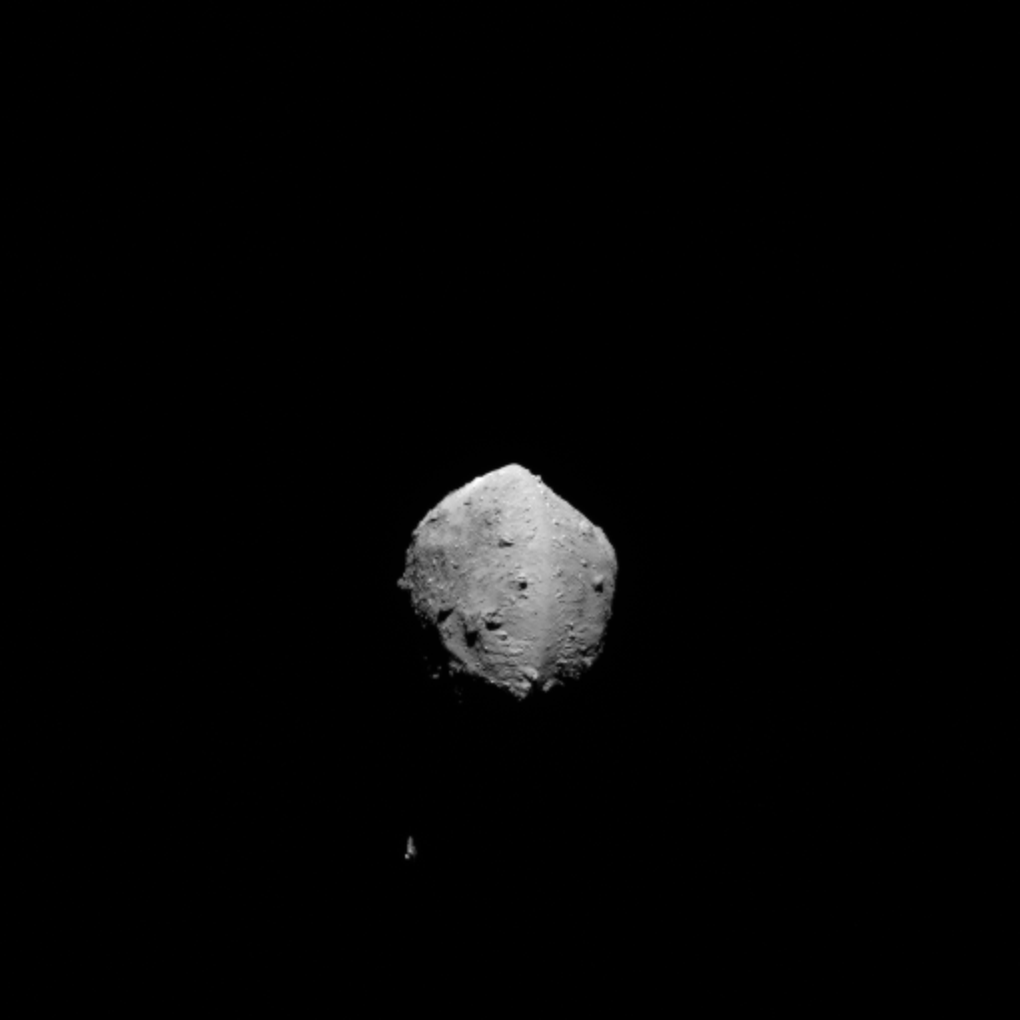
The European Space Agency’s Hera mission for planetary defence has acquired its first close-up of the Didymos binary asteroid system! 🛰️🪨🪨
https://t.co/njlxbN1de4
At the start of 2026, mathematicians were laughing at AI, by mid 2026 mathematicians were asking AI companies to throttle their progress so that their lives could still have meaning. By the end of 2026, that progress wil likely look quaint. Do you get it now? #SingularityIsNow
@cgtwts Like the Turing test before it, the AGI threshold was quietly surpassed relatively long ago, at least in the software world, the implications of that will continue to unfold for some time, just as the those of surpassing the Turing test continue to...