The final part of our State of Consumer 2026 report is here. We get into the Longevity Economy — then close on the thread running through all six forces: a widening trust gap, and the role we intend to play in closing it.
@heyfinlo@RJCcapital It’s profitable and when it’s not it’s a choice to reinvest in growth. It’s valued by revenue because of this dynamic. It’s growing quickly so that’s what makes the most sense to price.
@tanayj@BrendanFoody Or ownership of their own instances of foundation models within mag7; e.g., Meta owns their own private Claude instance
Akin to Foundry/GCP Vertex/Amazon Bedrock
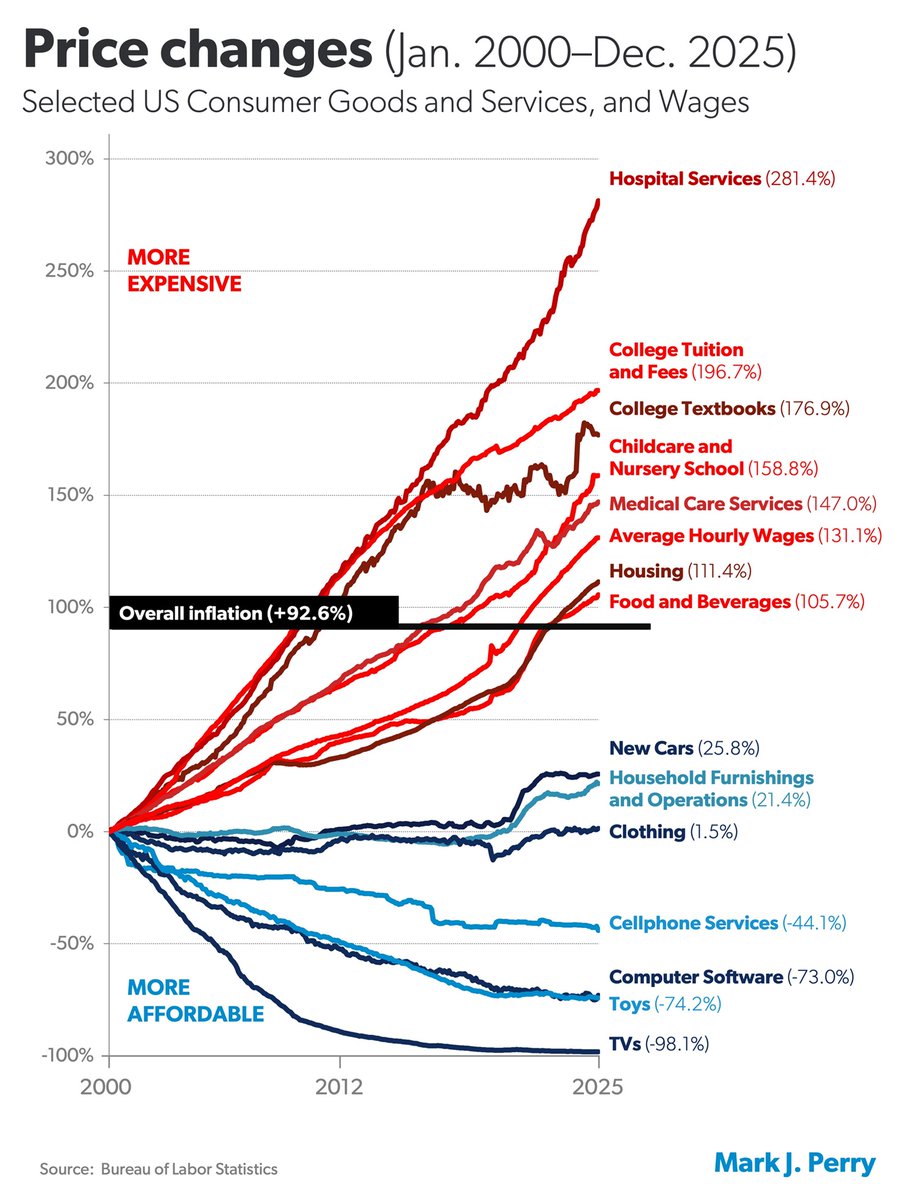
The data says recovery. Daily life for too many Americans says otherwise.
Inside that gap, new categories are delivering real relief — financial and emotional. AI can be part of the solution or part of the problem.
Part 2 of 4.
Until now, physicians using AI in clinic had to assemble the patient’s context themselves. Allergies, comorbidities, medications, prior procedures, copy-pasted in from the chart.
Today we’re announcing a partnership with @CedarsSinai. OpenEvidence now works directly inside Epic, drawing on the patient’s full record and interpreting the medical literature through the lens of that specific patient.
Cedars-Sinai is the first academic health system to deploy patient-aware clinical intelligence at enterprise scale. The clinician asks a complex question in natural language. The answer reflects both the best available evidence and the patient in front of them.
Patient data is never stored after the clinical session or used for any other purpose.
I actually think healthcare today is a glimpse into what the future of most jobs will look like
Healthcare has done two things that I think
- Creating systems to record almost every task happening (e.g. EHR access logs). New AI companies like Artisight are advancing this into physical spaces to monitor patients
- Creating formulas to assign complexity levels to different tasks (e.g. RVU systems)
IMO the future of work will look more like tracking a lot more of what we're doing in our screens/in-person, and then assigning tasks based on complexity
Tomorrow's post is a deeper dive into this + some thoughts around how roles and compensation are going to change as a result.
You can sign up to get it below + if you're on it we'll be announcing some big stuff in the next few weeks
NEW: The SpaceX S-1 filing quietly included healthcare as a major AI use case.
The filing says AI can “aid healthcare professionals in precise medical analysis and diagnosis” alongside accelerating scientific discovery.
Bullish 🚀
I've worked for two Thrive companies over the last decade.
A quick story to give you a sense of how they work:
In 2023, @nworahayogu asked how Thrive could help OpenAI's nascent sales efforts.
I said, "well, exec intros are always helpful"
I expected a few email intros....
Great data. One additional point of nuance is that the headline deals (Scale, Character AI, Inflection, Windsurf) aren’t traditional SPAs. They’re structured as non-exclusive IP licenses + talent packages, avoiding HSR filings entirely. The small undisclosed deals likely can be normal acquisitions because they fall below the threshold. The big ones are where deal structure gets creative.
Was in a meeting with IC member who has 100x more experience than me, and they (correctly) identified that the AI infra company I pitched is “actually a services business, not SaaS” after seeing those gross margins.
I realize this is where all software ends up now.