“Without hesitation, First Lieutenant Chontosh ordered the driver to advance directly at the enemy position enabling his .50 caliber machine gunner to silence the enemy. He then directed his driver into the enemy trench, where he exited his vehicle and began to clear the trench with an M16A2 service rifle and 9 millimeter pistol. His ammunition depleted, First Lieutenant Chontosh, with complete disregard for his safety, twice picked up discarded enemy rifles and continued his ferocious attack. When a Marine following him found an enemy rocket propelled grenade launcher, First Lieutenant Chontosh used it to destroy yet another group of enemy soldiers. When his audacious attack ended, he had cleared over 200 meters of the enemy trench, killing more than 20 enemy soldiers and wounding several others,”
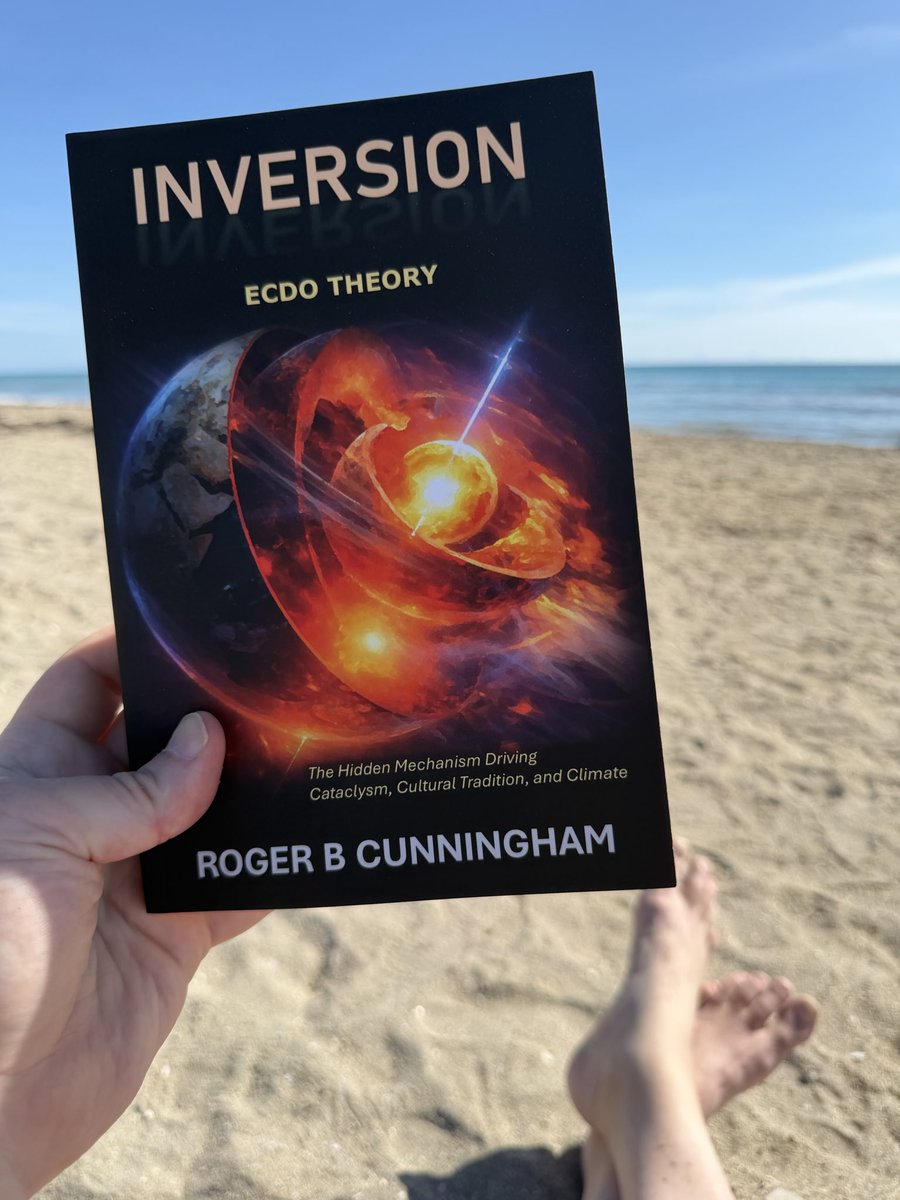
I was expecting this to happen soon - the convergence of AI, space weather, and acknowledgement of solar impact on seismic activity: https://t.co/Z9LTScLJ84
@SunWeatherMan@nobulart
@SamuelMKimzey Villeneuve's constant theme in all his movies is men and women in opposition to each other, or contrasting attitudes and roles. Sometimes the women are weaker (Sicario) or stronger (Arrival) but masculinity/femininity are always central
In the 1980s, California spent around seventy-four million dollars of public money building the Kern Water Bank, a vast underground reservoir meant to hold water for cities to fall back on in a drought.
Today it largely waters almonds and pistachios for a single billionaire couple.
Stewart and Lynda Resnick own the Wonderful Company, the outfit behind Wonderful Pistachios, POM juice, Halos mandarins and Fiji Water, and the biggest nut growers in the United States.
In 1994, across a few days of closed-door talks on the Monterey Peninsula, that taxpayer-built water bank was quietly moved out of public hands. When the dust settled, a Wonderful subsidiary held a 57 percent controlling stake. The same deal let water be banked, traded and sold like a commodity, and stripped cities of the priority they used to hold in a shortage.
So in a dry year the Resnicks can sell water back to the very public that paid to store it, at a premium.
The rest gets poured onto permanent orchards in the semi-arid western San Joaquin Valley, ground that sits close to desert and survives only on imported water. An almond drinks roughly a gallon apiece, and a nut tree cannot be left fallow when the rain fails the way a field of lettuce can. The thirst is locked in for decades.
None of this happened by accident. The Resnicks have poured millions into politicians of both parties and sit among Gavin Newsom's largest donors.
Water in California is supposed to belong to the public. They worked out that whoever owns the land and the paperwork owns the water, and they bought both.
Thirty years ago, I was presenting strategy to a sporting goods client in Pittsburgh, Pennsylvania. It was Thursday afternoon when I finished the client work session and headed to the airport. The plan was to fly home, work Friday, and then drive to my parents' house that evening.
But standing in the airport at the ticket counter, I changed my mind. Instead of going home first, I switched flights and headed directly to my parents' home that night.
My mother and father picked me up at the airport. We had a late dinner, watched an old movie, and I worked into the evening on a proposal due the next day. Eventually, I said goodnight and turned in.
At 3:15 a.m., something awakened me from a deep sleep.
"Go be with your father."
That familiar whisper from the ever-present Source.
I walked into my father's study. He often battled insomnia and stayed up late. He was watching an old Gene Autry singing-cowboy movie from the 1930s. He smiled as I sat down to be with him. I pretended to review the proposal work I had finished hours earlier.
At 3:40 a.m., he suddenly glanced upward with a startled expression. His arms rose momentarily.
Eight seconds, and he was gone.
I pulled him from his chair and immediately began CPR, alternating breaths and compressions while shouting for my mother to awaken and call 911.
When I returned home from the hospital around 6:30 that morning, I knew life would never be the same without him.
I walked back into his study, simply to absorb the scene once more.
On his desk, his old clock had stopped — frozen at 3:40 a.m. It remains so to this very day.
Beside it lay his Bible, opened to the Psalms. A portion of a passage had been underlined from Psalm 17:3:
"You have tested my heart;
You have visited me in the night;
You have tried me and found nothing."
Happy Father's Day.
I still miss you, Dad.
Imagine a vegan influencer posting that same holiday photo instead of me. Six years in, a bacon sandwich and a glass of wine, captioned "it works for me, back to lentils on Monday."
You already know how that ends. The quote-tweets. The betrayal arc. The earnest threads about what it reveals about their character. Dragged through the streets by teatime, the comment section run like a courtroom.
Me? I owned up to cheesecake and wine on holiday and the replies wished me a good trip.
I'm told constantly that carnivore is a cult. I keep waiting to actually meet it. The few dramatic accounts that fit the billing get drowned out every single time by the thousands who simply grasp that the diet is a tool, picked up because it works and put down for a slice of cake without anyone filing for excommunication.
A cult punishes the lapse. This lot told me to enjoy the wine.
Back on steak now, for the record, and still not in hospital. It's horse, as it happens, because that's what the local butcher had hanging up. I assume that's the detail that finally gets me dragged through the streets after all.
@giveashitnature Straight up question, something my sons and I have been debating. Is there a strict definition of "native" ? It's reasonable to believe that many plants have their origins elsewhere if you go back far enough…