"My life seemed like a glass tunnel, through which I was moving faster every year, and at the end of which there was darkness. When I changed my view, the walls of my glass tunnel disappeared. I now live in the open air." - Derek Parfit
Such beautiful words.
AI Economic Indicators is live! This new platform from @DigEconLab tracks the economic impact of AI. I joined @erikbryn and the wonderful team at DEL earlier this year to work on this project, and I'm thrilled to have it out in the wild.
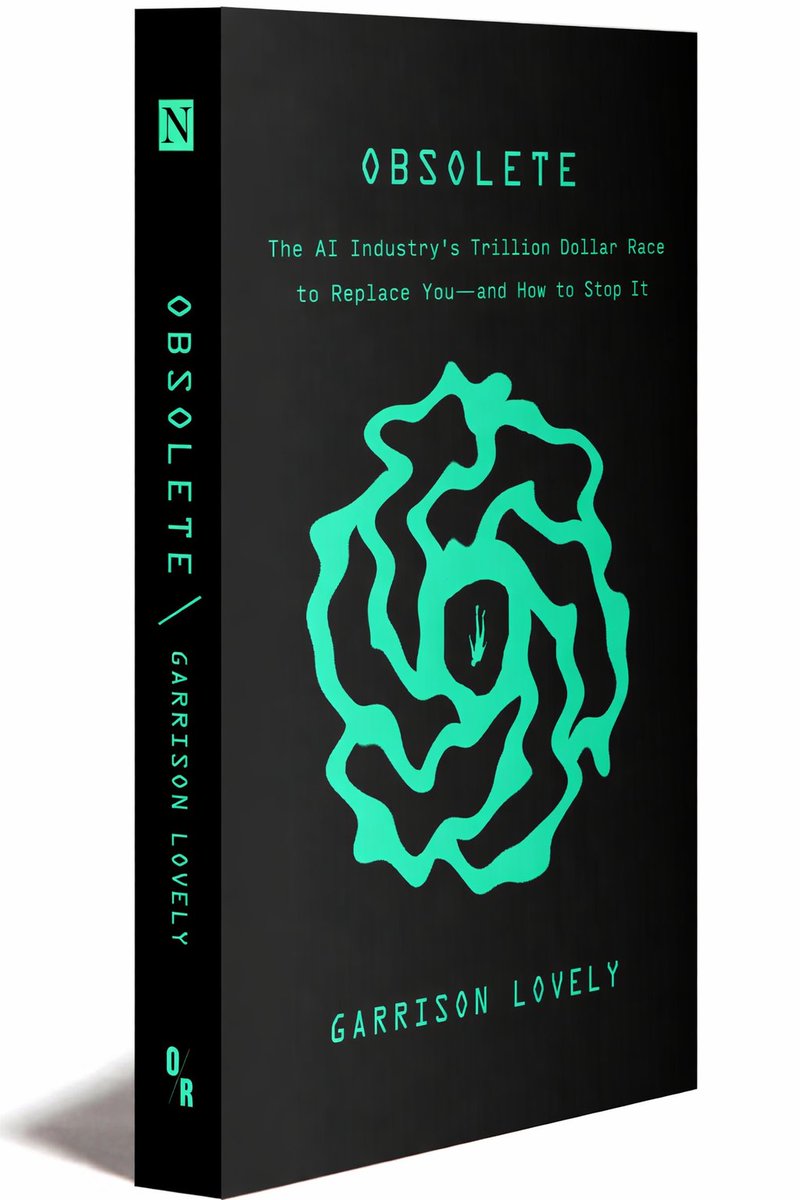
Nearly 3 years ago, I pitched an essay on AI to Jacobin, which became a cover story, which became a book about the biggest project in history:
Obsolete: The AI Industry's Trillion-Dollar Race to Replace You—and How to Stop It
Preorders w/ @orbooks + @thenation ship in May 🧵
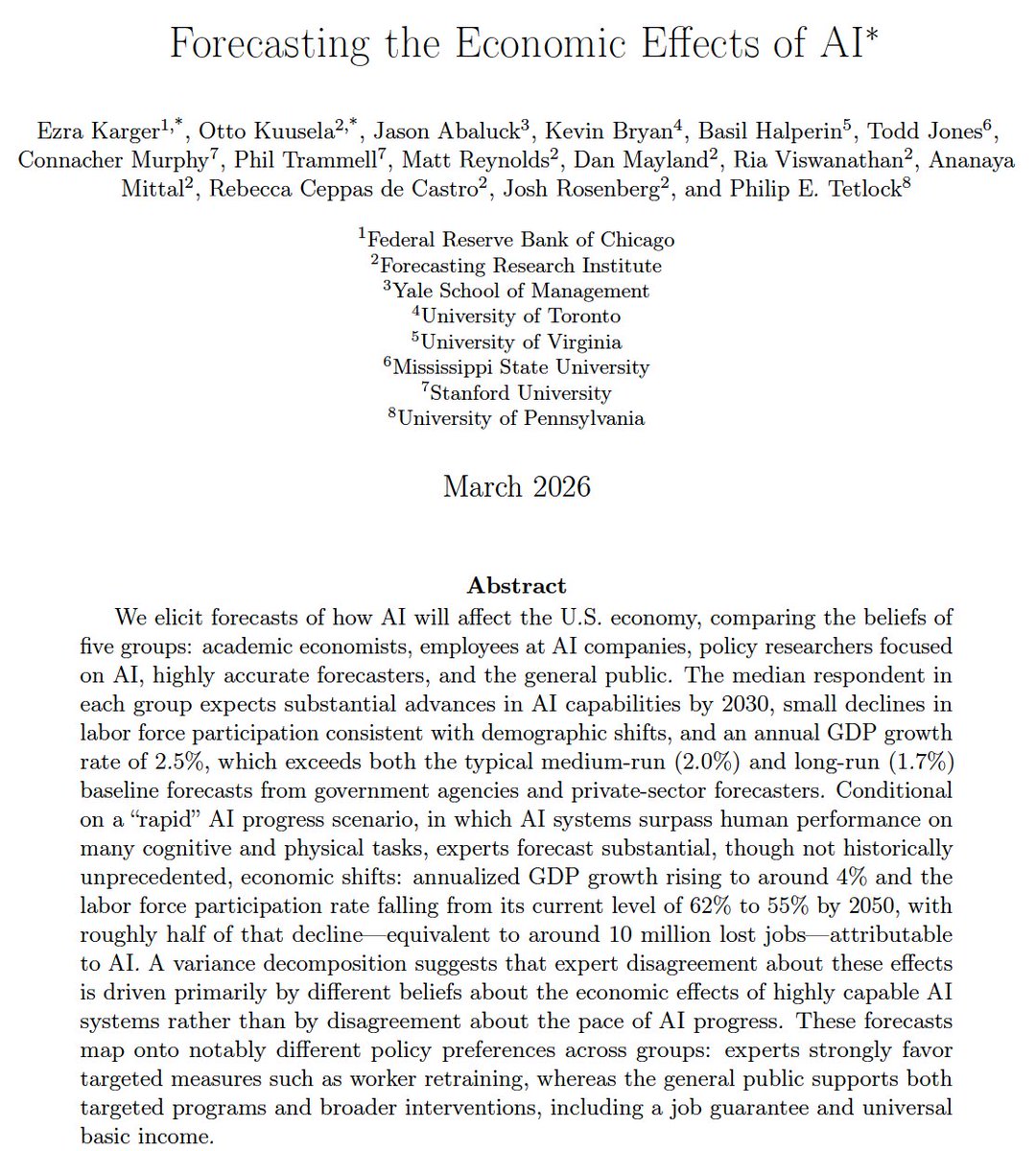
We completed the most comprehensive study of how economists and AI experts think AI will affect the U.S. economy.
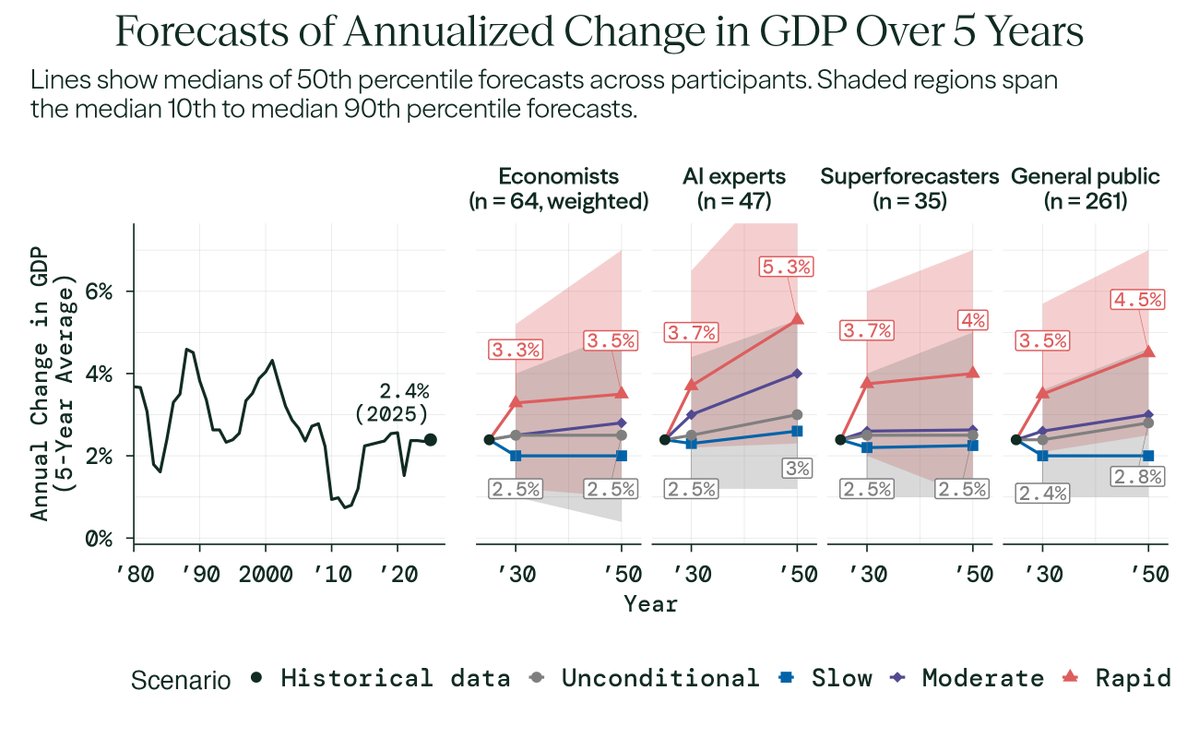
They predict major AI progress—but no dramatic break from economic trends: GDP growth rates similar to today's and a moderate decline in labor force participation.
However, when asked to consider what would happen in a world with extremely rapid progress in AI capabilities by 2030, they predict significant economic impacts by 2050:
• Annualized GDP growth of 3.5% (compared to 2.4% in 2025)
• A labor force participation rate of 55% (roughly 10 million fewer jobs)
• 80% of wealth held by the top 10% (highest since 1939)
🧵 Here's what we found:
1/ OPT OBSERVATORY
I’ve spent the past year creating *the most in-depth public resource* on how the US retains international students after they graduate.
Today, @IFP is releasing never-before-seen data we obtained from ICE via FOIA.
Check it out: https://t.co/La9FD8zN2j
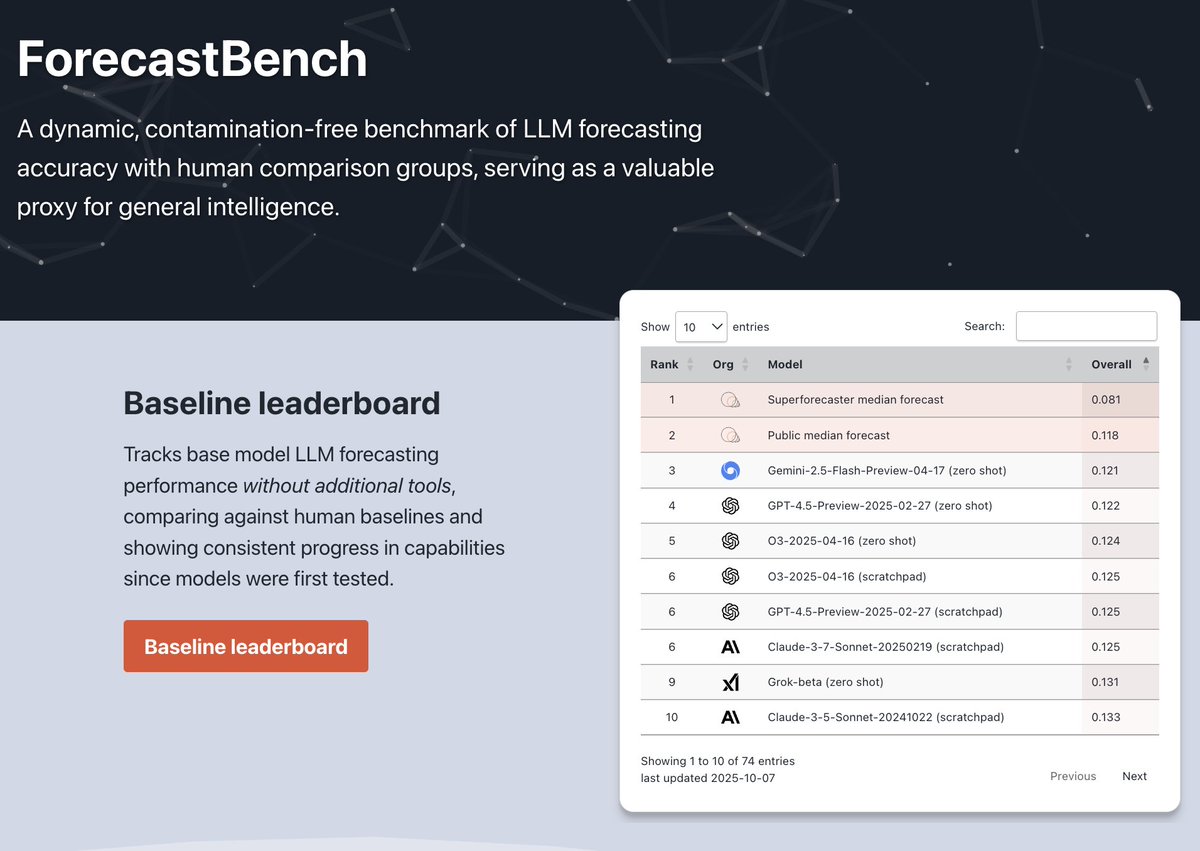
Is AI on track to match top human forecasters at predicting the future?
Today, FRI is releasing an update to ForecastBench—our benchmark that tracks how accurate LLMs are at forecasting real-world events.
A trend extrapolation of our results suggests LLMs will reach superforecaster-level forecasting performance around a year from now.
Here’s what you need to know: 🧵
🔮 When will AI forecasters match top human forecasters at predicting the future?
In a recent @cowenconvos podcast episode, @NateSilver538 said 10–15 years while @tylercowen predicted 1–2 years.
Who was right? Our updated AI forecasting benchmark, ForecastBench, suggests that Tyler Cowen is more likely to be right.
METR is a non-profit research organization, and we are actively fundraising!
We prioritise independence and trustworthiness, which shapes both our research process and our funding options. To date, we have not accepted funding from frontier AI labs.
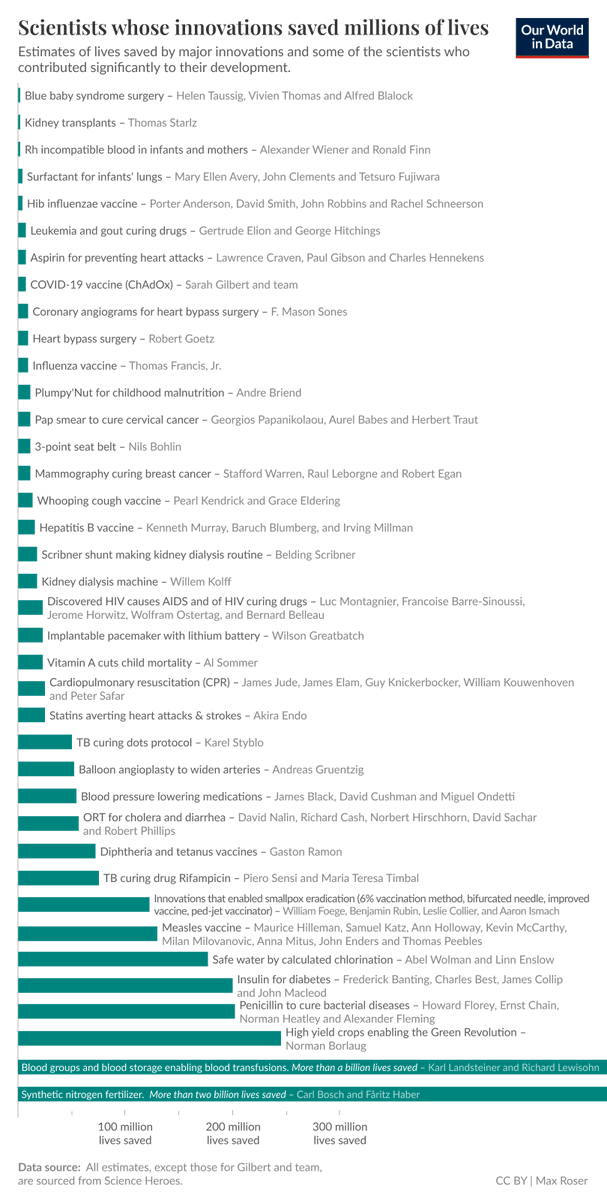
At Our World in Data, we spend much of our time counting deaths.
But it’s just as important to know the number of lives saved — even though it is harder to estimate and involves much larger uncertainty.
My Data Insight today includes this chart of some estimates.
How concerned should we be about AIxBio? We surveyed 46 bio experts and 22 superforecasters:
If LLMs do very well on a virology eval, human-caused epidemics could increase 2-5x.
Most thought this was >5yrs away. In fact, the threshold was hit just *months* after the survey. 🧵
Our new study finds: recent AI capabilities could increase the risk of a human-caused epidemic by 2-5x, according to 46 biosecurity experts and 22 top forecasters.
One critical AI threshold that most experts said wouldn't be hit until 2030 was actually crossed in early 2025. But forecasters predict that enacting mitigations could reduce risk close to baseline. 🧵
Epoch AI just published a dataset of worldwide AI supercomputers (GPU clusters)! After collecting much of the data for this project, I’ve decided to give my official list of the coolest AI supercomputers
Most data centers are boring and look the same, but here are some exceptions
OpenAI and Anthropic *both* warn there's a sig. chance that their next models might hit ChemBio risk thresholds -- and are investing in safeguards to prepare.
Kudos to OpenAI for consistently publishing these eval results, and great to see Anthropic now sharing a lot more too.
PEPFAR is one of the most popular, bipartisan US foreign aid programs. The State Department says it has saved 25million lives, but there isn't much public, independent verification. Last week I invited some friends to a weekend hackatjon to see if PEPFAR's numbers held up.
🚨 New piece in @TIME: AI progress hasn't stalled — it's just become invisible to most people. 🚨
I used to think that AI slowed down a lot in 2024, but I now think I was wrong. Instead, there's a widening gap between AI's public face and its true capabilities. 🧵
1/10 Today we're launching FrontierMath, a benchmark for evaluating advanced mathematical reasoning in AI. We collaborated with 60+ leading mathematicians to create hundreds of original, exceptionally challenging math problems, of which current AI systems solve less than 2%.
@Chris_Said@robertwiblin Thanks for the kind words on this report! Just want to note that I think this BOTEC underestimates the CE. We were just looking at one outcome (>10 million deaths). So, this excludes expected benefits from reducing risk of smaller or larger scale events.
@Chris_Said Thanks for the kind words on this report! Just want to note that I think this BOTEC underestimates the CE. We were just looking at one outcome (>10 million deaths). So, this excludes expected benefits from reducing risk of smaller or larger scale events.
Today we're releasing findings from the largest-ever forecasting survey of nuclear risk experts & superforecasters (151 total), conducted with @OpenNuclear. The median expert saw a 5% chance of catastrophe by 2045 - but identified policies that could cut this risk in half. 🧵