if you like reading about bio on the weekend, wanted to share a few pieces from the vault on:
commercializing bioxAI:
- in autonomous science - https://t.co/YUzo9qstrT
- with data sales - https://t.co/B3ISW1qGxO
- in protein dynamics - https://t.co/zTFMtp5pSU
- genome sequencing - https://t.co/b4C9KyzOgx
closing the human evidence gap:
- with a playbook on how to get it - https://t.co/ht70XOW0fo
- human challenge trials - https://t.co/IvcDTGUUdB
- why we still need clinical trials - https://t.co/zFiYwh9FpJ
biggest questions in biotech - https://t.co/QWohC7EOMX
how to fund/start non-consensus science companies -
https://t.co/4fwtm8QIP8 https://t.co/QjKWsQTeXR
Many more here - https://t.co/jN7yIaHZrZ
"The Bitter Lesson has fully arrived in sequence biology and protein structure. Evo 2, AlphaFold 2 and 3, ProGen3, RFdiffusion".
This sentence has some issues IMO. 1/
"We are about to see more scientific progress in the next 5 years than in the previous century."
Here's a glimpse of what we're seeing through building scientific superintelligence:
➡️Lila's AI has accumulated over 10 trillion tokens of scientific reasoning data, generated entirely by AI models reasoning through the scientific method against experimental results
➡️ For CAR-T cell therapy, one of the most promising frontiers in cancer treatment, Lila's AI explored 300,000 design variants. The traditional approach tested 13.
➡️ For mRNA therapeutics, Lila's AI achieved performance twice as effective as current technologies from leading pharmaceutical companies. Expression lasting 15 days versus the 1.5 days achieved by conventional approaches. A 10x improvement.
This is what happens when the scientific method compounds at machine speed. Read the full article by @PeterDiamandis:
Just out: our forward-looking essay on mRNA “delivery cells”—engineered cells that could locally manufacture mRNA at disease sites within the body and transfer it to target cells in extracellular vesicles.
We have a new writer. And she brings it. Welcome @joliegans to the pages of @corememory.
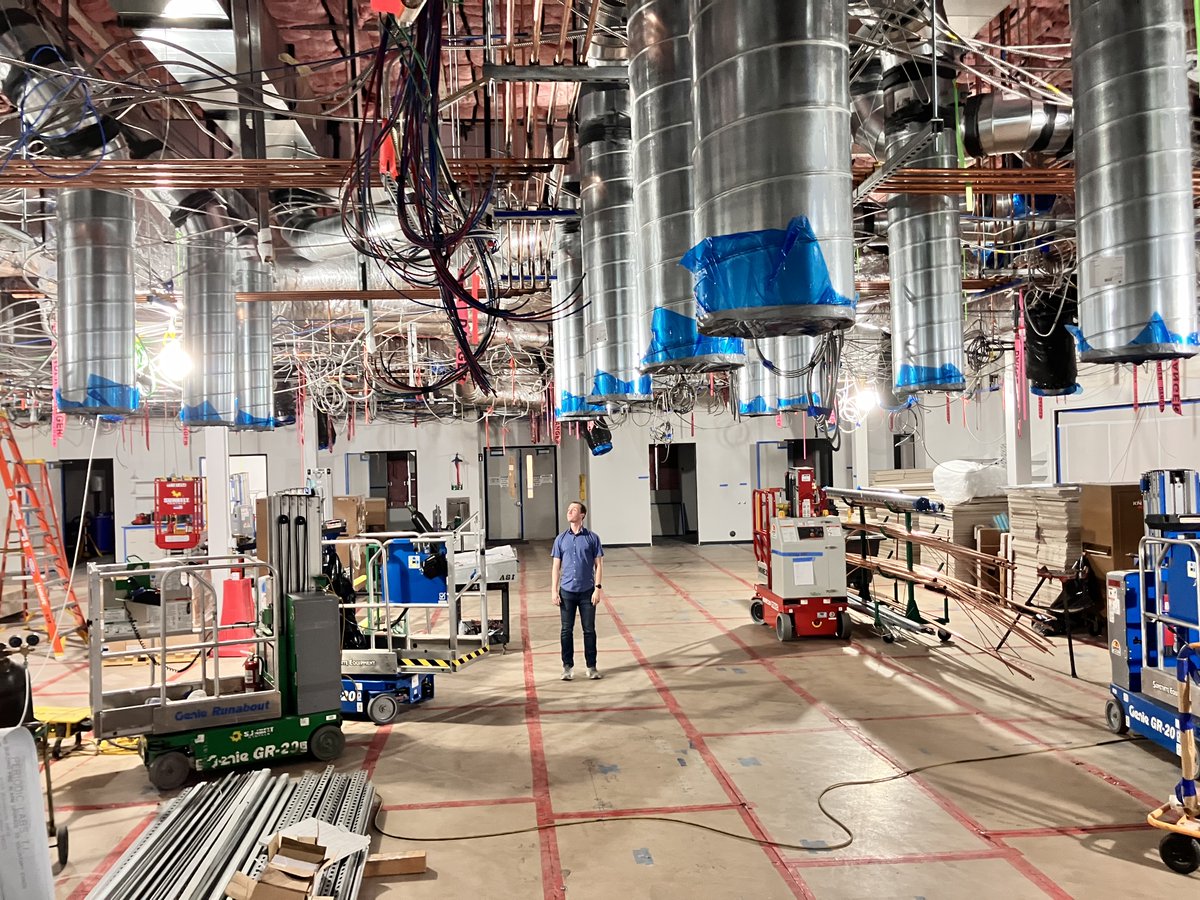
Here's her piece on the most automated bio lab in SF https://t.co/49bNsZeSXX
Someone just built a Claude Code for electronics.
It's called Blueprint. Type what you want to build and it generates wiring diagrams, bills of materials, and step-by-step assembly guides for your Arduino or Raspberry Pi project.
100% Free.
Alex Karnal (@alex_karnal) is the most talented bio and healthcare investor I've ever met.
He's spent 20 years in the industry and says 2025 was the single most exciting year he's seen. The start of a once-in-a-lifetime, trillion-dollar revolution in public health.
He explains how few people realize we already have the medicines to prevent our deadliest diseases. The problem is that almost no one takes them.
There's a population of people born with a mutation that means their bodies don't produce a protein called PCSK9. Their lifetime risk of cardiovascular disease is 88% lower than yours. Pharma turned that genetic advantage into a drug. It's been approved for years, but the number of people taking it is still vanishingly small.
Partly because high cholesterol is a silent killer. You feel nothing, right up until you have a heart attack. And partly because the health system makes it punishingly hard to stay on a preventive drug like a PCSK9 inhibitor. In other words, the medicine works, but the system around it doesn't.
That's what's starting to change, and in this episode, Alex explains why.
We discuss the "health stack" he believes can add a decade to most lives, why oral GLP-1s are breaking every adoption record in pharma, peptides and citizen pharmacology, and what AI is doing to drug discovery.
I wish I had an "Alex" for every interesting topic. We've been having versions of this conversation for over five years, and every single one is as clear and as useful as this one.
Enjoy!
Timestamps:
0:00 Intro
1:00 The State of Modern Medicine
5:00 Designing the Modern Health Stack
12:17 The GLP-1 Inflection Point
19:18 The Biological Mechanisms of GLP-1
30:36 Overcoming Frictions in Healthcare
34:19 Cardiovascular Disease
44:04 Addressing Alzheimer's
47:04 The Future of Cancer
57:33 Drug Discovery
1:05:25 AI and Scientific Super Intelligence
1:14:40 Citizen Pharmacology and the Peptide Movement
1:18:13 Background and Career Journey
1:31:09 Braidwell's Investment Approach
1:33:30 The Kindest Thing
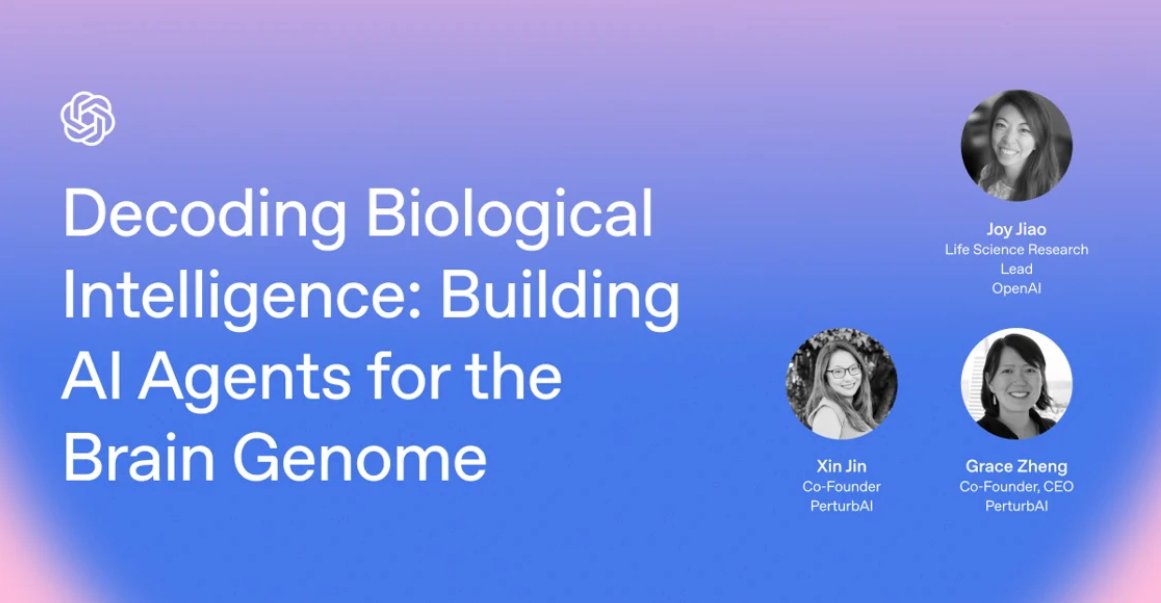
Next Wednesday at the @OpenAI Forum, I’ll be joined by @perturbai_tx to talk about decoding biological intelligence with AI. GPT-Rosalind is an exciting lead-in to that discussion, and we’re especially excited about the data and the collaboration behind! https://t.co/JD4Xf0h9mM
Big news: Our Virtual Embryo project has been selected as a Laude Institute Moonshots Seed Grant winner — chosen from 125 proposals evaluated by 600+ leading researchers.
I’m deeply honored to be recognized alongside a remarkable community that includes Fields Medalists like Terence Tao, Nobel laureates like Michael Kremer, Turing Award winners like Raj Reddy, and creators of transformative tools such as Jupyter Notebook.
We are now building (1) the largest time-resolved organism-level 3D perturbation atlas of mouse embryogenesis; (2) what could become the first digital twin of mammalian embryogenesis — a predictive model of development designed to uncover the mechanisms of congenital disease and ultimately help ensure that every newborn has the healthiest possible start in life.
If this vision excites you, come build with us — alongside Emily Fox, James Zou (@james_y_zou), and Marinka Zitnik (@marinkazitnik).
Thank you to @LaudeInstitute for believing in this vision. We also welcome industrial and philanthropic partners who want to help shape the future of developmental biology and human health.
Fellow X-scientists! Curious who among you might want human iPSCs stably expressing ASAP-family green fluorescent voltage indicators.
Cardiomyocytes and neurons differentiated from these iPSCs can self-report voltage with <1-ms and <1-mV resolution by standard widefield imaging.
50-fold affinity difference. No signal in vitro. Completely different outcomes in vivo. The gap between what we measure and what matters in CAR-T design is still enormous.
4/4 Solid data here though and affinity tuning is clearly an important variable we need to understand better for CAR design. #CARTcell#immunotherapy
https://t.co/JVClHjR1Eq
We are seriously early innings using Agents + Bio FMs to find new medicines. From prompt to therapeutic insight in minutes with our agent: 👇
PROMPT: I want you to use OCTO-VC to find me a new drug target for Leiomyosarcoma patients.
AGENT: On it. Let me pull the sarcoma embedding data and core metadata to find what's differentially expressed in LMS virtual tumor cells versus other sarcoma subtypes.
Here's what I found from the OCTO-VC sarcoma embedding data. I analyzed 321 LMS cores vs 89 non-LMS sarcoma cores (carcinosarcoma + myxofibrosarcoma) using virtual cell gene expression.
*The headline: ##### is your most actionable new drug target.*
Target #1: #####
• Surface protein — ideal for antibody-drug conjugate (ADC) targeting
• [drug XYZ] already exists as a clinical-stage ADC against #####
• Currently in trials for X, Y and Z — LMS could be a new indication
• This is the most immediately translatable finding
...
🦔A researcher invented a fake eye condition called bixonimania, uploaded two obviously fraudulent papers about it to an academic server, and watched major AI systems present it as real medicine within weeks.
The fake papers thanked Starfleet Academy, cited funding from the Professor Sideshow Bob Foundation and the University of Fellowship of the Ring, and stated mid-paper that the entire thing was made up. Google's Gemini told users it was caused by blue light. Perplexity cited its prevalence at one in 90,000 people.
ChatGPT advised users whether their symptoms matched. The fake research was then cited in a peer-reviewed journal that only retracted it after Nature contacted the publisher.
My Take
The researcher made the papers as obviously fake as possible on purpose. The AI systems didn't catch it. Neither did the human researchers who cited it in real journals, which means people are feeding AI-generated references into their work without reading what they're actually citing.
I've covered the FDA using AI for drug review, the NYC hospital CEO ready to replace radiologists, and ChatGPT Health launching this year. All of that is happening in the same environment where a condition funded by a Simpsons character and endorsed by the crew of the Enterprise was being presented as emerging medical consensus. The people making these deployment decisions seem to believe the pipeline from research to AI to patient is more supervised than it actually is. This experiment suggests it isn't supervised much at all.
Hedgie🤗
https://t.co/8Kg8FOrgHW