🚨High Court rejects bid to declare life imprisonment unconstitutional.
In a petition filed by Peter Kinyua Mwangi, the High Court at Milimani, through Justice R.E. Aburili, declined to declare life imprisonment unconstitutional or substitute a life sentence with a definite custodial term.
Mwangi had been convicted of murder in February 2015 and sentenced to death. His conviction was subsequently upheld by the Court of Appeal.
The death sentence was later commuted to life imprisonment through the President’s exercise of the power of mercy under Article 133 of the Constitution.
Mwangi petitioned the High Court seeking a declaration that life imprisonment was unconstitutional or, alternatively, an order replacing his sentence with a definite prison term.
He also asked the Court to consider his time in custody, rehabilitation and personal reform, and to order his release or resentencing.
What did the Court determine?
1. Courts cannot unilaterally redefine life imprisonment.
Justice Aburili relied on the Supreme Court’s decision in Republic v Ayako [2025] KESC 20 (KLR).
In that decision, the Supreme Court held that prescribing a fixed-term equivalent of life imprisonment, or determining eligibility for release, is a legislative rather than judicial function.
Consequently, courts cannot simply interpret life imprisonment as a specific number of years in the absence of an enabling legal framework.
2. Constitutional petitions cannot be used to reopen concluded appeals.
The Court found that Mwangi’s conviction and sentence had already been considered through the judicial process.
Article 165(6) of the Constitution does not empower the High Court to exercise supervisory jurisdiction over courts of equal or superior status.
The Court therefore declined to revisit decisions already determined through those proceedings.
3. Judicial finality limits repeated attempts at resentencing.
The Court applied the doctrine of functus officio, which generally prevents a court from reopening a matter after it has conclusively discharged its judicial function, except where the law permits.
Mwangi’s application could not be used to circumvent the finality of the earlier proceedings.
4. Rehabilitation does not automatically create an entitlement to release.
The Court acknowledged Mwangi’s rehabilitation, educational achievements, remorse and personal reform during imprisonment.
However, it held that these circumstances did not confer jurisdiction to replace his life sentence or order his release without an appropriate legal basis.
What have other courts held?
In Republic v Ayako [2025] KESC 20 (KLR), the Supreme Court overturned a Court of Appeal decision that had converted life imprisonment into a 30-year sentence.
The Supreme Court emphasised that defining the duration and operation of life sentences falls within Parliament’s legislative mandate.
The broader constitutional question
On one side, the justice system must respect the finality of criminal proceedings, statutory sentencing frameworks and the separation of powers.
On the other side, constitutional values of human dignity, rehabilitation and fair punishment raise important questions about the continued operation of indeterminate sentences.
Key takeaway: Courts cannot create fixed-term equivalents for life imprisonment where that function belongs to the legislature.
Rehabilitation may be relevant to lawful sentencing or review mechanisms, but it does not, by itself, empower a court to disregard jurisdictional limits or reopen final judgments.
Follow @Lexken_EMSLaw for practical legal insights on criminal law, constitutional litigation and sentencing jurisprudence in Kenya.
🚨 Can traffic police demand towing fees without an invoice, identifiable payee or clear basis for calculating the charges? The High Court says no.
In Waithera v Officer Commanding Juja Police Station & 2 others [2026] KEHC 18057 (KLR), the High Court at Thika declared a KSh 8,000 towing-fee demand unconstitutional for being arbitrary, opaque and procedurally deficient.
The dispute arose after David Kimani Waithera’s vehicle was towed to Juja Police Station following his arrest during a traffic operation.
When he sought its release, police demanded KSh 8,000 in towing charges without providing an invoice, an identifiable payee or a clear explanation of how the amount was calculated.
Police maintained that the charges were based on standard Automobile Association (AA) rates.
What did the Court determine?
1. Police may lawfully arrange for vehicles to be towed.
Justice Lawrence Mugambi recognised that Sections 106 and 107 of the Traffic Act permit police to remove and detain vehicles in specified circumstances.
However, the authority to tow vehicles does not permit arbitrary financial demands.
2. Towing charges must be transparent and ascertainable.
The Court held that motorists should not be subjected to charges determined solely at the discretion of police officers or private towing operators.
Such charges should be capable of verification through publicly known rates or a standard calculation formula.
3. Engaging private towing operators is not inherently unlawful.
The Court acknowledged that requiring formal prequalification of every towing operator may be impractical during urgent traffic operations.
Nevertheless, the use of private operators must not expose motorists to unjustified charges.
4. Arbitrary charges can violate constitutional rights.
The Court found that the unexplained KSh 8,000 demand violated Articles 10, 40 and 232 of the Constitution, particularly the principles of transparency, accountability and protection against arbitrary deprivation of property.
What orders did the Court issue?
The Court partially allowed the petition and suspended the KSh 8,000 demand.
It directed that the traffic court determine, upon conclusion of the pending traffic case, whether towing charges are payable and, if so, the amount supported by evidence.
The KSh 8,000 already deposited in court will remain held pending further directions.
The broader constitutional question
On one side, police require operational discretion to enforce traffic laws and protect road users.
On the other side, motorists are entitled to transparent, predictable and legally justified charges when public authority is exercised.
Key takeaway: Police may arrange vehicle towing where legally justified, but the resulting charges must be transparent, verifiable and supported by a lawful basis.
Follow @Lexken_EMSLaw for practical legal insights on constitutional law, administrative justice and traffic regulation in Kenya.
🚨🚨The 𝗛𝗶𝗴𝗵 𝗖𝗼𝘂𝗿𝘁 𝗮𝘁 𝗠𝗮𝗸𝘂𝗲𝗻𝗶 in 𝗪𝗠 (𝗠𝗶𝗻𝗼𝗿 𝗦𝘂𝗶𝗻𝗴 𝘁𝗵𝗿𝗼𝘂𝗴𝗵 𝗛𝗶𝘀 𝗠𝗼𝘁𝗵𝗲𝗿 𝗮𝗻𝗱 𝗡𝗲𝘅𝘁 𝗼𝗳 𝗙𝗿𝗶𝗲𝗻𝗱 𝗥𝗠𝗞) 𝘃 𝗝𝗪𝗪 (𝗙𝗮𝗺𝗶𝗹𝘆 𝗔𝗽𝗽𝗲𝗮𝗹 𝗘𝟬𝟬𝟯 𝗼𝗳 𝟮𝟬𝟮𝟰) [𝟮𝟬𝟮𝟱] 𝗞𝗘𝗛𝗖 𝟭𝟵𝟭𝟲𝟰 (𝗞𝗟𝗥) held that a father who consents to cater for all of his child’s educational needs cannot later limit that duty to a fixed fee amount and that a mother who pays those costs after the father fails to engage is entitled to reimbursement.
The Court held that equal parental responsibility under 𝗔𝗿𝘁𝗶𝗰𝗹𝗲 𝟱𝟯 𝗼𝗳 𝘁𝗵𝗲 𝗖𝗼𝗻𝘀𝘁𝗶𝘁𝘂𝘁𝗶𝗼𝗻 and the 𝗖𝗵𝗶𝗹𝗱𝗿𝗲𝗻 𝗔𝗰𝘁 applies fully to children 𝗯𝗼𝗿𝗻 𝗼𝘂𝘁𝘀𝗶𝗱𝗲 𝗺𝗮𝗿𝗿𝗶𝗮𝗴𝗲 and that 𝗪𝗵𝗮𝘁𝘀𝗔𝗽𝗽 𝗺𝗲𝘀𝘀𝗮𝗴𝗲𝘀 constitute 𝘃𝗮𝗹𝗶𝗱 𝗲𝘃𝗶𝗱𝗲𝗻𝗰𝗲 of consultation on school transfers.
The matter began with a 𝟮𝟬𝟭𝟵 consent in the 𝗖𝗵𝗶𝗹𝗱𝗿𝗲𝗻’𝘀 𝗖𝗼𝘂𝗿𝘁 under which the 𝗳𝗮𝘁𝗵𝗲𝗿 agreed to meet 𝗲𝘃𝗲𝗿𝘆𝘁𝗵𝗶𝗻𝗴 pertaining to the minor’s 𝗲𝗱𝘂𝗰𝗮𝘁𝗶𝗼𝗻 while the mother handled 𝗼𝘁𝗵𝗲𝗿 𝗻𝗲𝗲𝗱𝘀. When the child was moving to junior secondary school, the mother repeatedly sought the father’s input through 𝗪𝗵𝗮𝘁𝘀𝗔𝗽𝗽. He replied only briefly, confirmed that fees at the old school were cleared and did not otherwise engage. The mother then transferred the child in 𝗝𝗮𝗻𝘂𝗮𝗿𝘆 𝟮𝟬𝟮𝟰, paid the entry costs herself (including through informal loans) and sought reimbursement. The 𝘁𝗿𝗶𝗮𝗹 𝗰𝗼𝘂𝗿𝘁 declined the 𝗿𝗲𝗶𝗺𝗯𝘂𝗿𝘀𝗲𝗺𝗲𝗻𝘁 𝗰𝗹𝗮𝗶𝗺 and capped the father’s ongoing contribution at the old day-scholar rate of 𝗞𝗦𝗵𝘀 𝟮𝟬,𝟬𝟬𝟬, with the mother meeting any balance.
On appeal, 𝗝𝘂𝘀𝘁𝗶𝗰𝗲 𝗧.𝗠. 𝗠𝗮𝘁𝗵𝗲𝗸𝗮 found that the transfer was neither secretive nor mid-term. The 𝗪𝗵𝗮𝘁𝘀𝗔𝗽𝗽 𝗿𝗲𝗰𝗼𝗿𝗱 showed the father was aware of the move. The Court 𝗿𝗲𝗷𝗲𝗰𝘁𝗲𝗱 the father’s argument that 𝗵𝗶𝘀 𝗹𝗶𝗺𝗶𝘁𝗲𝗱 𝗶𝗻𝘃𝗼𝗹𝘃𝗲𝗺𝗲𝗻𝘁 was justified because the 𝗰𝗵𝗶𝗹𝗱 𝘄𝗮𝘀 𝗯𝗼𝗿𝗻 𝗱𝘂𝗿𝗶𝗻𝗴 𝗵𝗶𝘀 𝗺𝗮𝗿𝗿𝗶𝗮𝗴𝗲 𝘁𝗼 𝗮𝗻𝗼𝘁𝗵𝗲𝗿 𝘄𝗼𝗺𝗮𝗻 𝗮𝗻𝗱 𝗵𝗲 𝗮𝗹𝗿𝗲𝗮𝗱𝘆 supported other children. Article 𝟱𝟯(𝟭)(𝗲) and (𝟮) 𝗼𝗳 𝘁𝗵𝗲 𝗖𝗼𝗻𝘀𝘁𝗶𝘁𝘂𝘁𝗶𝗼𝗻 together with the 𝗖𝗵𝗶𝗹𝗱𝗿𝗲𝗻 𝗔𝗰𝘁 give every child an equal right to 𝗽𝗮𝗿𝗲𝗻𝘁𝗮𝗹 𝗰𝗮𝗿𝗲 and protection from both parents whether or not the parents are married to each other. An 𝗼𝗽𝗲𝗻-𝗲𝗻𝗱𝗲𝗱 𝗰𝗼𝗻𝘀𝗲𝗻𝘁 placing the full educational burden on the father could not be rewritten by a later order imposing a monetary ceiling that was not in the child’s best interests.
The Court further held that the father had failed to comply with the 𝗼𝗿𝗶𝗴𝗶𝗻𝗮𝗹 𝗰𝗼𝗻𝘀𝗲𝗻𝘁 and subsequent directions to present himself at the 𝘀𝗰𝗵𝗼𝗼𝗹 and ascertain the child’s full needs (𝘂𝗻𝗶𝗳𝗼𝗿𝗺𝘀, 𝘀𝘁𝗮𝘁𝗶𝗼𝗻𝗲𝗿𝘆, 𝗮𝗻𝗱 𝗼𝘁𝗵𝗲𝗿 𝗿𝗲𝗾𝘂𝗶𝗿𝗲𝗺𝗲𝗻𝘁𝘀). Once the mother established that she had spent money on those 𝗲𝗱𝘂𝗰𝗮𝘁𝗶𝗼𝗻𝗮𝗹 𝗻𝗲𝗲𝗱𝘀, she was entitled to 𝗿𝗲𝗶𝗺𝗯𝘂𝗿𝘀𝗲𝗺𝗲𝗻𝘁 regardless of the source of the funds. The matter was remitted to the 𝗖𝗵𝗶𝗹𝗱𝗿𝗲𝗻’𝘀 𝗖𝗼𝘂𝗿𝘁 for priority assessment of the exact sum to be 𝗿𝗲𝗽𝗮𝗶𝗱, the proper sharing of any boarding costs and determination of the original application on its merits.
The parents were also urged to enter a 𝗽𝗮𝗿𝗲𝗻𝘁𝗮𝗹-𝗿𝗲𝘀𝗽𝗼𝗻𝘀𝗶𝗯𝗶𝗹𝗶𝘁𝘆 𝗮𝗴𝗿𝗲𝗲𝗺𝗲𝗻𝘁 𝘂𝗻𝗱𝗲𝗿 𝘀𝗲𝗰𝘁𝗶𝗼𝗻 𝟯𝟯 of the 𝗖𝗵𝗶𝗹𝗱𝗿𝗲𝗻 𝗔𝗰𝘁 and to consider mediation.
This decision clarifies that 𝗱𝗶𝗴𝗶𝘁𝗮𝗹 𝗰𝗼𝗺𝗺𝘂𝗻𝗶𝗰𝗮𝘁𝗶𝗼𝗻 can satisfy the requirement of consultation that non-engagement does not shield a parent from liability and that courts will enforce open 𝗲𝗱𝘂𝗰𝗮𝘁𝗶𝗼𝗻𝗮𝗹 𝗰𝗼𝗻𝘀𝗲𝗻𝘁𝘀 in line with the 𝗽𝗮𝗿𝗮𝗺𝗼𝘂𝗻𝘁𝗰𝘆 of the child’s best interests. Parents who step in to cover a co-parent’s 𝗱𝗲𝗳𝗮𝘂𝗹𝘁𝗲𝗱 𝗲𝗱𝘂𝗰𝗮𝘁𝗶𝗼𝗻𝗮𝗹 𝗼𝗯𝗹𝗶𝗴𝗮𝘁𝗶𝗼𝗻𝘀 should keep clear records as those records support recovery. The ruling reinforces that a child’s right to 𝗲𝗱𝘂𝗰𝗮𝘁𝗶𝗼𝗻 and 𝗲𝗾𝘂𝗮𝗹 𝗽𝗮𝗿𝗲𝗻𝘁𝗮𝗹 𝗰𝗮𝗿𝗲 does not depend on the 𝗽𝗮𝗿𝗲𝗻𝘁𝘀’ 𝗽𝗲𝗿𝘀𝗼𝗻𝗮𝗹 𝗿𝗲𝗹𝗮𝘁𝗶𝗼𝗻𝘀𝗵𝗶𝗽 𝗼𝗿 𝗺𝗮𝗿𝗶𝘁𝗮𝗹 𝘀𝘁𝗮𝘁𝘂𝘀.
#law #kenya #legal #children #parentalresponsibility #familycourt
🚨🚨The 𝗛𝗶𝗴𝗵 𝗖𝗼𝘂𝗿𝘁 𝗮𝘁 𝗘𝗹𝗱𝗼𝗿𝗲𝘁 in 𝗥𝗲𝗽𝘂𝗯𝗹𝗶𝗰 𝘃 𝗦𝗵𝗮𝗯𝗮𝗻 𝗠𝗮𝗿𝗿𝗼𝘄 𝗕𝗶𝗹𝗮𝗹𝗶 (𝗖𝗿𝗶𝗺𝗶𝗻𝗮𝗹 𝗖𝗮𝘀𝗲 𝟮𝟯 𝗼𝗳 𝟮𝟬𝟮𝟬) [𝟮𝟬𝟮𝟰] 𝗞𝗘𝗛𝗖 𝟭𝟯𝟯𝟮𝟲 (𝗞𝗟𝗥) held that when sentencing a parent for 𝗺𝗮𝗻𝘀𝗹𝗮𝘂𝗴𝗵𝘁𝗲𝗿 arising from domestic violence, the best interests of the surviving children can justify a 𝗻𝗼𝗻-𝗰𝘂𝘀𝘁𝗼𝗱𝗶𝗮𝗹 𝘀𝗲𝗻𝘁𝗲𝗻𝗰𝗲 even where the offence involves a serious breach of trust and occurs against the backdrop of rising femicide. 𝗝𝘂𝘀𝘁𝗶𝗰𝗲 𝗥.𝗡. 𝗡𝘆𝗮𝗸𝘂𝗻𝗱𝗶 sentenced the accused to three years’ 𝗽𝗿𝗼𝗯𝗮𝘁𝗶𝗼𝗻 rather than 𝗶𝗺𝗽𝗿𝗶𝘀𝗼𝗻𝗺𝗲𝗻𝘁 so that he could continue providing 𝗽𝗮𝗿𝗲𝗻𝘁𝗮𝗹 𝗰𝗮𝗿𝗲 𝘁𝗼 𝗵𝗶𝘀 𝘁𝗵𝗿𝗲𝗲 𝘆𝗼𝘂𝗻𝗴 𝗰𝗵𝗶𝗹𝗱𝗿𝗲𝗻.
The accused had 𝗼𝗿𝗶𝗴𝗶𝗻𝗮𝗹𝗹𝘆 been charged with 𝗺𝘂𝗿𝗱𝗲𝗿. Under a 𝗽𝗹𝗲𝗮-𝗯𝗮𝗿𝗴𝗮𝗶𝗻𝗶𝗻𝗴 𝗮𝗴𝗿𝗲𝗲𝗺𝗲𝗻𝘁 he pleaded guilty to 𝗺𝗮𝗻𝘀𝗹𝗮𝘂𝗴𝗵𝘁𝗲𝗿 contrary to 𝘀𝗲𝗰𝘁𝗶𝗼𝗻 𝟮𝟬𝟮 as read with 𝘀𝗲𝗰𝘁𝗶𝗼𝗻 𝟮𝟬𝟱 of the Penal Code. On 𝟮𝟯 𝗠𝗮𝗿𝗰𝗵 𝟮𝟬𝟮𝟬 he and his wife argued after he 𝘀𝗮𝘄 𝘃𝗶𝗱𝗲𝗼𝘀 that appeared to show her with another man. When she denied being the 𝗽𝗲𝗿𝘀𝗼𝗻 𝗶𝗻 𝘁𝗵𝗲 𝘃𝗶𝗱𝗲𝗼𝘀 he beat her with a 𝘄𝗮𝗹𝗸𝗶𝗻𝗴 𝘀𝘁𝗶𝗰𝗸 until she 𝗮𝗱𝗺𝗶𝘁𝘁𝗲𝗱 𝗮 𝗽𝗿𝗲𝘃𝗶𝗼𝘂𝘀 𝗿𝗲𝗹𝗮𝘁𝗶𝗼𝗻𝘀𝗵𝗶𝗽 𝘄𝗶𝘁𝗵 𝗵𝗲𝗿 𝗲𝘅-𝗯𝗼𝘆𝗳𝗿𝗶𝗲𝗻𝗱. He then gave her pain-killers. Later, when she complained of severe pain, he took her to 𝗖𝗵𝗲𝗽𝗸𝗶𝗴𝗲𝗻 𝗛𝗲𝗮𝗹𝘁𝗵 𝗖𝗲𝗻𝘁𝗿𝗲 where she died about an hour later. The court 𝗰𝗼𝗻𝘃𝗶𝗰𝘁𝗲𝗱 𝗵𝗶𝗺 𝗼𝗻 𝗵𝗶𝘀 𝗼𝘄𝗻 𝗽𝗹𝗲𝗮 𝗼𝗳 𝗴𝘂𝗶𝗹𝘁𝘆.
𝗦𝗼𝗰𝗶𝗮𝗹 𝗶𝗻𝗾𝘂𝗶𝗿𝘆 𝗿𝗲𝗽𝗼𝗿𝘁𝘀 from the 𝗽𝗿𝗼𝗯𝗮𝘁𝗶𝗼𝗻 𝗼𝗳𝗳𝗶𝗰𝗲𝗿 and the children’s officer became central to the sentence. The children, aged 𝟭𝟰, 𝟭𝟮 and 𝟴, requested to remain with their father. Both reports recommended a 𝗻𝗼𝗻-𝗰𝘂𝘀𝘁𝗼𝗱𝗶𝗮𝗹 𝘀𝗲𝗻𝘁𝗲𝗻𝗰𝗲 so that the children would not lose their only 𝘀𝘂𝗿𝘃𝗶𝘃𝗶𝗻𝗴 𝗯𝗶𝗼𝗹𝗼𝗴𝗶𝗰𝗮𝗹 𝗽𝗮𝗿𝗲𝗻𝘁 while the probation office would 𝗺𝗼𝗻𝗶𝘁𝗼𝗿 𝗽𝗮𝗿𝗲𝗻𝘁𝗶𝗻𝗴, provide anger-management and grief counselling and facilitate 𝗿𝗲𝗰𝗼𝗻𝗰𝗶𝗹𝗶𝗮𝘁𝗶𝗼𝗻 with the deceased’s family.
In imposing 𝘁𝗵𝗿𝗲𝗲 𝘆𝗲𝗮𝗿𝘀’ 𝗽𝗿𝗼𝗯𝗮𝘁𝗶𝗼𝗻 the court balanced the purposes of sentencing (𝗿𝗲𝘁𝗿𝗶𝗯𝘂𝘁𝗶𝗼𝗻, 𝗱𝗲𝘁𝗲𝗿𝗿𝗲𝗻𝗰𝗲, 𝗿𝗲𝗵𝗮𝗯𝗶𝗹𝗶𝘁𝗮𝘁𝗶𝗼𝗻, 𝗿𝗲𝘀𝘁𝗼𝗿𝗮𝘁𝗶𝘃𝗲 𝗷𝘂𝘀𝘁𝗶𝗰𝗲 and 𝗱𝗲𝗻𝘂𝗻𝗰𝗶𝗮𝘁𝗶𝗼𝗻) against the 𝗽𝗮𝗿𝗮𝗺𝗼𝘂𝗻𝘁𝗰𝘆 of the 𝗰𝗵𝗶𝗹𝗱𝗿𝗲𝗻’𝘀 𝗯𝗲𝘀𝘁 𝗶𝗻𝘁𝗲𝗿𝗲𝘀𝘁𝘀. It applied the factors set out by the 𝗦𝘂𝗽𝗿𝗲𝗺𝗲 𝗖𝗼𝘂𝗿𝘁 in 𝗙𝗿𝗮𝗻𝗰𝗶𝘀 𝗞𝗮𝗿𝗶𝗼𝗸𝗼 𝗠𝘂𝗿𝘂𝗮𝘁𝗲𝘁𝘂 & 𝗮𝗻𝗼𝘁𝗵𝗲𝗿 𝘃 𝗥𝗲𝗽𝘂𝗯𝗹𝗶𝗰 [𝟮𝟬𝟭𝟳] 𝗲𝗞𝗟𝗥 and drew on the 𝗖𝗵𝗶𝗹𝗱𝗿𝗲𝗻 𝗔𝗰𝘁, 𝗔𝗿𝘁𝗶𝗰𝗹𝗲 𝟱𝟯 of the Constitution, the 𝗖𝗼𝗻𝘃𝗲𝗻𝘁𝗶𝗼𝗻 𝗼𝗻 𝘁𝗵𝗲 𝗥𝗶𝗴𝗵𝘁𝘀 𝗼𝗳 𝘁𝗵𝗲 𝗖𝗵𝗶𝗹𝗱 𝗮𝗻𝗱 𝘁𝗵𝗲 𝗔𝗳𝗿𝗶𝗰𝗮𝗻 𝗖𝗵𝗮𝗿𝘁𝗲𝗿 𝗼𝗻 𝘁𝗵𝗲 𝗥𝗶𝗴𝗵𝘁𝘀 𝗮𝗻𝗱 𝗪𝗲𝗹𝗳𝗮𝗿𝗲 𝗼𝗳 𝘁𝗵𝗲 𝗖𝗵𝗶𝗹𝗱. The court expressly recognised that 𝗱𝗼𝗺𝗲𝘀𝘁𝗶𝗰 𝘃𝗶𝗼𝗹𝗲𝗻𝗰𝗲 and 𝗳𝗲𝗺𝗶𝗰𝗶𝗱𝗲 are serious social evils that ordinarily call for 𝗳𝗶𝗿𝗺 𝗽𝘂𝗻𝗶𝘀𝗵𝗺𝗲𝗻𝘁 and that the 𝗱𝗲𝗰𝗲𝗮𝘀𝗲𝗱’𝘀 𝘃𝘂𝗹𝗻𝗲𝗿𝗮𝗯𝗶𝗹𝗶𝘁𝘆 and the breach of trust were aggravating. Nevertheless, a 𝗰𝘂𝘀𝘁𝗼𝗱𝗶𝗮𝗹 𝘀𝗲𝗻𝘁𝗲𝗻𝗰𝗲 would itself have impaired the children’s rights to parental care, dignity and security. The 𝗽𝗿𝗼𝗯𝗮𝘁𝗶𝗼𝗻 𝗼𝗿𝗱𝗲𝗿 was therefore made subject to 𝗰𝗼𝗻𝗱𝗶𝘁𝗶𝗼𝗻𝘀 requiring 𝗽𝘀𝘆𝗰𝗵𝗼-𝘀𝗼𝗰𝗶𝗮𝗹 𝘁𝗵𝗲𝗿𝗮𝗽𝘆 focused on 𝗿𝗲𝗯𝘂𝗶𝗹𝗱𝗶𝗻𝗴 𝘁𝗿𝘂𝘀𝘁 with the 𝗰𝗵𝗶𝗹𝗱𝗿𝗲𝗻 and 𝗵𝗮𝗹𝗳-𝘆𝗲𝗮𝗿𝗹𝘆 𝗽𝗿𝗼𝗴𝗿𝗲𝘀𝘀 𝗿𝗲𝗽𝗼𝗿𝘁𝘀 to the 𝗗𝗲𝗽𝘂𝘁𝘆 𝗥𝗲𝗴𝗶𝘀𝘁𝗿𝗮𝗿.
The decision illustrates that 𝗞𝗲𝗻𝘆𝗮𝗻 𝗰𝗼𝘂𝗿𝘁𝘀 will not treat the 𝗯𝗲𝘀𝘁-𝗶𝗻𝘁𝗲𝗿𝗲𝘀𝘁𝘀 𝗽𝗿𝗶𝗻𝗰𝗶𝗽𝗹𝗲 as an 𝗮𝘂𝘁𝗼𝗺𝗮𝘁𝗶𝗰 𝘀𝗵𝗶𝗲𝗹𝗱 for 𝗼𝗳𝗳𝗲𝗻𝗱𝗲𝗿𝘀 but will give it 𝗿𝗲𝗮𝗹 𝘄𝗲𝗶𝗴𝗵𝘁 where 𝗶𝗺𝗽𝗿𝗶𝘀𝗼𝗻𝗺𝗲𝗻𝘁 of a sole 𝘀𝘂𝗿𝘃𝗶𝘃𝗶𝗻𝗴 𝗽𝗮𝗿𝗲𝗻𝘁 would cause clear and 𝗶𝗺𝗺𝗲𝗱𝗶𝗮𝘁𝗲 𝗵𝗮𝗿𝗺 𝘁𝗼 𝗱𝗲𝗽𝗲𝗻𝗱𝗲𝗻𝘁 𝗰𝗵𝗶𝗹𝗱𝗿𝗲𝗻. It also shows that 𝗽𝗹𝗲𝗮-𝗯𝗮𝗿𝗴𝗮𝗶𝗻𝗶𝗻𝗴 to 𝗺𝗮𝗻𝘀𝗹𝗮𝘂𝗴𝗵𝘁𝗲𝗿 does not guarantee leniency; the specific facts, the quality of the social inquiry reports and the court’s ability to attach 𝗺𝗲𝗮𝗻𝗶𝗻𝗴𝗳𝘂𝗹 𝗿𝗲𝗵𝗮𝗯𝗶𝗹𝗶𝘁𝗮𝘁𝗶𝘃𝗲 𝗰𝗼𝗻𝗱𝗶𝘁𝗶𝗼𝗻𝘀 remain 𝗱𝗲𝗰𝗶𝘀𝗶𝘃𝗲.
#law #kenya #sentencing #domesticviolence #childrenrights #HighCourt #probation #jurisprudence #legalupdate
High Court declares SHA’s 2% digital health system fee unconstitutional for lack of public participation, suspends invalidity for 120 days to allow compliance with the law.
In Dr. Magare Gikenyi B & 2 others v Social Health Authority & 9 others, Constitutional Petition E007 of 2026, the High Court at Vihiga, through Justice R. Nyakundi, ruled on the constitutionality of the 2% Health Information Management Service (HIMS) fee deducted from SHA-approved healthcare claims.
Under Regulation 11(2) and the Third Schedule to the Digital Health (Data Exchange Component) Regulations, 2025, healthcare facilities are charged 2% of approved claims, capped at KSh 5,000 per claim.
What did the Court determine?
1. A statutory basis does not excuse inadequate public participation.
The Court acknowledged that Section 48(1)(c) of the Digital Health Act, 2023 provides a legal foundation for fees charged for services rendered by the Digital Health Agency (DHA).
However, it found that the specific 2% fee had not been subjected to meaningful public participation.
Although consultations were conducted on the Regulations generally, the evidence did not establish that stakeholders were consulted on the 2% rate or KSh 5,000 cap.
The Court declared the fee provision invalid for violating Articles 10(2)(a) and 201(a) of the Constitution and Section 5 of the Statutory Instruments Act.
2. Service charges must have an identifiable and justifiable basis.
The Court distinguished a tax from a fee charged for services rendered.
It characterised the HIMS deduction as a service charge rather than an inherently unlawful tax.
However, it questioned the absence of evidence explaining how the 2% rate was calculated or how collections corresponded to the cost of operating the digital health system.
3. Public participation must address the actual measure being introduced.
The Government produced evidence of newspaper notices, stakeholder meetings and public consultations.
However, the Court found that the consultation records did not demonstrate public consideration of the specific percentage-based HIMS charge.
The decision reinforces an important distinction: consulting the public on a regulatory framework does not necessarily establish meaningful participation on every substantive charge subsequently introduced under it.
4. Constitutional remedies must consider their practical consequences.
Although the Court declared the fee invalid, it declined to order immediate invalidation.
Recognising the potential disruption to healthcare facilities and SHA claims processing, it suspended the declaration of invalidity for 120 days to allow the fee to be reconsidered through a constitutionally compliant process.
If no lawful replacement is introduced within that period, the existing fee provision lapses.
5. Previously collected fees will not automatically be refunded.
The Court declined to order refunds, noting that the deductions had been made under a published regulatory instrument and that the fees related to services rendered.
It also dismissed the application challenging the engagement of Kilukumi & Co. Advocates to represent the Health Ministry officials.
The broader constitutional question
On one side, the Government must develop and sustainably finance digital infrastructure supporting healthcare delivery.
On the other side, Articles 10 and 201 require transparency, accountability and meaningful public participation in decisions affecting public finances.
Key takeaway: A statutory power to impose fees does not dispense with the constitutional obligation to explain, justify and subject specific charges to meaningful public participation.
The ruling also illustrates how courts may suspend declarations of invalidity to protect essential public services while requiring the Government to correct constitutional defects.
Follow @Lexken_EMSLaw for practical legal insights on constitutional law, healthcare regulation and public finance law in Kenya
𝐒𝐋𝐀𝐘𝐄𝐑/ 𝐅𝐎𝐑𝐅𝐄𝐈𝐓𝐔𝐑𝐄 𝐑𝐔𝐋𝐄
🚨🚨The 𝐂𝐨𝐮𝐫𝐭 𝐨𝐟 𝐀𝐩𝐩𝐞𝐚𝐥 𝐚𝐭 𝐍𝐚𝐢𝐫𝐨𝐛𝐢 in 𝐀𝐦𝐢𝐧𝐚 𝐒𝐡𝐢𝐫𝐚𝐳 𝐘𝐚𝐤𝐮𝐛 𝐯 𝐃𝐚𝐯𝐢𝐝 𝐁𝐚𝐛𝐮𝐫𝐚𝐦 𝐉𝐚𝐠𝐚𝐭𝐫𝐚𝐦 [𝟐𝟎𝟏𝟗] 𝐊𝐄𝐂𝐀 𝟖𝟔𝟐 (𝐊𝐋𝐑) carefully balanced the constitutional presumption of innocence with the long standing “𝐬𝐥𝐚𝐲𝐞𝐫 𝐨𝐫 𝐟𝐨𝐫𝐟𝐞𝐢𝐭𝐮𝐫𝐞 𝐫𝐮𝐥𝐞” in succession disputes
In this case, the widow of a wealthy businessman was charged with his murder. She and her father in law were joint administrators of the estate. The High Court stayed confirmation of the grant and ordered that the cash assets (over Ksh 60 million) be managed by an independent asset management company pending the outcome of the criminal case citing both the murder charge and the deep mistrust between the co administrators.
The widow appealed, arguing that the orders violated her right to be presumed innocent under Article 50(2) of the Constitution and that she was entitled to a life interest under Section 35 of the Law of Succession Act. The Court of Appeal agreed that the presumption of innocence continues to apply and that she remained innocent until proved guilty. However, the Court firmly recognised the slayer or forfeiture rule, which has been incorporated into Section 96 of the Law of Succession Act.
Section 96 provides that a person who while sane, murders another shall not be entitled directly or indirectly to any share in the estate of the murdered person and that a criminal conviction is sufficient evidence of the murder for this purpose. The Court emphasised that no one should benefit from their own wrong and that it would be unthinkable for a court to allow a person accused of murdering the deceased to control or administer the victim’s estate while the charge remains pending.
Although the Court found that the intended appeal raised arguable points, it dismissed the application for stay. It held that the widow had failed to show that the appeal would be rendered nugatory if the High Court’s protective orders remained in place. The cash assets would still be available whether the appeal succeeded or failed and the High Court had properly exercised its discretion to protect the estate.
The decision is significant because it confirms that Kenyan courts will not allow an accused beneficiary to control an estate simply because they have not yet been convicted. Interim protective measures such as staying confirmation of the grant or appointing a neutral manager are available and appropriate where a murder charge is pending while the accused person retains the full benefit of the presumption of innocence in the criminal proceedings.
#law #kenya #legal #succession #slayerrule #forfeiture #inheritance
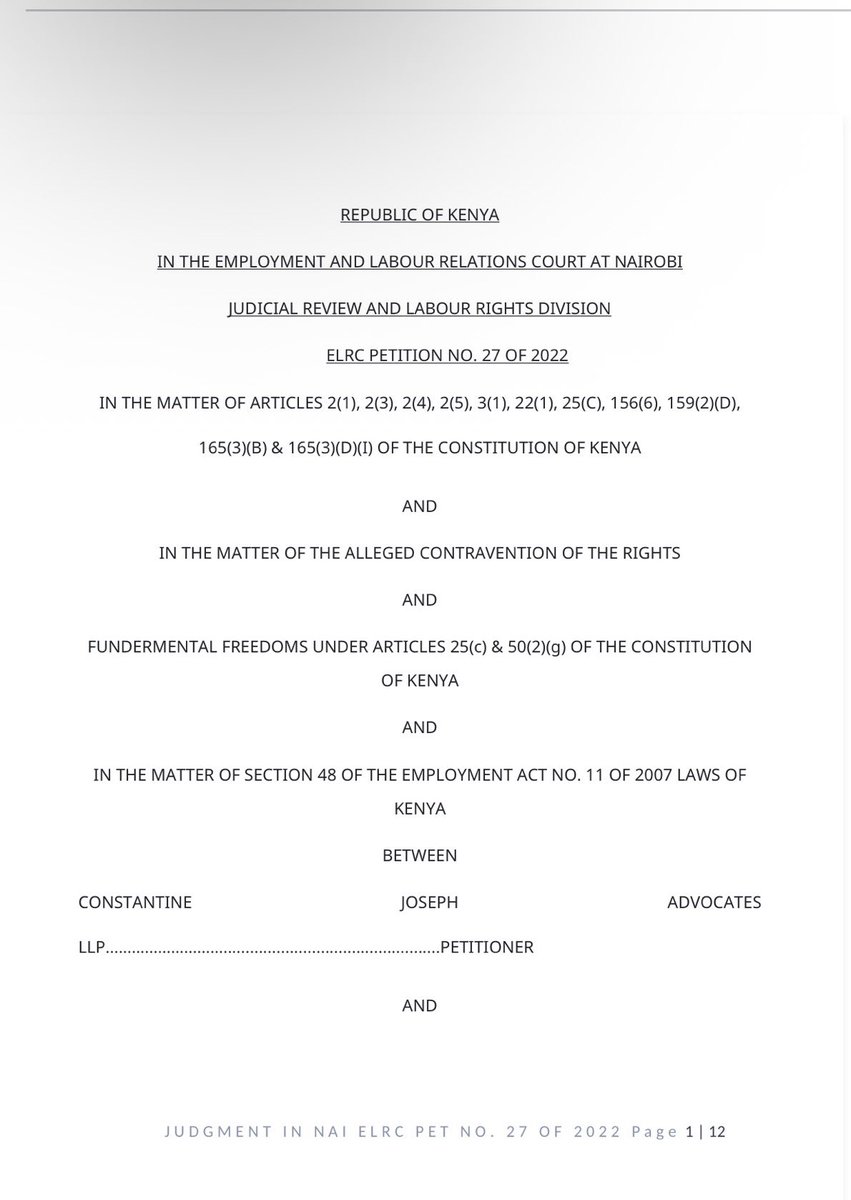
🚨 Can an employer be represented by an advocate before a labour officer while an employee is denied the same right?
In Constantine Joseph Advocates LLP v Attorney General, ELRC Petition No. 27 of 2022, the Employment and Labour Relations Court examined the constitutionality of Section 48 of the Employment Act, which restricts legal representation in complaints presented before labour officers.
Section 48 prohibits advocates from representing parties in proceedings before a labour officer. However, it permits representation or assistance by officials of trade unions and employers’ organisations, even where those officials are advocates.
The Petitioner challenged the provision, arguing that it threatened the constitutional right to a fair hearing by denying parties access to legal representation.
The Court declared the limitation on legal representation unconstitutional to the extent that it excludes advocates representing employees while permitting advocates acting as officials of employers’ organisations.
Three aspects of the judgment are particularly significant:
1. The restriction created unequal treatment between employers and employees.
The Court found that Section 48 effectively allowed an employer to be represented by an advocate who was an official of an employers’ organisation, while excluding an employee from similar legal representation. This created an unequal playing field and violated Article 27(1) of the Constitution, which guarantees equality before the law and equal protection and benefit of the law.
2. Proceedings before labour officers are subject to constitutional standards of procedural fairness.
The Court recognised that labour officers exercise an administrative mandate under the Employment Act. Their proceedings are therefore subject to Article 47, which guarantees every person the right to administrative action that is lawful, reasonable and procedurally fair.
3. Limitations on constitutional rights must satisfy the test under Article 24.
The Court found that the restriction imposed by Section 48 was neither reasonable nor justifiable in an open and democratic society. It noted that the provision, enacted before the promulgation of the 2010 Constitution, could not justify allowing one party access to legal representation while denying the other the same opportunity.
The broader constitutional question
The judgment highlights the importance of equality of arms in administrative dispute resolution. Although labour officers provide an alternative avenue for resolving employment disputes, the process must still respect constitutional guarantees of fairness and equal treatment.
Key takeaway: Employers and employees appearing before labour officers should not be subjected to unequal standards of legal representation. A statutory provision cannot restrict access to legal representation in a manner that unjustifiably discriminates between parties.
👉 Follow @Lexken_EMSLaw for practical legal insights on employment law, constitutional rights and emerging legal issues in Kenya.
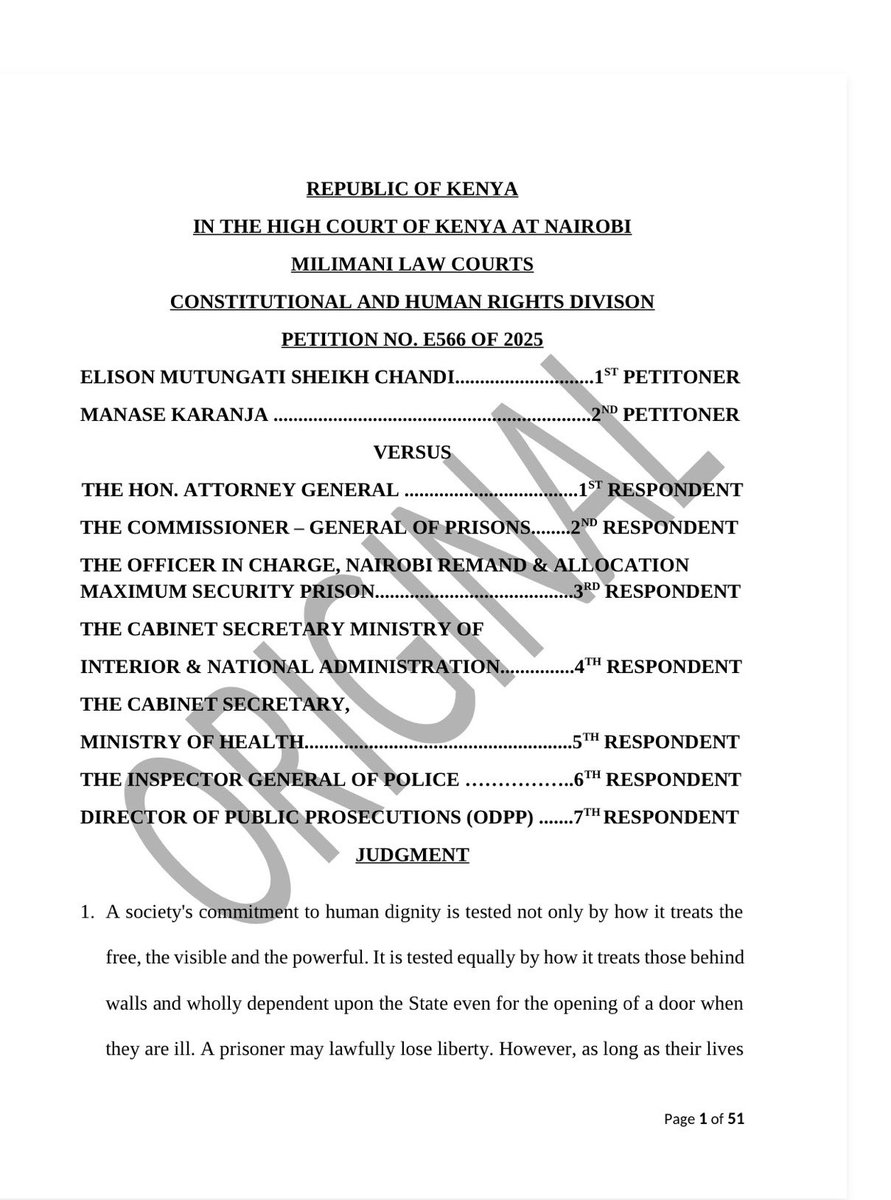
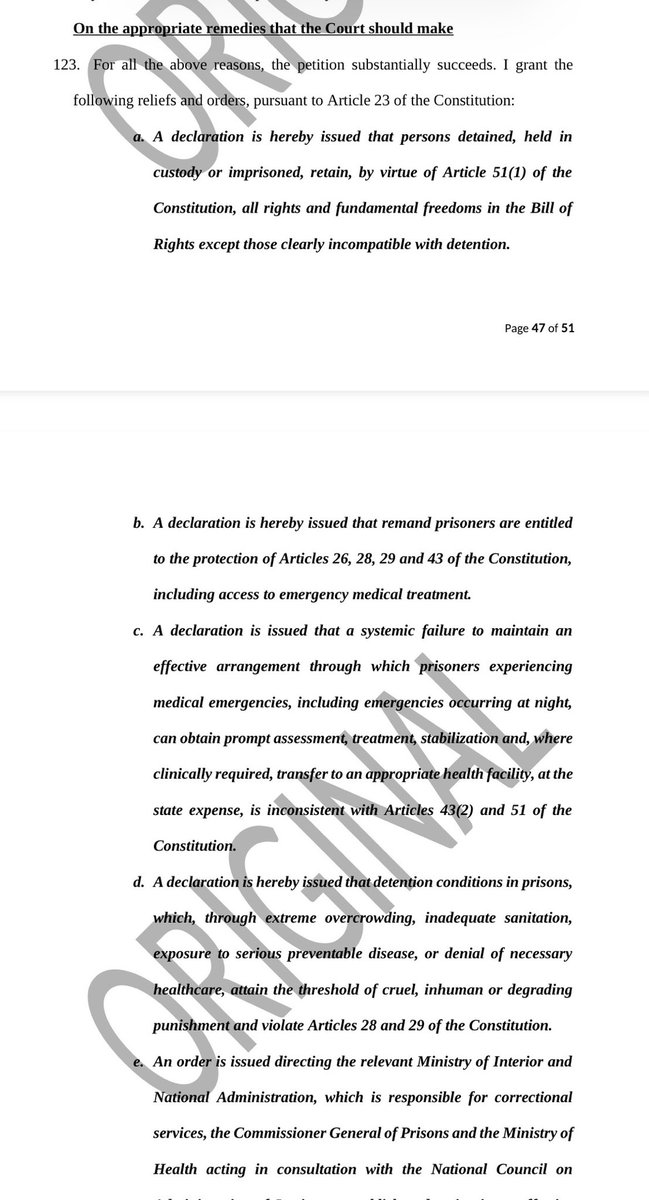
🚨 Does incarceration absolve the State of its obligation to provide timely and adequate healthcare to prisoners?
In Elison Mutungati Sheikh Chandi & another v Attorney General & 6 others, Petition No. E566 of 2025, the High Court examined the constitutional obligations of the State to protect the health, dignity and welfare of persons deprived of their liberty.
The Petitioners challenged systemic shortcomings in prison conditions at Nairobi Remand and Allocation Maximum Security Prison, including overcrowding, inadequate sanitation, poor ventilation and, particularly, the failure to provide timely emergency medical attention, especially at night.
The Court found that the systemic failure to provide an effective emergency medical response system violated Articles 43(1)(a), 43(2) and 51 of the Constitution.
Three aspects of the determination stand out.
✅ First, imprisonment does not extinguish constitutional rights. Under Article 51(1), persons detained, held in custody or imprisoned retain all rights and fundamental freedoms in the Bill of Rights, except those clearly incompatible with their detention. The rights to life, human dignity, freedom from cruel, inhuman or degrading treatment and the highest attainable standard of health remain protected.
✅ Second, access to healthcare must be effective and timely. The State's obligation is not satisfied merely by having healthcare facilities within correctional institutions. Prisoners must have access to qualified medical attention when needed, including during night-time emergencies. Where systemic failures threaten life or expose inmates to serious avoidable suffering, Articles 26, 28 and 29 may also be implicated.
✅ Third, the State must take practical measures to address systemic failures. The Court emphasised the need for an effective emergency response mechanism, including access to external medical facilities where necessary. This does not require a fully equipped hospital in every prison, but it does require arrangements capable of ensuring timely medical intervention and referral.
The Court's orders: The Court declared the systemic failure to provide an effective emergency medical response system unconstitutional. It directed the relevant government ministries, the Commissioner General of Prisons and other responsible authorities, in consultation with the National Council on the Administration of Justice (NCAJ), to establish and maintain a 24-hour emergency medical response system in major prisons and other custodial institutions as necessary.
The Court also directed measures addressing healthcare staffing, essential medicines, functional facilities, disease prevention, prison decongestion and the integration of the penal system into the Social Health Authority (SHA).
Key takeaway: The deprivation of liberty does not amount to the deprivation of constitutional protection. The State assumes a heightened responsibility to safeguard the health and dignity of persons in its custody, and systemic failures in providing essential healthcare may amount to constitutional violations.
👉 Follow @Lexken_EMSLaw for practical legal insights on constitutional law, human rights and the administration of justice in Kenya.
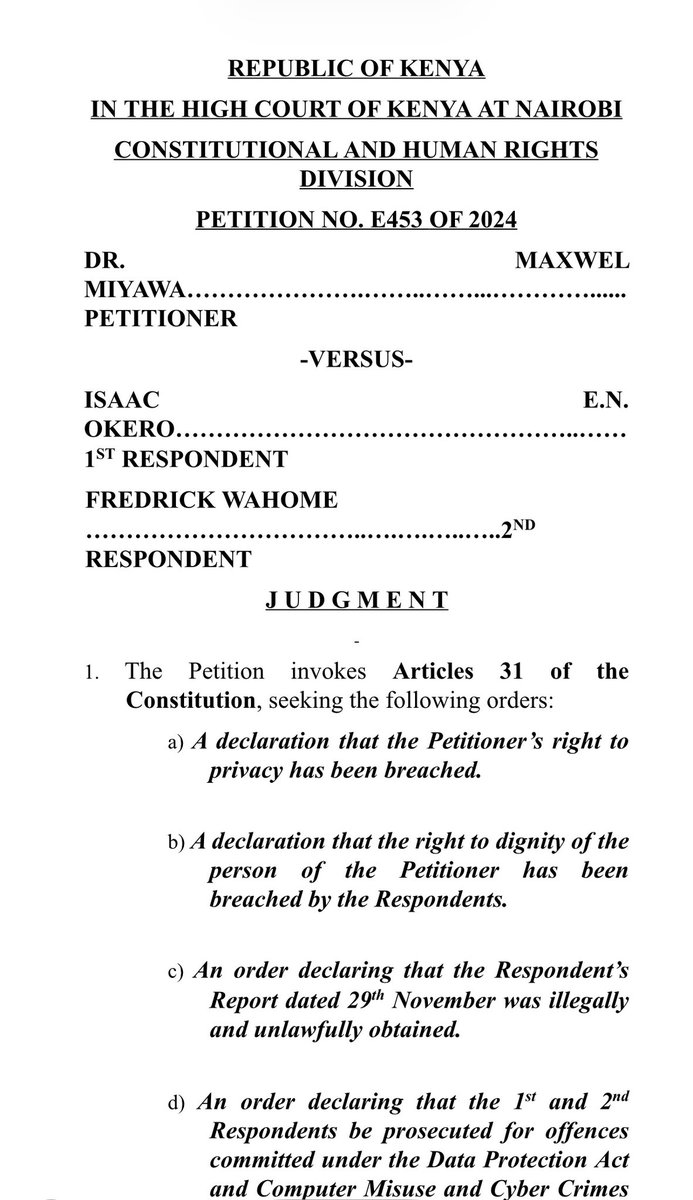
🚨 Does the need to gather evidence in litigation justify investigating another person's social media account?
In Miyawa v Okero & another [2026] KEHC 16365 (KLR), the High Court examined the tension between the constitutional right to privacy and the legitimate need to obtain digital evidence for use in judicial proceedings.
The dispute arose after the 1st Respondent engaged a cybersecurity expert to establish whether two Facebook profiles, one of which allegedly published defamatory statements, belonged to the Petitioner. The resulting report prompted allegations of hacking, unauthorised access to private communications and unlawful processing of personal data.
The Court dismissed the petition, finding that the Petitioner had not proved the alleged violations of Articles 28 and 31 of the Constitution.
Three aspects of the determination stand out.
✅ First, the use of tools such as Kali Linux and hashing techniques does not, without evidence of unauthorised intrusion, establish hacking. The legality of digital investigations depends on the activities undertaken, not merely the tools employed.
✅ Second, publicly accessible information remains protected personal data under the Data Protection Act. Its accessibility does not automatically authorise unrestricted collection, processing or disclosure.
✅ Third, the Court recognised that processing personal data for the establishment, exercise or defence of a legal claim may be lawful. However, this does not grant litigants unrestricted authority to access protected systems or private communications.
The legal dispute: Article 31 protects individuals against unnecessary disclosure of private information, while Article 50(1) guarantees the right to a fair hearing, including the ability to present and challenge evidence. The challenge lies in allowing legitimate digital investigations without turning the pursuit of evidence into an avenue for violating privacy rights.
The Court also left the authenticity and admissibility of the verification report to the subordinate court handling the defamation proceedings, distinguishing constitutional violations from ordinary evidentiary disputes.
Key takeaway: A legitimate litigation purpose may justify processing personal data, but it does not excuse unlawful methods of acquisition or unrestricted disclosure. Equally, the right to privacy does not automatically prohibit the collection of relevant digital evidence.
👉 Follow @Lexken_EMSLaw for practical legal insights on constitutional law, data protection and emerging legal issues in Kenya.
BREAKING: The Constitutional Court has declared Section 115 of the Penal Code Act, which criminalises the offence of insulting the modesty of a woman, unconstitutional on grounds that it discriminates against men, contrary to Article 21(3) of the Constitution.
#ResistLawlessness
🔴WRONG MOVE WEDNESDAY🔴
Are you certain your foreign judgment is enforceable?
In Dunaiski v Kenya Airways, a reinstatement and back-pay win in Angola worth a claimed KZ 108,052,680 failed at the enforcement stage in Nairobi.
[THREAD]
#WrongMoveWednesday
🚨🔴 EVER CLASHED WITH THE POLICE, ONLY TO FIND YOURSELF FACING PRISON? WHAT RECOURSE DO YOU HAVE? READ THIS!
Imagine being arrested, charged with assaulting a police officer and then fined KSh 200,000 - with seven years in prison hanging over your head if you cannot pay. That is what happened to James Gachogo Muira. But on appeal, the High Court at Nyandarua examined the evidence and found serious inconsistencies in the officer’s account of how he was injured. The officer gave conflicting explanations, while the medical report documented a forearm injury but did not record the alleged head injury. The Court found the conviction unsafe, quashed it and set aside the sentence. The appellant was ordered released unless otherwise lawfully held. In James Gachogo Muira v Republic, Criminal Appeal No. E009 of 2026, the Court delivered a powerful reminder: an accusation, even one involving a police officer, must still be proved beyond reasonable doubt.
But there is another important lesson in this judgment. The trial court had imposed seven years’ imprisonment as the default sentence for failure to pay a KSh 200,000 fine. The High Court held that, since Section 103(a) of the National Police Service Act does not prescribe a separate default sentence, Section 28(2) of the Penal Code applied - and capped the default imprisonment at 12 months for a fine exceeding KSh 50,000. That is a significant safeguard against unlawful punishment. Whether you are facing an assault charge, an allegation of obstructing police officers, or a sentence you believe is unlawful, do not assume that a conviction is beyond challenge or that every sentence imposed by a court is automatically legal. The right to a fair trial includes the right to have evidence properly tested and the law correctly applied. Know your rights. Challenge what the law allows you to challenge.
Kindly retweet widely🙏
🚨🔥 KRA COLLECTS YOUR TAXES - BUT WHO PROTECTS YOU WHEN THE TAXMAN CROSSES THE LINE? YOUR RIGHTS DO NOT END AT THE KRA GATE!
With Kenyans increasingly feeling the weight of taxation, a crucial question must be asked: does paying taxes mean surrendering your rights to the Kenya Revenue Authority? Absolutely not. In Francis Awino v Commissioner General, Kenya Revenue Authority, Constitutional Petition No. E007 of 2026, the High Court examined KRA's handling of a tax exemption application by a registered person with disability seeking to import a vehicle. The dispute brought into focus an important principle: tax exemptions provided by law are not favors from KRA, and administrative power must be exercised within the law. KRA is entitled to verify applications, demand supporting documents and prevent abuse of exemptions - but its decisions and processes remain subject to constitutional standards of legality, fairness and accountability. The taxpayer is not powerless simply because the other party is KRA.
Here is where every mwananchi needs to pay attention: the law provides avenues to challenge decisions or omissions by the Commissioner under Sections 229 and 230 of the East African Community Customs Management Act. The Court also recognised that an exemption application must be processed through the applicable statutory procedures; submitting documents does not automatically guarantee approval. Although the petition was dismissed as premature, the judgment is a reminder that KRA's authority is regulated by law, just as the taxpayer's obligations are. Whether you are facing a disputed tax assessment, a delayed exemption, a customs dispute, or an administrative decision you believe is unlawful, do not simply surrender or ignore the process. Know the available review and appeal mechanisms, observe the timelines, and seek legal advice early. You have a duty to pay lawful taxes. KRA has a duty to administer the law lawfully. Neither side is above the law. ⚖️
Kindly retweet widely🙏🙏
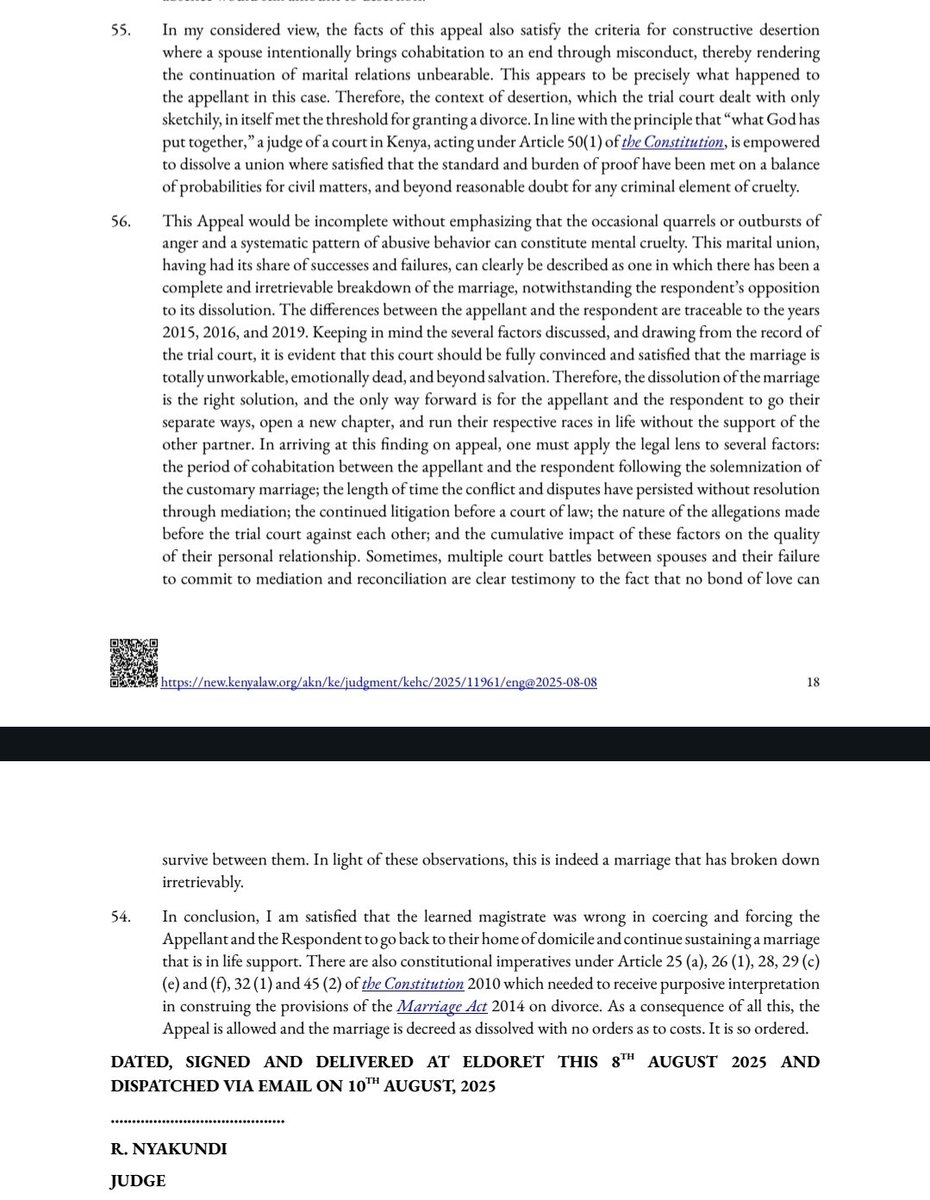
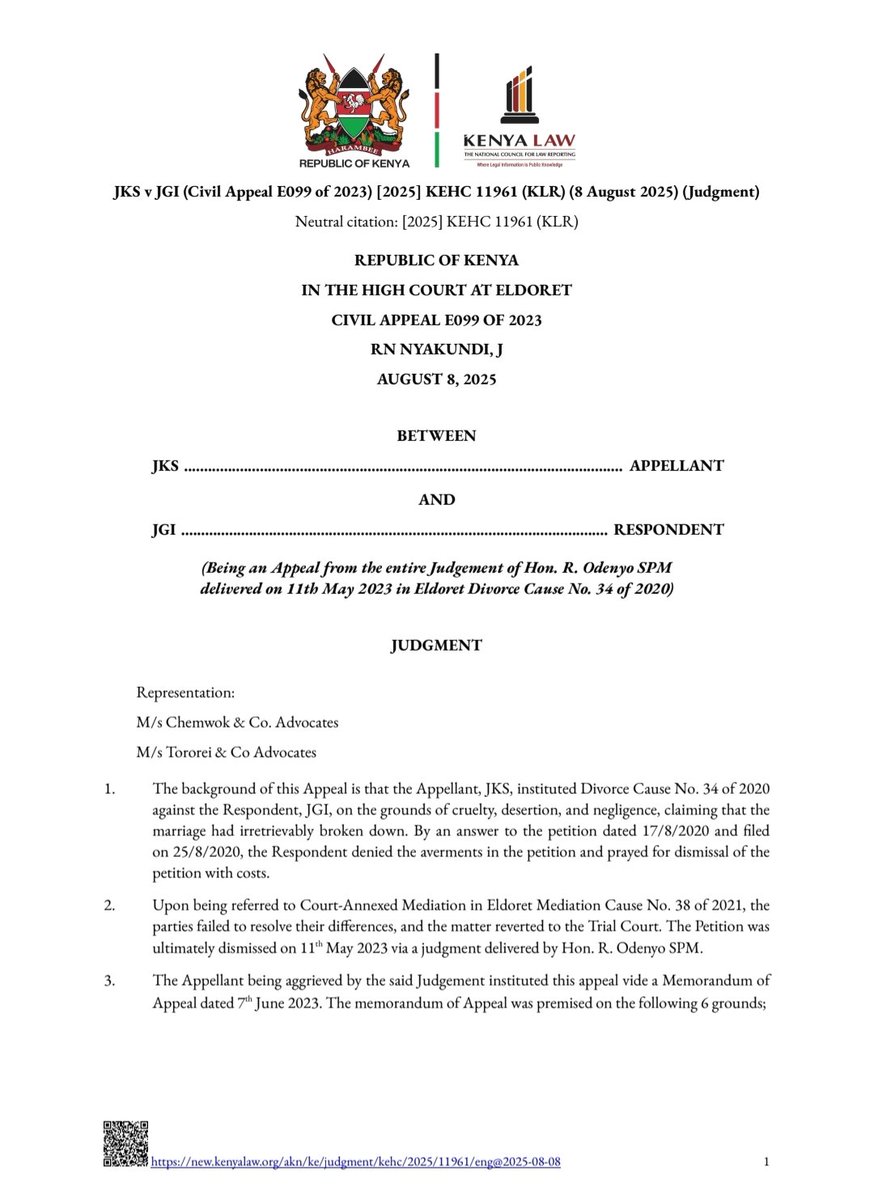
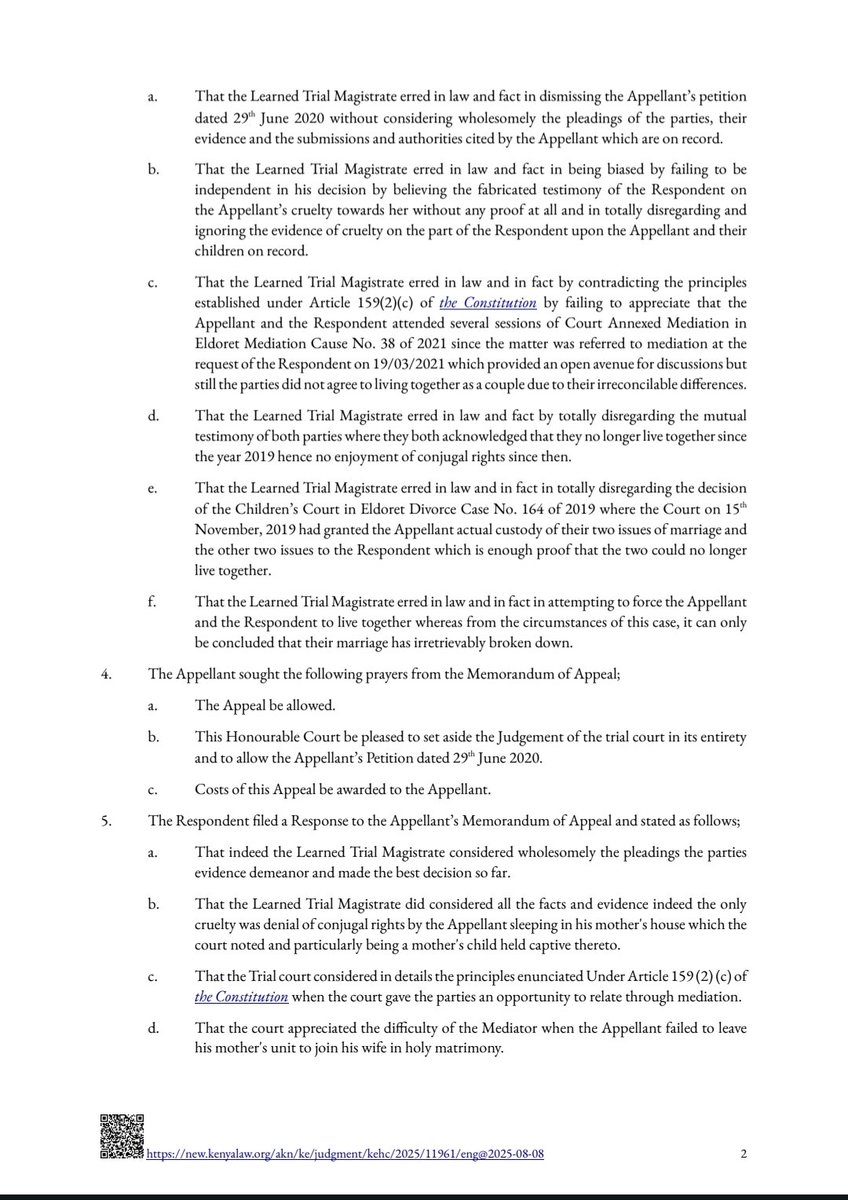
“NO KISS, NO MARRIAGE!” The High Court has redefined cruelty in marriage. It’s not only about beatings, it includes emotional neglect, cold silence, denial of intimacy and living like strangers under one roof. A marriage without love, affection, and companionship is not a marriage at all.
In JKS v JGI, the Court said forcing people to stay where love has died is injustice. Marriage must be chosen every day, not endured like a prison sentence. Kenya’s divorce law has officially shifted, duty alone can’t save a dead relationship.
1. 👇This is the case of Janet Karamana Gituma & 5 others (Including Clement Munyao Katiku) v Republic [2015] eKLR (Court of Appeal, Criminal Appeal 88 of 2014
2. Clement was not a Snr. Neurosurgeon at KNH as alleged, he operated a Bar in Kibera (Par.48), the incident happened in 2009 not 2005.
3. On the night of 23 October 2009, four masked men stormed a home in Garden Estate, Nairobi. They held the family in a bathroom for hours, waiting for the man of the house, Moses Gituma. When he got home around 2am, they attacked him viciously. He died months later.
4. During the raid, the attackers took the family's phones. One of them was a Nokia 1208 belonging to Beth, who was in the house that night. That small phone would end up deciding Clement Munyao Katiku's fate.
5. Weeks later, police traced Beth's phone to a man along Mombasa Road. He said he got it from a woman named Virginia as security for a KSh 1,000 loan she needed to treat her sick son.
6. The phone led police to Clement's Kibera neighbour, Virginia. She told the court he had given her that very phone as security for a KSh 1,000 loan in October 2009.
7. Clement admitted giving her a phone but insisted it was his own Nokia 1200, not the stolen 1208. The court wasn't convinced.
8. The Court of Appeal found the phone had passed from Clement to Virginia to the man on Mombasa Road without a break. A simple "it wasn't that phone" wasn't enough. With no convincing explanation, the court concluded he must have been part of the attack.
9. In December 2015 the Court of Appeal upheld his murder conviction and replaced his 30-year term with the then-mandatory death sentence. His conviction rested on that one handset.
9. It's a striking lesson in how far circumstantial evidence can go in Kenyan criminal law. Fair application of the law, or too big a leap?
Follow @Lexken_EMSLaw
𝐀 𝐓𝐇𝐈𝐑𝐃-𝐏𝐀𝐑𝐓𝐘 𝐆𝐔𝐀𝐑𝐀𝐍𝐓𝐎𝐑’𝐒 𝐒𝐏𝐄𝐂𝐈𝐅𝐈𝐂𝐀𝐋𝐋𝐘 𝐂𝐀𝐏𝐏𝐄𝐃 𝐋𝐈𝐀𝐁𝐈𝐋𝐈𝐓𝐘 𝐎𝐕𝐄𝐑 𝐌𝐀𝐓𝐑𝐈𝐌𝐎𝐍𝐈𝐀𝐋 𝐏𝐑𝐎𝐏𝐄𝐑𝐓𝐘 𝐂𝐀𝐍𝐍𝐎𝐓 𝐁𝐄 𝐄𝐗𝐏𝐀𝐍𝐃𝐄𝐃 𝐓𝐎 𝐋𝐀𝐓𝐄𝐑 𝐀𝐃𝐕𝐀𝐍𝐂𝐄𝐒 𝐖𝐈𝐓𝐇𝐎𝐔𝐓 𝐂𝐎𝐍𝐒𝐄𝐍𝐓 𝐀𝐍𝐃 𝐀 𝐁𝐀𝐍𝐊’𝐒 𝐏𝐎𝐖𝐄𝐑 𝐎𝐅 𝐒𝐀𝐋𝐄 𝐅𝐀𝐈𝐋𝐒 𝐖𝐈𝐓𝐇𝐎𝐔𝐓 𝐏𝐑𝐎𝐎𝐅 𝐎𝐅 𝐕𝐀𝐋𝐈𝐃 𝐒𝐓𝐀𝐓𝐔𝐓𝐎𝐑𝐘 𝐍𝐎𝐓𝐈𝐂𝐄𝐒 𝐔𝐍𝐃𝐄𝐑 𝐓𝐇𝐄 𝐋𝐀𝐍𝐃 𝐀𝐂𝐓
🚨🚨The 𝐇𝐢𝐠𝐡 𝐂𝐨𝐮𝐫𝐭 𝐚𝐭 𝐌𝐨𝐦𝐛𝐚𝐬𝐚 in 𝐃𝐚𝐧𝐢𝐞𝐥 𝐊. 𝐌. 𝐌𝐚𝐬𝐚𝐤𝐡𝐚 𝐯 𝐅𝐚𝐦𝐢𝐥𝐲 𝐁𝐚𝐧𝐤 𝐋𝐢𝐦𝐢𝐭𝐞𝐝 & 𝟐 𝐎𝐭𝐡𝐞𝐫𝐬 (𝐂𝐢𝐯𝐢𝐥 𝐒𝐮𝐢𝐭 𝐍𝐨. 𝐄𝟎𝟓𝟏 𝐨𝐟 𝟐𝟎𝟐𝟒) held that a third-party 𝐜𝐡𝐚𝐫𝐠𝐨𝐫 who executes a limited personal guarantee of Kshs 6.3 million over his 𝐦𝐚𝐭𝐫𝐢𝐦𝐨𝐧𝐢𝐚𝐥 𝐩𝐫𝐨𝐩𝐞𝐫𝐭𝐲 cannot have that property treated as 𝐨𝐩𝐞𝐧-𝐞𝐧𝐝𝐞𝐝 𝐜𝐨𝐧𝐭𝐢𝐧𝐮𝐢𝐧𝐠 𝐬𝐞𝐜𝐮𝐫𝐢𝐭𝐲 for later, larger facilities advanced to the borrower without his knowledge or consent. The Court further held that the bank’s statutory power of sale never 𝐜𝐫𝐲𝐬𝐭𝐚𝐥𝐥𝐢𝐬𝐞𝐝 because the mandatory notices under 𝐬𝐞𝐜𝐭𝐢𝐨𝐧𝐬 𝟗𝟎 𝐚𝐧𝐝 𝟗𝟔 𝐨𝐟 𝐭𝐡𝐞 𝐋𝐚𝐧𝐝 𝐀𝐜𝐭 were not proved to have been served at the chargor’s correct address.
This judgment, delivered by 𝐇𝐨𝐧 𝐍𝐠𝐚𝐚𝐡 𝐉𝐚𝐢𝐫𝐮𝐬 𝐉 on 𝟏𝟔 𝐎𝐜𝐭𝐨𝐛𝐞𝐫 𝟐𝟎𝟐𝟔 after a full trial, clarifies the proper relationship between a 𝐜𝐚𝐩𝐩𝐞𝐝 𝐠𝐮𝐚𝐫𝐚𝐧𝐭𝐞𝐞 and a charge containing 𝐚 𝐜𝐡𝐚𝐫𝐠𝐞 𝐜𝐨𝐧𝐭𝐚𝐢𝐧𝐢𝐧𝐠 𝐬𝐭𝐚𝐧𝐝𝐚𝐫𝐝 “𝐚𝐥𝐥 𝐦𝐨𝐧𝐢𝐞𝐬”continuing-security clauses and it underscores the strictness of the Land Act notice regime when a bank seeks to sell a chargor’s home.
The Plaintiff, 𝐃𝐚𝐧𝐢𝐞𝐥 𝐊. 𝐌. 𝐌𝐚𝐬𝐚𝐤𝐡𝐚,co-owns matrimonial property known as 𝐋.𝐑. 𝐍𝐨. 𝐌𝐨𝐦𝐛𝐚𝐬𝐚/𝐌𝐚𝐢𝐧𝐥𝐚𝐧𝐝 𝐍𝐨𝐫𝐭𝐡/𝐁𝐥𝐨𝐜𝐤 𝟐/𝟓 with his wife. In 𝟐𝟎𝟏𝟔 Family Bank advanced a 𝐊𝐬𝐡𝐬 𝟑𝟎 𝐦𝐢𝐥𝐥𝐢𝐨𝐧 𝐭𝐫𝐚𝐝𝐞-𝐟𝐢𝐧𝐚𝐧𝐜𝐞 𝐟𝐚𝐜𝐢𝐥𝐢𝐭𝐲 to 𝐌𝐚𝐬𝐡𝐢𝐧𝐚𝐧𝐢 𝐃𝐢𝐬𝐭𝐫𝐢𝐛𝐮𝐭𝐢𝐨𝐧 𝐋𝐢𝐦𝐢𝐭𝐞𝐝, a company in which the wife was a director. The facility was secured, among other things, by a 𝐋𝐞𝐭𝐭𝐞𝐫 𝐨𝐟 𝐆𝐮𝐚𝐫𝐚𝐧𝐭𝐞𝐞 and 𝐈𝐧𝐝𝐞𝐦𝐧𝐢𝐭𝐲 executed by the Plaintiff on 𝟏𝟗 𝐌𝐚𝐲 𝟐𝟎𝟏𝟔 and a Charge over the matrimonial property dated 𝟑𝟎 𝐌𝐚𝐲 𝟐𝟎𝟏𝟔. 𝐂𝐥𝐚𝐮𝐬𝐞 𝟔 of the letter of offer and the guarantee itself limited the Plaintiff’s exposure to Kshs 𝟔.𝟑 𝐦𝐢𝐥𝐥𝐢𝐨𝐧. The Bank’s own witness later conceded under cross-examination that “𝐭𝐡𝐞 𝐠𝐮𝐚𝐫𝐚𝐧𝐭𝐞𝐞 𝐟𝐨𝐫 𝐩𝐫𝐢𝐧𝐜𝐢𝐩𝐚𝐥 𝐚𝐦𝐨𝐮𝐧𝐭 [𝐰𝐚𝐬] 𝟔.𝟑 𝐦𝐢𝐥𝐥𝐢𝐨𝐧.” The Bank subsequently advanced further facilities of 𝐊𝐬𝐡𝐬 𝟒𝟓 𝐦𝐢𝐥𝐥𝐢𝐨𝐧 (𝟐𝟎𝟏𝟕), 𝐊𝐬𝐡𝐬 𝟐𝟑.𝟒 𝐦𝐢𝐥𝐥𝐢𝐨𝐧 (𝟐𝟎𝟏𝟖) 𝐚𝐧𝐝 𝐊𝐬𝐡𝐬 𝟒𝟓.𝟒 𝐦𝐢𝐥𝐥𝐢𝐨𝐧 (𝟐𝟎𝟏𝟖), which it treated as 𝐫𝐞𝐬𝐭𝐫𝐮𝐜𝐭𝐮𝐫𝐢𝐧𝐠𝐬. In 𝐉𝐮𝐧𝐞 𝟐𝟎𝟐𝟒 the Plaintiff received notice from 𝐓𝐫𝐞𝐯𝐨 𝐀𝐮𝐜𝐭𝐢𝐨𝐧𝐞𝐞𝐫𝐬 that the property would be sold to recover approximately Kshs 𝟓𝟐.𝟐 𝐦𝐢𝐥𝐥𝐢𝐨𝐧 nearly 𝐞𝐢𝐠𝐡𝐭 𝐭𝐢𝐦𝐞𝐬 the sum he believed he had guaranteed. He sued for a declaration that his liability was capped and for an injunction.
The Bank argued that the Charge was a 𝐜𝐨𝐧𝐭𝐢𝐧𝐮𝐢𝐧𝐠 𝐬𝐞𝐜𝐮𝐫𝐢𝐭𝐲 𝐟𝐨𝐫 𝐚𝐥𝐥 𝐦𝐨𝐧𝐢𝐞𝐬 owed by the company, that the later facilities were merely restructurings of the original facility and that its statutory power of sale had properly crystallised. The Plaintiff maintained that he never consented to the later advances, that the charge and guarantee must be read together so as to give effect to the monetary cap and that the statutory notices were sent to the 𝐰𝐫𝐨𝐧𝐠 𝐩𝐨𝐬𝐭𝐚𝐥 𝐚𝐝𝐝𝐫𝐞𝐬𝐬 (𝐁𝐨𝐱 𝟗𝟑𝟐𝟑𝟐 𝐢𝐧𝐬𝐭𝐞𝐚𝐝 𝐨𝐟 𝐡𝐢𝐬 𝐜𝐨𝐫𝐫𝐞𝐜𝐭 𝐁𝐨𝐱 𝟗𝟑𝟐𝟑𝟏).
The Court found the Charge formally valid but limited in scope. Applying the Supreme Court’s recent decision in 𝐒𝐭𝐚𝐧𝐝𝐚𝐫𝐝 𝐂𝐡𝐚𝐫𝐭𝐞𝐫𝐞𝐝 𝐅𝐢𝐧𝐚𝐧𝐜𝐢𝐚𝐥 𝐒𝐞𝐫𝐯𝐢𝐜𝐞𝐬 𝐋𝐢𝐦𝐢𝐭𝐞𝐝 𝐯 𝐌𝐚𝐧𝐜𝐡𝐞𝐬𝐭𝐞𝐫 𝐎𝐮𝐭𝐟𝐢𝐭𝐭𝐞𝐫𝐬 (𝐧𝐨𝐰 𝐊𝐢𝐧𝐠 𝐖𝐨𝐨𝐥𝐞𝐧 𝐌𝐢𝐥𝐥𝐬 𝐋𝐢𝐦𝐢𝐭𝐞𝐝) [𝟐𝟎𝟐𝟓] 𝐊𝐄𝐒𝐂 𝟔𝟖, which confirms that 𝐜𝐨𝐧𝐭𝐢𝐧𝐮𝐢𝐧𝐠-𝐬𝐞𝐜𝐮𝐫𝐢𝐭𝐲 𝐩𝐫𝐨𝐯𝐢𝐬𝐢𝐨𝐧𝐬 must be 𝐞𝐱𝐩𝐫𝐞𝐬𝐬𝐥𝐲 𝐬𝐭𝐚𝐭𝐞𝐝 and that a security is not 𝐚𝐮𝐭𝐨𝐦𝐚𝐭𝐢𝐜𝐚𝐥𝐥𝐲 discharged by restructuring, the learned Judge held that the two instruments must be read together. Where a third-party surety’s consent to charge his matrimonial home was procured by reference to a specifically quantified guarantee, the property cannot be subjected to unlimited exposure merely because the charge contains 𝐬𝐭𝐚𝐧𝐝𝐚𝐫𝐝 “𝐚𝐥𝐥 𝐦𝐨𝐧𝐢𝐞𝐬” language. Comparative authority from the English Court of Appeal in 𝐓𝐫𝐢𝐨𝐝𝐨𝐬 𝐁𝐚𝐧𝐤 𝐍𝐕 𝐯 𝐃𝐨𝐛𝐛𝐬 [𝟐𝟎𝟎𝟓] 𝐄𝐖𝐂𝐀 𝐂𝐢𝐯 𝟔𝟑𝟎,the 𝐈𝐫𝐢𝐬𝐡 𝐇𝐢𝐠𝐡 𝐂𝐨𝐮𝐫𝐭 and the 𝐒𝐮𝐩𝐫𝐞𝐦𝐞 𝐂𝐨𝐮𝐫𝐭 𝐨𝐟 𝐈𝐧𝐝𝐢𝐚 was cited to the same effect: 𝐚 𝐦𝐨𝐧𝐞𝐭𝐚𝐫𝐲 𝐜𝐚𝐩 𝐢𝐧 𝐚 𝐠𝐮𝐚𝐫𝐚𝐧𝐭𝐞𝐞 𝐢𝐬 𝐧𝐨𝐭 𝐝𝐢𝐬𝐩𝐥𝐚𝐜𝐞𝐝 𝐛𝐲 𝐥𝐚𝐭𝐞𝐫 𝐚𝐠𝐫𝐞𝐞𝐦𝐞𝐧𝐭𝐬 𝐛𝐞𝐭𝐰𝐞𝐞𝐧 𝐭𝐡𝐞 𝐥𝐞𝐧𝐝𝐞𝐫 𝐚𝐧𝐝 𝐭𝐡𝐞 𝐩𝐫𝐢𝐧𝐜𝐢𝐩𝐚𝐥 𝐝𝐞𝐛𝐭𝐨𝐫 𝐮𝐧𝐥𝐞𝐬𝐬 𝐭𝐡𝐞 𝐠𝐮𝐚𝐫𝐚𝐧𝐭𝐞𝐞 𝐜𝐥𝐞𝐚𝐫𝐥𝐲 𝐬𝐨 𝐩𝐫𝐨𝐯𝐢𝐝𝐞𝐬. In addition, 𝐬𝐞𝐜𝐭𝐢𝐨𝐧 𝟖𝟒(𝟐) of the 𝐋𝐚𝐧𝐝 𝐀𝐜𝐭 requires any variation that increases the amount secured to be effected by 𝐚 𝐦𝐞𝐦𝐨𝐫𝐚𝐧𝐝𝐮𝐦 𝐬𝐢𝐠𝐧𝐞𝐝 𝐛𝐲 𝐭𝐡𝐞 𝐜𝐡𝐚𝐫𝐠𝐨𝐫 and no such memorandum was produced. The Bank’s witness admitted it did not consider notification of the guarantor “𝐧𝐞𝐜𝐞𝐬𝐬𝐚𝐫𝐲.”
On the𝐩𝐨𝐰𝐞𝐫 𝐨𝐟 𝐬𝐚𝐥𝐞, the Court held that the Bank failed to prove service of the 𝐬𝐭𝐚𝐭𝐮𝐭𝐨𝐫𝐲 𝐧𝐨𝐭𝐢𝐜𝐞𝐬.The Plaintiff’s correct address on the title documents is Box 𝟗𝟑𝟐𝟑𝟏-𝟖𝟎𝟏𝟎𝟎. The Bank’s own documents showed Box 𝟗𝟑𝟐𝟑𝟐-𝟖𝟎𝟏𝟎𝟎 and the witness’s evidence was inconsistent and unsupported by any certificate of posting. Following 𝐌𝐨𝐬𝐞𝐬 𝐊𝐢𝐛𝐢𝐞𝐠𝐨 𝐘𝐚𝐭𝐨𝐫 𝐯 𝐄𝐜𝐨 𝐁𝐚𝐧𝐤 𝐊𝐞𝐧𝐲𝐚 𝐋𝐢𝐦𝐢𝐭𝐞𝐝 [𝟐𝟎𝟏𝟒] 𝐊𝐄𝐄𝐋𝐂 𝟒𝟒𝟗,any real doubt as to correct addressing must be resolved in favour of the 𝐜𝐡𝐚𝐫𝐠𝐨𝐫. Consequently the power of sale had 𝐧𝐨𝐭 𝐜𝐫𝐲𝐬𝐭𝐚𝐥𝐥𝐢𝐬𝐞𝐝.
Judgment was entered for the Plaintiff. The Court declared that his liability under the 2016 guarantee and charge is limited to 𝐊𝐬𝐡𝐬 𝟔.𝟑 𝐦𝐢𝐥𝐥𝐢𝐨𝐧 plus 𝐥𝐚𝐰𝐟𝐮𝐥 𝐢𝐧𝐭𝐞𝐫𝐞𝐬𝐭 and does not extend to the 𝟐𝟎𝟏𝟕 and 𝟐𝟎𝟏𝟖 facilities. It further declared that the 𝐬𝐭𝐚𝐭𝐮𝐭𝐨𝐫𝐲 𝐧𝐨𝐭𝐢𝐜𝐞𝐬 were not validly served and that the power of sale had not crystallised. A 𝐩𝐞𝐫𝐦𝐚𝐧𝐞𝐧𝐭 𝐢𝐧𝐣𝐮𝐧𝐜𝐭𝐢𝐨𝐧 was issued restraining sale or alienation of the property pursuant to the impugned process, without prejudice to the Bank’s right to pursue recovery of any sum genuinely outstanding within the 𝐊𝐬𝐡𝐬 𝟔.𝟑 𝐦𝐢𝐥𝐥𝐢𝐨𝐧 limit after serving fresh and valid notices. Costs were awarded to the Plaintiff against the Bank and the auctioneer.
The jurisprudential importance of the decision lies in its careful integration of the Supreme Court’s guidance on continuing securities with the protective purpose of the Land Act’s notice provisions and the special character of matrimonial property. It rejects any automatic expansion of a 𝐜𝐚𝐩𝐩𝐞𝐝 𝐭𝐡𝐢𝐫𝐝-𝐩𝐚𝐫𝐭𝐲 𝐠𝐮𝐚𝐫𝐚𝐧𝐭𝐞𝐞 𝐢𝐧𝐭𝐨 𝐨𝐩𝐞𝐧-𝐞𝐧𝐝𝐞𝐝 𝐬𝐞𝐜𝐮𝐫𝐢𝐭𝐲 for subsequent advances, thereby protecting guarantors who reasonably understand their exposure to be limited. At the same time it reaffirms that banks must strictly comply with 𝐬𝐞𝐜𝐭𝐢𝐨𝐧𝐬 𝟗𝟎 𝐚𝐧𝐝 𝟗𝟔 𝐨𝐟 𝐭𝐡𝐞 𝐋𝐚𝐧𝐝 𝐀𝐜𝐭 and cannot rely on notices sent to an incorrect address.
Banks must obtain the 𝐜𝐡𝐚𝐫𝐠𝐨𝐫’𝐬 𝐜𝐨𝐧𝐬𝐞𝐧𝐭 and a 𝐟𝐨𝐫𝐦𝐚𝐥 𝐦𝐞𝐦𝐨𝐫𝐚𝐧𝐝𝐮𝐦 𝐮𝐧𝐝𝐞𝐫 𝐬𝐞𝐜𝐭𝐢𝐨𝐧 𝟖𝟒(𝟐) before relying on an existing charge for materially increased facilities. Guarantors of matrimonial homes should insist on clear monetary caps and should verify that notices are addressed to the correct postal address appearing on the title. Auctioneers act at their peril if the underlying statutory notices are defective. The judgment reinforces two enduring principles: first, that a 𝐬𝐩𝐞𝐜𝐢𝐟𝐢𝐜𝐚𝐥𝐥𝐲 𝐪𝐮𝐚𝐧𝐭𝐢𝐟𝐢𝐞𝐝 𝐭𝐡𝐢𝐫𝐝-𝐩𝐚𝐫𝐭𝐲 𝐠𝐮𝐚𝐫𝐚𝐧𝐭𝐞𝐞 𝐚𝐧𝐝 𝐭𝐡𝐞 𝐜𝐡𝐚𝐫𝐠𝐞 𝐬𝐞𝐜𝐮𝐫𝐢𝐧𝐠 𝐢𝐭 𝐦𝐮𝐬𝐭 𝐛𝐞 𝐫𝐞𝐚𝐝 𝐭𝐨𝐠𝐞𝐭𝐡𝐞𝐫 𝐬𝐨 𝐚𝐬 𝐭𝐨 𝐠𝐢𝐯𝐞 𝐞𝐟𝐟𝐞𝐜𝐭 𝐭𝐨 𝐭𝐡𝐞 𝐚𝐠𝐫𝐞𝐞𝐝 𝐜𝐞𝐢𝐥𝐢𝐧𝐠 and second, 𝐭𝐡𝐚𝐭 𝐭𝐡𝐞 𝐬𝐭𝐚𝐭𝐮𝐭𝐨𝐫𝐲 𝐩𝐨𝐰𝐞𝐫 𝐨𝐟 𝐬𝐚𝐥𝐞 𝐜𝐫𝐲𝐬𝐭𝐚𝐥𝐥𝐢𝐬𝐞𝐬 𝐨𝐧𝐥𝐲 𝐮𝐩𝐨𝐧 𝐬𝐭𝐫𝐢𝐜𝐭 𝐩𝐫𝐨𝐨𝐟 𝐨𝐟 𝐬𝐞𝐫𝐯𝐢𝐜𝐞 𝐨𝐟 𝐯𝐚𝐥𝐢𝐝 𝐧𝐨𝐭𝐢𝐜𝐞𝐬 𝐮𝐧𝐝𝐞𝐫 𝐭𝐡𝐞 𝐋𝐚𝐧𝐝 𝐀𝐜𝐭.
#law #kenya #Legal
Must a sexual offence complainant's testimony be corroborated to secure a conviction? Not necessarily
A sexual offence conviction can rest on the complainant’s uncorroborated evidence alone, if believed and reasons are recorded by the Court under Section 124 of the Evidence Act.
🚨🚨The 𝐒𝐮𝐩𝐫𝐞𝐦𝐞 𝐂𝐨𝐮𝐫𝐭 𝐨𝐟 𝐊𝐞𝐧𝐲𝐚 in 𝐊𝐰𝐚𝐧𝐳𝐚 𝐄𝐬𝐭𝐚𝐭𝐞𝐬 𝐋𝐢𝐦𝐢𝐭𝐞𝐝 𝐯 𝐉𝐨𝐦𝐨 𝐊𝐞𝐧𝐲𝐚𝐭𝐭𝐚 𝐔𝐧𝐢𝐯𝐞𝐫𝐬𝐢𝐭𝐲 𝐨𝐟 𝐀𝐠𝐫𝐢𝐜𝐮𝐥𝐭𝐮𝐫𝐞 𝐚𝐧𝐝 𝐓𝐞𝐜𝐡𝐧𝐨𝐥𝐨𝐠𝐲 [𝟐𝟎𝟐𝟒] 𝐊𝐄𝐒𝐂 𝟕𝟒 (𝐏𝐞𝐭𝐢𝐭𝐢𝐨𝐧 𝐄𝟎𝟎𝟏 𝐨𝐟 𝟐𝟎𝟐𝟒) held that a commercial landlord cannot compel a tenant to remain in occupation of premises or claim the full rent for the entire unexpired term of a fixed-term lease that contains no break or termination clause, once the tenant has unilaterally vacated. The Court ruled that such early departure constitutes a breach of contract, yet the proper remedy is damages limited to a reasonable re-letting period rather than the whole remaining term, together with any agreed restoration costs after giving credit for the security deposit. Financial hardship alone even when caused by the COVID-19 pandemic and temporary government lockdowns of learning institutions, does not amount to frustration of the lease and does not automatically discharge the tenant’s rental obligations.
The dispute concerned a six-year lease of 𝐍𝐚𝐤𝐮𝐫𝐮 𝐌𝐮𝐧𝐢𝐜𝐢𝐩𝐚𝐥𝐢𝐭𝐲 𝐁𝐥𝐨𝐜𝐤 𝟗/𝟗𝟎 that ran from 1 May 2016 to 30 April 2022. The lease required quarterly advance payment of an increasing annual rent that began at Kshs 45,543,000 plus service charge and it deliberately contained no break clause so that it would fall outside the controlled-tenancy regime of the 𝐋𝐚𝐧𝐝𝐥𝐨𝐫𝐝 𝐚𝐧𝐝 𝐓𝐞𝐧𝐚𝐧𝐭 (𝐒𝐡𝐨𝐩𝐬, 𝐇𝐨𝐭𝐞𝐥𝐬 𝐚𝐧𝐝 𝐂𝐚𝐭𝐞𝐫𝐢𝐧𝐠 𝐄𝐬𝐭𝐚𝐛𝐥𝐢𝐬𝐡𝐦𝐞𝐧𝐭𝐬) 𝐀𝐜𝐭, 𝐂𝐚𝐩 𝟑𝟎𝟏. On 10 July 2020 𝐉𝐊𝐔𝐀𝐓 issued a three-month notice citing drastic falls in self-sponsored student numbers after government placement-policy changes and the 𝐂𝐎𝐕𝐈𝐃-𝟏𝟗 closure of universities. It vacated the premises on 31 January 2021. Kwanza Estates restrained the removal of property, issued invoices and instructed auctioneers to distrain for purported arrears. 𝐉𝐊𝐔𝐀𝐓 sued in the Environment and Land Court seeking declarations that the lease had been frustrated and that the distress was unlawful. The landlord counterclaimed for the balance of rent to expiry plus restoration costs, exceeding Kshs 162 million.
The 𝐄𝐧𝐯𝐢𝐫𝐨𝐧𝐦𝐞𝐧𝐭 𝐚𝐧𝐝 𝐋𝐚𝐧𝐝 𝐂𝐨𝐮𝐫𝐭 held that neither the earlier policy changes nor COVID-19 frustrated the lease, that the July 2020 notice was void and that JKUAT remained liable until 30 April 2022. It awarded the agreed Kshs 40 million restoration sum plus Kshs 71,965,138.70 in rent. The Court of Appeal reversed that decision. It treated the phrase “𝐨𝐫 𝐬𝐨𝐨𝐧𝐞𝐫 𝐝𝐞𝐭𝐞𝐫𝐦𝐢𝐧𝐚𝐭𝐢𝐨𝐧” appearing in several clauses as creating an exit window, held that COVID-19 amounted to 𝐟𝐨𝐫𝐜𝐞 𝐦𝐚𝐣𝐞𝐮𝐫𝐞 that frustrated the purpose of the lease and limited the landlord to the restoration figure alone. The Supreme Court granted leave on the ground that the legal effect of 𝐂𝐎𝐕𝐈𝐃-𝟏𝟗 on contractual obligations raised a matter of general public importance under 𝐀𝐫𝐭𝐢𝐜𝐥𝐞 𝟏𝟔𝟑(𝟒)(𝐛) 𝐨𝐟 𝐭𝐡𝐞 𝐂𝐨𝐧𝐬𝐭𝐢𝐭𝐮𝐭𝐢𝐨𝐧.
In its judgment of 6 December 2024 the Supreme Court 𝐈𝐛𝐫𝐚𝐡𝐢𝐦, 𝐖𝐚𝐧𝐣𝐚𝐥𝐚, 𝐍𝐣𝐨𝐤𝐢, 𝐋𝐞𝐧𝐚𝐨𝐥𝐚 & 𝐎𝐮𝐤𝐨, 𝐒𝐂𝐉𝐉) partially allowed the petition. It set aside the Court of Appeal judgment but declined to reinstate the full Environment and Land Court award. It upheld the Kshs 40 million restoration costs, awarded only three months’ rent of Kshs 13,839,449.75 less the security deposit of Kshs 11,385,750 (net Kshs 2,453,699.75), and directed each party to bear its own costs. The Court emphasised that it would be unconscionable to force a tenant to remain in premises it no longer wished to occupy and equally unreasonable for a landlord to demand the entire unexpired term after the tenant had left.
The Court first distinguished 𝐅𝐨𝐫𝐜𝐞 𝐌𝐚𝐣𝐞𝐮𝐫𝐞 from frustration. Force majeure is a contractual risk-allocation mechanism that must be expressly written into the agreement; frustration is a common-law doctrine that discharges parties when an unforeseen event radically alters the nature of performance without fault of either side. The lease contained 𝐧𝐨 𝐟𝐨𝐫𝐜𝐞-𝐦𝐚𝐣𝐞𝐮𝐫𝐞 𝐜𝐥𝐚𝐮𝐬𝐞 and JKUAT had pleaded only frustration. Applying the classic tests from 𝐓𝐚𝐲𝐥𝐨𝐫 𝐯 𝐂𝐚𝐥𝐝𝐰𝐞𝐥𝐥 𝐚𝐧𝐝 𝐃𝐚𝐯𝐢𝐬 𝐂𝐨𝐧𝐭𝐫𝐚𝐜𝐭𝐨𝐫𝐬 𝐋𝐭𝐝 𝐯 𝐅𝐚𝐫𝐞𝐡𝐚𝐦 𝐔𝐫𝐛𝐚𝐧 𝐃𝐢𝐬𝐭𝐫𝐢𝐜𝐭 𝐂𝐨𝐮𝐧𝐜𝐢𝐥, as previously restated by the Court of Appeal in 𝐂𝐡𝐚𝐫𝐥𝐞𝐬 𝐌𝐰𝐢𝐫𝐢𝐠𝐢 𝐌𝐢𝐫𝐢𝐭𝐢 𝐯 𝐓𝐡𝐚𝐧𝐚𝐧𝐠𝐚 𝐓𝐞𝐚 𝐆𝐫𝐨𝐰𝐞𝐫𝐬 𝐒𝐚𝐜𝐜𝐨 𝐋𝐭𝐝 and 𝐅𝐢𝐯𝐞 𝐅𝐨𝐫𝐭𝐲 𝐀𝐯𝐢𝐚𝐭𝐢𝐨𝐧 𝐋𝐢𝐦𝐢𝐭𝐞𝐝 𝐯 𝐄𝐫𝐰𝐚𝐧 𝐋𝐚𝐧𝐨𝐞, the Court held that temporary lockdowns and financial hardship did not render performance impossible. Once restrictions eased, JKUAT resumed operations and simply relocated within Nakuru. Financial difficulty alone does not discharge rent obligations. The phrase “𝐨𝐫 𝐬𝐨𝐨𝐧𝐞𝐫 𝐝𝐞𝐭𝐞𝐫𝐦𝐢𝐧𝐚𝐭𝐢𝐨𝐧” was too ambiguous to create a break clause; the lease had been deliberately drafted without one so as to fall outside Cap 301. Unilateral vacation therefore constituted a breach. Drawing on the 𝐦𝐢𝐭𝐢𝐠𝐚𝐭𝐢𝐨𝐧 𝐩𝐫𝐢𝐧𝐜𝐢𝐩𝐥𝐞 in 𝐀𝐟𝐫𝐢𝐜𝐚𝐧 𝐇𝐢𝐠𝐡𝐥𝐚𝐧𝐝 𝐏𝐫𝐨𝐝𝐮𝐜𝐞 𝐋𝐭𝐝 𝐯 𝐉𝐨𝐡𝐧 𝐊𝐢𝐬𝐨𝐫𝐢𝐨 and earlier High Court decisions such as 𝐂𝐡𝐢𝐦𝐚𝐧𝐥𝐚𝐥 𝐌𝐞𝐠𝐡𝐣𝐢 𝐒𝐡𝐚𝐡 𝐯 𝐎𝐱𝐟𝐨𝐫𝐝 𝐔𝐧𝐢𝐯𝐞𝐫𝐬𝐢𝐭𝐲 𝐏𝐫𝐞𝐬𝐬 and 𝐈𝐧𝐝𝐚𝐫 𝐒𝐢𝐧𝐠𝐡 𝐋𝐭𝐝 𝐯 𝐒𝐭𝐚𝐫 𝐓𝐢𝐦𝐞𝐬 𝐌𝐞𝐝𝐢𝐚, the Court held that both parties must mitigate loss. A landlord cannot sit idle for fourteen months; three months is a reasonable period for re-letting. 𝐒𝐞𝐜𝐭𝐢𝐨𝐧 𝟓𝟕 𝐨𝐟 𝐭𝐡𝐞 𝐋𝐚𝐧𝐝 𝐀𝐜𝐭 was inapplicable because the lease was not periodic. Damages are compensatory and must be pleaded and proved and the security deposit was credited against the award.
The judgment resolves the uncertainty created by conflicting lower-court approaches. It confirms that the absence of a 𝐛𝐫𝐞𝐚𝐤 𝐜𝐥𝐚𝐮𝐬𝐞 does not entitle a landlord to lock a tenant into the premises or claim the entire remaining term, nor does it allow a tenant to walk away free of all liability. COVID-19, while extraordinary, is not a universal frustrating event for commercial leases. The decision develops Kenyan contract and landlord-tenant jurisprudence by balancing the principle of 𝐩𝐚𝐜𝐭𝐚 𝐬𝐮𝐧𝐭 𝐬𝐞𝐫𝐯𝐚𝐧𝐝𝐚 with equity and the duty to mitigate and by clarifying the limited reach of Cap 301 where parties have contracted out of it.
Landlords should include clear, precise break clauses if early exit is contemplated and must actively market premises after a tenant leaves. Tenants cannot treat financial hardship or temporary lockdowns as automatic grounds for discharge; any early exit exposes them to damages measured by a reasonable re-letting period plus restoration. Advocates drafting commercial leases must now weigh the protective benefits of Cap 301 against the certainty of a fixed term. The practical message for ordinary Kenyans is that contracts remain binding, but courts will not enforce unconscionable windfalls once the relationship has ended.
Key principles reaffirmed are that financial hardship does not frustrate a lease, unilateral termination of a fixed-term lease without a break clause is a breach remediable in damages rather than specific performance and both parties owe a duty to mitigate loss.
#law #kenya #legal
🚨 The Shakahola judgment did justice for the victims. The harder question is whether the court reached it the right way.
On 19 October 2026, the High Court at Malindi delivered its judgment in the Shakahola case, R v Paul Nthenge and others, arising from the deaths of 191 people, most of them children, in Kilifi County. The outcome protected the vulnerable and held the perpetrators to account.
But in a new commentary, our very own @WAIGWAMKUU , examines a paradox in how the court got there. To establish criminal intent, it ventured into a theological critique of scripture, which he argues crossed a constitutional line. Kenya has no State religion, and a secular court is meant to judge conduct and harm, not the truth of a faith. The just result, he shows, never needed theology. It rests on firmer ground: the limitation of rights under Article 24, and the ordinary law of murder.
His forward-looking point is the one to sit with. The gap this case exposes is that Kenya has no offence aimed at coercive control and thought reform, the methods of cultic exploitation, as opposed to the content of belief. Drawing on models from France and the United Kingdom, he argues for legislation that targets the method, so that courts can prosecute objective harm and never again sit as theologians.
The detailed analysis, the authorities and the proposed statutory framework are in the full article.
Read it here 👇
https://t.co/wMj44kyUSu
👉 Follow @Lexken_EMSLaw for practical legal insights on constitutional and criminal law.
🚨 Your till number and your Pochi la Biashara are becoming tax-enforcement tools. KRA has told Parliament it seeks use financial and mobile-money data to find income that was never declared.
This is the tax authority's new data-driven enforcement plan, and it runs straight into the law on privacy. Here is what it means.
Appearing before the National Assembly's Finance and Planning Committee, the Kenya Revenue Authority set out how it intends to close its collection gaps. For value added tax among micro and small traders, it will use financial data, including till numbers and Pochi la Biashara, to identify undeclared income. For the shortfall in pay as you earn, it will match employer and payroll records against third-party data. And for rental income, it will use the electronic Rental Income Tax System, known as eRITS, to fuse data and flag non-compliant landlords, having already identified about one million property owners.
The push is driven by numbers. Between July and September 2026, domestic value added tax brought in KSh 98.2 billion, KSh 2.6 billion below target, and pay as you earn brought in KSh 154.9 billion, KSh 7.3 billion short. The data is how the authority hopes to close the difference.
Here is where the law comes in. The Tax Procedures Act gives the Revenue Authority broad power to demand information and records, from taxpayers and from third parties, and the law has increasingly allowed it to assess tax using data held by others. So much of this rests on a statutory base. But the reach of that power is contested. The Authority has repeatedly sought wider access to individual, bank and mobile-money data, and both Parliament and the courts have pushed back where the reach was too broad or the safeguards too thin. This is an active legal battleground, not a settled rule.
Over it sits the Data Protection Act of 2019 and the right to privacy under Article 31. Using personal and financial data to collect tax can be lawful, because tax administration is a legitimate public function, but the processing must be proportionate, confined to that purpose, accurate, and respectful of the taxpayer's rights, including the right to know the basis of an assessment and to challenge it. That matters especially here, because a till number or a Pochi la Biashara line carries business and personal transactions together, and automated data-matching can produce false positives. The data is mixed, and the stakes of getting it wrong are real.
The legal dispute worth noting. On one side, tax is a legal duty, the gaps are genuine, and when some under-declare the burden shifts to the honest. The Authority has lawful powers and a real interest in using data to enforce the law evenly, and the digital trails that make evasion easy to hide should also make it easier to detect. On the other side, the Constitution protects privacy, and the Data Protection Act limits how the State may gather and match citizens' financial lives.
The power needs a clear legal basis, proportionality, accuracy and a fair hearing, and Parliament and the courts have already trimmed some of the Authority's broader data ambitions. Efficient collection must not become unaccountable surveillance. Where lawful, data-driven enforcement ends and disproportionate intrusion begins is the question these measures raise.
Key takeaway: KRA's statutory powers to use third-party and financial data are real and expanding, but they are not unlimited. For small businesses and landlords, the practical lesson is to declare and reconcile, because the data is being matched. The legal lesson is that even the taxman must act within the Data Protection Act and the right to privacy, with a lawful basis, proportion and a right to be heard.
👉 Follow @Lexken_EMSLaw for practical legal insights on tax and data protection.