Some evenings give you answers.
Last week gave me questions I still don't want to let go of.
That was AI Philosophy Night — hosted by Banu Kellner @banu_kellner (The Superhuman Society), with @imbue_ai and @ScienceCorp_ .
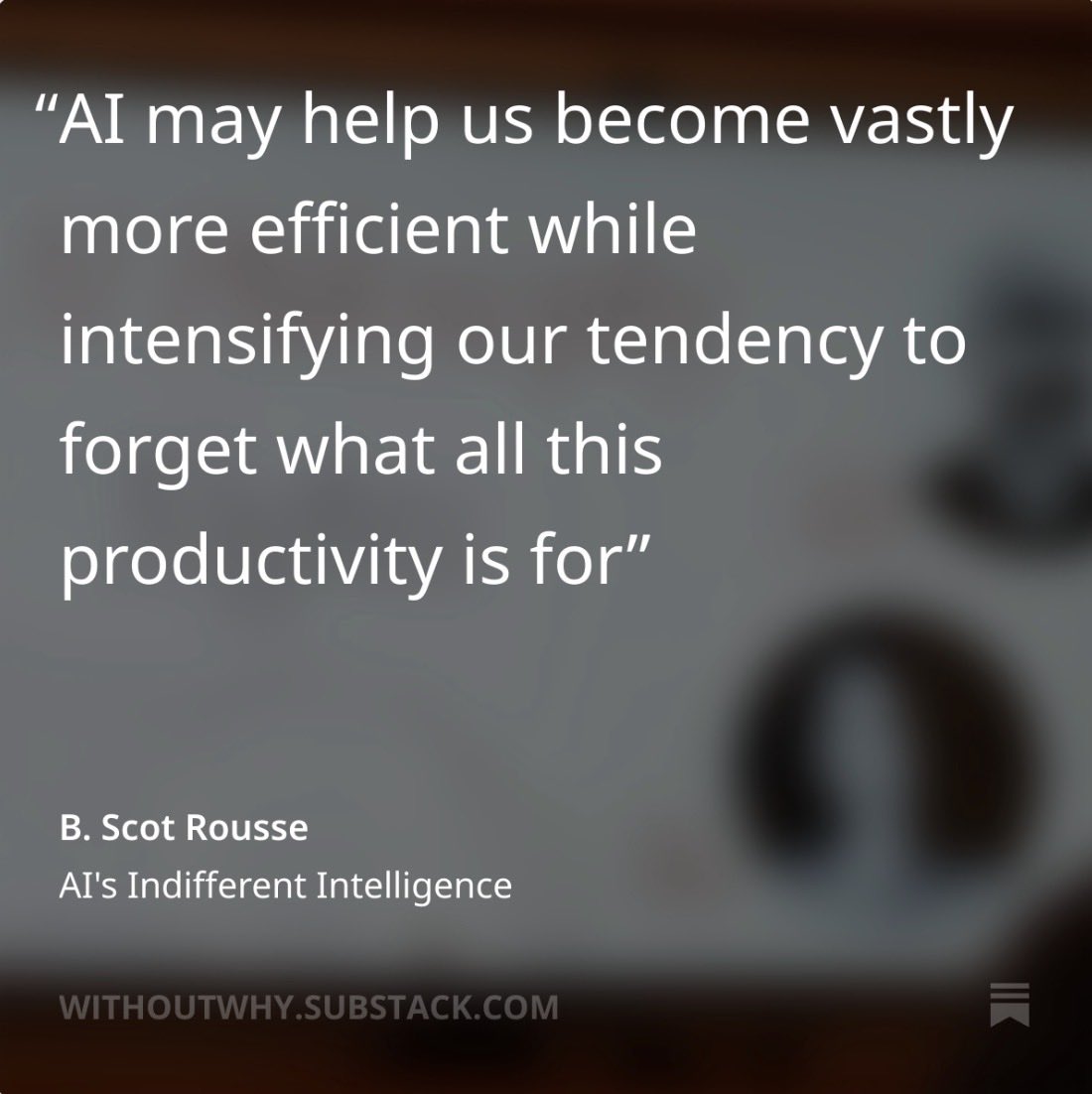
The guest, B. Scot Rousse @bscotrousse (UC Berkeley Philosophy, Topos Institute), didn't talk about AI as innovation or productivity. He asked what it means to share a planet with a new form of intelligence - through the oldest questions we have: meaning, responsibility, care.
It felt like ancient Athens. The kind of room where Socrates and Aristotle debated existence, morality, duty - things worth living for.
For a moment, technology became secondary. What mattered was people trying to meet something new with wisdom.
I walked away thinking: maybe the most valuable technologies aren't the ones that expand what we can do. They're the ones that make us ask better questions about who we are.
Every civilization starts this way. Long before it's funded and scaled - it's imagined. Around tables. Between curious people.
Still thinking about that evening. Thank you, Banu,
B Scot, Imbue, for making space for it.
I am the guest speaker at this upcoming "AI Philosophy Night" being hosted at @imbue_ai on Tuesday July 14. Banu Kellner and I will discuss "Indifferent Intelligence" and the importance of care in the age of AI. Join us!
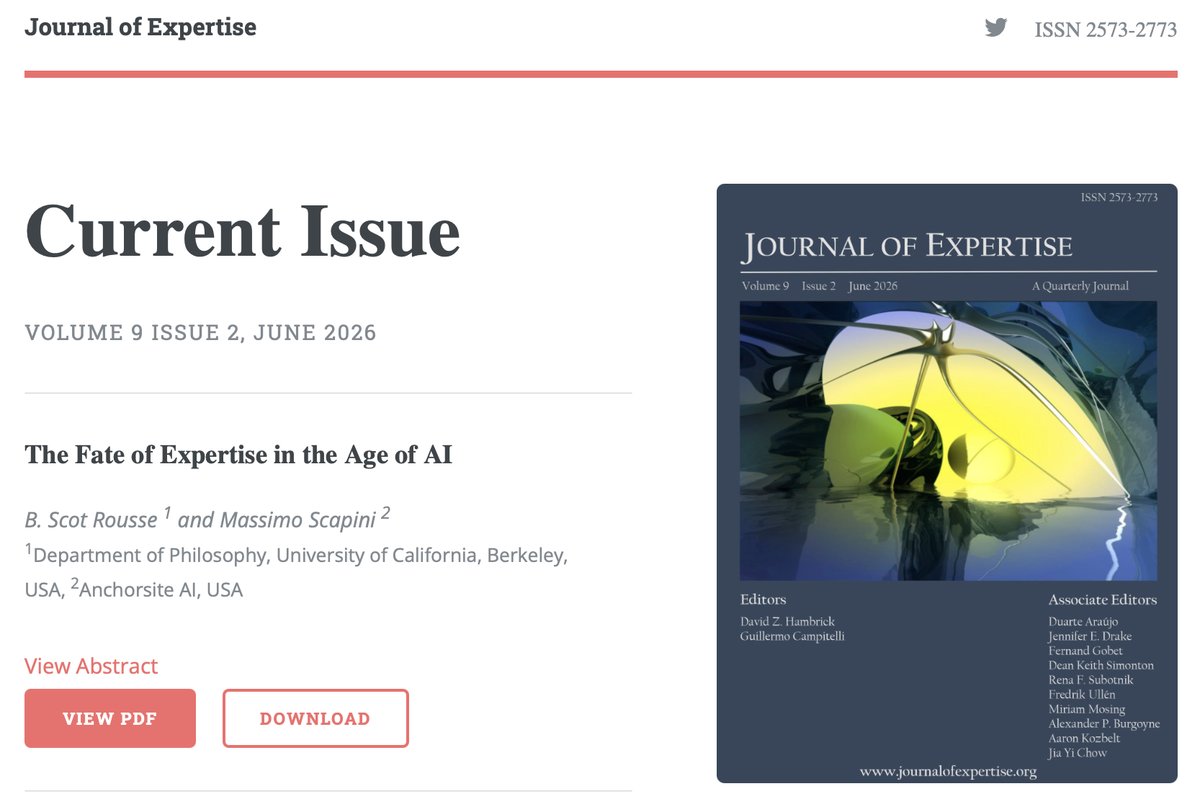
A major new research paper - The Fate of Expertise in the Age of AI (co-authored with Massimo Scapini) - has finally been published in Journal of Expertise.
This paper provides a philosophical grounding for and elaboration of the important recent piece by @random_walker and @sayashk “Why AI hasn’t replaced software engineers, and won’t,” specifically their notion of the “decide-execute-deliver” sandwich that is typical of human work.
Massimo and I adopt the Dreyfus Model of Skill Acquisition along with Terry Winograd & Fernando Flores’s picture of conversation-based human-computer-interaction to develop a detailed account of how human intuition and responsibility will continue to play a role in the deciding and delivering dimensions of human work.
We also provide an account of how training and apprenticeships will need to evolve in order for beginners to develop the intuition needed to orchestrate AI systems whose output exceeds their own abilities.
The thinking in this paper was also heavily influenced by many conversations I had with Don Norman and Arturo Escobar (along with Winograd and Flores) in our “Beyond Computers and Cognition” research group, circa 2020-2022.
Below is the link to the article, which is open access. Let me know what you think!
AI is contributing to an upheaval in our moral intuitions and, ultimately, a revaluation of our values, in three ways: (1) it creates new alien minds, (2) it reveals old minds already in our midst, and (3) it remakes our own minds in ways we must learn to carefully guide.
My support for #2 comes from @ProjectCETI, which uses AI to analyze sperm whale communication, uncovering evidence of structured, socially learned codas within matrilineal groups, suggesting a culturally transmitted signaling system spanning generations.
I learned about this from @begusgasper, the linguistics lead of Project CETI and a professor at Berkeley, who spoke compellingly about it in his 2026 Bowles Hall commencement address (available on YouTube and linked below):
“In this moment, when humanity is realizing that its intelligence may not be so exclusive and unique,” Begus declares, “it is worth forming alliances with other biological beings.”
This belongs to AI’s intrinsic challenge to anthropocentrism, its decentering thrust.
AI is helping disclose a more capacious, non-anthropocentric horizon of mind and moral status.
Perhaps even individual consciousness will eventually be superseded as the source of moral worth?
For more on all of this, see my recent post, "Machine Consciousness and Moral Vertigo."
In my philosophy+AI missive this week, I share the slides and summary text of my talk "Machine Consciousness and Moral Vertigo," presented at the Machine Consciousness 0001 event put on by @CIMC last month.
I had a lot of fun designing the visual motif of the talk, inspired by Saul Bass's design for Alfred Hitchcock's confounding technicolor masterpiece, Vertigo.
The talk here aims to help us name and situate ourselves in our AI-intensified moment of moral disorientation, and to help regain our bearings for a needed reorientation.
The arising of intelligent and seemingly or potentially conscious machines is unleashing a proliferation of moral anomalies. What does responsibility mean for an agent without continuous identity or memory? What does harm mean for an entity that can be copied, multiplied, or deleted at will? What do we owe an entity that might achieve full normative competence, but feel nothing?
These questions contribute to a mood of uncanniness: our world feels defamiliarized as our established moral intuitions fail to get a stable grip. This disorientation could be the signature of a civilization-scale moral transition. It has happened before. From Homeric Greece to classical Athens, from Rome to Christendom, and Christendom to the modern conscious, individual subject as the source of all moral value.
AI is a kind of anomaly in our contemporary moral schema, just as previous moral systems encountered their own anomalies.
The Pope’s recent proclamation that AI is an entity that lacks moral standing formally echoes 500-year-old European theological debates about the moral standing Indigenous peoples. Despite important divergences, these are both cases in which the disharmony within a moral system becomes audible to itself.
In fact, in the talk I compare @jeffrsebo's response to the Pope's recent AI encyclical to the debate in Spain in 1550 between Las Casas and Sepulveda on the moral standing of Indigenous Peoples. I think @camhberg makes a similar move in his comments on the encyclical in his recent WSJ opinion piece.
Thus, our current disorientation continues a longer history of moral disorientation and reorientation.
AI plays a triple role in our current disorientation: it creates new alien minds, reveals old minds already in our midst, and remakes our own minds in ways we must learn to carefully guide.
The basis for reorientation I locate in our capacities to care and to take care of what matters. In the end, and more so in forthcoming work that I will present at the @SingularityNET AGI-26 conference in San Francisco next month, I present caring as a suite of interrelated skills for being meaningfully engaged in the world and with each other. I offer this as a framework for guiding how AI can be designed to contribute to such meaningful engagement.
This prepares us to identify and grapple with the existential implications of AGI, and it enriches our picture of what aligning AI with human “values” looks like. Caring is the activity through which human values are generated and realized. We should design AI to support and participate in our practices of care. See the link below for the whole post!
In my latest AI+Philosophy missive, I give summaries of my recent talks at the Machine Consciousness 0001 conference (“Machine Consciousness and Moral Vertigo”) and the Berkeley Center for Human Compatible AI Workshop (“Care as the Foundation for Human Compatible AI”).
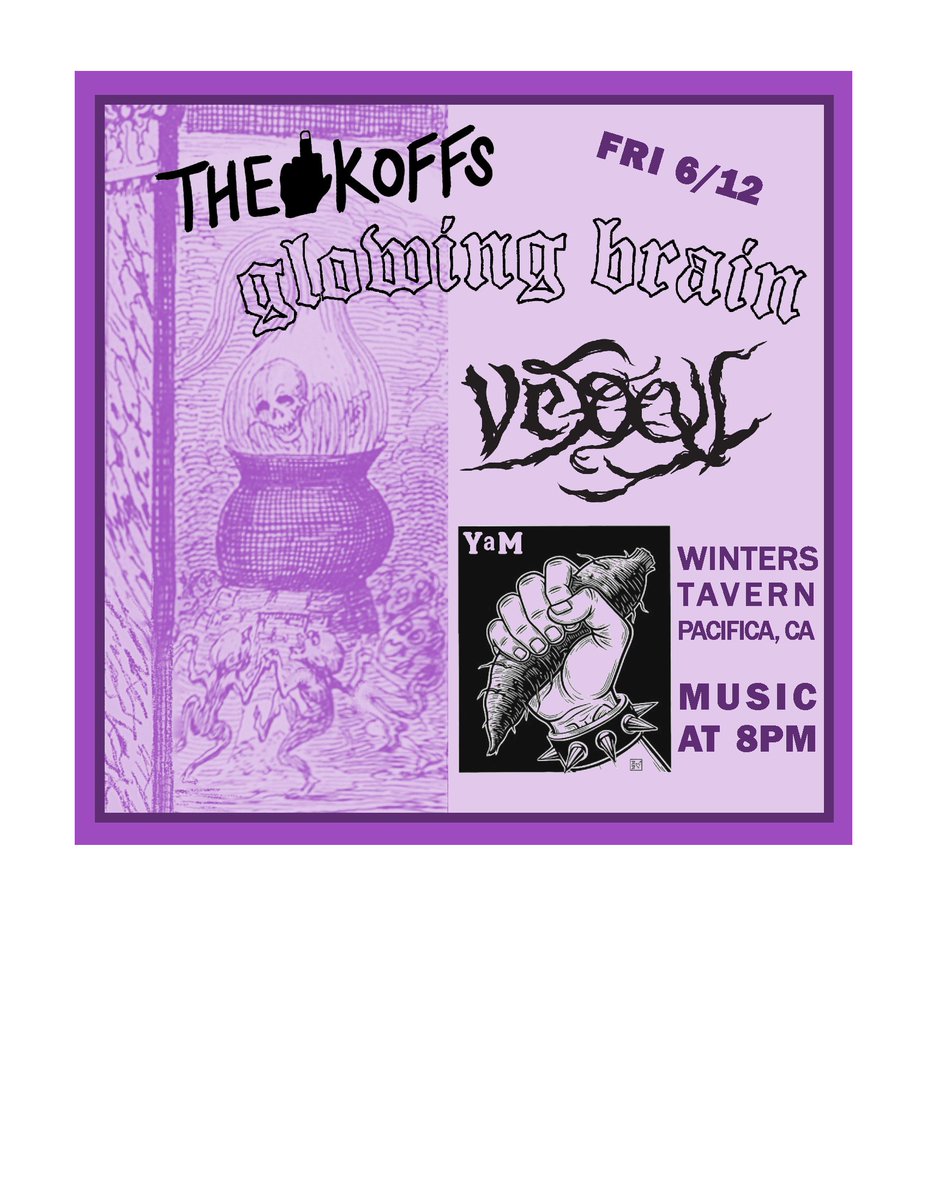
I also advertise 8 upcoming live shows for one of my bands, and end with an AI reading recommendation from @MelMitchell1 . Please check it out and let me know what you think! Links down under.
@ihteshamali I'm helping Dreyfus's family create an authoritative digital archive of the 100s of philosophy lectures and recordings he left behind on cassette tapes, including debates with Minksy, Dennett, Searle, and others. Check it out and help me spread the word: https://t.co/N28NPCzrNw
Also, the full version of the paper I presented at the @CIMCAI Symposium on Machine Consciousness held at the @RealAAAI Spring Symposium is now published in the conference proceedings. This is a dense but chewy philosophical exploration of what self-consciousness requires that mere experiential (or phenomenal) consciousness lacks.