There are two visions of universal basic income. And the gap between them is the gap between freedom and 1984.
Vision one is Sam Altman's. In Moore's Law for Everything, he proposes an American Equity Fund: the State taxes companies and land, then redistributes to citizens. The State sits between the people and the companies that create value. Every dollar you receive goes through it.
Think about what that means. The entity that decides who gets what, how much, and under which conditions becomes the most powerful entity in human history. Your income depends on your compliance. That's not a safety net. That's a leash. Orwell didn't need AI to imagine where this ends.
Vision two is Musk's. The companies that create value give it directly to the people. No ministry. No agency. No committee deciding who deserves what. You own a piece of the machine. Want to work on top of that? Work. Nobody can take it away because you voted wrong or posted wrong.
Notice the words Elon uses. He doesn't talk about Universal Basic Income. He talks about Universal High Income. That's not a detail. It's the whole thesis.
UBI is a scarcity concept. A minimum check, voted by politicians, to keep you alive while the machines do the work.
Universal High Income is an abundance concept. In the world AI is creating, value grows exponentially and the cost of almost everything collapses toward zero. That's massive deflation. In that world, a fixed check from the State is the worst possible model: it's always late, always negotiated, always smaller than the value actually created. Equity is the best model. When you own a piece of the companies building the future, your income grows at the speed of innovation, not at the speed of a parliamentary vote.
And it keeps the State from standing between the people and the companies, slowing down the very innovation that makes abundance possible.
Here's what most people miss: this design also kills institutional capture.
Look at how influence works today. You don't need to win elections. You fund the intermediaries. The Gates Foundation became one of the largest funders of the WHO. Soros money flowed into NGOs, think tanks, district attorney races. Same playbook every time: whoever finances the middle layer controls the middle layer.
Billionaires giving isn't the problem. Gates and Soros give too. The difference is where the money goes. They fund institutions that then decide for you. Musk gives ownership to individuals. No strings, no intermediary to steer.
Vision one builds a giant central intermediary, the most valuable capture target ever created. Every lobby, every foundation, every ideologue will fight to control it.
Vision two has no center to capture. You can't corrupt a pipe that goes straight from the company to the citizen. Corruption isn't fought. It's made impossible by design.
Will capture disappear overnight? No. But it loses its target. And a parasite without a host doesn't last long.
What Elon is doing is rewriting civilization's operating system. Removing the parasitic layer between those who create and those who receive. Because that's what it takes to become a Kardashev Type II civilization, one that harnesses the full energy of its star. You don't get there with a bureaucracy approving every step.
The question was never "should we share the abundance AI creates?" It's "who stands between you and it?"
His answer: nobody.
Today is the birth anniversary of Dr. A. P. J. Abdul Kalam, a man who left behind no mansion, no luxury-filled lifestyle, and no desire to accumulate wealth — but a legacy that continues to inspire millions.
He left behind thousands of books, a few personal belongings, and a lifetime of dreams for India.
Dr. Kalam spent his life serving the nation, inspiring young minds, advancing India's scientific capabilities, and reminding every student that their circumstances do not define their future.
He never measured success by what a person owned, but by what they contributed to society.
From a small house in Rameswaram to Rashtrapati Bhavan, his journey proved that greatness does not require privilege. It requires curiosity, discipline, humility, and an unshakable belief in one's dreams.
He encouraged students sitting on the last bench to dream of becoming scientists, teachers, leaders, and nation-builders.
He may have left behind very few possessions, but he gave an entire generation something priceless — the courage to dream and the confidence to believe that those dreams could come true.
Some people leave behind wealth. Some leave behind power.
Dr. A. P. J. Abdul Kalam left behind a vision for a stronger, more developed India.
And perhaps that is the most beautiful measure of a life well lived: not how much we accumulate, but how many lives we inspire.
Happy birth anniversary to the People's President, the Missile Man of India, and the teacher whose dreams continue to guide our nation. 📷📷
#APJAbdulKalam #KalamSir #MissileManOfIndia #BharatRatna #Inspiration
#WATCH | Delhi: On SC judge Justice Ujjal Bhuyan's views on citizens' right to vote, Former Judge at the Uttarakhand High Court, Lokpal Singh, says, "As far as intensive revision of votes is concerned, it is a normal process. The Election Commission of India is engaged in this process throughout the year for adding or deleting the names of the voters... intensive revisions should be done. So far as gross deletion of names is concerned, it is the ECI that can see it better. It's always easy to say that thousands of votes have been deleted. But when the people and the population of the particular states... Bihar and West Bengal, both the states are adjoining Bangladesh. Infiltration cannot be denied. So many fake votes are there. If the ECI, after verification, has deleted the names of so many persons, and those persons who have not come—for them, so many institutions are coming forward saying, 'Yes, a bulk of voters have been deleted in Bihar or West Bengal.' I feel that no one can deny the infiltration from West Bengal... So, a change of govt is one part. I feel that no one should blame the Central govt, saying that due to their intervention in West Bengal, the regime has changed..."
On Justice Nariman's remarks, he says, "Justice Nariman is a jurist of this country. I have a great respect for Justice Nariman. But so far as the statement of the election of West Bengal is concerned, I do not agree with Justice Nariman. 90 lakhs were deleted... now you have been watching the news that after the elections, so many persons traveled from West Bengal to Bangladesh. Can anyone question this? Can anyone find out from where they came and why they are returning to Bangladesh? If they were citizens of India, they should not have traveled from West Bengal to Bangladesh, so I do not have any agreement with Justice Nariman on this point..."
Please, please, please make this thread viral.
Mainstream media won't present the fact that the Lawyers Association For Constitution is a Marxist outfit
Before they spread a fake narrative, let’s show them the power of nationalists.
Tag big accounts and ask them to share it.
I generally agree with this post.
GCCs originally get started around a combination of specific competency + global coverage + cost arbitrage. During the earlier stages - depending on "leadership" the focus is narrow and reports into a specific department in the mother country. It does well. And grows.
As it grows and becomes successful -- other departments in the morher country are "nudged" and "encouraged" to outsource some of their functions to India also. Some do it willingly, sone do it grudgingly. The India leadership also now has to become more generic than their original "special" focus that made them successful.
Global policies start getting applied to India. HR and finance grows their tentacles and have to approve everything. The autonomy that the India center originally enjoyed reduces. The centre loses it specialization. Gradually and over a 3-4 year span.
That is how they "degrade". The key is giving India leadership the autonomy to execute an India specific " hiring, salary and management strategy" so they don't get diluted.
But doesn't happen! India stops being India and starts looking more like any other global office for that company.
Hence better to "outsource".
There is something almost predictable about consulting advice
If a company runs its own GCC, someone will eventually say Why carry all this cost yourself? Move it to a specialist service provider. If the company already outsources heavily, the advice becomes You are losing control of technology - Build your own GCC
Same story with strategy. Diversified companies are told to focus. Focused companies are told to diversify.
Best Buy is a good example of this cycle. It built its Bengaluru technology centre in 2024 and scaled it to roughly 600 employees. It became a serious internal tech operation, even larger than Best Buy three US technology offices combined
Now Best Buy is transferring that operation to TCS under a roughly ₹2,000 crore, five-year deal. The logic is simple running a large GCC yourself sounds attractive because you get control, ownership and a dedicated team.
But once salaries rise, attrition increases and hiring AI/cloud/data talent becomes harder, the economics start changing
For TCS, this is exactly the opportunity. It is no longer saying only, Give us your IT projects
The newer pitch is closer to Give us your entire technology centre. We will hire the people, run the office, manage attrition, bring AI capabilities and operate it for you
Interesting I didn't think of this that will change the Dynamics of IT sector a positive call after last TCS gone after data center
That is important because GCCs have themselves become a huge industry. Companies originally created them to reduce dependence on IT outsourcing firms. Now IT firms are increasingly offering to build, operate and even take over those same GCCs
There is also a human side. Around 600 Best Buy employees in Bengaluru will move to TCS. They go from working inside a focused Best Buy technology organisation to becoming part of a 600,000+ employee services company
Some may get wider career opportunities. Others may feel they have lost some ownership of the product they were
Retweet this tweet if you think Abhijeet Dipke, Saurav Das, and Ashutosh Ranka should be arrested under UAPA for waging a regime change war against our country with the help of foreign powers.
They should be put behind bars with their friend Umar Khalid.
We the faculty of IIT Bombay express condolences to the family of the student but will stand by our colleagues Prof. Doolla, who has been named in the FIR along with other institute officials. We are
absolutely distressed at the damage done to his reputation.
#iitb#PMOffice
You tried to paint me as a pervert for exposing fraud, and as a result radical leftists started trying to dox me and send death threats, wanting to kill me.
Now you are taking credit for “leading the charge” on the fraud. Are you serious?
You are the fraud.
As an Alumni of IIT B, Prof. Suryanarayana Doolla sir or doolla sir as we used to call him taught our batch several electrical courses during our 2nd and 3rd years of college.
I actually FAILED one of his courses and had to retake it, but even through that experience, I never felt harassed, discouraged, or annoyed by the professor. On the contrary, he was always encouraging, supportive, and professional.
I feel that the professors at IIT Bombay, particularly those at DESE, are among the most professional and influential guiding figures for students. The achievements they have built throughout their careers, along with the depth of research, knowledge, and experience they bring to the classroom, provide students with an invaluable perspective.
#IITBombayProtest
@allegrajacchia@Monique_X I’d like to work for 𝕏, it’s becoming nearly too dangerous for me to even film anymore.
I understand the platform just as much as anyone from a creator perspective and believe in the mission of 𝕏.
Let’s make it happen 🤝
Pretty cool: Mohan Pedhapati (@S1r1u5_) was part of the team that hacked into OpenAI through a bug-hunting program. A poor kid from a rural Indian background who went to a free, no-name college in a small town in Andhra. Was denied a US visa repeatedly. Doing it simply for the love of it.
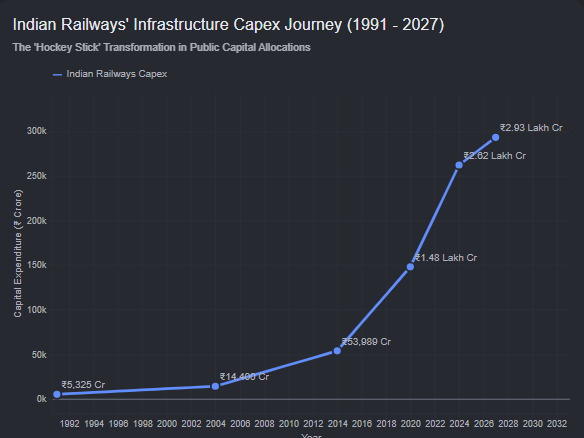
While expressways hog the headlines, the transformation of Railways has been no less impressive. Since 2014:
-Full electrification: Over 48,000 rkm electrified, cutting diesel dependency dramatically and shifting the economy away from heavy oil imports
-More than 31,000 kilometers of new tracks laid, increasing capacity of existing lines and connecting hitherto inaccebile Kashmir and North East
-Additionally, more than 54,600 km of old tracks fully renewed to handle increased weights and prevent accidents
And the new chapter:
-Vande Bharat Trains
-Bullet Train
-Dedicated Freight Corridor
-Kavach Safety systems
-Station Redevelopment
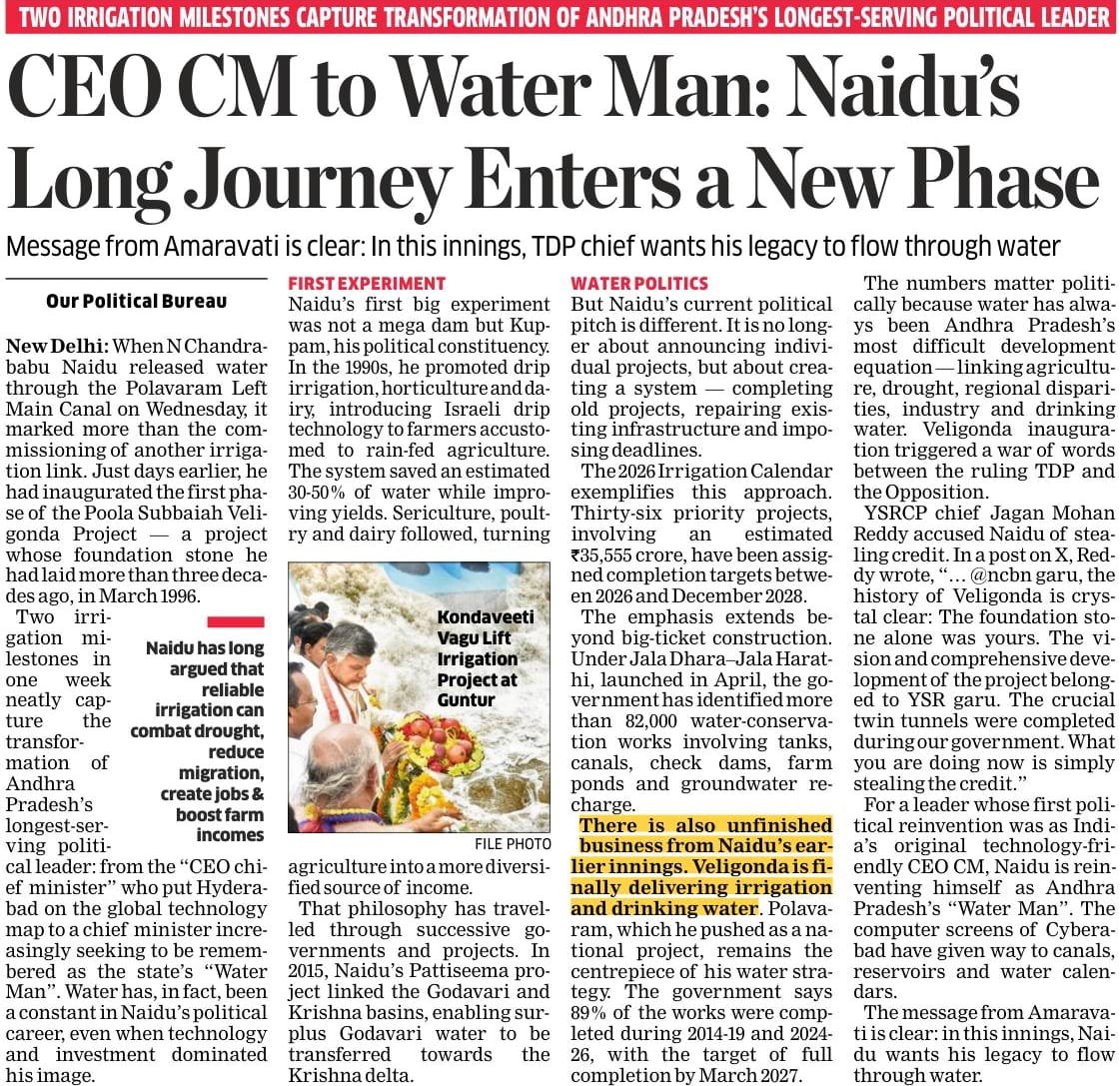
This week has been truly special, with two landmark irrigation projects reaching fruition in Andhra Pradesh. The #PolavaramLeftMainCanal and the #VeligondaProject have been decades in the making, and will transform lives and livelihoods across Uttarandhra and Rayalaseema.
It also feels like a new phase in my long journey in public life. I have been called the “CEO Chief Minister” over the years. Yet, bringing water to parched lands, giving hope to our farmers, transforming agriculture and securing drinking water for generations to come will always remain my most cherished legacy.
In the end, I would like my legacy to flow through water. Thank you, @EconomicTimes, for this thoughtful profile of that journey.
https://t.co/2KZqR7918l
When 740 children died at sea and every country said "no," one man—who had reason to remain silent—said "yes."
The year was 1942.
The ship drifted in the Arabian Sea, like a floating coffin. There were 740 Polish children on board. Orphans. Survivors of Soviet labor camps, where their parents had died of the flu or starvation. They had escaped through Iran, but a more terrible punishment awaited them.
No one would accept them.
The British Empire—the most powerful power of its time—refused entry to port after port along the Indian coast. "It's not our responsibility. Sail away."
Almost finished with food. No medicine. Time was running out.
Twelve-year-old Maria held her six-year-old brother's hand. She had promised her dying mother to protect him. But how do you protect someone when the whole world turns on them?
And then news came to the small palace in Gujarat.
The ruler was Jam Sahib Digvijay Singhji, Maharaja of Navanagar. In the royal system, he was just a minor prince. The British controlled the ports, trade, and army. He had every reason to obey and remain silent.
When his advisors told him that 740 children were stranded at sea after the British refused to take them to any port in India, he asked one question:
"How many children are there?"
"Seven hundred and forty, Your Majesty."
He paused and calmly said:
"The British may control my ports. But they do not control my conscience. These children are docked at Navanagarh."
The advisors warned him:
"If you challenge the British—"
"So I will stop. "
He sent a message to the ship: You are welcome here.
When British officials protested, the Emperor remained firm.
"If the strong refuse to save the children," he said.
I, the weak, will do what you cannot.
In August 1942, the ship struggled to enter Navanagara harbor under the blazing summer sun.
The children walked like ghosts—exhausted, blank-eyed, many too weak to walk. They had learned to hope for good. Hope had turned dangerous.
The Maharaja was waiting for them on the dock.
Dressed simply in white, he knelt down to be at their eye level. Through interpreters, he spoke words they had not heard since their parents died.
"You are no longer orphans.
You are my children now.
I am your Bapu—your father."
Maria felt her brother's handshake. After months of rejection, these words seemed surreal.
But he was serious.
He didn't build a refugee camp.
He built a home.
In Balachadi, he created something amazing—a little Poland in India. Polish teachers who understand trauma. Polish food flavored with memory. Polish songs in an Indian garden. A Christmas tree under a tropical sky.
“Suffering tries to erase you,” he said. “But your language, culture, and traditions are sacred. Let's keep them here.” "
Children who were told they had no place in the world finally found a home.
They laughed again. They played again. They returned to school. Maria watched her brother chase a peacock in the palace garden, and her body remembered again what safety meant.
The Emperor used to visit them often. He remembered names. He celebrated birthdays. He watched high school plays. He comforted children crying for parents who would never return. He paid for doctors, teachers, clothing, and food—from his own wealth.
For four years, while the world was torn by war, 740 children lived not as refugees, but as a family.
When the war ended and it was time to leave, many wept. Balachadi became the only home they had ever truly known.
These children have grown and moved around the world—becoming doctors, teachers, engineers, parents, grandparents. And they have never forgotten.
Warsaw's Good Emperor Square appeared in Poland. Schools bear his name. He was awarded Poland's highest honor.
But the original monument wasn't made of stone.
It cost 740 lives.
Today, at 80 years old, they still gather. They tell their grandchildren about an Indian king who refused to turn compassion into political calculation.