Just found a gem of a website
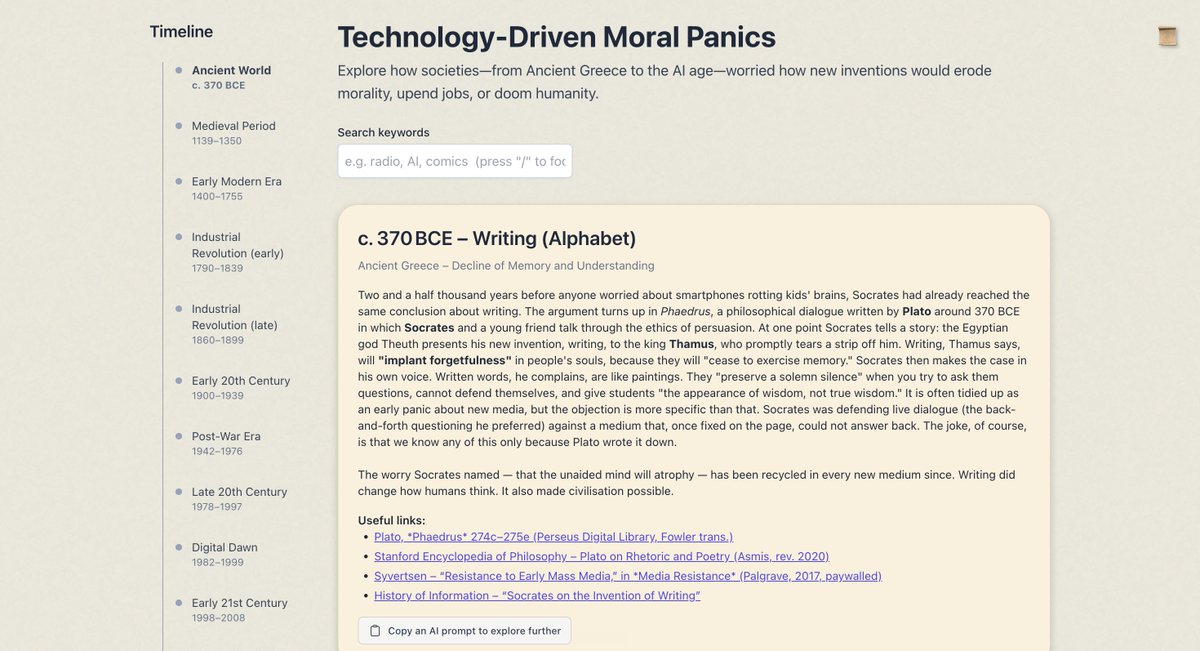
"Technology-Driven Moral Panics" or how societies all the way back to Ancient Greece worried about new inventions dooming humanity
A 6 year old losing his mind over a tablet is doing something his brain is physically incapable of stopping.
The apps kids use run on a variable ratio reinforcement schedule. The reward lands after an unpredictable number of taps. Sometimes the next level, sometimes a new character, sometimes nothing. Behavioral scientists proved in the 1950s that this exact pattern produces the most compulsive, hardest to extinguish behavior of any reward structure ever tested. It is the same schedule slot machines run on.
Now point that at a 6 year old. The prefrontal cortex, the part that handles impulse control and delayed gratification, does not finish wiring until the mid 20s. In a 6 year old it is barely online. So the parent is asking a child to self-regulate against software tuned by teams of adult engineers to be maximally compelling, using the one reinforcement pattern evolution made hardest to resist.
"No amount of time was ever enough" is tolerance. The reward system adapts to the dose, the same screen time stops landing, the brain demands more. Standard addiction curve.
"A fight every single day" is what happens when you cut off a variable ratio reward. The behavior spikes before it fades, because the brain learned that pushing harder eventually pays. The tantrum is the system working as designed, not the kid being difficult.
"3 hours later he was a different kid" is the tell. That is roughly how long a young, overstimulated dopamine system needs to settle back toward baseline. The flat, irritable version was withdrawal. The child who showed up after lunch was the actual child.
The kid was never the problem. He was outgunned by software the smartest behavioral scientists alive helped design, carrying a brain that will not have the hardware to fight back for another 20 years.
Vitamin D is misnamed. It's a hormone the body makes from cholesterol when sunlight hits the skin.
Two substances we've been told to avoid for fifty years.
The cholesterol gets prescribed away with a statin.
The sun gets blocked with SPF 50 from March.
When the bloodwork inevitably comes back deficient, you're handed a capsule of synthetic D3, often suspended in soybean oil, and told that supplementing is now essential.
The system removed the inputs. The system then sold you the replacement.
Vitamin D regulates immune function, bone density, mood, hormonal health, and the expression of hundreds of genes. The chronic disease epidemics of the modern era track its decline almost perfectly.
The cure is not a capsule. The cure is the cholesterol your liver wants to make and the sun on the skin it was always meant to meet.
Both are free. Which is the entire problem.
Despite the reputation, I don't think everyone needs to be carnivore. You don't have to bin the vegetables, torch the fruit bowl, and swear a blood oath to ribeye.
My position is calmer than the internet would have you believe. It comes down to three things.
One. Fatty animal foods belong at the centre of the human diet, as the keystone, the place the evolutionary record keeps quietly pointing to while we keep politely looking away. The guidelines shoved them into the corner of the plate, and that was the mistake.
Two. Plants are not automatically virtuous. Some are wonderful, some are fine, and some carry oxalates, lectins, and a long list of caveats nobody reads out while calling them clean. "Plant" was never a synonym for "harmless."
Three. Carnivore is a viable diet in its own right, short term and long term, for health and for the way you feel walking around inside your own body.
That's the whole manifesto. No commandments. No congregation. Animal fat restored to its rightful seat, plants judged honestly rather than worshipped, and one very good option put back on the table for whoever wants it.
Eat your veg if it suits you. I'd just like the steak to stop being treated like the problem.
"Livestock use 83% of the world's farmland and give back just 18% of our calories."
There it is. The killer stat, lifted off the infographic, courtesy of Poore and Nemecek's enormous 2018 study in Science: nearly 38,700 farms across 119 countries. Damning. Wildly inefficient. Somebody fetch the cow a P45.
One small question before sentencing. Where is that 83% of land?
It's grass. Worldwide, around two-thirds of all farmland isn't cropland at all; it's pasture and rough grazing. Fell, moor, steppe, marsh, scrub.
Marginal land, to use the term of art. Too steep, thin, wet, or cold to grow a single thing a human can chew.
In Britain, about 65% of farmland is good for grass and little else. You are welcome to plant lentils on a Cumbrian hillside. You will then watch them sit there, baffled, and die.
What that land does grow is cellulose, the most abundant biomass on Earth and a substance your gut regards as scaffolding. You cannot eat it. Nor can any pig, chicken, or vegan.
A ruminant can. That is the entire trick. She walks across the inedible two-thirds of the world's farmland and turns it into milk and meat.
So the cow isn't squatting on prime arable while the nation starves; she's working the land that grows precisely one crop, grass, which she eats, which is the whole point of her.
Calling that inefficient is like calling a fishing boat inefficient for its poor performance on the motorway.
Then there's the calorie sleight of hand, which is somehow the dafter half.
Yes, beef is a modest share of calories. So is a glass of cooking oil. You can get calories from a spoon of sugar. Calories are the easy part.
The hard part is everything else the steak is carrying. On DIAAS, the actual measure of protein quality, beef scores about 1.0 to 1.1, with milk and eggs a shade higher.
Wheat limps in around 0.45. Almonds manage 0.40. The FAO won't let a protein scoring under 0.75 make a quality claim at all, which quietly disqualifies most of the plant kingdom.
Then there's B12, of which plants contain essentially none, plus heme iron and zinc in a form your body can actually be bothered to absorb.
Ranking food by raw calories and declaring the steak a failure is like ranking a library by how well the books burn.
By that measure, petrol is the finest meal in Britain.
Modern medicine's approach to digestion, summarised:
- Heartburn after eating
- Take an antacid
- Still burning
- Step up to a proton pump inhibitor, long term
- Settles up top, but now bloated and miserable lower down
- Standard advice: eat more wholegrains, up your fibre
- Bloating gets worse
- Try a probiotic
- Still bloated
- Add a fibre supplement, on top of the wholegrains
- Worse again
- A second supplement to settle the first
- Refer to a specialist
- Specialist recommends low-FODMAP, a long list of plants to stop eating, wholegrains very much included
At no point in this entire cascade does anyone suggest the radical step of removing the foods that started the hurting. We will tell you to eat more of the bloating grain, then sell you a powder to fix the bloating the grain caused, before we'll ever say "perhaps just stop eating the grain."
We will add nine things to your shopping basket before we'll subtract one.
There's a reason for that, and it isn't your health.
Activist: "Your sheep are unsustainable."
Farmer: "Compared to what?"
Activist: "Anything. They're a drain on the land."
Farmer: "This land grows grass and nothing else. Too steep to plough, too wet to crop, too thin to bother. The sheep is the only thing alive that turns it into food."
Activist: "Grow plants instead."
Farmer: "Nothing arable grows here, I've told you. So walk me through it. A solar-powered animal eats a crop I can't, on ground I can't farm, and hands me back the most bioavailable protein going. What's the more sustainable version of that?"
Activist: "Lab protein. Soy."
Farmer: "Both want flat land, inputs, and a factory. Mine wants rain and a fence. And while she's at it she grows a fleece, a renewable textile that composts in a hedge, off the same blade of grass."
Activist: "Wool's barely used anymore."
Farmer: "Because you swapped it for plastic dragged out of the ground, shedding microfibre into the rivers, sat in landfill for four centuries. You picked the oil jumper and called the wool one wasteful."
Activist: "It's still livestock."
Farmer: "It's grass, sun, sheep, dinner, and a jumper, on land that otherwise feeds nobody. If you've got a tidier loop than that, I'm all ears."
Activist: "..."
Farmer: "Sustainable means it keeps going on its own. She's been managing that on this hill since before the word turned up."
If you want to know where property growth is heading, follow the runway✈️
Long before the first plane lands at the new Cape Winelands Airport, investors are already buying the land around it. Now ask yourself why?
Because airports attract logistics companies, warehouses, hotels, retailers, offices and the infrastructure needed to support them. Entire economic ecosystems form around major airports.
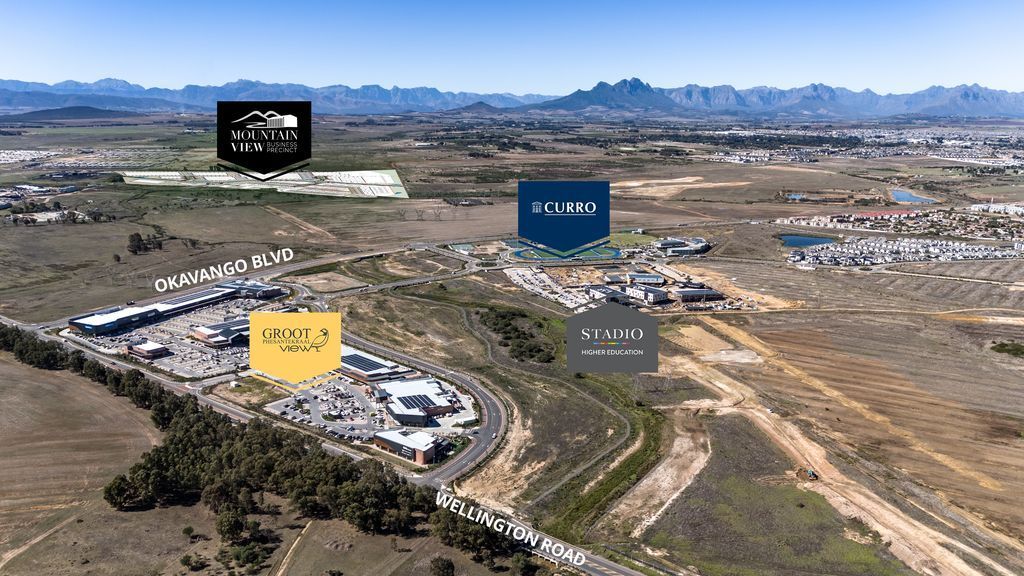
One development (5km from the future Cape Winelands Airport) that looks exciting is the Mountain View Business Precinct.
Quick details about the industrial park:
Phase 1:
• 66,500m2 secured by national + international users
• 18,681m2 single plot of serviced industrial land remains for sale
• Already 75% sold out
Phase 2
• 120,000m2 planned for release
The development will also include upgrades to Darwin Road, helping unlock the broader Durbanville industrial node.
There is a term urban planners use for development around airports: aerotropolis. Think of it as an airport-centred city where industrial, commercial, retail and hospitality developments cluster around aviation infrastructure. We've seen this happen around major airports across the world. Now we're watching it happen in the Cape Winelands.
Construction is expected to begin within the next 3 months. I've said it before, if you can, always buy near the airport.
Drone image credit: JW Brand Solutions
The Knepp Estate in West Sussex is the most famous rewilding project in Britain. It is on Springwatch, in the broadsheets, in a bestselling book. It is the place everyone points to when they want to show you what the land does the moment humans step back and stop farming it. Look at the nightingales, the purple emperors, the storks. Proof, apparently, that we should get the animals off the land and let it go wild.
There is one problem with using Knepp this way. You have to never look at what is standing in the fields.
Knepp is full of animals. Deliberately, by design, as the entire point.
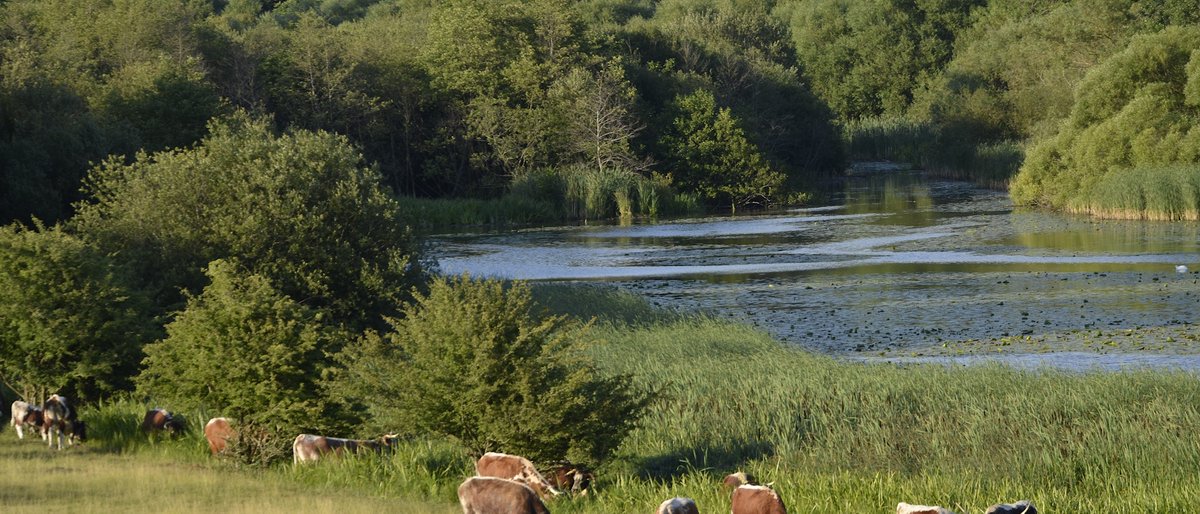
When Charlie Burrell and Isabella Tree gave up on intensive farming around 2000, on heavy Sussex clay that had run the estate £1.5 million into debt, they did the reverse. They brought more animals in, of more kinds, took down seventy miles of fencing, and let them roam. Old English longhorn cattle. Tamworth pigs. Exmoor ponies. Red, fallow and roe deer. Stand-ins for the wild aurochs, boar and horses we wiped out long ago. Their grazing, browsing, trampling, rootling and dung is the engine that builds the whole mosaic of scrub and wood pasture the rare birds need. Too few animals and it chokes into dense woodland. Too many and it flattens to bare grass. The cattle are the reason the nightingale is there at all.
And Knepp does not leave nature to it. There are no wolves in Sussex, so the herds would breed until they ate the place bare. So Knepp culls them every autumn. The deer are shot by a licensed stalker. The cattle and pigs go to a small organic abattoir. Knepp calls this, without flinching, stepping into the role of the missing apex predator.
A managed herd, grazing grass, culled before winter for meat. There is a word for that, and it is a very old one.
Then comes the part that should end the argument outright. They sell the meat. Knepp Wild Range: an online butchery and a restaurant, longhorn beef aged on the bone for weeks, Tamworth pork off pigs fattened on autumn acorns, venison, charcuterie cured in house. Heston Blumenthal calls the longhorn the best beef in the world. Knepp markets the lot as the most sustainable meat you can buy, and its own website argues, in words any carnivore would recognise, that pasture-fed meat is good for you and that grazing ruminants are one of the best carbon sinks on the planet.
So Britain's flagship rewilding project is a former arable farm, gone broke under the plough, rescued by swapping the crops for free-roaming cattle, pigs, ponies and deer, then counting them, culling them, and selling them as premium grass-fed steak.
This is the thing held up as the case for taking animals off the land.
Post a Knepp turtle dove with a caption about what nature does once we stop eating meat, and you have it exactly upside down. The turtle dove is sponsored by the longhorn. The green cathedral was built by a herd of cattle, and paid for, in part, by selling the surplus as steak.
None of which means we should turn all of Britain into Knepp. We shouldn't. It grows a fraction of the food the land could, and nobody lives on nightingales. But on the one principle it actually demonstrates, it is unanswerable, and it is the precise principle the people quoting it want dead. Put the grazing animals back and the wildlife pours in. Take them away and it drains out.
The poster child for the end of livestock is a working meat farm.
Go and read its menu.
Raw kidney beans: five of them will hospitalise you with phytohaemagglutinin poisoning.
Raw cassava: kills people regularly in food-insecure regions if the cyanogenic glycosides aren't processed out.
Raw elderberries: contain cyanide compounds. Toxic without cooking.
Raw potatoes: solanine. Enough of them and the nervous system stops cooperating.
Raw grain: mycotoxins, lectins, phytates. Requires milling, soaking, and cooking to be safely edible.
Raw spinach: oxalates that accumulate in soft tissue and kidneys with regular use.
Raw ribeye: safe. Eaten raw across cultures for thousands of years. No processing required.
The plant kingdom is, biochemically, defending itself. The chemistry is real and documented. Every soaking, sprouting, fermenting, boiling, and roasting step humans developed for plants exists because the plant was actively trying to deter the eater.
And the soaking, sprouting, and fermenting only makes the plant *less* toxic. Never fully safe. Never as inert as a piece of meat sitting on a chopping board.
You don't have to cook a steak to avoid hospital. You absolutely have to cook a red kidney bean.
The animal is on your side. The plant has been at war with you the entire time.
I interview dozens/hundreds of new grads, nearly every day of the year. These are people with a well-formatted resume and a Bachelor's Degree in Engineering from well-regarded US universities and a GPA above 3.6. The majority cannot engineer, cannot function independently, cannot answer basic technical questions. We have watered down standards and inflated grades to the point that a bright, enthusiastic student spending four years in school sends almost no signal at all.
What does? Hard evidence of actually building stuff. There is no substitute for actually doing the thing.
A quick tour of the plant-based "milks" that were going to save you and the planet.
Almond milk. Ingredients: water, almonds (2%), calcium carbonate, sunflower lecithin, locust bean gum, gellan gum, potassium citrate, dipotassium phosphate, sea salt, natural flavour, vitamin mix. Each litre uses around 1,600 gallons of irrigated water in a state that has been in drought for a decade.
Oat milk. Ingredients: water, oats, rapeseed oil, dipotassium phosphate, calcium carbonate, tricalcium phosphate, sea salt, riboflavin, vitamin A, D2, B12. Hexane-extracted seed oil with a dusting of grain in it. Spikes your blood sugar like a can of Coke.
Soy milk. The soy was grown for the oil. The leftover meal, normally fed to pigs and chickens, is what you are drinking. The industrial by-product of seed oil production, sold to you as the ethical choice.
Coconut milk. Thickened with carrageenan, shown in studies to provoke gut inflammation. Driving deforestation across Southeast Asia. Some Thai producers still use chained monkey labour to harvest the coconuts.
Rice milk. Ingredients: water, rice, sunflower oil, calcium carbonate, sea salt, gellan gum, locust bean gum, vitamins. Sugar water with a faint memory of rice and another splash of seed oil for good measure.
Pea milk. Engineered in a lab in 2015. Ingredients: water, pea protein isolate, sunflower oil, cane sugar, calcium phosphate, sea salt, gellan gum, xanthan gum, sunflower lecithin, natural flavour. The contents of a chemistry set in a carton.
Hemp milk. Tastes like a barn floor. Still contains sunflower lecithin and gellan gum, because nothing in this aisle is allowed to exist without an emulsifier.
Cashew milk. The shells contain a chemical so caustic that the women in Vietnam who hand-process them routinely suffer permanent skin damage. The world's most exploitative latte.
Cow's milk. Ingredients: cow's milk.
Eight thousand years on the table. No marketing budget required.
They took your food apart and sold it back to you, piece by piece, at a markup.
They skimmed the cream off the milk and sold it back as a separate product.
They trimmed the fat off the meat, sold the lean as premium, and rendered the fat into the base of the processed food you bought to replace the meal.
They took the yolk out of the egg and sold you a carton of whites with a photograph of an athlete on it.
They boiled the bone out of the stock and sold you a collagen sachet with a picture of someone meditating.
They took the butter off the bread and sold you a spread emulsified from oil they extracted with a petroleum solvent.
They took the offal off the plate, the part your great-grandmother prized, and ground it into pet food, then sold you a multivitamin containing synthetic copies of what the offal gave away for free.
Every single thing they removed, they sold back to you, in a more expensive and less nourishing form.
Your great-grandmother bought a whole animal and wasted none of it.
You buy the same animal, in fourteen separate packets, at four times the price, and you have been trained to call that choice.
The Ica Valley sits on the Peruvian coast, north-west of Lima, at the foot of the Andes. It is one of the driest inhabited places on Earth. Annual rainfall is measured in single millimetres. Without external water, almost nothing grows there.
In the early 2000s, the Peruvian government, supported by the US and the World Bank, designated the Ica Valley as a hub for high-value export agriculture. The land was cheap. The labour was cheap. The climate, paradoxically, was perfect for crops that respond well to sunshine and controlled irrigation. The water would come from the aquifer beneath the valley, drawn up through wells at minimal cost to the agribusinesses that bought up the land.
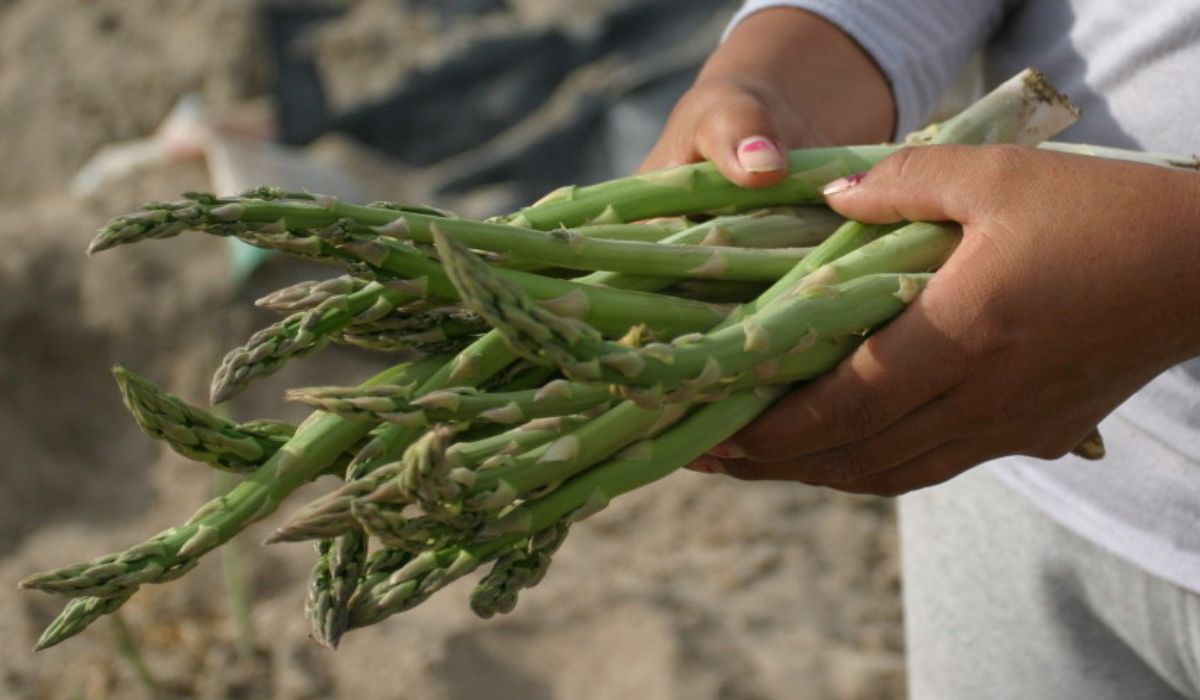
The crop that drove the expansion was asparagus. Between 1990 and 2013, the area under asparagus in Ica went from around 410 hectares to over 10,000.
Asparagus is a thirsty crop. It requires 15,000 to 17,000 cubic metres of water per hectare per year. By 2004, annual groundwater extraction in the valley had already exceeded the aquifer's natural recharge rate. By 2013 the overdraft was extracting 60% more water than the aquifer could replace. In some areas the water table is now dropping by eight metres per year, one of the fastest rates of aquifer depletion recorded anywhere in the world.
Small farmers, who relied on shallow wells, found their wells dry. The local water utility is now struggling to supply the city of Ica. Some of the export companies themselves, including Athos, one of the largest, have begun retiring asparagus fields because the water is no longer there.
99% of Peruvian asparagus is exported. A large proportion of it goes to British supermarkets, where it appears year-round, frequently labelled in a way that emphasises freshness and a green, vegetal wholesomeness.
The asparagus on the British plate in February is a unit of water that has been pumped out of a desert aquifer in a country 6,300 miles away. The water is non-renewable on any human timescale. The aquifer is not being refilled. The valley is being mined.
The British grass on the Welsh hillside is being watered by rain.
The rain is free, and arrives whether or not anyone is paying attention.
We have built a system in which the difficult thing is easy and the easy thing is being made impossible.
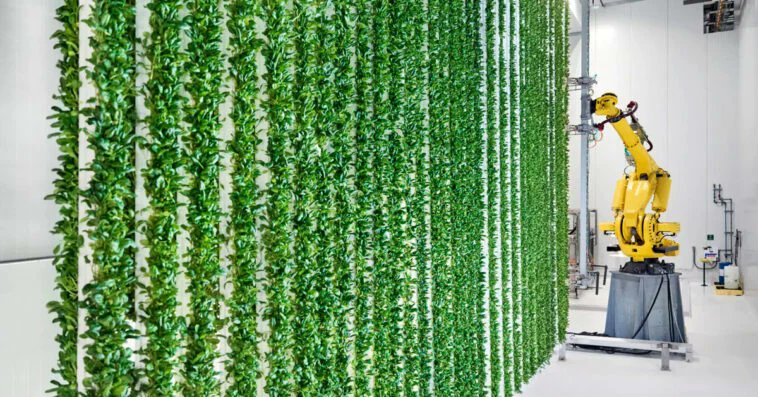
Plenty Unlimited raised $940 million from Jeff Bezos, SoftBank, and Eric Schmidt.
They were going to feed the world with vertical farms. Lettuce grown indoors, under LEDs, using 90% less water and no pesticides. The pitch was beautiful. The decks were elegant. The press releases were full of words like "revolution" and "future."
They filed for Chapter 11 in March 2025. The valuation had collapsed by 99% from its $1.9 billion peak.
Bowery Farming raised $700 million at a $2.3 billion peak valuation. Backed by Fidelity, Google Ventures, Justin Timberlake. Shut down in November 2024.
Fourteen indoor farming companies filed for bankruptcy in 2025. Combined funding burned: $1.37 billion. Of capital. Vaporised.
The reason every single one of them failed is the same reason a farmer in Herefordshire with 180 cattle, no LEDs, no robotics, and no Series C, is still in business in 2026.
Grass is free. Rain is free. Sunlight is free.
The cow does not require a $200 million data centre to function. She is the data centre. She runs on weather, processes cellulose, outputs protein, and her firmware has been stable for ten thousand years.
The pitch decks promised to reinvent agriculture.
Agriculture was already invented. It was just in a field, looking the other way.
The funniest maths in modern environmentalism.
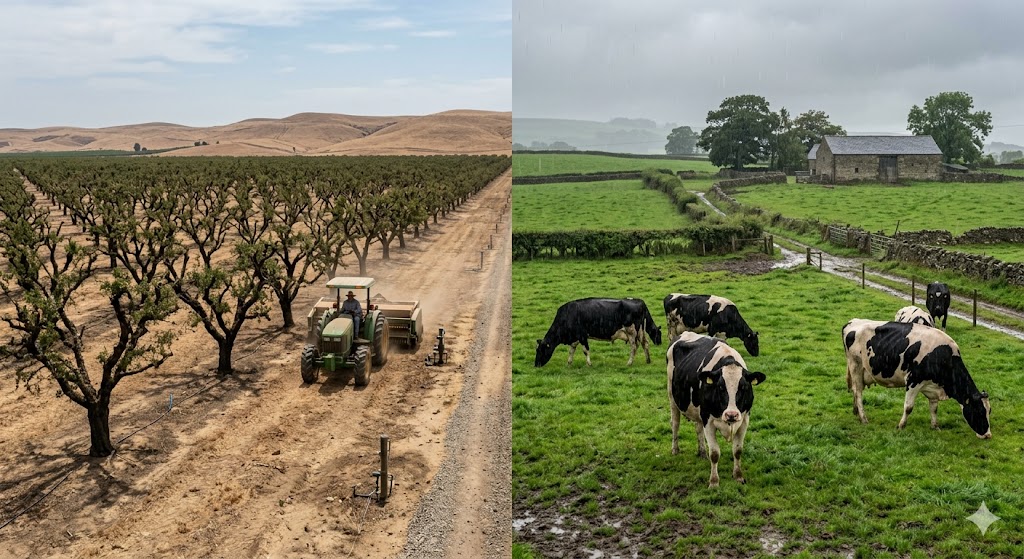
One almond requires 12 litres of irrigated water to produce. Peer-reviewed, ScienceDirect, 2017. A glass of almond milk contains roughly 50 of them. 600 litres of water before the carton is filled.
The water comes from the San Joaquin Valley in California, which sits over one of the most over-extracted aquifers on earth. The valley floor has subsided by up to nine metres in places due to groundwater depletion. The carton is then refrigerated, sailed across the Atlantic, refrigerated again, lorried to a Manchester Tesco, and bought by someone who is concerned about the environmental impact of dairy.
Meanwhile, in Cheshire.
A British dairy cow drinks roughly 70 to 100 litres of water a day and produces around 28 litres of milk. That's about 3.5 litres of water per litre of milk. The water is rainwater that fell on her field or came from a local stream fed by the same rainwater. The rain was going to fall on the field whether the cow stood in it or not. 80% of her moisture intake comes from the grass itself, which is also rain.
She converts the grass, free of charge, into a litre of milk containing seven times the protein and four times the calcium of almond milk, and shipped roughly 18 miles to the same Tesco.
To recap.
600 litres of stolen aquifer, flown halfway round the world for nutritionally worthless beige water.
Or 3.5 litres of rain that was already falling, converted by an animal you can pet, into actual food.
The shopper picks the almond.
She has been told this is the ethical position.
The aquifer would like a word.
I can share an interesting experience from last week. We have a person who is incharge of buying hardware, software and data sets. This might sound stupid but when you are buying 100s of servers, workstations and laptops a month, it's complicated. This dude used Claude to create an entire tracking and maintanence portal that inventoried everything. He even managed to integrate the portal with our monitoring software to display the status of every server vm. He then modified it to store invoices and so on. He's been at it for a couple of weeks and we've been able to identify wastage and needs.
Without Claude, this would have been a maze of spreadsheets and a lot of manual labor. But we wouldn't have hired a developer for this. To me, this kind of software is the killer use case for AI. Enough to simplify your life, but not enough to justify hiring someone or buying a product.
Is the code great? Is it scalable? Is it good software engineering? No, no and no. But that's besides the point.
⚡️Children remember the moments when the family becomes fully alive.
That is the core. Vacation is just the common vessel.
A child does not encode childhood as a spreadsheet of responsible parenting.
They encode atmosphere.
They remember the motel pool, the gas station stop, the smell of sunscreen, the weird restaurant, the long drive, the sunset, the parents laughing differently, the feeling that normal life cracked open and something larger appeared.
That is why ages 5 to 10 hit so hard. The child is old enough to form durable narrative memory and young enough for the world to remain enchanted. Parents still feel mythic. A beach, cabin, lake, theme park, road trip, or even a cheap rented house can become sacred geography.
The real mechanism is interruption of routine plus emotional safety.
Ordinary life teaches stability. Trips create myth. The family leaves the repeating loop of school, work, chores, screens, exhaustion, and time pressure. For a few days, the child experiences parents outside their normal roles. Mom and dad are no longer just managers of homework, food, discipline, bedtime, and logistics. They become companions inside an adventure.
That imprints.
The money matters far less than parents think. Luxury is mostly adult vanity. Children remember intensity, freedom, attention, surprise, and togetherness. A $200 trip can beat a $10,000 trip if the child feels wonder and the parents are emotionally present.
Many adults are starved because their childhood had no sacred interruptions. Everything was duty, stress, survival, noise, pressure, or emotional absence. No mythic family scenes. No private homeland in memory. No recurring proof that life could be warm and strange and alive.
That matters for the adult psyche. People draw from childhood memories during loneliness, fear, ambition, loss, and love. Those memories become inner architecture.
Deepest compression: a good childhood is not built only by protection. It is built by unforgettable shared worlds.
Take the kid somewhere. Break the loop.
Make the ordinary world disappear for a few days.
That becomes part of them forever.
Every Olympic endurance coach in the world now tapes their athletes' mouths shut at night because a Swedish lab proved in 1995 that the nose produces a gas the mouth cannot, and that single gas determines whether your blood absorbs 100% of the oxygen you inhale or only 82%.
The gas is nitric oxide.
The lab was the Karolinska Institute in Stockholm. The discovery was published in Nature Medicine that same year, and it quietly rewrote everything respiratory physiology thought it knew about why humans have a nose in the first place.
Here is what they actually found.
The empty air-filled cavities inside your skull, the ones anatomy textbooks called evolutionary leftovers for a hundred years, are not empty and not useless.
The lining of those sinuses contains an enzyme called inducible nitric oxide synthase. It runs continuously. It produces large amounts of nitric oxide gas. That gas sits in your nasal cavity at concentrations hundreds of times higher than anywhere else in your body.
The Karolinska team measured it. Air leaving the nose contains roughly 56 parts per billion of nitric oxide. Air leaving the mouth contains 14. Air leaving the trachea, below both, contains 6. The nose is the only factory.
Then they ran the experiment that changed sports medicine.
When you inhale through your nose, that nitric oxide rides the airstream down into your lungs. It hits the small blood vessels surrounding your alveoli and forces them to dilate.
More blood flows past more oxygen, and more oxygen crosses into your bloodstream. The exact figure they measured was an 18% increase in arterial oxygen uptake compared to mouth breathing the same air.
Same lungs. Same oxygen in the room. Same heart rate. One nostril of difference and your blood is carrying nearly a fifth more fuel.
The reverse is what should haunt anyone who mouth breathes at night.
Mouth breathing bypasses the sinuses entirely. The nitric oxide never enters the lungs. Pulmonary blood vessels stay constricted. Less oxygen crosses into the blood.
The heart has to pump harder to deliver the same oxygen to the same tissues. A 2008 review in the Anatomical Record showed mouth breathers develop measurably higher pulmonary artery pressure over time, simply because the gas designed to lower it never arrives.
There is a second finding most people miss.
Nitric oxide is antimicrobial. It directly inhibits the replication of viruses and bacteria in the upper airway. During the COVID pandemic, researchers in the European Journal of Pharmacology proposed that habitual mouth breathers were getting hit harder partly because they had bypassed the body's first chemical line of defense. The nose was not just a filter.
It was a chemical weapons factory aimed at every pathogen trying to reach the lungs.
The implication is the part that should change how you sleep tonight.
Your body built a free 18% oxygen upgrade and a free antiviral system into the same organ. Both only activate when air passes through your nose. Both shut off the moment your mouth opens.
Half the adult population sleeps with their mouth open and has no idea they are running their lungs at 82% capacity for a third of their life.
The fix costs nothing. A strip of tape across the lips at night. That is the entire intervention.
The most expensive thing in human performance is the oxygen you already paid for and never absorbed.
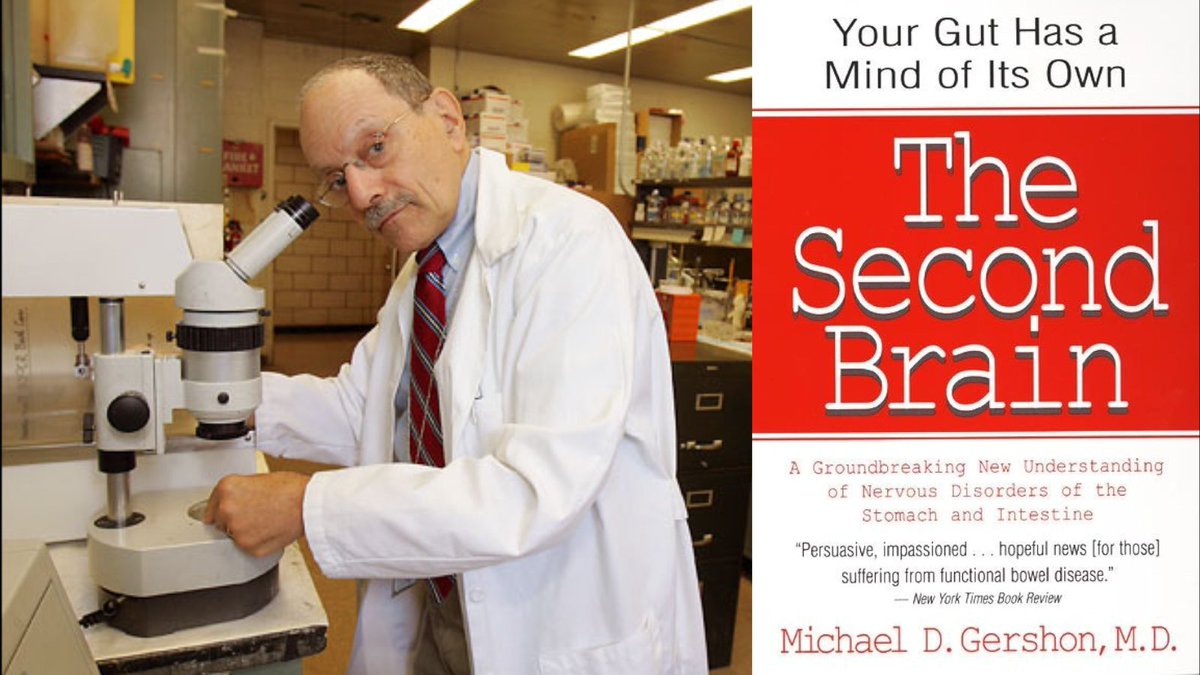
A neurobiologist at Columbia spent 30 years proving that the gut has its own brain, and the day he finally published the book that named it, almost every psychiatrist in America stopped returning his calls.
His name is Michael Gershon.
He runs the Department of Anatomy and Cell Biology at Columbia University Medical Center in New York, and the field he built from the ground up is called neurogastroenterology in short brain-gut axis.
The book that announced it to the world was published in 1998, and the title alone tells you everything about what he was up against. He called it The Second Brain.
The claim sounded like science fiction in the 1990s. Gershon was saying that the human gut contains its own fully functional nervous system, with around 100 million neurons embedded in the walls of the alimentary canal, which is the nine-meter tube running from your esophagus to your anus.
That is more neurons than your entire spinal cord, and more than your entire peripheral nervous system put together. The gut was not just digesting food. It was running its own intelligence, with its own reflexes, its own memory, and its own way of deciding what to do without asking the brain in your head for permission.
The medical establishment treated this as borderline heretical when he first started publishing it. The brain was supposed to be the command center. Everything else was supposed to be the periphery. A second brain in the belly did not fit the architecture anyone had been taught.
Then the data started piling up, and it was impossible to argue with.
The first finding that broke the old model was about serotonin. You might have heard Andrew Huberman talking about it on his podcasts. Serotonin is the neurotransmitter associated with mood, well-being, sleep, and depression. Every antidepressant on the market targets it.
The assumption for decades was that serotonin was a brain chemical, produced in the brain, regulated in the brain, and responsible for what happened inside the brain.
Gershon's lab showed that 90 to 95 percent of the body's serotonin is not produced in the brain at all. It is produced in the gut, by specialized cells called enterochromaffin cells embedded in the intestinal lining.
Your stomach and intestines are the largest serotonin factory in the human body, and the brain in your skull is producing only a tiny fraction of what is circulating below your neck.
The second finding was even harder to swallow. The vagus nerve is the longest cranial nerve in the body, running from the base of the brain down through the neck, the chest, and into the abdomen, where it branches into the gut. For most of the 20th century, doctors assumed the vagus was the brain's way of giving orders to the digestive system, in the same way the brain gives orders to the rest of the body.
The actual measurements showed almost the opposite. Roughly 90 percent of the fibers in the vagus nerve are carrying signals upward, from the gut to the brain, and only a small fraction are carrying signals downward. Your gut is sending nine times more information to your head than your head is sending to your gut.
The bandwidth is wildly asymmetrical, and almost all of it is going in a direction the medical textbooks had quietly been wrong about for decades.
The implication of those two findings together is what changed psychiatry.
If most of your serotonin is being produced in your gut, and most of the information flowing through your vagus nerve is moving from your gut to your brain, then your mood is being shaped from the bottom up far more than it is being directed from the top down.
The feeling of dread before a difficult meeting. The sudden clarity after a good meal. The low-grade anxiety that will not go away no matter how much you talk through it. All of it is downstream of signals that started below your diaphragm.
A 2019 study at McMaster University put the final piece in place. Researchers gave mice oral antidepressants and watched what happened. The drugs activated the vagus nerve from the gut side, and the gut-to-brain signaling was what produced the antidepressant effect.
When they cut the vagus nerve and tried the same drugs, the antidepressant effect disappeared completely. The drug was not working on the brain directly. It was working on the gut, and the gut was working on the brain.
The follow-up research on the microbiome made the connection even tighter. Mice raised in completely sterile environments with no gut bacteria produced about 60 percent less serotonin in their intestines than normal mice. When the bacteria were reintroduced, serotonin production returned to normal.
The trillions of microorganisms living in your digestive tract are not passengers. They are running the factory that makes the chemical your antidepressant is trying to manipulate.
The most haunting line from Gershon's interviews is the one I keep coming back to.
He said the second brain does not do philosophy or poetry, and it cannot help you write a novel. But it is the brain that decides whether you wake up in the morning feeling like the day is full of possibility or feeling like something is wrong before anything has even happened.
The mood you assume your conscious mind is generating from your thoughts is mostly being generated underneath you, by a nervous system you cannot feel and cannot consciously access, in an organ you have spent your entire life thinking about as a digestion machine.
The decision your gut makes about how you are going to feel arrives in your head a fraction of a second before your brain catches up to it. The conscious thought is the explanation your mind invents for a verdict that has already been reached somewhere lower.
You did not feel uneasy because you were thinking dark thoughts.
You started thinking dark thoughts because your gut was already uneasy.