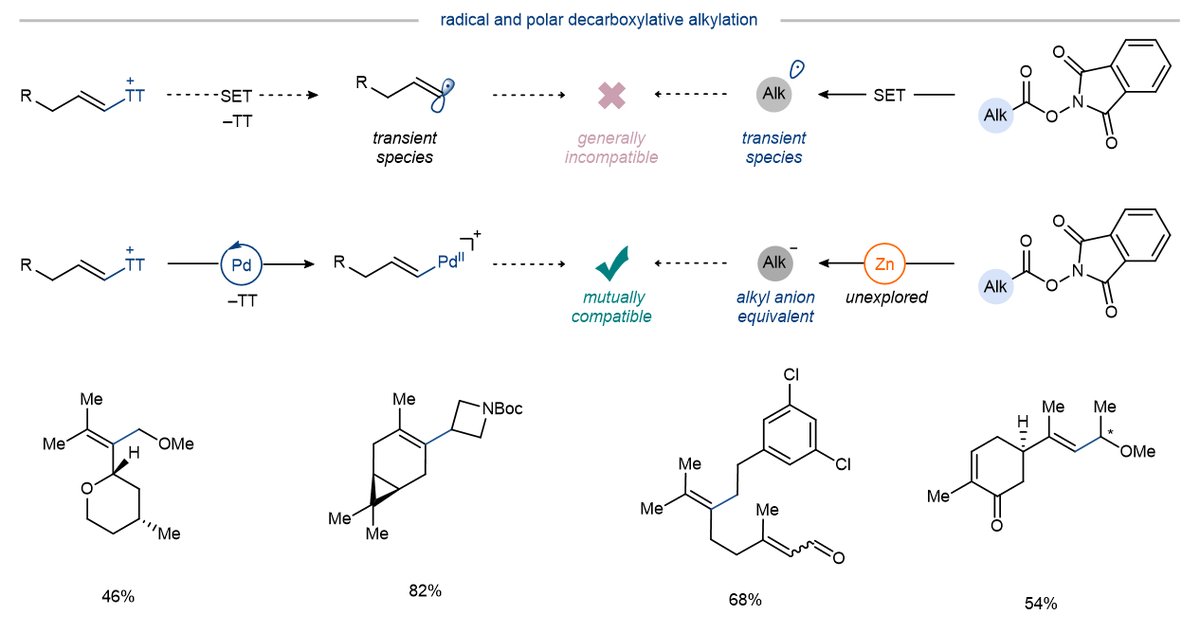
In @Nature, we show that redox-active esters can be transformed into alkyl zinc species useful for transmetalation, providing a solution to rate matching in XEC reactions! First application: alkylation of alkenes via polar decarboxylative cross-coupling!
https://t.co/mOBf4ChHk0
The latest from the @ChirikGroup -BMS collaboration in @J_A_C_S exploring stepwise vs. concerted C–C bond formation and radical capture and application of mechanistic probes. Congratulations to Hao and the team.
https://t.co/XFDsPDDMPM
Our magnum opus Tutorial on asymmetric hydrogenation with group 9 metals Congratulations to @ChirikGroup’s Lauren on the hard work. https://t.co/7sVDsc1iJK
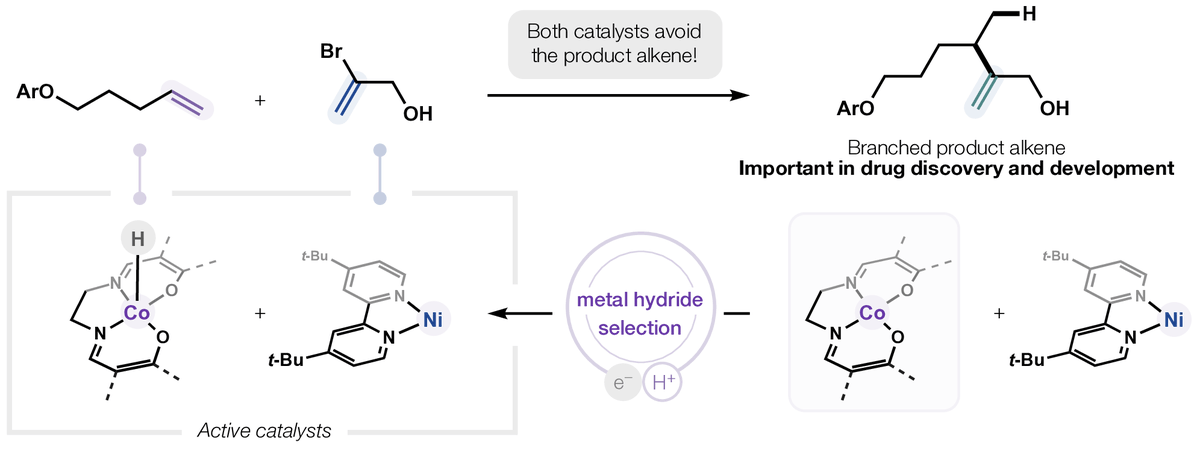
A new method from the @Shenvi_Lab enables the construction of branched molecular frameworks from simple alkenes via controlled MHAT chemistry, resolving a longstanding selectivity challenge and accelerating access to drug-relevant structures, as reported in @ScienceMagazine. More: https://t.co/40ETE5Wv63
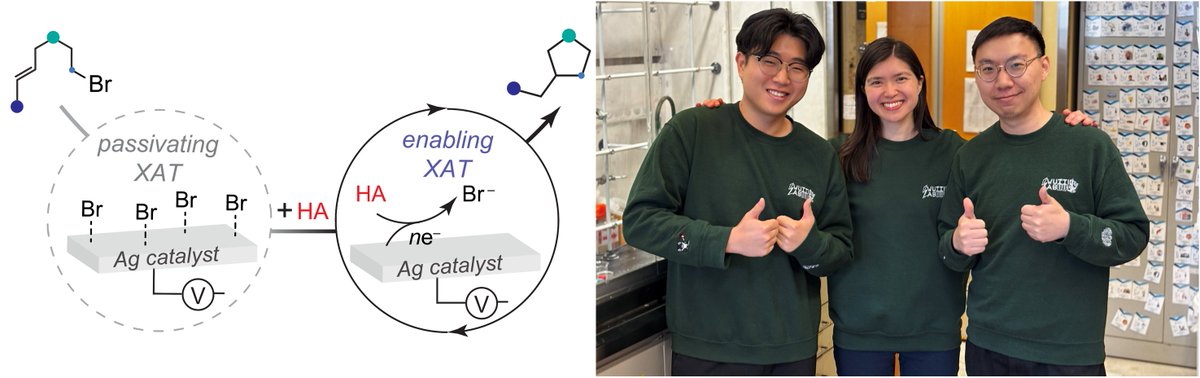
My lab’s next paper is out in JACS! Congrats to Taemin and Ching who discovered that Brønsted acids unlock mild interfacial catalytic halogen atom transfer at Ag electrodes!
https://t.co/8xszEKeRxA
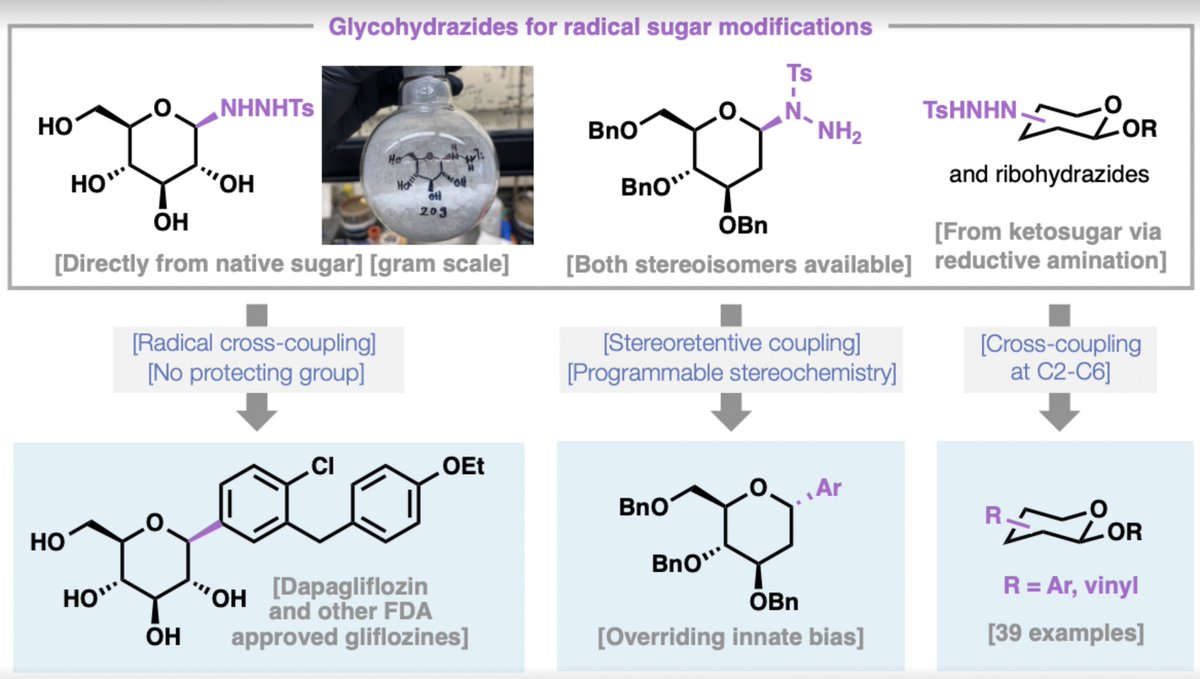
Making C-glycosides SWEET and simple! Today in @ChemRxiv we disclose (https://t.co/VDfit7itxh), in collaboration with @GroupAggarwal, an incredibly easy way to achieve radical functionalization of sugars. In this video (https://t.co/GRf6w9ZA7z), a two-step synthesis of the billion dollar drug Dapagliflozin is achieved using household vinegar and dextrose powder from the local supplement store.
High Level Summary:
The work addresses a longstanding challenge in carbohydrate chemistry: the efficient, scalable, and stereocontrolled synthesis of C-aryl glycosides directly from unprotected native sugars. C-Aryl glycosides form the core pharmacophore of the SGLT2 inhibitors (dapagliflozin, canagliflozin, empagliflozin, and related agents), which are frontline therapies for type 2 diabetes and represent one of the highest-grossing classes of small-molecule drugs.
Conventional synthetic routes to these molecules generally require extensive protecting-group manipulations, multi-step activation of glycosyl donors, or organometallic additions under demanding conditions. Recent advances in radical and transition-metal-catalyzed cross-couplings have improved access, yet most approaches still depend on protected precursors, specialized reagents, or protocols that are difficult to scale.
We report a practical alternative based on glycosyl sulfonyl hydrazides—stable, crystalline radical precursors that are prepared in a single step from unprotected sugars by treatment with tosylhydrazine in acetic acid, followed by simple crystallization. These hydrazides undergo redox-neutral nickel-catalyzed radical cross-coupling with aryl iodides or bromides under mild conditions (70 °C, DMSO, tetramethylguanidine as base). The reaction requires no external oxidant or reductant, no photocatalyst, and no organotin species. In glucose-derived systems the coupling typically delivers high β-selectivity (>19:1 in many cases), an outcome that appears to depend on hydrogen-bonding interactions between tetramethylguanidine and the free hydroxyl groups.
The main findings are as follows:
All five FDA-approved SGLT2 inhibitors, as well as several clinical candidates, can be prepared in a single coupling step from the corresponding glycohydrazide.
Decagram-scale synthesis of dapagliflozin was demonstrated starting from commercial dextrose; the product was isolated by aqueous workup and recrystallization (no column chromatography required at this scale).
Di- and trisaccharides (lactose, cellobiose, maltose, maltotriose) couple directly to give aryl-linked oligosaccharides.
Several natural products and medicinally relevant structures (salmochelin-SX, neopetrosin C, the tryptophan-mannose conjugate, and a ribose-derived IMPDH inhibitor) that previously required 9–20 steps or costly reagents are now accessible in 1–4 steps with good stereocontrol.
The platform extends to non-anomeric C–C bond formation at positions C2–C6 on glucose and ribose scaffolds, providing the first systematic exploration of radical diversification across these positions.
Stereoretentive radical cross-coupling, using configurationally pure hydrazides, enables programmable delivery of either α- or β-anomers, overriding inherent substrate biases and providing access to stereoisomers not previously obtainable by radical methods.
The chemistry builds on our earlier development of sulfonyl hydrazide-based redox-neutral cross-coupling and stereoretentive radical arylation, here adapted and optimized for carbohydrate substrates. The method is operationally straightforward, uses inexpensive reagents and starting materials, and eliminates protecting-group strategies.
One of the “hidden gems” behind this paper: huge credit to Dr. Shuanghu Wang, our first author, for spearheading the project and driving many of the most exciting applications. Congrats Shuanghu and the whole team on a fantastic piece of work!
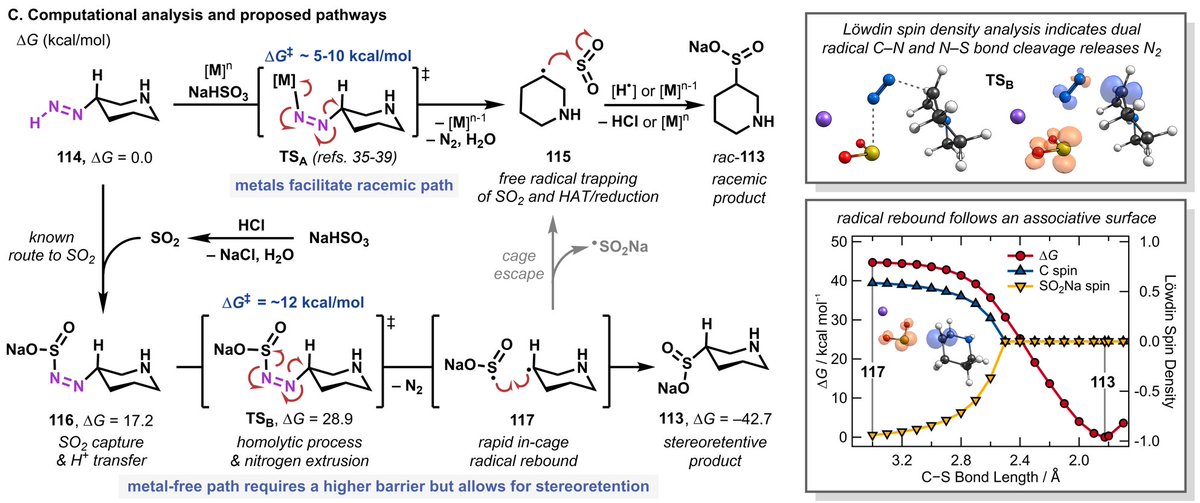
Computational analysis reveals this too. Add a metal, and you get fast reactions with higher yield, but reduced ee. If you remove the metal, the reaction slows down but the ee goes up! Geminate radical pairs are seen again; nitrogen extrusion drives it all!
We asked ourselves, "What is the simplest way to make radicals from a diazene intermediate?" Turns out, you just need a little heat and a mild base. Radicals are seen even without a metal!
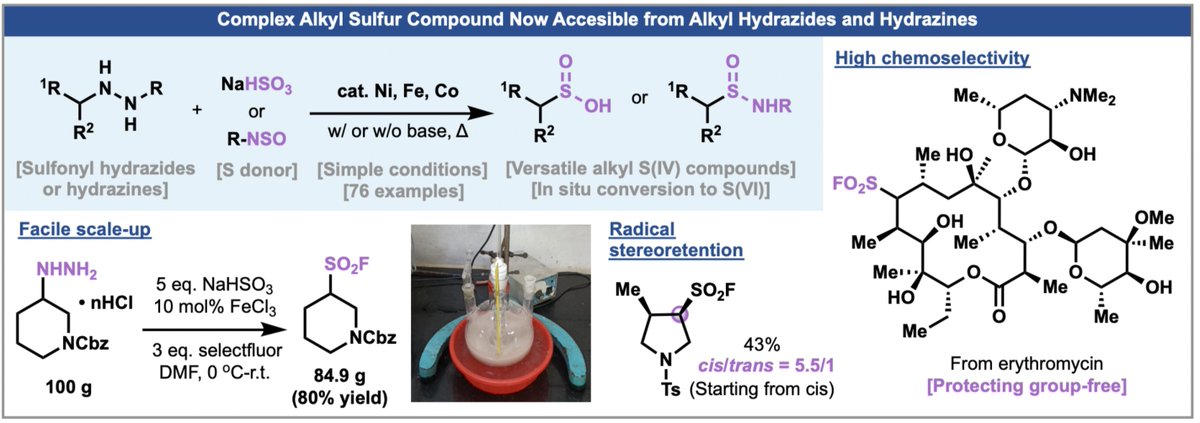
👋DRUG HUNTERS👋 N₂ extrusion from alkyl hydrazines delivers complex, medicinally relevant alkyl S(VI)-chemical space with exceptional chemoselectivity and operational simplicity.
Appearing today in @ChemRxiv: https://t.co/Y4JeCBWkGw
Alkyl hydrazines (or their sulfonyl derivatives) serve as practical radical precursors readily prepared from ketones, alcohols, amines, and complex molecules. Simple thermal activation triggers clean N₂ extrusion to generate alkyl radicals that are captured by inexpensive SO₂ sources, delivering versatile sulfinates convertible in situ to sulfonyl fluorides or sulfinamides.
70+ examples, protecting-group-free late-stage functionalization of natural products and drugs (ticagrelor, erythromycin, spiramycin), 100-g scale with trivial work-up, and stereoretentive variants round out a unified platform that directly addresses the growing need for complex alkyl S(VI) motifs in medicinal chemistry. Detailed mechanistic studies, including temperature scanning calorimetry, radical clocks, and DFT calculations help to demystify the process.
Metals can help, though! They turn on new reactivity pathways at lower temperatures. TSR calorimetry reveals this immediately. Add a metal, and the radicals are made in abundance, giving higher yield. The trade-off is that *free* radicals are generated, not caged ones.
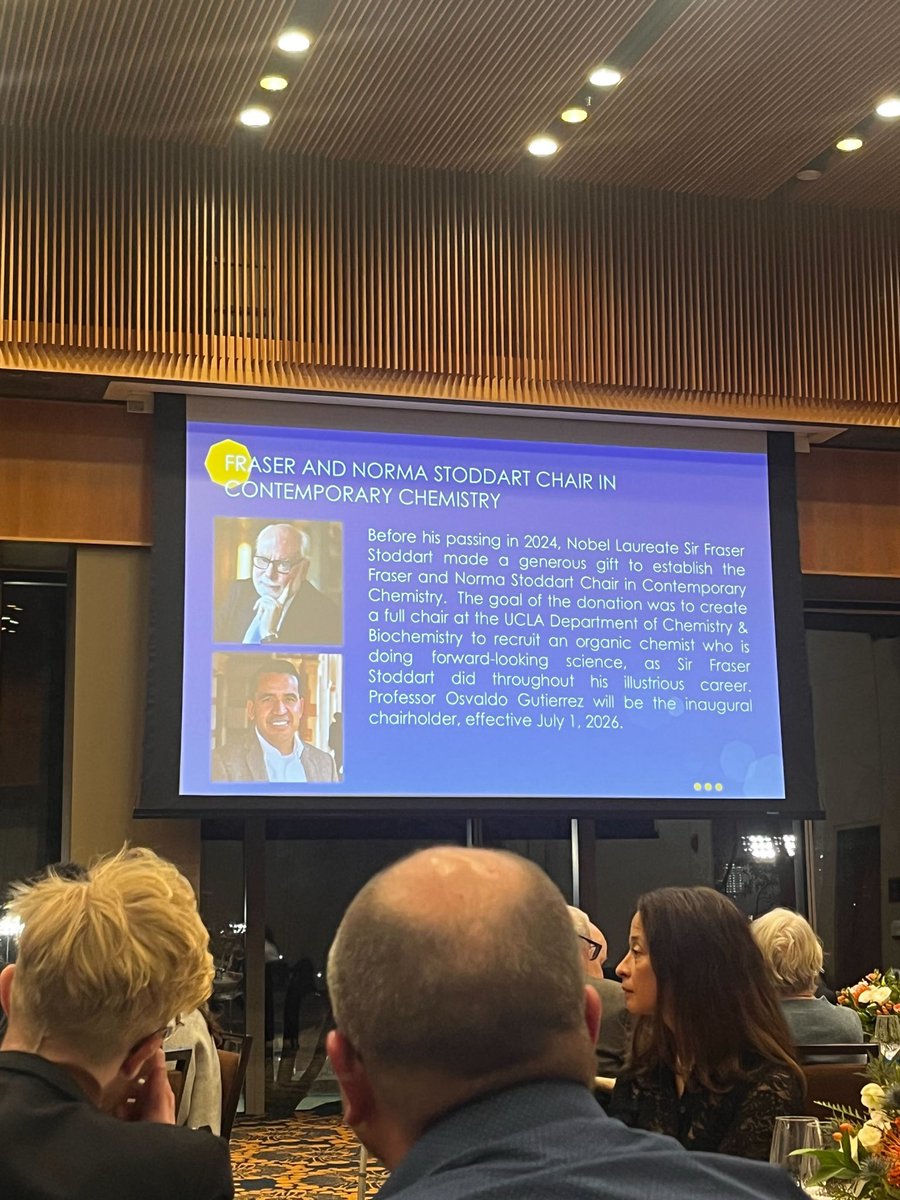
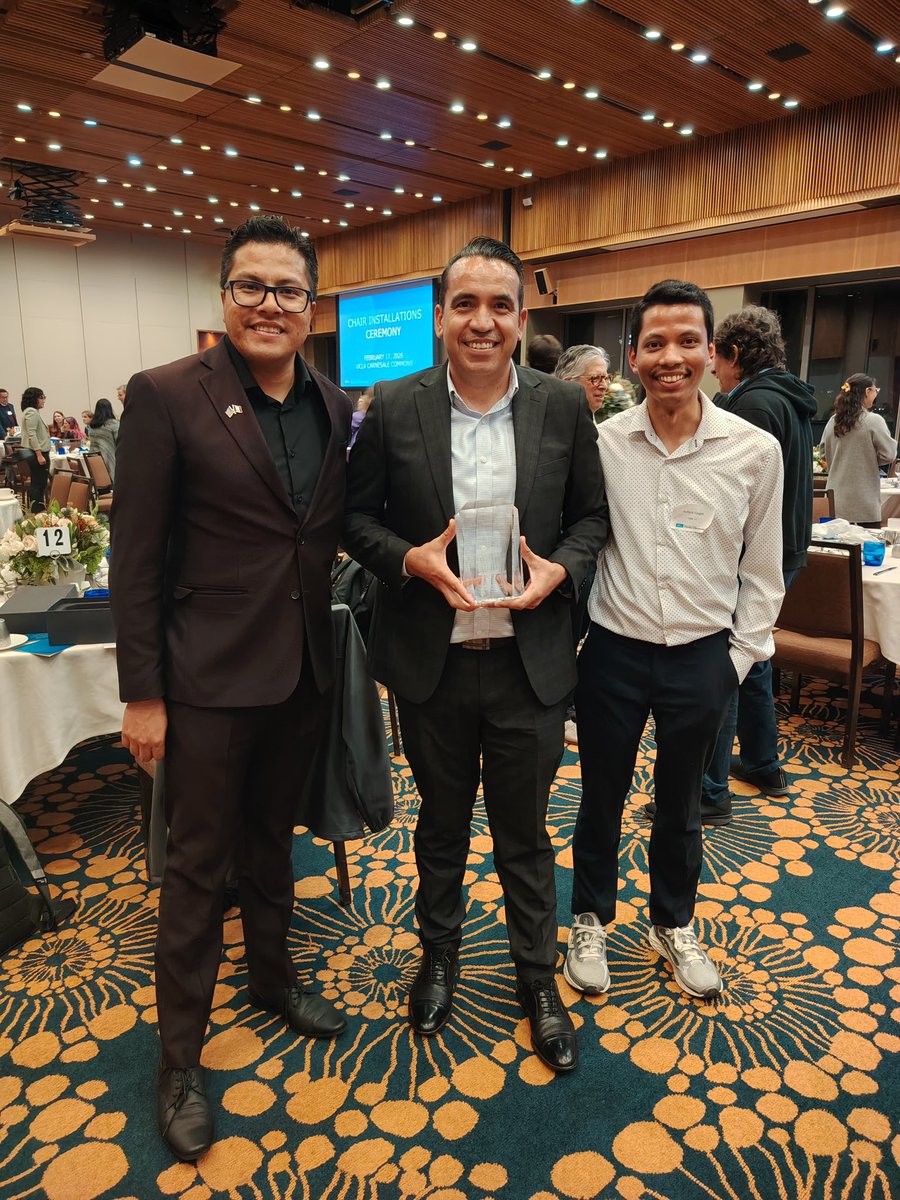
Huge congratulations to our PI, Prof. Osvaldo Gutierrez, for his appointment as the Fraser and Norma Stoddart Chair at @UCLA Chemistry & Biochemistry! https://t.co/DQnwWaQAvA
The final peer-reviewed version of our Ni(DQ)2 study hit the presses @Orgmet_ACS earlier this month.
Update regarding commercial availability coming soon!
https://t.co/2kMPv3HimN
Tonight, we held our annual Paper of the Year meeting, during which we celebrated the great chemistry published in 2025. This year’s winner was the Stereoretentive Radical Cross-Coupling from @BaranLabReads https://t.co/oitdxeErgC