Human Rights @Wikimedia / Co-founder of @accessnow / Founder @AzadiArchive / Former #humanrights professor @CEU
"Joy is not made to be a crumb" -Mary Oliver
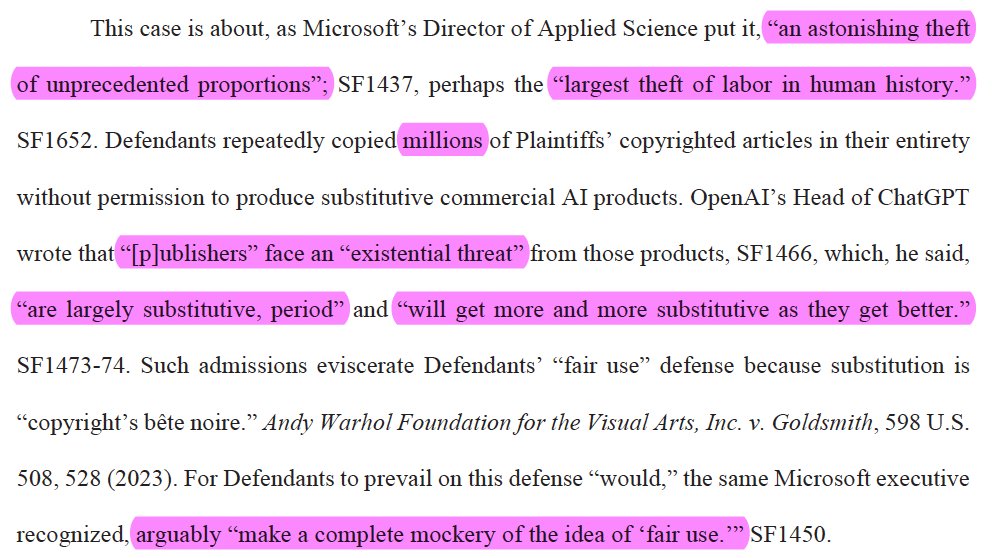
woah. Court just unsealed Summary Judgment motions in New York Times v OpenAI / Microsoft.
Easy to see why the AI companies had so many redactions (pink). Their own people wrote the lede for NYT, the "largest theft of labor in human history"... "more and more substitutive..." /1
This @nytimes article covers Wikipedia’s challenges. The Human Rights team I lead is highlighted for supporting volunteers.
Proud of @Wikimedia & my team for fighting to keep the internet a place where everyone can share in the sum of all human knowledge
https://t.co/yiw8iO1MLT
I’m deeply saddened to hear of the loss of Marjane Satrapi.
Marjane was a towering artist, a singular voice, and a steadfast advocate for the Iranian people. Beyond her remarkable achievements, I will remember a woman of extraordinary passion and heart.
We bonded over our shared love for Iran, our connection to Rasht, and a belief in the power of art to transcend politics.
When her beloved husband, Mattias, died last year, she spoke of a grief that had become a fire—one that grew larger, not smaller, with time. It was impossibles to read her words and not be moved by the depth of her love and loss.
The world knew her as the creator of Persepolis. I will remember her sharp wit, fearless candor, and unwavering love for our homeland.
Marjane leaves behind an extraordinary legacy—not only through her work, but through the authenticity with which she moved through the world.
Rest gently, dear Marjane.
One question I get a lot is can you see the stars differently from up in space. When we orbit on the night side of the planet, we get a view of the stars very much like being in a very dark place on Earth. And because of our orbital inclination, we get to see the stars of both the northern and southern hemisphere. I captured this shot of our galactic plane from one of the windows of the Crew Dragon Freedom that is docked to the zenith docking port.
Liftoff.
The Artemis II mission launched from @NASAKennedy at 6:35pm ET (2235 UTC), propelling four astronauts on a journey around the Moon.
Artemis II will pave the way for future Moon landings, as well as the next giant leap — astronauts on Mars.
The @washingtonpost just let go of every single journalist working on the #MiddleEast.
What a stunning, absolutely incomprehensible decision.
I hope they all get snapped up fast by the Post's competitors.
Calculations Behind Confrontation
1- It increasingly appears that a U.S. military strike may be unavoidable. Diplomatic moves by the Islamic Republic officials—including Ali Larijani’s trip to Moscow to meet President Putin and Abbas Araghchi’s shuttle diplomacy—offer little indication that Tehran is seriously prepared to accept President Trump’s demands. #Iran is bracing for a U.S. attack. The regime’s strategic calculus is far from conventional, and Trump’s threats merely reinforce the narrative that Supreme Leader Ali Khamenei has long cultivated among his supporters: that Iran is under constant siege by foreign enemies.
2- Within this worldview, confrontation with the United States serves several purposes. At a moment when the government’s legitimacy has been badly shaken by the killing of thousands in January, in their view, an external conflict could help rally loyalists, energize the machinery of repression, and justify an even harsher crackdown at home. The regime would rather fight Washington than confront its own citizens in the streets—where prolonged repression risks fracturing its support base. The logic echoes the early months of the Iran-Iraq war in 1980, which allowed the newly established Islamic Republic to suppress internal rivals and consolidate power under the cover of national emergency. Much has changed since then, but the leadership still relies on this dynamic—a calculation that, depending on the scale and nature of a U.S. strike, could prove catastrophically wrong.
3- The horrifying mass killings of recent weeks have frozen daily life across Iran. A mood of collective mourning now coexists with tense anticipation of a major turning point. It remains unclear how the public would respond to an American attack—whether it would resemble the aftermath of the 12-day war in June 2025 or take a very different form. The authorities appear to hope that war would, at least partially, redirect public anger outward, stir nationalist sentiment, divide protesters, and temporarily clear the streets, giving security forces space to absorb the shock and tighten control. Opponents of the regime argue the opposite: that strikes—particularly against military installations or senior officials—could propel people back into the streets and even tip the system toward collapse. This will be a defining test for both camps. What is clear is that Iranian society is emotionally and politically far removed from where it stood a year ago. War, however—depending on its scope and duration—can radically reshape outcomes. For now, many Iranians blame the government for placing the country on a collision course with Washington, limiting its ability to mobilize public opinion in its favor. Yet the state’s repressive apparatus remains intact, and no major rupture within it has yet emerged.
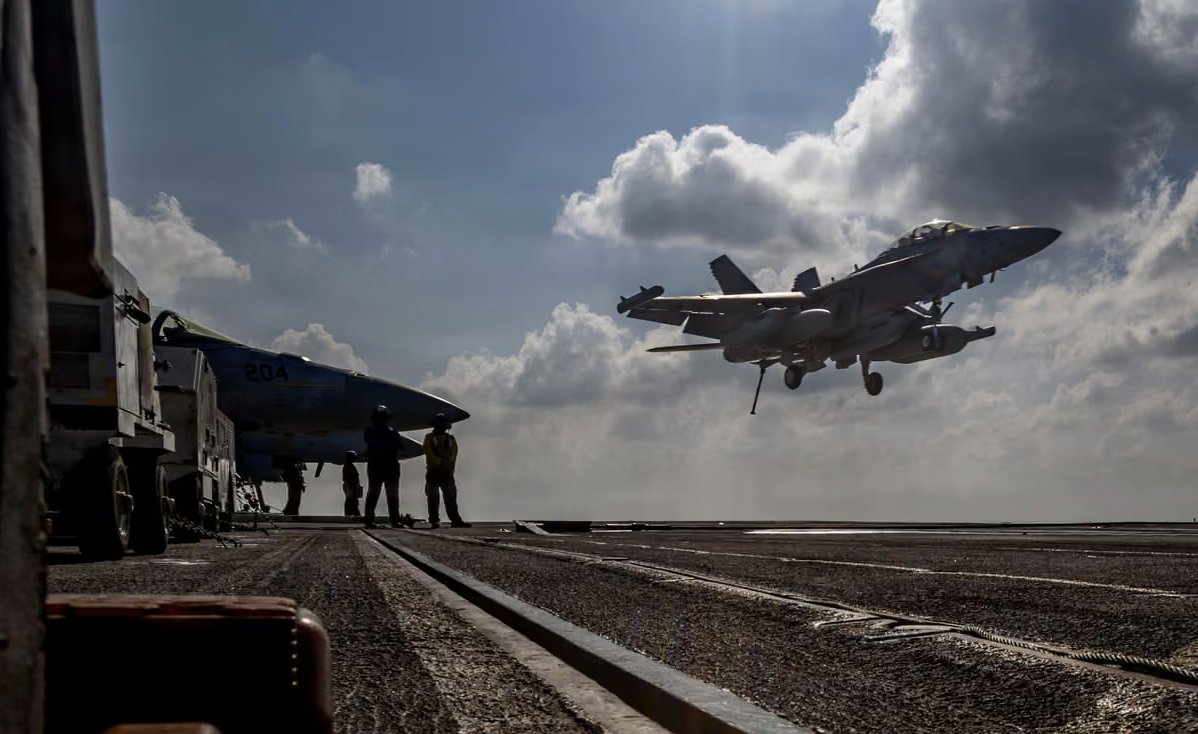
4- The regime's leadership is portraying its refusal to yield to #Trump’s demands as a show of strength and deterrence. In this, it mirrors Trump’s own transactional style: the belief that retreat invites escalation. Iranian officials appear convinced that they can endure far more pain than the United States—and that Washington’s tolerance for casualties and prolonged conflict is far lower. Based on years of observing the psychology and rhetoric of Iran’s decision-makers, the prevailing assumption in Tehran seems to be that if U.S. and allied strikes fail to bring down the regime, they will ultimately strengthen the regime's hand and force Trump back to negotiations on different terms. Iran’s skies are currently exposed, and after last year’s attacks on nuclear facilities, Tehran has fewer levers of pressure. Still, some officials appear to believe that serious harm to U.S. forces—even limited—would impose high political costs on Trump and make him more cautious about escalating further. This helps explain why the regime may continue its defiant posture to the very end, seeking to convince Washington that a swift, low-cost victory is impossible. That calculation could backfire spectacularly, prompting the United States to dramatically widen the scope of its assault.
5- Iranian officials may also have concluded—particularly after the designation of the Revolutionary Guards by the E.U.—that any U.S. strike would aim not merely to punish but to severely cripple the regime and force acceptance of Trump’s demands. European governments resisted such measures for years; Tehran may now suspect that they, too, see the regime entering its final phase and are positioning themselves accordingly. That perception could increase the likelihood of a forceful regime response. It may also explain why Tehran views Trump’s intermittent signals about negotiations not as genuine openings, but as efforts to sow confusion and preserve the element of surprise.
6- In the end, the Islamic Republic’s distinctive cost-benefit national security calculus—so different from that of many other states—has created an extraordinarily volatile situation for Iranians, for the United States, and for the wider world. Both sides appear to be sharpening their knives, preparing to inflict maximum damage. Paradoxically, this very march toward maximal options could also open narrow pathways to avoid the worst-case scenario. Much will depend on the nature, objectives, and scale of any U.S. strike—details the Trump administration has so far kept tightly guarded.
7- What is undeniable is that Iran’s leaders have placed the country, the Iranian people, and its resources in extreme jeopardy, risking profoundly grim outcomes. Many people hope that this lead to the collapse of the regime. Others are concerned about unpredictable and costly outcomes. The days ahead may shatter decades of assumptions and miscalculations made by a regime that has prioritized the survival of an unpopular, cruel minority over the good of its citizens.
8- The Islamic Republic now appears more fragile than at any point in recent memory, and Washington seems determined to exploit that vulnerability to extract long-sought concessions. The central question is who blinks first—and how this volatile mix of pressure, propaganda, and brinkmanship ultimately plays out. The presence of numerous interacting factors, the shifting and often contradictory behavior of the actors involved in this confrontation, the role of unpredictable variables, and the many latent fractures within Iranian society that could erupt at any moment all add to the extraordinary complexity of the situation.
After so many years of demanding, pressuring, fighting, finally, they all joined our call to list #IRGC as a terrorist organisation. But why did so many people have to die before we got there? My thoughts are with the victims of IRGC. My hopes are for a free #Iran.
This is the voice of Mohammad Nourizad, writer and political prisoner.
This message was received by Pulse Media from Evin Prison in Tehran.
In this message, Nourizad says, “You are hearing my voice from among dust, blood, and ashes.”
Addressing the Islamic Republic, he adds: “Soon, very soon, you will fall into the grave you have dug for yourselves.” (+English Subtitle)
این صدا، صدای محمد نوریزاد، نویسنده و زندانی سیاسی است.
این پیام از زندان اوین تهران به دست پالسمدیا رسیده .
نوریزاد دراین پیام میگوید «صدای مرا از میان خاک و خون و خاکستر میشنوید». او خطاب به جمهوری اسلامی میگوید: «زودا، زودا، به گور خودکندهی خود سرنگون میشوید»
Some updates and observations from Iran: "The country feels like it’s on autopilot."
- Every day, new figures emerge about those killed in the protests across #Iran. What is clear is that the government has refused to release an accurate death toll. And these killings are not confined to major cities or a few specific locations. Tonight, I spoke with someone close to the medical staff at a hospital in a small town near Mashhad. What they described echoed reports we have already heard, but the fact that this is coming from such a small place underscores the scale of what has happened.
They said they witnessed scenes that will stay with them forever. According to this person, doctors at a hospital in the town of Torbat-e Jam saw wounded protesters being finished off with gunshots by security forces — something that has been reported before elsewhere as well. That such acts took place even in a small city suggests that on January 8 and 9, the authorities intended, at all costs, to force people off the streets, using lethal violence and excessive force so broadly that others would think twice before protesting again. The aim, it appears, was to instill terror and to signal that the government would not back down in the face of dissent.
- Another point: many people who were shot during the protests — whether with live ammunition, pellet guns, or birdshot — are refusing to go to hospitals because they fear arrest or even being killed there. As a result, some may be dying from untreated wounds. - Back in Tehran, several friends and acquaintances have told me that nothing feels normal. Everyone is tense and waiting for the next move. Nearly everyone knows someone who has been killed, shot, or detained. “A close friend of mine has legs full of pellets and needs to go to the hospital to have them removed, but it’s impossible,” one told me. “People are furious. Schools and universities are closed most days. There’s no internet. Work has ground to a halt. No one watches state television anymore. The tear gas they used has made many people sick — strange, lingering sore throats. My own family is dealing with that.”
- Because people no longer trust the authorities, many are spending hours watching satellite television channels like Iran International and BBC Persian, along with other outlets, trying to understand what is coming next. Nearly everyone I have spoken to in recent days says the current situation is unlike anything they have seen in decades.
- Another friend — a young, highly educated professional — told me: “Almost everyone is convinced that we are not going back to the way things were before the protests. The country feels like it’s on autopilot. No one is at the wheel. You can’t work; there’s no income. People are waiting for something big to happen — for real change to come. Controlling the population no longer works. Even many who hold foreign passports and could leave the country have chosen to stay because they want to be part of whatever transformation may come. What will happen next, no one knows.” #IranMassacre
@AndrewGhalili Exactly. Everyone said that June would cause a rally-round-the-flag moment yet 6 months later Iranians were burning that flag in the streets.
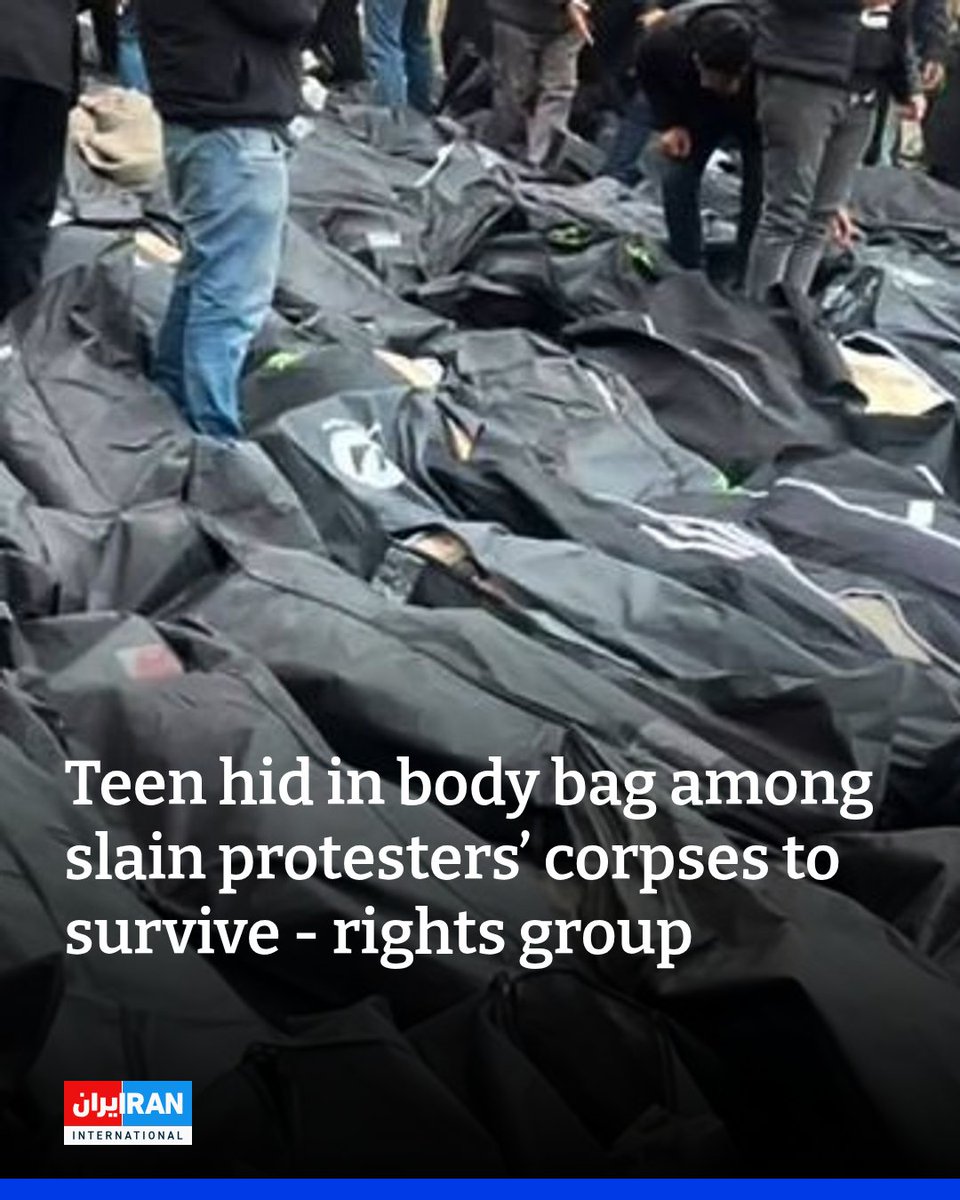
The Iran Human Rights Documentation Center (IHRDC) said a wounded protester who remained motionless inside a plastic body bag for three days out of fear that security forces would kill him was a teenager under the age of 18, according to new information obtained by the rights group.
IHRDC said the teenager was held among bodies of slain protestors transferred to the Kahrizak Forensic Center, south of Tehran, where he stayed still to avoid detection until his family eventually found him alive.
“During the three days he was held among the bodies transferred to Kahrizak, he heard the ringing of cell phones among the corpses and smelled the intense stench of decay,” the Iran Human Rights Documentation Center said, citing the teenager’s account.
The group said the witness described hearing gunfire after sounds from wounded detainees, suggesting they were summarily executed.
https://t.co/f3dNHdl4yP
I have worked on Iran human rights since 2009, and the collective grief and heartbreak of the diaspora right now is unlike anything I have seen in 17 years.
A girl named Parian, meaning angelic in Persian. Born in 2009. Killed by the Iranian regime.
This is the cruel fate of Iranian youth under the Islamic Republic: body bags.
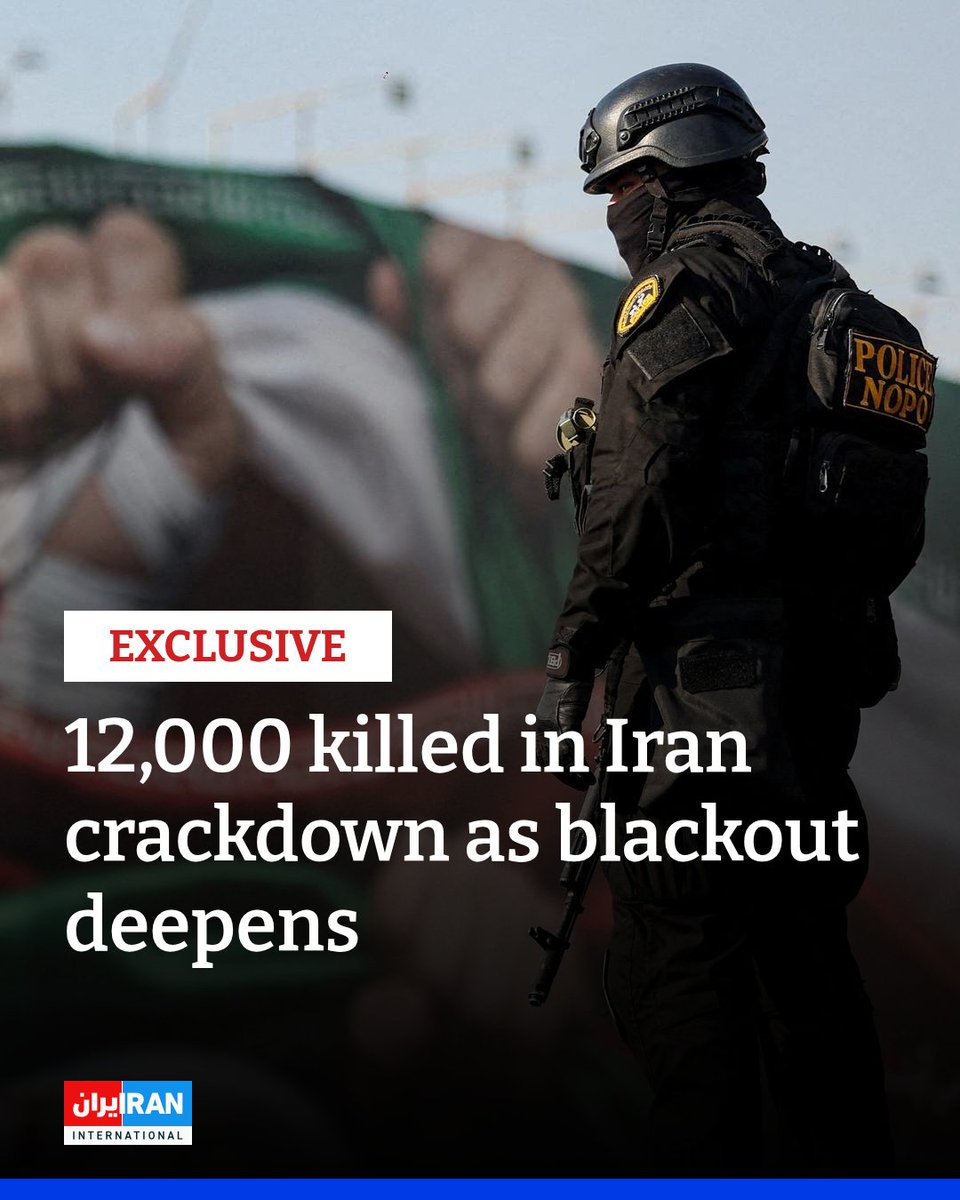
At least 12,000 people were killed in the largest killing in Iran’s contemporary history, carried out largely over two consecutive nights on January 8 and 9, Iran International’s editorial board concluded, based on a review of sources and medical data.
Iran is under a coordinated blackout aimed not only at security control but at concealing the truth, reflected in internet cuts, crippled communications, media shutdowns, and the intimidation of journalists and witnesses.
Publication was delayed until the evidence converged.
The assessment is based on a multi-stage review of information from a source close to the Supreme National Security Council; two sources in the presidential office; accounts from several sources within the Islamic Revolutionary Guard Corps in Mashhad, Kermanshah and Isfahan; testimonies from eyewitnesses and families of those killed; field reports; data linked to medical centers; and information provided by doctors and nurses in multiple cities.
https://t.co/EPjCpZlr2p