Are multi-agent debates actually just expensive groupthink? 🤔
From the inaugural ACM CAIS in San Jose we show that
sycophancy and consensus collapse are real. Read how self-correction prevails: 📄 Paper: https://t.co/HQZ3l1C9AG 💻 Code: https://t.co/4FS0ewyjbw
If you figure out how a large multi-agent system can autonomously coordinate to maximum effect, you’ll win a Nobel Prize, a Turing Award and a trillion-dollar fortune all in one.
🚀 Hiring: 2 MSCA PhD Positions in AI & Networking! 🎓
The Roles:
1️⃣ PhD 1: Neuro-Symbolic Orchestration (Personalized Home Spaces)
2️⃣ PhD 2: Neural Algorithmic Reasoning (Business Digital Spaces)
📎 Apply by April 10: https://t.co/oIBPlmQNIA
Please RT/Share. 🔄
Sufficiently advanced agentic coding is essentially machine learning: the engineer sets up the optimization goal as well as some constraints on the search space (the spec and its tests), then an optimization process (coding agents) iterates until the goal is reached.
The result is a blackbox model (the generated codebase): an artifact that performs the task, that you deploy without ever inspecting its internal logic, just as we ignore individual weights in a neural network.
This implies that all classic issues encountered in ML will soon become problems for agentic coding: overfitting to the spec, Clever Hans shortcuts that don't generalize outside the tests, data leakage, concept drift, etc.
I would also ask: what will be the Keras of agentic coding? What will be the optimal set of high-level abstractions that allow humans to steer codebase 'training' with minimal cognitive overhead?
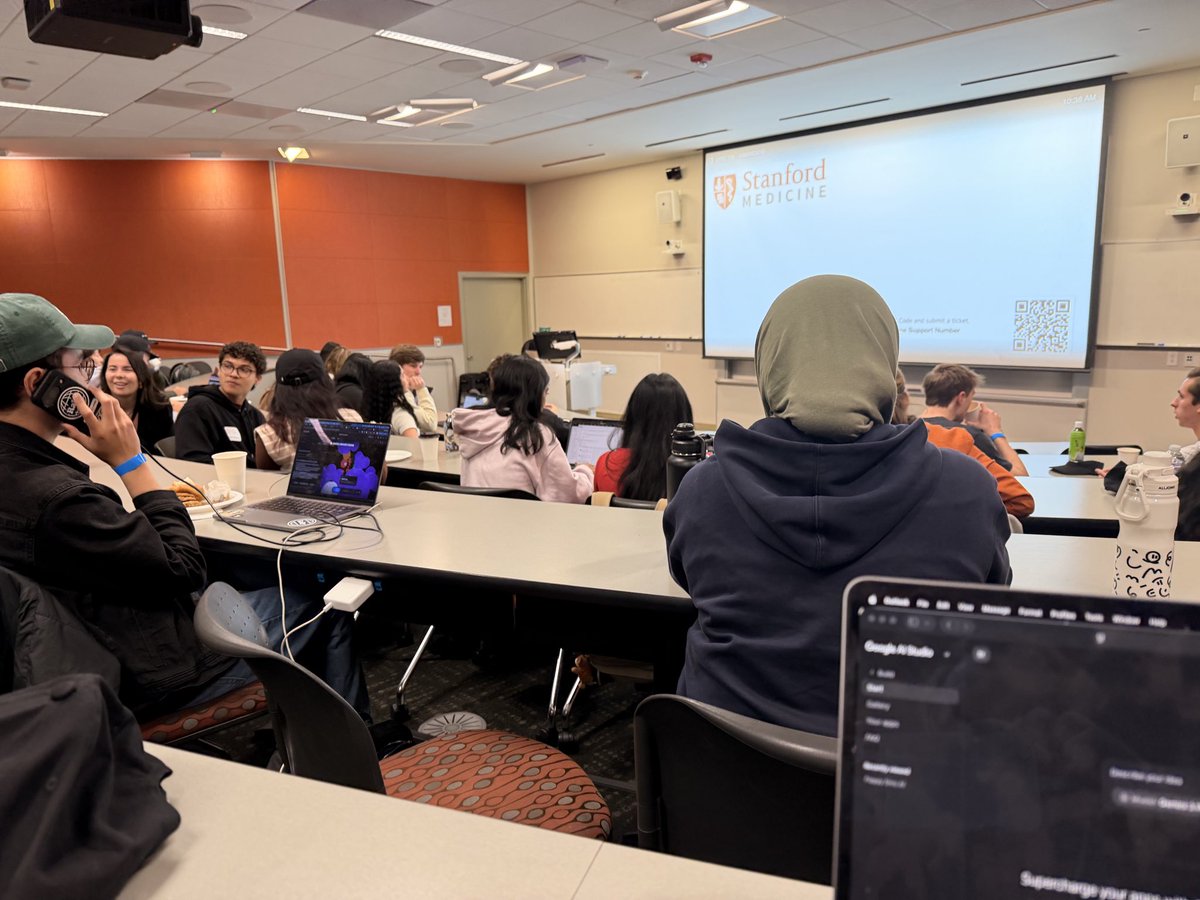
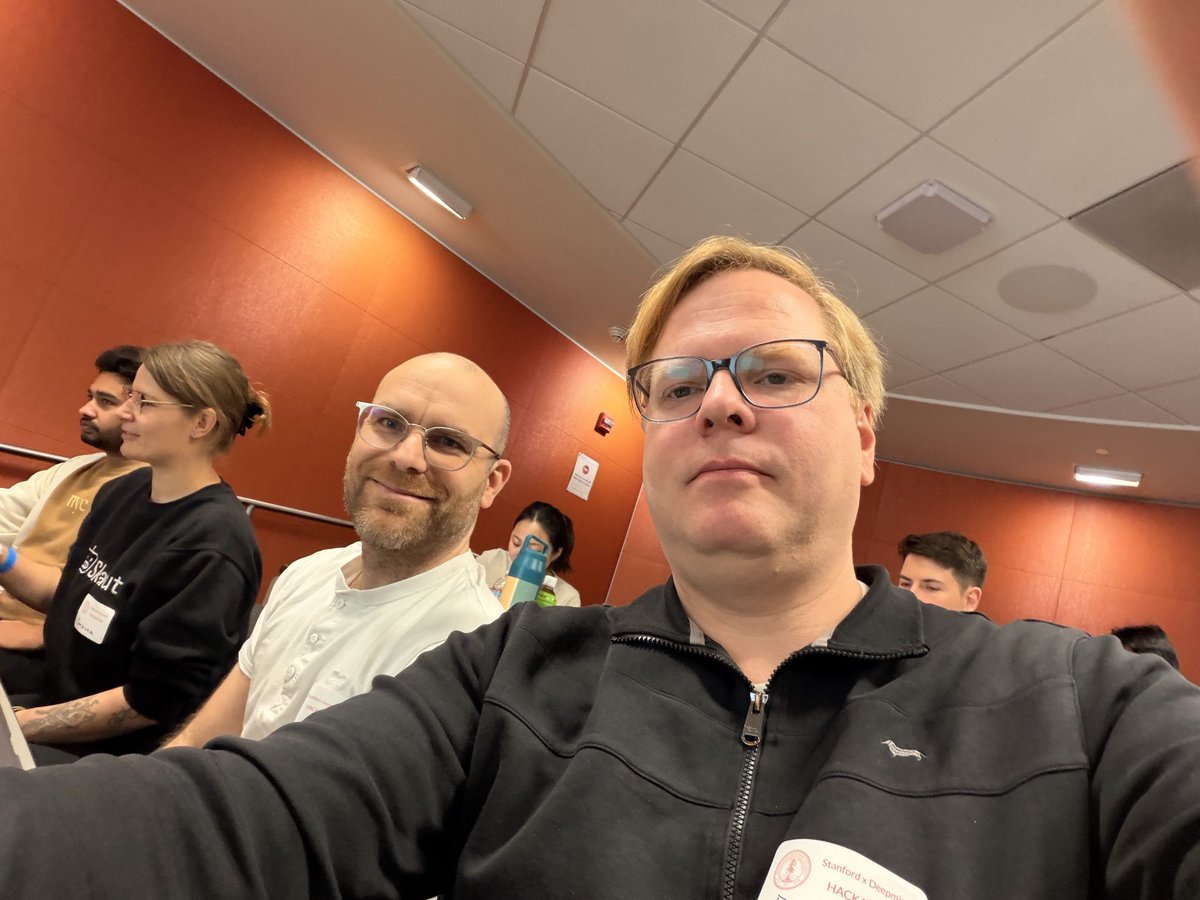
We’re building at a @Stanford hackathon, supported by @GoogleDeepMind, and in 3 hours we have to ship a working MRP engine— something manufacturers usually pay millions for.
That wasn’t the hard part.
The hard part is data that captures intent and real business logic. Most ERP systems are just expensive databases that rely on people to type reality into software.
We’re here to build systems that understand how manufacturing actually works — not how it’s documented.
#Stanford #DeepMind #Manufacturing #AI #Hackathon #ERP
Recorded a quick tutorial on connecting Nordoon to Outlook. If your POs come in via email (most do), this saves a lot of copy-paste. https://t.co/yfYtU5MSi7
🚀 Big news for cloud-native systems
In-Place Pod Vertical Scaling is now GA in Kubernetes 1.35 — more than 6 years after its original conception.
This is a major step forward for resource efficiency and flexibility in Kubernetes. 🧵⬇️
📄 Our new IEEE CLOUD paper tackles this head on.
We introduce MARLISE:
Multi-Agent Reinforcement Learning–based In-Place Scaling Engine
Goal:
⚡ low latency
📈 high resource efficiency
🔄 real-time adaptation
I've never felt this much behind as a programmer. The profession is being dramatically refactored as the bits contributed by the programmer are increasingly sparse and between. I have a sense that I could be 10X more powerful if I just properly string together what has become available over the last ~year and a failure to claim the boost feels decidedly like skill issue. There's a new programmable layer of abstraction to master (in addition to the usual layers below) involving agents, subagents, their prompts, contexts, memory, modes, permissions, tools, plugins, skills, hooks, MCP, LSP, slash commands, workflows, IDE integrations, and a need to build an all-encompassing mental model for strengths and pitfalls of fundamentally stochastic, fallible, unintelligible and changing entities suddenly intermingled with what used to be good old fashioned engineering. Clearly some powerful alien tool was handed around except it comes with no manual and everyone has to figure out how to hold it and operate it, while the resulting magnitude 9 earthquake is rocking the profession. Roll up your sleeves to not fall behind.
Introducing ALERT: a new method that detects feature drift and triggers retraining before performance degrades.
ALERT combines:
🧠 Representation learning (MLPs)
📊 Statistical tests (KS & PSI)
⚙️ A novel utility assessment function
https://t.co/Kz35nqbY7y
Top AI Papers of The Week (October 6-12):
- Webscale-RL
- Tiny Recursive Model
- The Markovian Thinker
- Emergent Misalignment
- Agentic Context Engineering
- Abstract Reasoning Composition
- Reasoning over Longer Horizons via RL
Read on for more:




![Rainmaker1973's tweet photo. How an egg is made.
[✏️ The Calgary Sun] https://t.co/svZqTghBWZ](https://pbs.twimg.com/media/Gc_EuowWQAAlGlM.jpg)


