Past few months of #3D work in #houdini on a few @Kpler projects - everything from abstract depictions of financial flows to conceptualising internal systems and of course lots of #AIS! #dataviz#animation
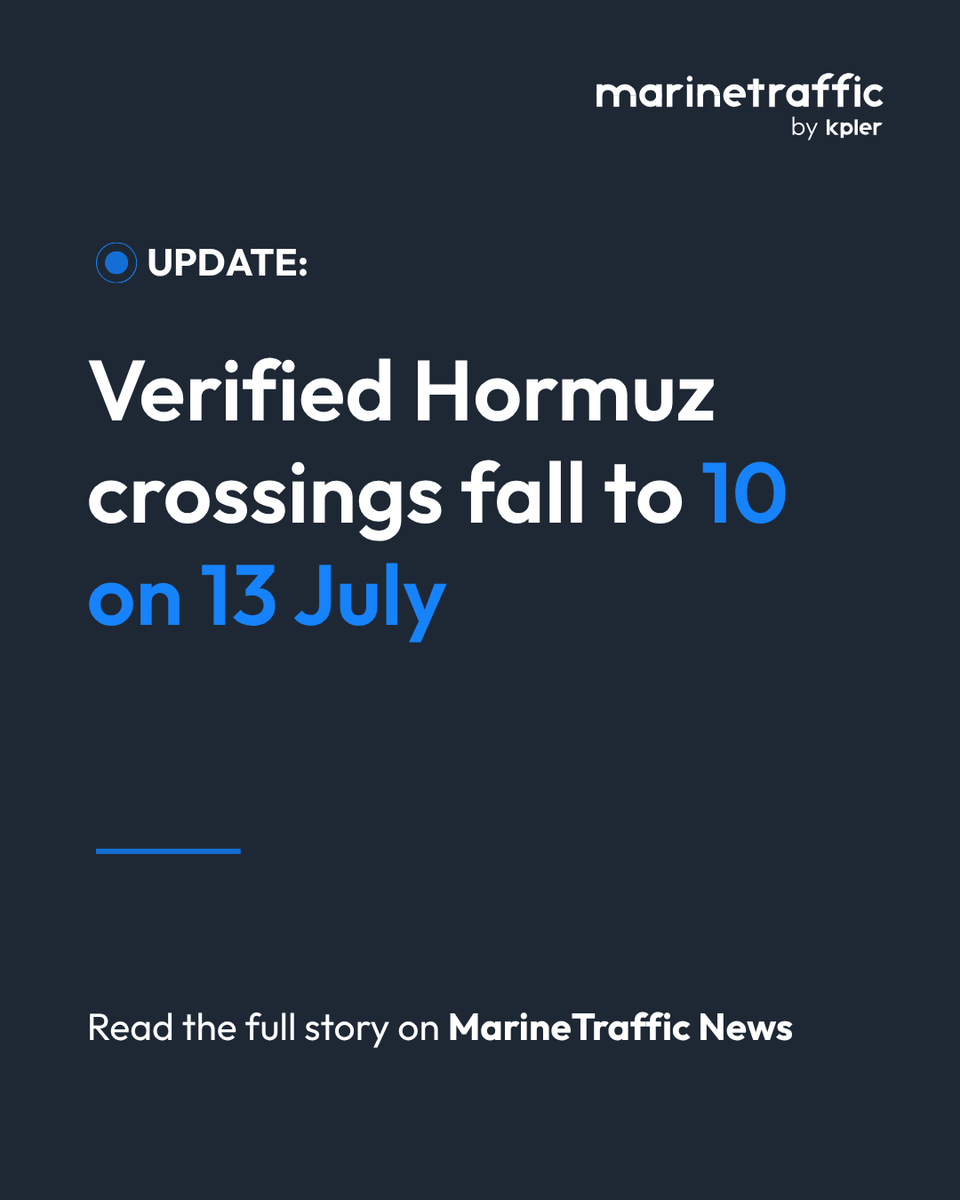
Hormuz crossings continue falling
Just 10 verified crossings were recorded through the monitored Strait of Hormuz zone on 13 July, marking a further slowdown in maritime activity as renewed conflict continues to affect regional shipping. Low risk commercial vessels accounted for the sharpest day on day reduction, while nine of the 10 crossings used the Iranian Route. The IMO has now confirmed 53 incidents and 14 seafarer fatalities, with another attack added to its incident tracker. At the same time, public exchanges between Washington and Tehran have further weakened the diplomatic outlook, increasing uncertainty around access and navigation. For operators, crew safety, insurance costs and operational acceptance remain the primary constraints on transit decisions.
Read more here: https://t.co/INfAIS1M1f
Numbers need to be put in context yes 100 million barrels passing through Hormuz last month sounds like a big number… but pre war flows were between 450-600 million barrels a month. DO NOT UNDERESTIMATE the disruption. #OOTT
Matt Smith of Kpler is a real fucking black belt in the industry. There aren’t that many around these days, but the man is spitting straight 🔥.
@mattvsmith01
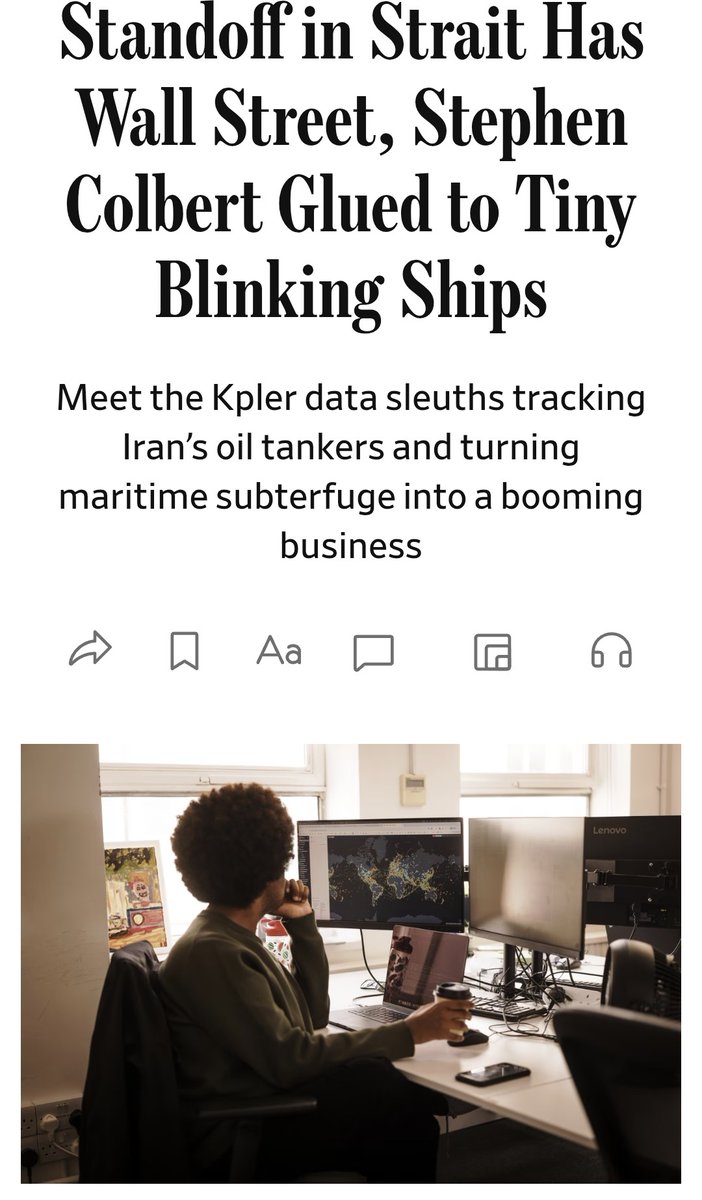
When the Strait of Hormuz froze, the world started watching ships. My profile of Kpler, the company whose tanker maps are helping Wall Street, governments and Steven Colbert track the economic fallout of the Iran war
It feels like 2008 again, with the subprime loan market being the oil market today that everybody ignores until the very last moment.
Difference is that unlike central banks that can print money, oil molecules can not be printed.
Saudi crude reroute pushes Yanbu to its limits
Yanbu is being pushed toward its operational ceiling as Saudi Arabia reroutes #crude flows away from the closed Strait of Hormuz. Exports are averaging 3.4 Mbd in March, with the recent week hitting 4.6 Mbd and peak days above 5 Mbd, testing system limits.
Congestion is building rapidly, with 30+ tankers waiting offshore and delays stretching to around five days, signalling that terminal capacity, rather than pipeline supply, is becoming the primary constraint. Eastbound cargoes must also transit the Bab el Mandeb, adding an additional layer of geopolitical risk to an already stretched system. As flows increase, the system is increasingly expressing strain through delays, rising freight exposure, and higher delivered costs into key Asian markets.
Stay ahead of the market with #Kpler Insight: https://t.co/J0wY6EpiTH
this is the stuff every 20 year old needs to hear. not bullshit career advice from people who never took risk to build something real.
game from a guy who got pushed out of his own company, cashed out billions, and started building again like nothing happened.
different breed.
@Amena__Bakr I don’t want to expose my geekiness, but once, I had to do a small calculation to check a possibility to deliver small crude production in Japan by lorries 🚛.
To deliver one VLCC, it requires more than 5000 large lorries 😫.
Strait of Hormuz traffic drops sharply amid regional escalation
Vessel activity in the Strait of Hormuz has shifted materially following recent US strikes on Iran and the subsequent regional escalation. According to real-time traffic analysis, transits through the chokepoint fell by approximately 70% after 16:00 UTC on 28 February, compared with levels 12 hours earlier.
#MarineTraffic playback shows visible behavioural changes across the region over the past three days, including U-turns, idling, reduced speeds, and last-minute diversions, particularly after maritime security warnings were issued. Watch the playback of vessel activity in the Strait of Hormuz over the past three days.
When GPS lies, ships stop moving.
GNSS spoofing, the deliberate manipulation of satellite navigation signals, has been confirmed in the Gulf. Ships can’t trust where they are, so many are choosing not to go at all.
The result: a sharp drop in vessel traffic through the Strait of Hormuz, a chokepoint that carries ~20% of global oil flows.
This isn’t just a navigation problem. When ships hesitate in a corridor this critical, supply chains feel it and so do energy prices.
Kpler data doesn’t just show you the headlines. It shows you what’s happening before the headlines catch up.
Following this weekend’s events, I’ve been analysing vessel activity in the Strait of Hormuz at @Kpler.
Raw AIS from 28 Feb shows clear GNSS spoofing - vessels drifting over land and pulsing around fixed points (normally far cleaner).
#AIS#DataViz#Maritime#StraitOfHormuz
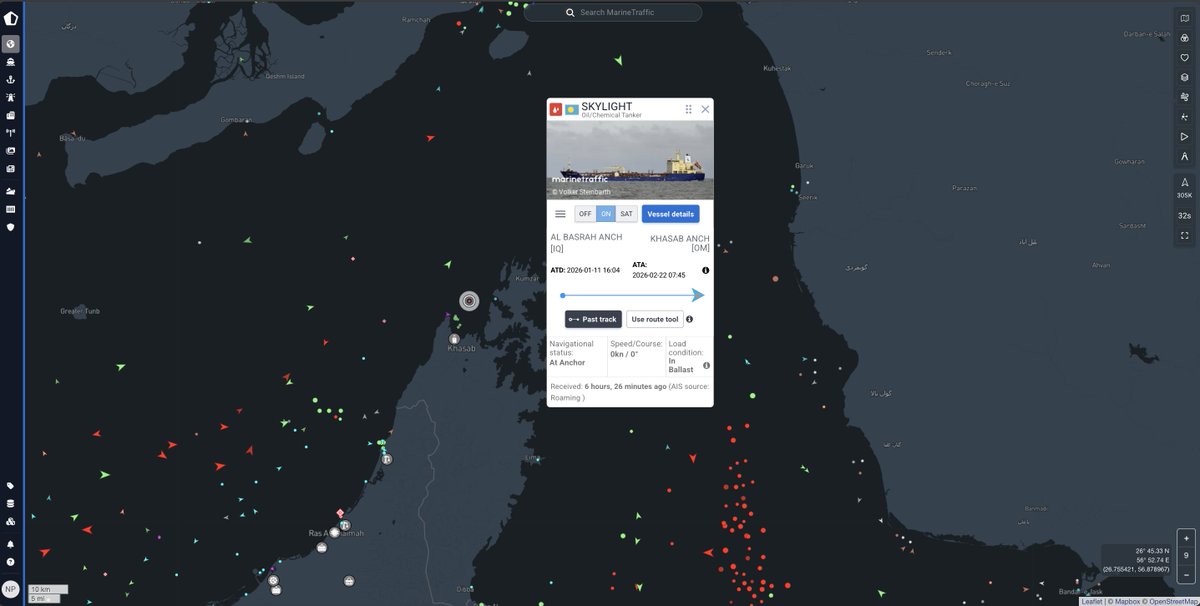
Reports indicate that the Palau-flagged tanker #Skylight was hit earlier today in the Persian Gulf. @MarineTraffic data reveals the last AIS signal was at 3am UTC, and based on @Kpler data the vessel was sanctioned by OFAC on 18 Dec 2025 as part of sanctions related to Iran.
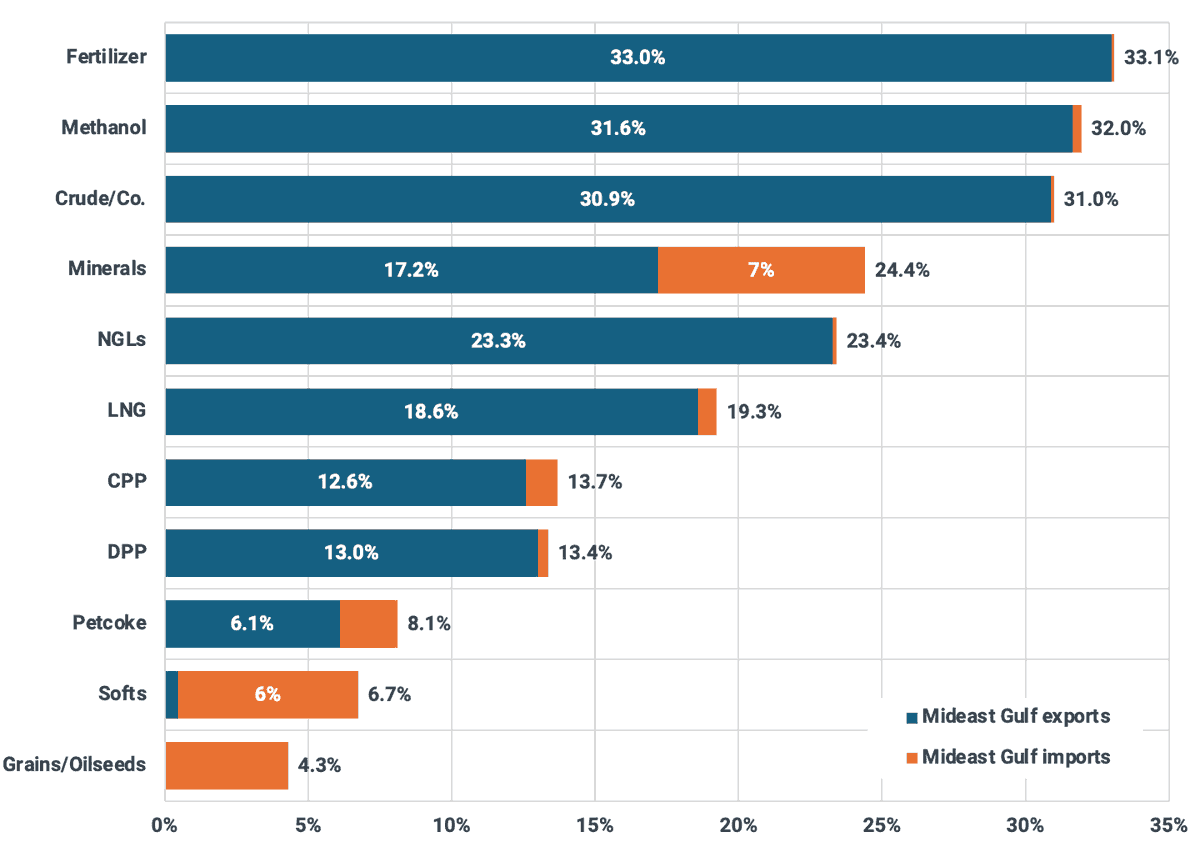
Another great graphic from the @kpler team today (h/t 'Super Flo' aka Florian Grünberger) depicting the share of global seaborne commodity flows transiting the Strait of Hormuz in 2025 (imports + exports). It's not all about the oil...