Proud to share our first TRACERx cancer study integrating epigenomics + genomics in NSCLC as co-drivers of tumor evolution.
Led by not me but by the wonderful @NnennayaKanu, @F_gimenoval, @ccastignani6, @VanLooLab
🚨Thrilled to share our latest work: “Tumor-Infiltrating Clonal Hematopoiesis” @NEJM - we investigated how age-related blood mutations impact cancer when they infiltrate tumors, with @Elsa2Bernard Maria Zagorulya, @PapaemmanuilLab@CharlesSwanton + more
https://t.co/PYUKWzSxV2
Our pre-print "Comparative evaluation of methods for the prediction of protein-ligand binding sites" is out on Research Square. Check it out!
🔗 https://t.co/vDxW7Lruwk
On this paper we benchmark 11 ligand binding site prediction tools on our curated reference dataset: LIGYSIS!
Join us for the RNA Therapeutics Meeting on Wednesday, May 15th! Featuring talks from a diverse lineup of speakers representing academia, biotech, and VC, we will showcase the pivotal role RNA plays in revolutionising healthcare. Click to learn more:
https://t.co/LyNCcYRms2
Invitation! The Somatic Evolution and Tumour Microenvironment hybrid Symposium (5th edition) will take place on the 18th June 2024 at the Francis Crick Institute, London. Another great lineup of speakers!
Free registration is open here:
https://t.co/fiUAsAy6UR
📣 we’re excited to see all the fantastic abstracts coming in, if you haven’t submitted yet then you have until midnight BST tomorrow!👨💻🧑💻👩💻
There are prizes to be won 🤓
Register for the symposium: https://t.co/R8HjRBzM38
Submit your abstract: https://t.co/WI2XvlMO4t
Do plants develop cancer? Since trees live long and have many cells, shuld we expect to see "tumoral forests" as the on in the image (my drawing)? Spoiler: negative answers to both questions (with exceptions). Understanding why is a fascinating story @ara_anderson @AguadeGuim
📢📢 We're hiring! Just finished your PhD? Come help us figure out how cancers evolve and develop diagnostics. You'll work in a multi-lab team @EarlyCancerCam/@TheCrick and lead a stunning project on lung cancer. Flexible start date to Oct. Pls RT!
https://t.co/lRRBVXuurT
Last year we used spatial transcriptomics from 15 samples to explore how Cancer Hallmarks are distributed in space
We have just finished a new version where we analyze 63 tumor samples from 10 cancer types to extend the original findings
Here's what we learned 👇
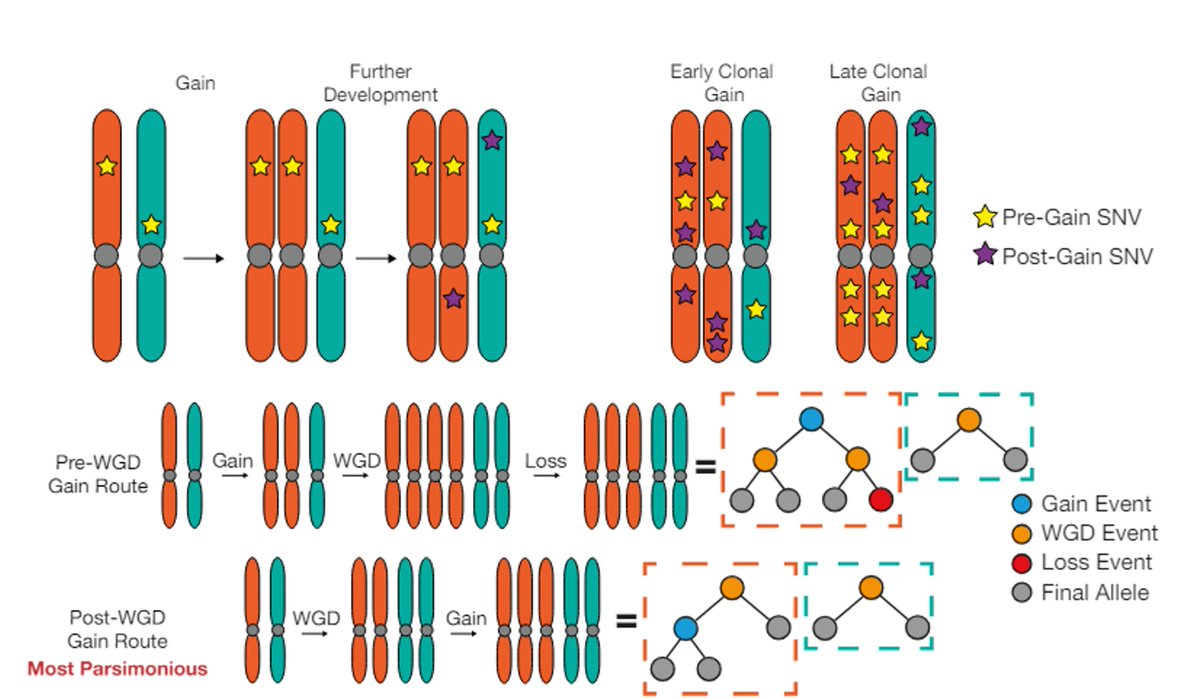
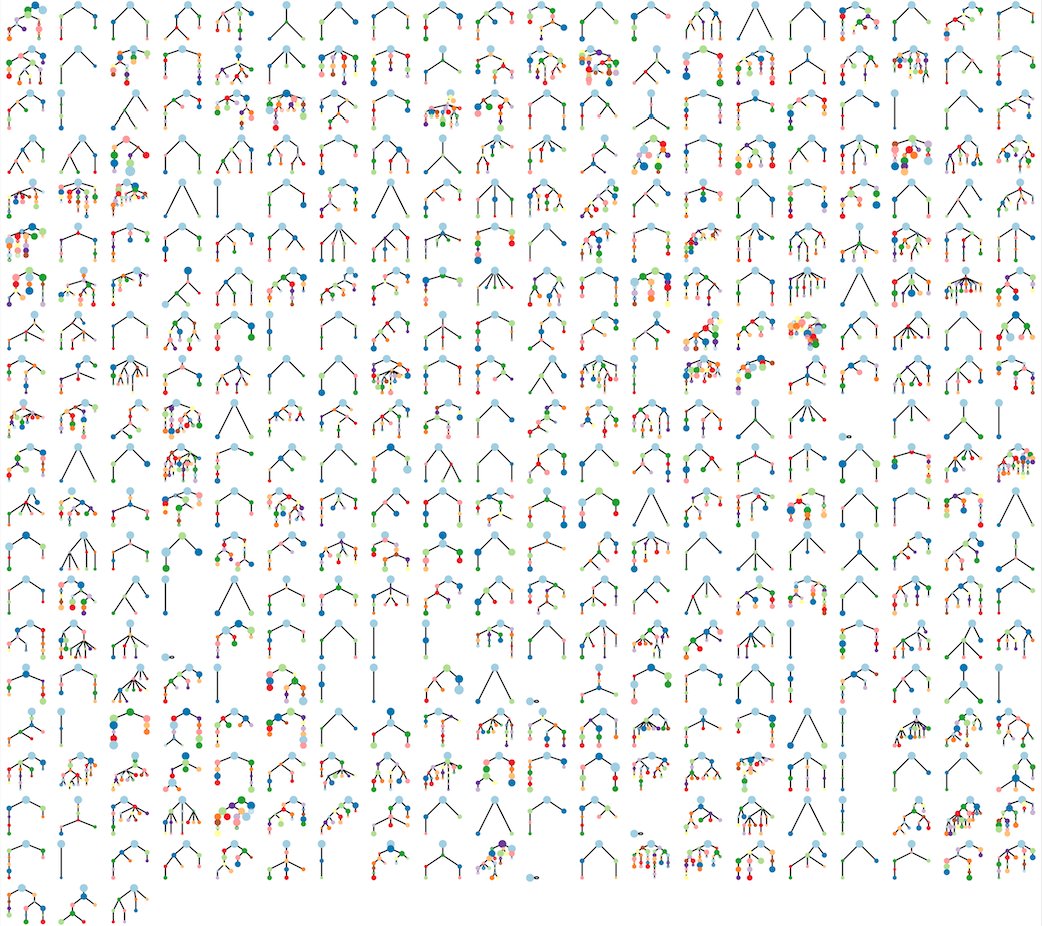
CONIPHER, our method for automated reconstruction of tumour subclonal structure and phylogeny that we used in our recently published TRACERx studies, is now out in Nature Protocols! (https://t.co/MObIlTZf6D). Welcome to the CONIPHER TREEtorial, just in time for Christmas! 🌲 1/n
When Science & art touch one another. Our cover chosen @MolecularCell. Based on #soniadelaunay#orphism, the painting presents a vibrant and abstract world using colorful geometric shapes, symbolizing the rhythmic patterns within the cell cycle. By https://t.co/xTSVFdpQLx
📢‼️New event! Join us to learn about how #AI is being leveraged to drive innovation.
Experts will showcase current and future applications and discuss societal implications🧠🤖.
Don't miss it, register now:
https://t.co/aZzMFzNKfa
Have you registered for our cancer innovation event yet? 👀 ⬇ : https://t.co/qoCpJ4I9Ep
We’ve teamed up with @CR_Horizons and @science_eclub and we are delighted that @parkermoss from @GenomicsEngland will be chair of the event 🤩🙌
💫 Great session today at the #FoG2023 about new bisulfite-free methylation methods by @dagams, identification of high metastatic risk patients in NETs by Mark Quinn and finally fantastic talk by the great @StephanBeck6 with the launch of genoME app from @PGPUK_genomes team 🧬