Everyone loves innovation.
Fewer people talk about what it takes to actually manufacture it.
In biotech, the future isn’t just discovered. It has to be built.
#biotech#pharma#CDMO#manufacturing
Welcome to AI biotech era.
The is the new normal for late 2020s.
All kind of research, from years to seconds.
China has unveiled an artificial intelligence platform for drug discovery that can screen a vast library of chemical compounds, cutting the initial drug screening phase from months or years down to 10s of seconds.
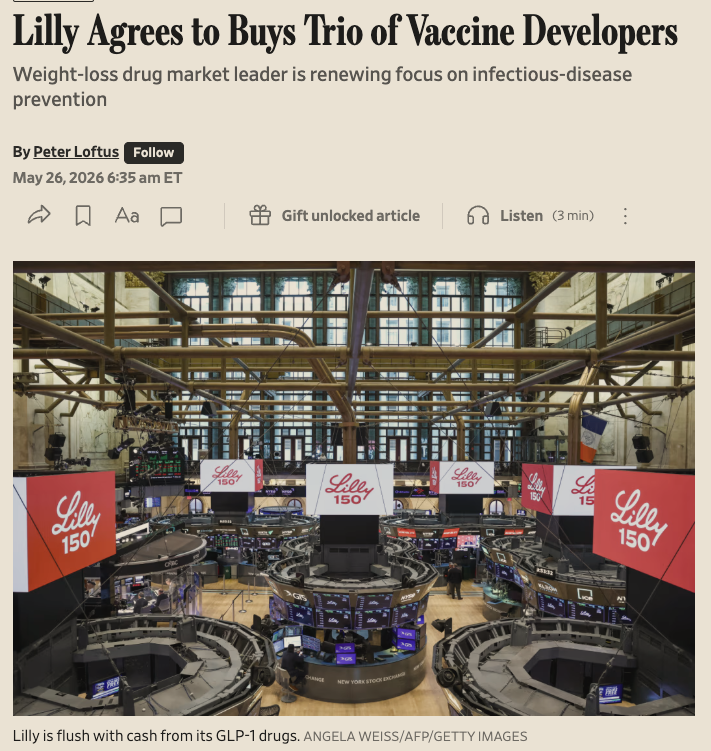
Eli Lilly $LLY agreed to acquire three vaccine developers in deals worth up to nearly $4B combined, per WSJ, using GLP-1 cash flow to expand beyond obesity, diabetes, cancer, immunology, and neurodegeneration.
The deals include:
Curevo: shingles vaccine, up to $1.5B
LimmaTech: bacterial vaccines including staph aureus, up to $780M
Vaccine Co.: Epstein-Barr virus vaccine, up to $1.55B
Lilly says vaccines could become a core focus if the programs pan out.
Everyone talks about AI in drug discovery.
Not enough talk about AI inside manufacturing.
→ predictive batch failure prevention
→ smarter scheduling
→ lower deviation rates
→ faster release cycles
The next CDMO winners may be software companies disguised as manufacturers.
Mitraphylline is a rare natural compound with potential anti-cancer properties.
Scientists discovered how plants produce it by identifying two key enzymes responsible for creating its unique molecular structure.
The breakthrough could help researchers produce the compound more sustainably for future pharmaceutical and medical applications.
Source: University of British Columbia Okanagan.
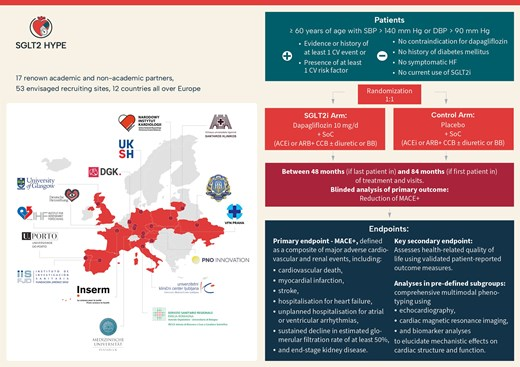
Will the HYPE over SGLT-2 continue?
The first CV Outcome Trial on Dapa vs Placebo in patients with arterial hypertension
By @IngoEitel@hswapnil@kidney_boy
https://t.co/lMfURkgbV4
A breakthrough stem-cell treatment could change the future of hearing restoration by targeting the underlying nerve damage responsible for permanent hearing loss.
Biotechnology company Rinri Therapeutics has developed an experimental therapy called Rincell-1, which uses specially grown stem-cell-derived auditory nerve precursor cells to repair damaged connections between the inner ear and the brain.
Current treatments such as hearing aids and cochlear implants mainly improve sound perception or bypass damaged structures, but they do not repair the lost nerve cells themselves. Rincell-1 aims to rebuild these critical auditory pathways, potentially offering a long-term restorative approach rather than symptom management.
In preclinical animal studies, the therapy has shown encouraging results, prompting regulators to approve the next stage of research. The UK’s Medicines and Healthcare products Regulatory Agency (MHRA) has now authorised the first human clinical trial of the treatment, with patient testing expected to begin in May 2026.
Researchers will investigate how safely the transplanted cells integrate into the ear and whether they can successfully re-establish hearing-related nerve signals. Although the treatment is still experimental, scientists believe it could mark a major step toward regenerative therapies capable of reversing certain forms of permanent hearing loss in the future.
Source: Rinri Therapeutics (2026). MHRA approval granted for first-in-human clinical trial of Rincell-1 (NCT07032038). Medicines and Healthcare products Regulatory Agency.
For biotech startups, the "Valley of Death" is the gap between discovery and scale-up.
A strategic #CDMO partner does more than simply providing equipment; they provide the regulatory and technical roadmap to reach the clinic. 🗺️💊
#Startups#Biotech#DrugDevelopment#ScaleUp
After 25 years of research, Brazilian scientists developed a drug capable of regenerating spinal cord tissue after severe injuries.
The therapy stimulates axon regrowth and reduces scarring that typically prevents nerve recovery.
In preclinical trials, treated animals regained partial motor function within weeks. The drug combines neurotrophic factors, small molecule compounds, and bio-scaffolds to guide nerve repair. Human trials are now underway to assess safety and effectiveness.
If successful, this breakthrough could restore mobility to millions, transform rehabilitation medicine, and reduce long-term dependency on care. It also sets the stage for future therapies combining cellular engineering and regenerative biology to treat other complex injuries.
The shift from PCOS to PMOS (Polyendocrine Metabolic Ovarian Syndrome) is a paradigm shift.
This clarity will accelerate targeted R&D and specialized therapeutic solutions. 🧬🩺
#Biotech#PMOS#WomensHealth#MetabolicHealth#CDMO
According to a report in The Lancet, the new name, polyendocrine metabolic ovarian syndrome, or PMOS, was chosen by a global coalition of patients, clinicians, and medical organizations to better reflect the condition’s wide-ranging hormonal and metabolic impacts.
The focus on ovarian cysts has led to delays in diagnoses and fragmented care, while the new name aims to improve how the condition is detected, treated, and explained, the researchers said.
Symptoms of PMOS include irregular or absent menstrual cycles, infertility, pregnancy complications, excess hair growth, acne, anxiety and depression, weight gain, obesity, diabetes and other disturbances in insulin, and cardiovascular disease.
Tap the link to learn more about the transition to the new terminology. https://t.co/gvrIcsvJwC
Türkiye biyoeczacılıkta yükselen bir merkez!
Yerel girişimlerin globalleşmesi için stratejik CDMO desteği şart. Teknik uzmanlığı doğru altyapıyla birleştirerek biyoteknolojinin geleceğini inşa ediyoruz. 🚀
#Biyoteknoloji#ArGe#CDMO#Türkiye#Girişimcilik#İlaç
#Scaling a biotech breakthrough requires world-class infrastructure.
CDMOs are the backbone, bridging the gap between discovery and #clinical delivery. By outsourcing, firms can focus on what they do best: R&D. 🧬✨
#Biotech#CDMO#Biopharma#LifeSciences#Innovation
🚨 Goodbye Kidney Stones?
Scientists have engineered special gut bacteria that may help stop kidney stones naturally. These tiny microbes break down oxalate — the substance responsible for many painful stones — before it reaches the kidneys.
Instead of painful treatments, future medicine could use living bacteria inside the body to quietly prevent stones from forming. A tiny organism… doing a huge job inside you.
Source:
Stern, J. M., et al. Engineered living therapeutics for the treatment of hyperoxaluria and kidney stone disease. Nature Biotechnology
Biotech saves lives & improves life quality through genetic engineering.
This CRISPR-driven success is a massive step forward that we hope to see scaled for global access.
Industry-wide cooperation is key to making these cures a reality.
Cheers🥂
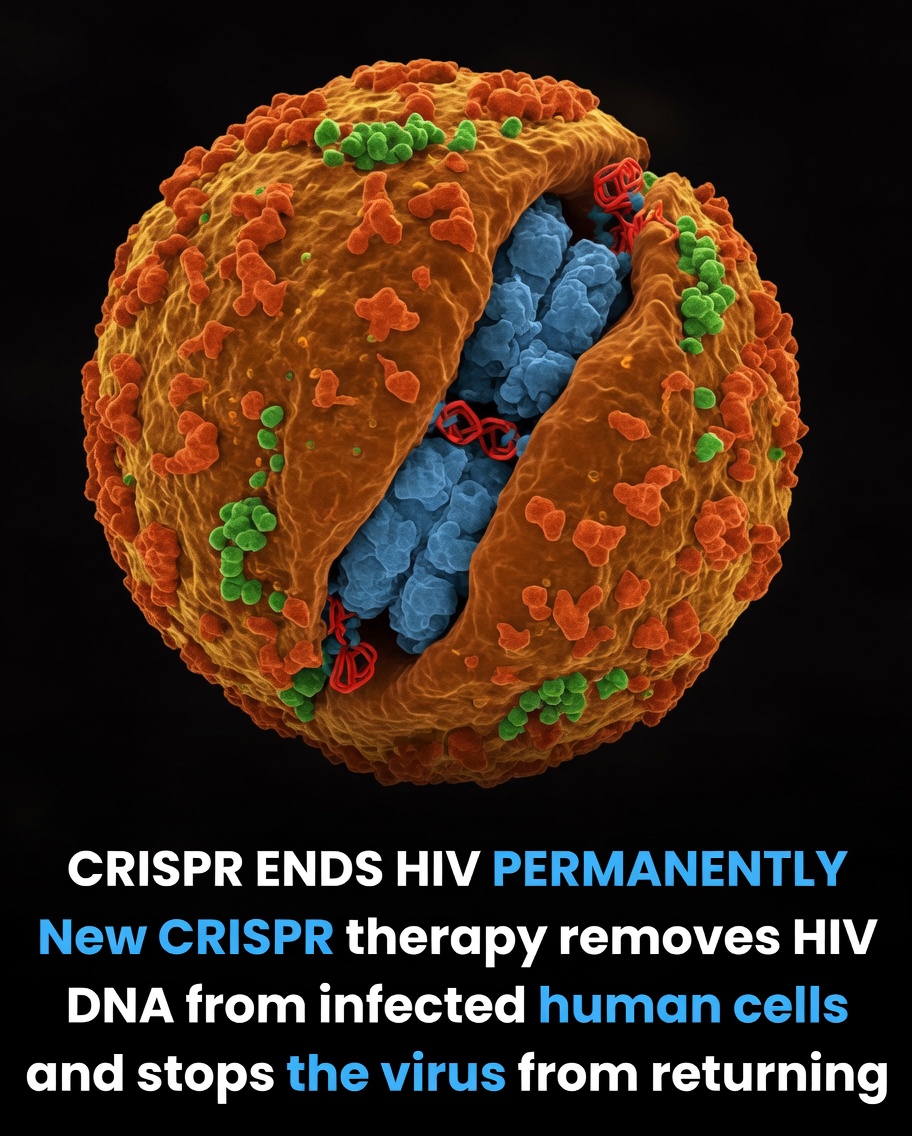
The end of HIV infections may be closer than we think.
Scientists cut HIV out of immune cells using CRISPR.
And the cells stayed HIV-free even after re-exposure. A cure could finally be within reach.
In a groundbreaking advance, scientists at Temple University have successfully used CRISPR/Cas9 gene editing to eliminate HIV-1 DNA from the genomes of human immune cells.
Unlike existing treatments that suppress the virus, this method completely removes the genetic blueprint of HIV from infected T-cells.
This April, we got a drug revolutionary in 3 ways: daraxonrasib roughly doubles survival in metastatic pancreatic cancer, cracked RAS, a protein deemed untreatable for decades & pioneered a drug class called molecular glues. Read more in my piece @WorksInProgMag
https://t.co/utmOOKLZmx
- Pancreatic cancer is a particularly tough cancer.
- It's diagnosed late in its progression and it coats itself with tissue that block the immune system from attacking it. This makes immunotherapies, which have been revolutionary in other metastatic cancers (e.g. melanoma) ineffective against it.
- 90% of pancreatic cancer have one mutated protein: RAS. This should make it easily targetable. But ... not so quick! - RAS has a property that has made it "undruggable" for decades: it largely lacks the pockets or grooves that most drugs depend on to bind and act upon their target.
- Molecular glues sidestep the problem entirely. Instead of binding a pocket, daraxonrasib forces two proteins together — locking RAS in its inactive state by wedging a third protein in the way.
- The result: median survival of 13.2 months vs ~6 on standard chemo. Not a cure, but a genuine doubling, delivered as a daily pill.
- The implications go far beyond pancreatic cancer. RAS is mutated in lung, colorectal, and many other cancers. Molecular glues are now being developed against multiple other "undruggable" targets. The assumption that certain proteins are simply beyond reach has turned out, repeatedly, to be wrong.
- The bad news is that most patients eventually develop resistance mutations that vary from patient to patient. In order to deliver a real cure, we need to rethink our regulatory system and make small-n, early stage bespoke trials much easier to run.
Pharma is having its Sputnik moment. Welcome to mutually assured drug discovery.
On April 6, Anthropic acquired Coefficient Bio — an 8-month-old, 10-person startup — for $400 million. They had no lab. No drugs in development. No clinical trials.
A week later, on April 14, OpenAI announced a drug-discovery partnership with Novo Nordisk covering everything from discovery through commercial operations. Just 2 days after that, it launched GPT-Rosalind, a biology research agent built for drug discovery.
We've known the frontier labs care about biology. But:
> Why now?
> Why is every major lab making the same bet at the same time?
> What does it mean for the cancer drug your partner needs, or the clinical trial readout your father is waiting on?
https://t.co/0ysZJQTrLJ
You can't automate experience. 🧠
The #CDMO industry is facing a massive talent gap. The companies winning in 2026 aren't just the ones with the newest cleanrooms—they're the ones with the best process engineers.
Tech is the tool and talent is the catalyst. 🧪
#Biotech