Russia must get out of Ukraine with its war – we want no war. Ukraine has put forward proposals to our key partners, and Putin’s friends have also heard from us that a meeting is possible and that ending this war is possible. Russia must now take that step toward peace.
Hodges: Crimea dominates the Black Sea, it's why Catherine the Great took it in the 18th century. If Russia holds it, they block access to the Azov Sea and disrupt everything out of Odessa.
It's in the interest of all of us that Ukraine regains control of Crimea. 1/
Just yesterday, Russian guided aerial bomb strikes on Zaporizhzhia killed 5 people and injured 26 others. In Poltava, tragically, 2 people were killed and 12 were injured as a result of the shelling, including 6 children. My condolences to their families and loved ones.
The Dnipro, Kharkiv, Odesa, Sumy, Donetsk, Kirovohrad, and Rivne regions also came under attack. Our frontline and border communities are constantly targeted by drones. In total, this week alone, the Russians launched about 2,200 attack drones, more than 1,800 guided aerial bombs, and 87 missiles of various types against Ukraine.
It truly matters that, against the backdrop of these attacks, the G7 and European Council summits and the UDCG meeting delivered results and secured new contributions to strengthen our defense. I am grateful to our partners for their unity. It is now equally important to implement everything quickly, above all the delivery of air defense missiles, so that these new contributions provide real protection for lives from constant Russian strikes. Thank you to everyone who is helping.
Western defeatism is a scourge and things like $200 oil are a symptom of this, intended to scare Western policy makers away from tough action. Sanctions work. Just look at Trump's Rosneft and Lukoil sanctions in Oct. '25. They crushed Urals oil price...
https://t.co/0QSvbRkj2e
MORE: Tying the US-Iran nuclear negotiations to the Lebanon issue not only helps Iran advance its strategic objective of preserving Hezbollah but also enables the regime to delay nuclear negotiations while reaping the economic benefits of the US-Iran memorandum of understanding (MoU). Iran is attempting to compel the United States to pressure Israel to end operations against Hezbollah, given that Israel is not a party to the MoU.
Iran likely seeks to postpone nuclear negotiations in order to avoid having to make concessions on its nuclear program while benefiting from the economic relief that is included in the MoU.
Israel and Hezbollah agreed to a new ceasefire on June 19. This ceasefire probably does not meet Iran’s demand for a “complete ceasefire” in Lebanon because Iranian officials and media have repeatedly argued that a “complete ceasefire” in Lebanon requires the withdrawal of Israeli forces from Lebanese territory.
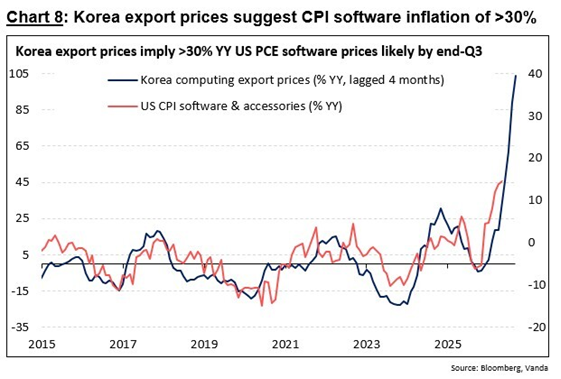
Higher oil prices was inflationary for headline and deflationary for core
Lower oils prices is deflationary for headline and inflationary for core
Thanks for coming to my ted talk
My guess is that financial conditions are going to get a lot more volatile. But maybe - just maybe - we will also get fewer systematic policy errors, particularly at turning points... Market wont need to wait for the famously slow-moving committee to change its views about the outlook. Good in a 2022-style scenario?
Today's post is a requiem for $200 oil. These apocalyptic forecasts were just as wrong now as they were in 2022. There's a lesson there, which is especially important for Europe. You can blockade Russia or clamp down on the shadow fleet. Things will be ok.
https://t.co/DY7b4HbfRI
The US blockade of Iran was highly successful and worked exactly the way it was supposed to. After its imposition on April 13, the Iranian Rial weakened on capital flight and panic. Now it's recovering on the peace deal. Next we need to blockade Russia...
https://t.co/Vz3rK5HX1Y
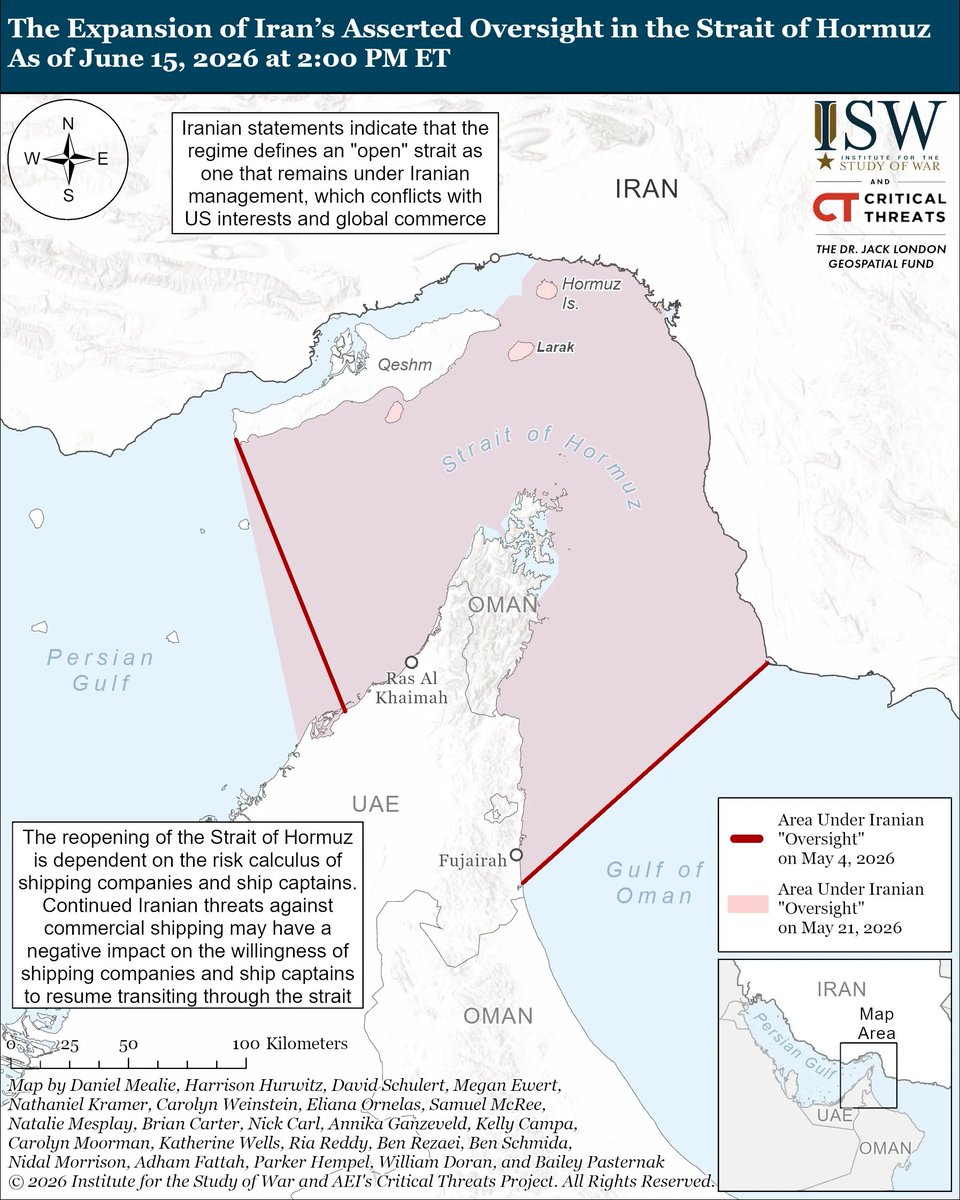
2/ MORE: The reopening of the Strait of Hormuz depends on the risk calculus of shipping companies and ship captains. Continued Iranian threats against commercial shipping may have a negative impact on the willingness of companies and captains to resume transiting through the strait. Trump stated on June 15 that vessels have begun transiting through the strait via the “southern highway,” almost certainly referring to the internationally recognized traffic separation scheme.
Shipping companies will likely remain reluctant to resume normal operations, at least for the time being, due to the ongoing risk of Iranian attacks and naval mines, however. The IRGC Navy announced on June 15 that it has not issued transit permits over the past 96 hours and emphasized that the strait remains closed to all vessels. The IRGC Navy reportedly warned ships not to approach areas under Iranian control “until further notice,” which is an implicit threat to attack vessels that attempt to transit through the strait without Iranian permission. These threats are part of a broader Iranian effort since March 2026 to use force to deter vessels from transiting the strait without Iranian authorization.
Iran’s mine-laying activities and threats to mine the strait are also a key component of this effort. Reuters, citing shippers in Asia and Europe, reported that shipping companies intend to resume navigation only after authorities fully confirm the safety of the waterway. Reuters, citing Western maritime security services, added that mine-clearing operations could take 40 to 50 days. Trump stated on June 14 that mine-removal operations will begin after the agreement is signed on June 19. Iranian officials and media have not commented publicly on potential mine-clearing efforts.
Brent is down to $80, which is the lowest level since the very early days of the war. The narrative in markets is already shifting back to "supply glut." We were at $70 before all this started, so the risk premium is rapidly being eroded. Don't chase this.
https://t.co/OlsRFkLwKS