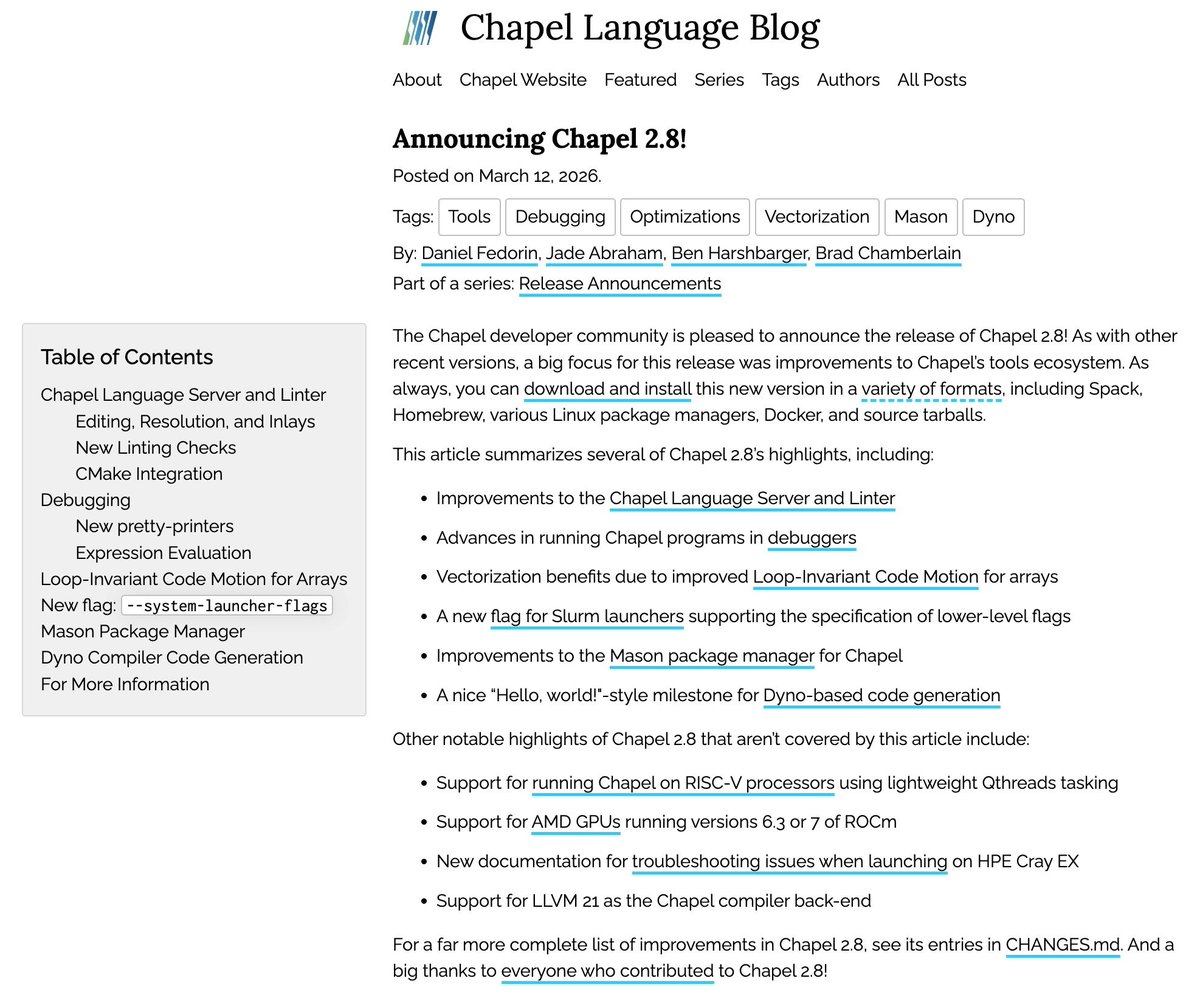
Today, we’re proud to announce the release of Chapel 2.8! Its highlights include improvements to Chapel’s tools ecosystem, as well as some nice advances in portability and performance.
For details, please see: https://t.co/6i5tVPnV8q
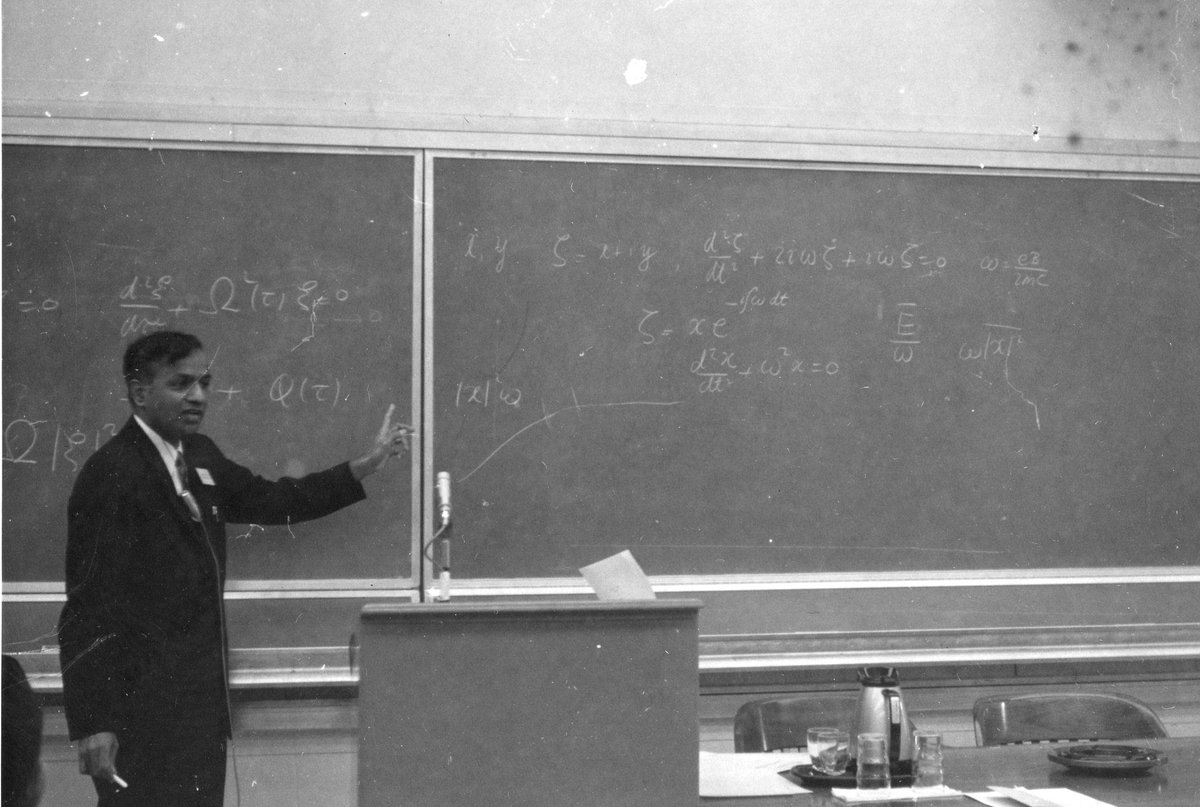
In the 1940s, Subrahmanyan Chandrasekhar was committed to his teaching role at the University of Chicago, despite being based at the Yerkes Observatory. Each week, he traveled 80 miles to teach a special course attended by only two students. The students were Tsung-Dao Lee and Chen-Ning Yang. They proved their mentor's faith was well-placed when they both won the Nobel Prize in Physics in 1957, years before Chandrasekhar received the same honor in 1983. Remarkably, this course went down in history as the only one where every attendee received a Nobel Prize, underscoring the extraordinary impact of Chandrasekhar's dedication and teaching.
📷 AIP Emilio Segrè Visual Archives, Physics Today Collection
@HiroNishikawa If there is a subroutine that returns the exact solution as a function of (x,t), then one can use AD to compute the source term, which gives source code for the source term. For fortran AD, try Tapenade from INRIA.
@HiroNishikawa If it is to test numerical fluxes alone, then this can be done. But if you want to test all aspects of methods like reconstruction method, it is not easy to do. What can also be useful is to develop a collection of testcases, quantities to compute, provide grids, etc.
🦔 A neuroscientist who testified before the Senate says US schools weren't broken until tech companies convinced them they were. Jared Cooney Horvath found that test scores in Utah started declining right when schools implemented mandatory digital infrastructure in 2014. The US has spent $30 billion putting laptops and tablets in classrooms since 2002. According to international data, more time students spend on computers correlates with worse scores, not better. Gen Z is the first generation to score lower than their parents on standardized assessments.
Now the same cycle is repeating with AI. A Pew survey found more than half of US teens use AI for schoolwork. Teachers report students can't reason, think, or solve problems independently. Horvath argues that tools experts use to make their lives easier are not the tools students should use to learn how to become experts.
My Take
The "transfer problem" goes back to the 1950s. Students learn to master the tool but not the subject matter. Pressey and Skinner ran into this with teaching machines 70 years ago, and we're running into it again with AI. The tech changes but the outcome doesn't.
I think Horvath has it right. Learning requires friction. You have to struggle with a problem to actually understand it. AI removes that friction, which feels like help but functions as dependency. An expert can use AI effectively because they already know enough to evaluate the output. A student using AI to skip the hard part never builds that foundation. We're watching an entire generation learn to operate tools instead of developing the skills the tools are supposed to augment. The productivity gains go to the platforms, not to the kids.
Hedgie🤗
Many college professors are discovering that students learn less when they have laptops open. Many of us are banning their use in class.
Putting computers and tablets on students desks in K-12 may turn out to be among the costliest mistakes in the history of education
Sir Roger Penrose argues that current AI is a misnomer because it lacks the one ingredient essential for true intelligence: Understanding.
By applying the lens of mathematical logic, he explains that while machines are masters of following rules, the ability to understand why those rules work is a non-computational process. To Penrose, the leap from calculation to comprehension requires more than just better code; it requires Consciousness.
At the fundamental level, intelligence isn't just data processing; it's the conscious awareness that gives meaning to the math.
Credit: TheInstituteOfArtAndIdeas
@HiroNishikawa Paraphrasing what somebody else said. Anybody who has an area of expertise will quickly realize that these AI tools are pretty useless. What this shows is that most people dont have an area of expertise.
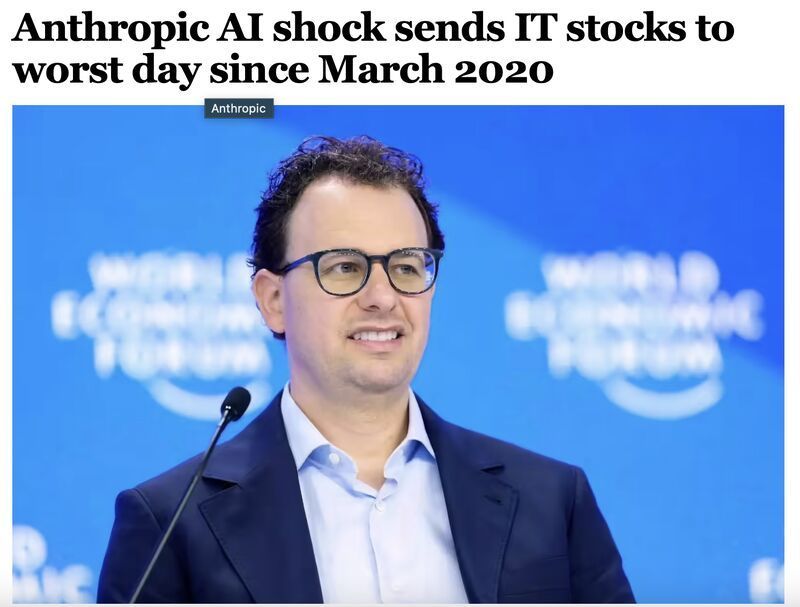
I'm pretty sure everyone at my company saw this article and now they all think we're in an AI crisis.
We're not in an AI crisis. We use Claude to summarize Slack threads.
But here's what's actually interesting: this whole panic reveals something nobody wants to admit.
Every company in America has been bullshitting about their "AI strategy" for two years.
We all saw the hype. We all knew we had to say something. So we rebranded our existing automation as "AI-powered" and called it a day.
My company isn't special. We're all doing the same thing.
The problem is now the executives actually believe their own bullshit. They think we have "significant AI exposure" because they've been telling investors we're "AI-first."
I just got pulled into an emergency meeting. Six executives asking me to explain our "AI dependency matrix."
There is no AI dependency matrix.
There's Claude for meeting summaries, there's some sentiment analysis in our support tickets that came free with Zendesk, and there's whatever Gmail is doing when it autocompletes my sentences.
But I can't say that in a room full of people who told their boards we're "transforming the business through AI."
So I said we have "distributed AI touchpoints across multiple vendors with no single point of failure."
Which is technically true. We use a bunch of different services that all have AI features we mostly ignore.
The CFO asked if we should "hedge our AI exposure."
I have no idea what that means. Neither does he.
What am I going to do: nothing. Because in three weeks, Anthropic will say something reassuring, the stocks will recover, and everyone will forget this happened.
But I'll have documentation showing I recommended a "risk assessment" that mysteriously never got prioritized.
The funniest part is that half these executives probably don't even know what Anthropic is. They just saw "AI" and "crash" in the same headline.
We're all pretending. The whole industry is pretending.
And articles like this just remind everyone how fragile the pretending is.
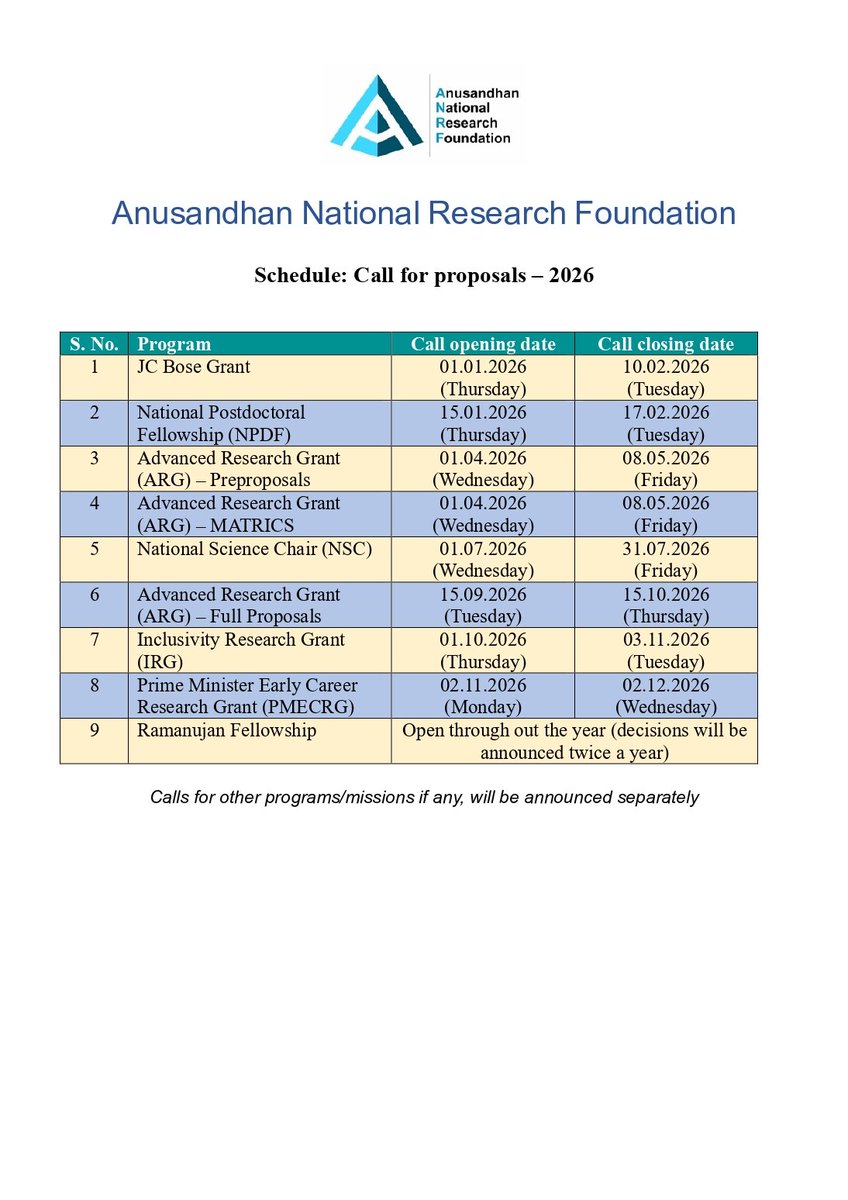
𝗔𝗡𝗥𝗙 | 𝗨𝗽𝗰𝗼𝗺𝗶𝗻𝗴 𝗖𝗮𝗹𝗹𝘀 𝗮𝗻𝗱 𝗞𝗲𝘆 𝗧𝗶𝗺𝗲𝗹𝗶𝗻𝗲𝘀
#ANRFIndia invites the research community to take note of the upcoming calls and key timelines & begin preparing accordingly.
@HiroNishikawa@DoGreatScience They use algebraic structure of FEM schemes to add some kind of graph viscosity. Methods finally look like a convex combination of several Rusanov schemes. Also see the works of Dmitri Kuzmin, I think there are similarities.
Chapel’s November Newsletter is out! As with last year’s edition, this one features a special section for events at #SC25. It also has news from ChapelCon ’25, recent talks, articles, and other community events.
https://t.co/xJKPypzqsC