Before leaders shape institutions, ideas shape leaders.
Every policy framework reflects a way of understanding society. The best public leaders engage with multiple traditions of thought before forming their own.
This edition of Policy in Pages features:
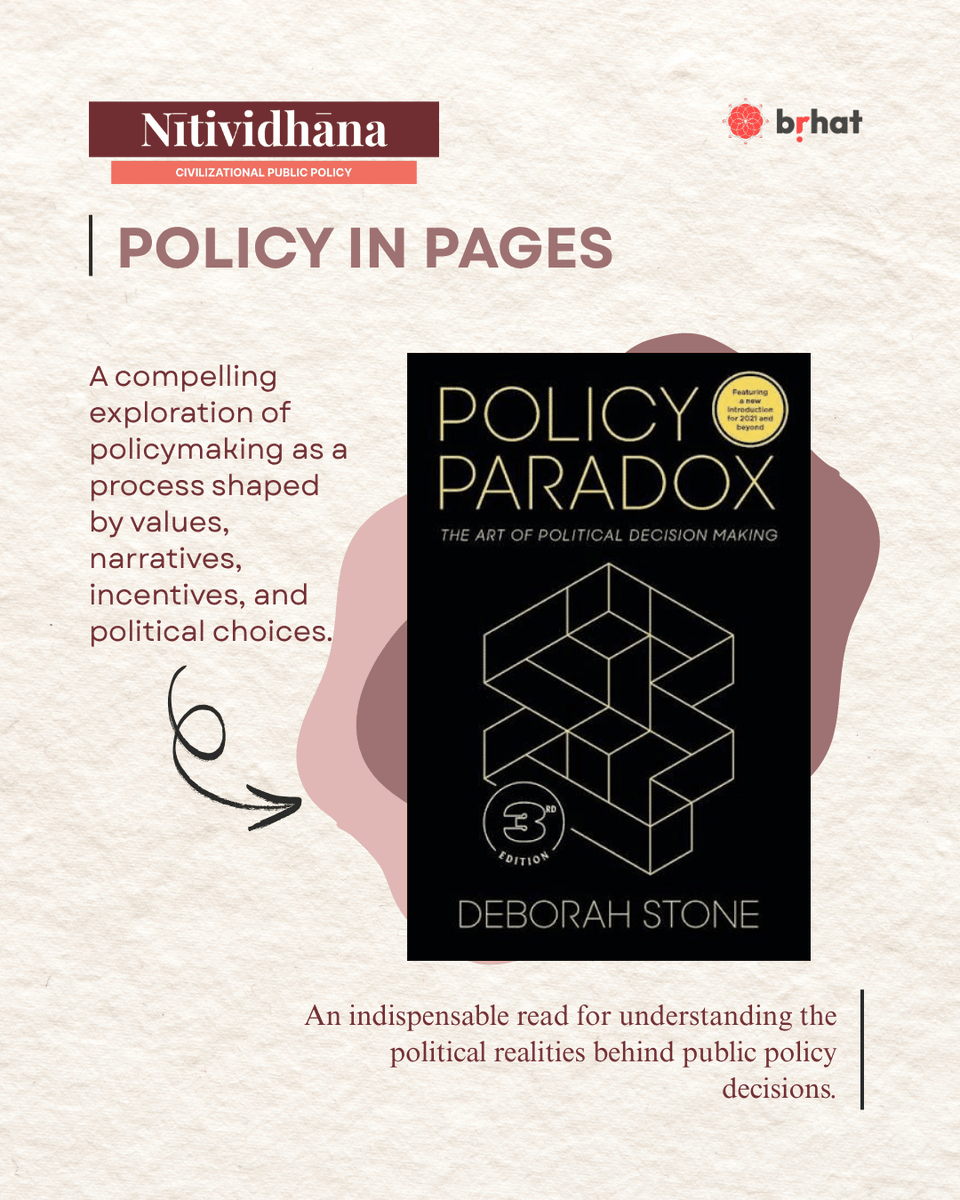
- Policy Paradox by Deborah Stone
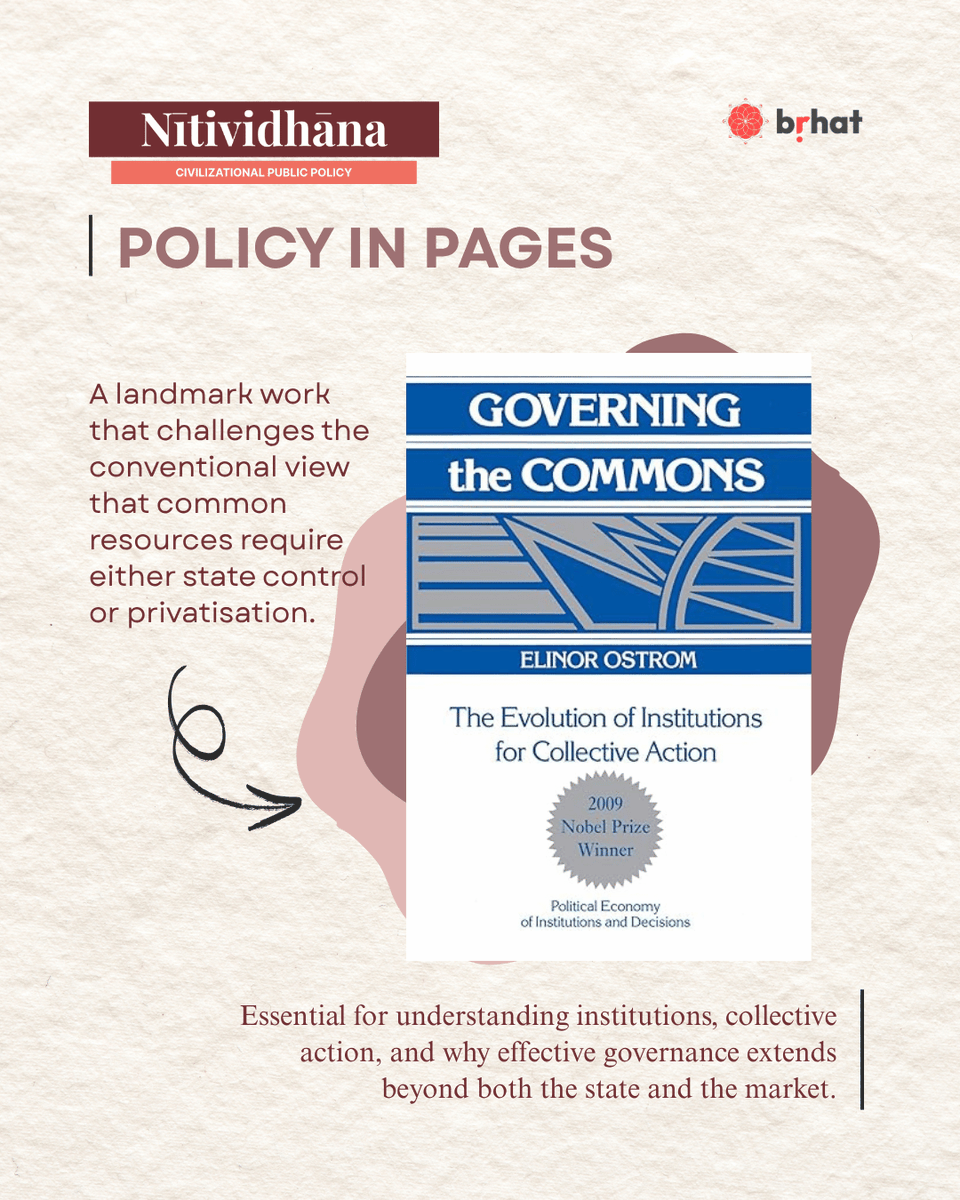
- Governing the Commons by Elinor Ostrom
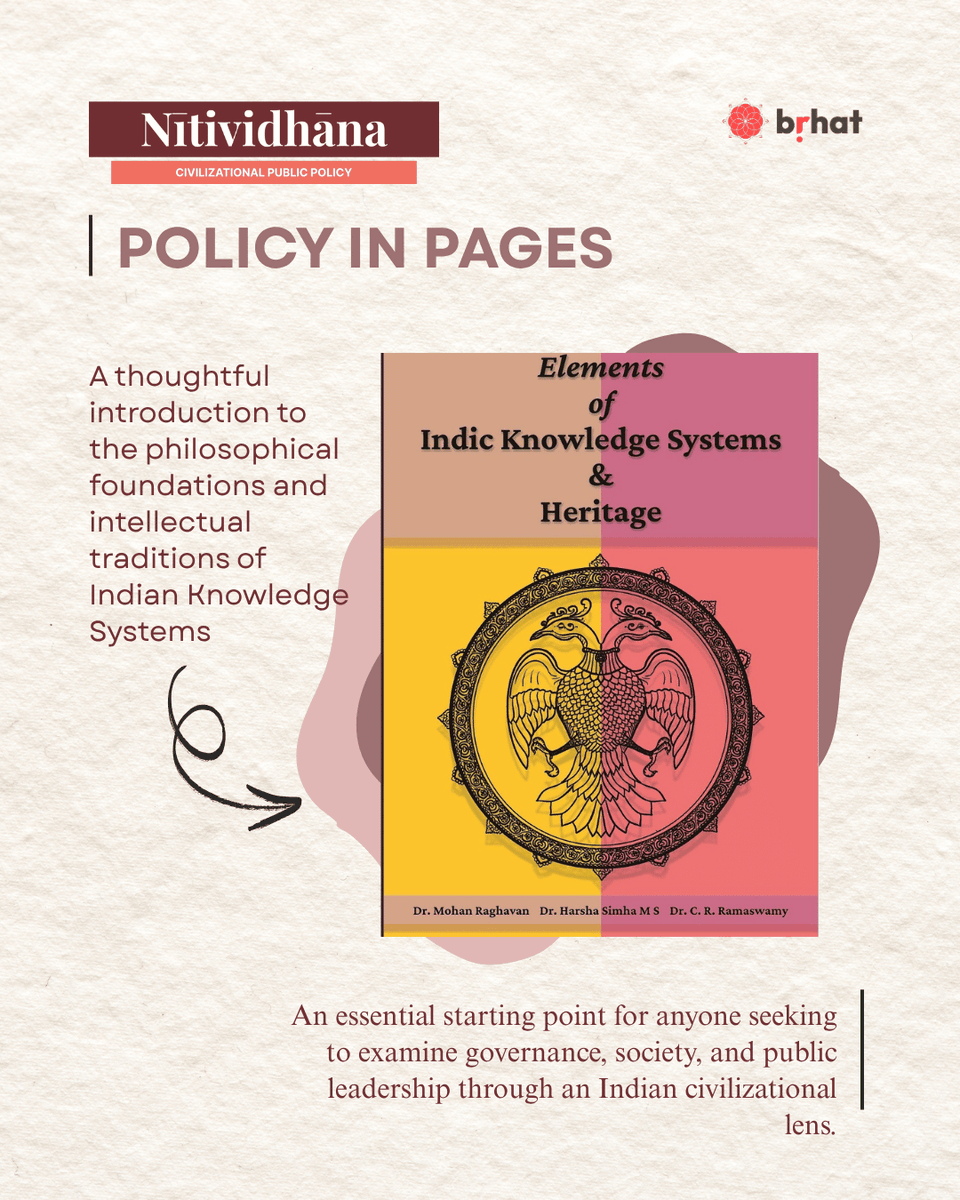
- Elements of Indian Knowledge Systems by Mohan Raghavan @MohanRaghavan8
Three books that will deepen your understanding of governance, institutions, and knowledge systems.
Comment 'BOOK' to receive our curated reading list, or explore more recommendations in Policy in Pages: https://t.co/pzF8vUfCyX
What book has shaped the way you think about governance? Tell us in the comments.
#publicpolicy #iks #policy #governance #leadership #statecraft #nitividhana #policyinpages
For three years, a software engineer from Pune on assignment in London watched two deductions leave her payslip every month: one into the UK's National Insurance scheme, the other into India's Employees' Provident Fund back home, because her employer kept her enrolled in India's system even while she worked abroad. She would never draw a UK pension. Yet every month, roughly 15 per cent of her salary was set aside twice, once for a benefit she would use, once for one she never would. From July 2026, she keeps only one deduction. The other simply disappears.
That single deleted line on a payslip is a more honest measure of what India just negotiated with Britain than any tariff schedule. Trade agreements are usually read through their headline numbers: cheaper Scotch, easier textile access, projected export gains. The Double Contribution Convention (DCC), woven into the landmark India-UK Comprehensive Economic and Trade Agreement (CETA) rather than left standalone, belongs to a rarer category. It does not change what anything costs on a shelf. It changes what nearly seventy-five thousand Indian professionals, across one of the largest corporate corridors linking the two economies, keep in their pockets every month.
I highlight how Indian talent is its global competitive advantage and Indian Government under PM @narendramodi and trade Minister @PiyushGoyal has navigated it through the maze of tariff and non-tariff barriers to deliver for Indians even under a very troubled global environment for global migration and AI.
Mobility is the real market access in today’s world.
https://t.co/Bnu7I2RAVb
@SVaidhyasubrama Sir, these ministries including tourism was under one ministry during the 1980s, given the technological changes we can handle theses subjects under one ministry of instead of many silos
Happy Birthday, Thomas Sowell: “We’ll Still Be Reading Sowell a Hundred Years from Now,” Says Nobel Laureate James M. Buchanan https://t.co/bJQtzfJpvc via @CatoInstitute
Govt officials have different views on this debate, we have to wait & see how far the new establishment sustain...
Tamil Nadu news: How Vijay's TVK government is saving big state finance, and contractors are thanking him - Tamil Nadu News | India Today https://t.co/seaorj6g43
The Monk Who Runs State Finances Like a Ferrari
A breakdown of Yogi Adityanath's fiscal report card in Uttar Pradesh. A comparison with every single state in India.
https://t.co/9gYCV8oK2D
My interview to @timesofindia on the outcome of the recent elections in Tamil Nadu, my political journey with the BJP, the reasons behind my decision to move on, and the vision and objectives of our new political movement to shape a stronger future for Tamil Nadu.
https://t.co/SVCXXfyHYZ
@dmuthuk it became highly passion to appoint a completely different sector or subject expert to another totally different subject area. the merit of domain expert is killed. There are excellent education sector experts who can have far better expertise than the scientist.
2003, Bangalore: IIM interview group discussion. Topic — India & Southeast Asia. 9 out of 10 pushed defence cooperation. I said the future is trade — sign an FTA with ASEAN.
Seven years later, Dr Manmohan Singh did exactly that. It became one of India’s largest economic mistakes.
US Trade Representative Jamieson Greer has landed in Delhi. Headlines will scream tariff cuts, but from my experience the real killers of Indian exports are non-tariff barriers, standards and behind-the-border rules.
My article in The Hindu explains why these silent killers matter more than tariffs — and how India is finally learning from past FTAs with ASEAN, Japan and Korea.
An interim deal may be close or not, but will it deliver real market access?
https://t.co/XAp2AWDrZW
What’s the biggest non-tariff headache you’ve faced in exports?"
���Thrilled to announce the inaugural cohort of the 1991 Fellowship @mercatus.
Meet some of the most talented and creative minds working on challenging policy problems at the state level in India.
Details of our first twelve 1991 Fellows in this thread👇
We think the Economics Nobel Prize confers some kind of real economic insight about how a poor country becomes rich. It does not.
If you want real insight about how a developing nation gets rich, study Lee Kuan Yew of Singapore, study Japan, study South Korea, study Taiwan, study post-Mao China. They have all lifted people up from poverty, produced widely shared prosperity but they do not produce Nobel Laureates in Economics.
The book "How Asia Works" by Joe Studwell is a great read.
Tldr; ignore Nobel Laureates in Economics. That is not the path to wealth.
Excellent article on R&D Underspending in India.
Indian business caution is not simply a moral weakness or civilizational trait. It has been shaped by colonial disruption, protected markets, financial incentives, and political uncertainty, argues V Anantha Nageswaran.
Preserving a 120-Year Legacy
We are posting this note to clarify misconception and misinformation being shared in the social media. We believe it is our duty to place the correct facts in front of the public.
The Madras Sanskrit College, an institution with a distinguished 120-year legacy of excellence, reaffirms its unwavering commitment to its founding mission. We wish to state categorically that the College will continue its operations preserving and promoting Sanskrit and our sastras, exactly as it has for 120 years. The sastras we are teaching – Mimamsa, Vedanta, Vyakarana, Sahitya, Nyaya, Jyotisha and recently, Saiva Agama - will continue to be taught with the full vigour as they always have been. Our college is not being shifted to Kanchipuram or anywhere else.
There have never been, nor will there ever be, any plans for the sale of the land or property, nor is there any property development being considered. The physical and academic integrity of this historic institution remains sacrosanct.
The earlier scheme of funding from the Central Sanskrit University had a clause requiring us to cede the land and property to them, for which we got an exclusion. The College has successfully secured funding through Corporate Social Responsibility (CSR) grants. Under this scheme there is no claims or requirement on the property at all. This new financial model grants us the operational independence necessary to maintain high academic standards while ensuring long-term sustainability, and to pursue an ambitious roadmap for the future, including AI and LLM Integration: and other Indian Knowledge Systems (IKS).
We emphasize that this administrative transition will be entirely seamless for our core community:
We wish to address recent misinformation regarding the leadership of the trust. Justice Chandru was not a trustee. He served with distinction as the president of the committee overseeing the Oriental Higher Secondary School managed by our trust. Justice Chandru never initiated any moves to alienate the property. He has completed his term, and has been followed by Madam Shashi Swaran Singh and now by Smt. Bhamathi IAS as the current president of the School.
The Madras Sanskrit College remains a self-reliant beacon of Sanskrit learning, dedicated to preserving our heritage while embracing the future.
Among several fiscal measures, if I had to focus on one, it would be: Capital Outlay for Development (real & per capita). It’s the best predictor of long term growth of a state. Here are the 30 yr trends for large states (rank ordered by GSDP growth rate). Red line is national average. Read more: https://t.co/w77uNQtTgF