Pleased to co-chair with @UNDP Administrator @alexanderdecroo a high-level policy dialogue on
Conflict in the Persian Gulf and Its Implications for Human Development and Crisis Resilience in Asia and the Pacific.
Had a rich exchange with PRs from the region and agreed that strengthening regional cooperation, sharing solutions and preparedness are critical for our countries to respond to the current food, fuel and fertiliser crisis.
Appreciate UNDP’s role in facilitating dialogue among regional partners.
On Indian poverty reduction:
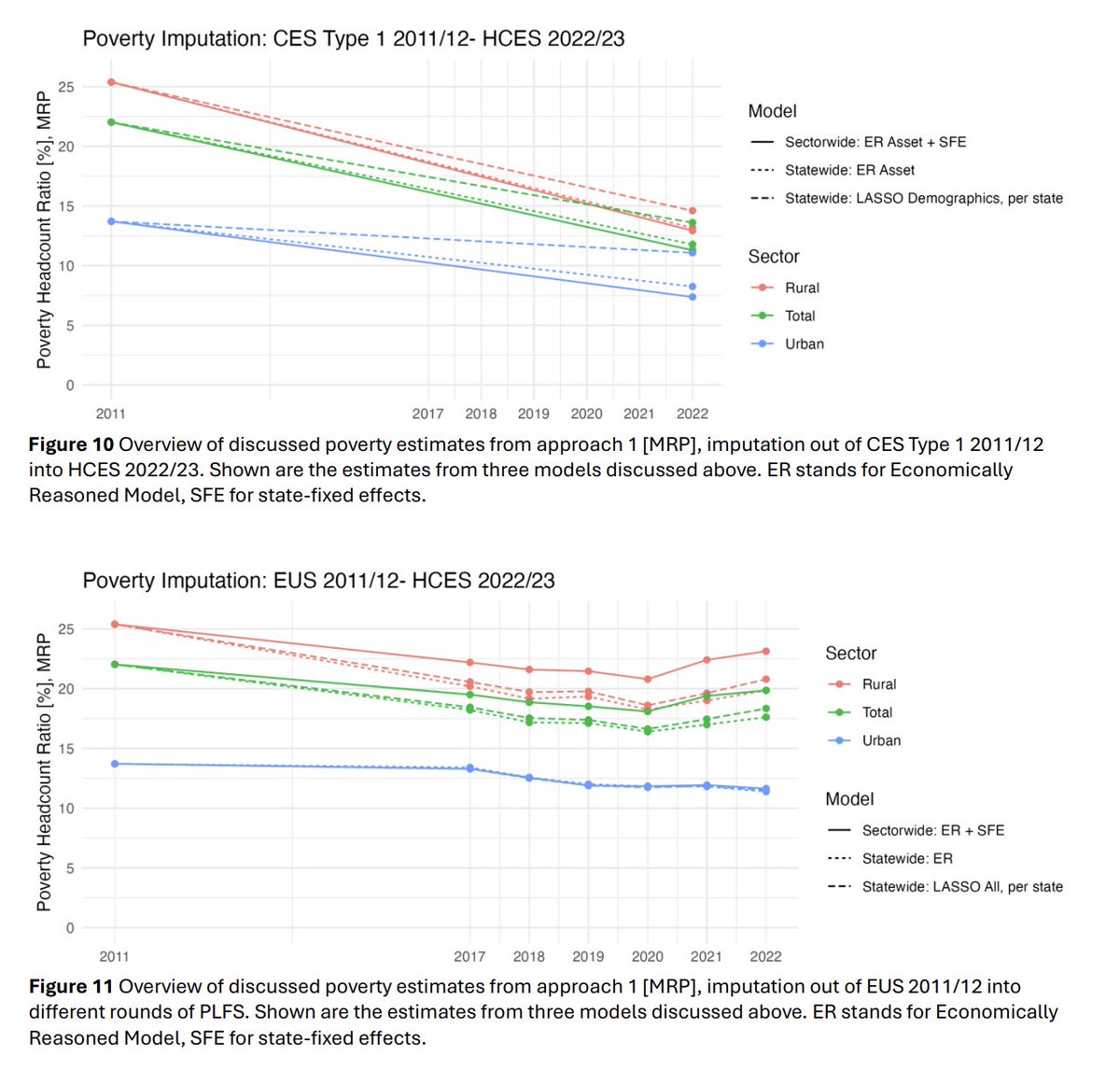
New paper from Pete Lanjouw & coauthors, who pioneered methods for linking poverty measures across messy data series:
"All estimates indicate a significant slowing of poverty decline between 2011/12 and 2022/23 compared to the preceding decade"
Ten notable facts from India’s new SRS Statistical Report 2024 published two days ago:
1) India’s total fertility rate (TFR) has dropped to 1.88 (rounded up to 1.9 in the figures) in 2024 from 1.92 in 2023.
2) This drop is roughly the historical speed of the last few decades. India’s TFR was 4.3 in 1985 and it has been falling around 0.06 per year since then.
3) For those who think “smartphones are the reason for the fall of TFR,” there is not much change in India’s TFR after their introduction. Of course, this might only apply to India.
4) India’s sex ratio at birth continues moving toward natural levels. It has grown from 907 girls per 1000 boys in 2018-2020 to 918 in 2022-2024. Without sex selection (e.g., selective abortions), it should be around 952.
5) Nonetheless, this bias still means that India’s replacement rate is around 2.15, not 2.1 as in other advanced economies.
6) Hence, India is already 0.27 children below the replacement rate and the gap continues growing.
7) However, this figure hides large regional differences. Kerala is at 1.3, well below the U.S. and approaching Italian and Spanish levels (Delhi is even lower, at 1.2, but it is a peculiar case), while Bihar remains at 2.9.
8) In terms of the rural/urban divide, rural India is at 2.1 and urban India at 1.5.
9) From everything I can see, India’s TFR will continue to fall, and it should reach 1.57 (the current level of the U.S.) around 2031 unless something significant changes.
10) Having said that, India’s data has a non-trivial margin of error, and a new Census might change our reading of the situation.
In summary, India is following the same path as everyone else. No Indian fertility Sonderweg!
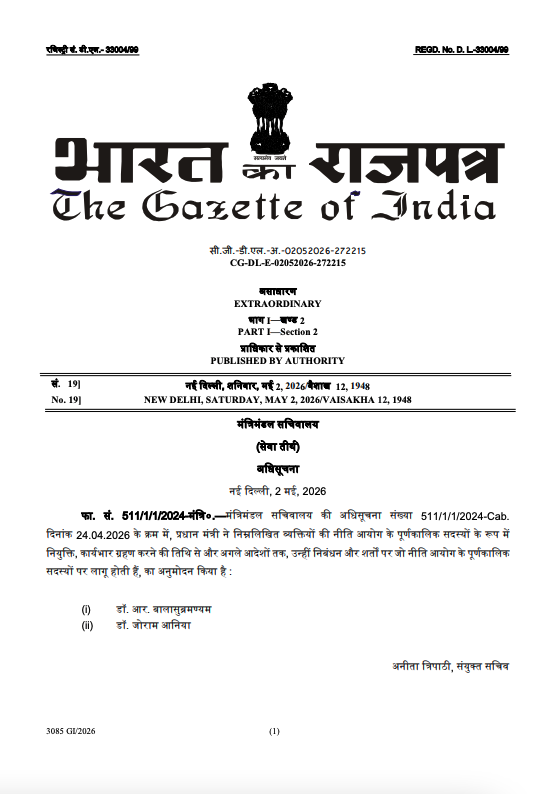
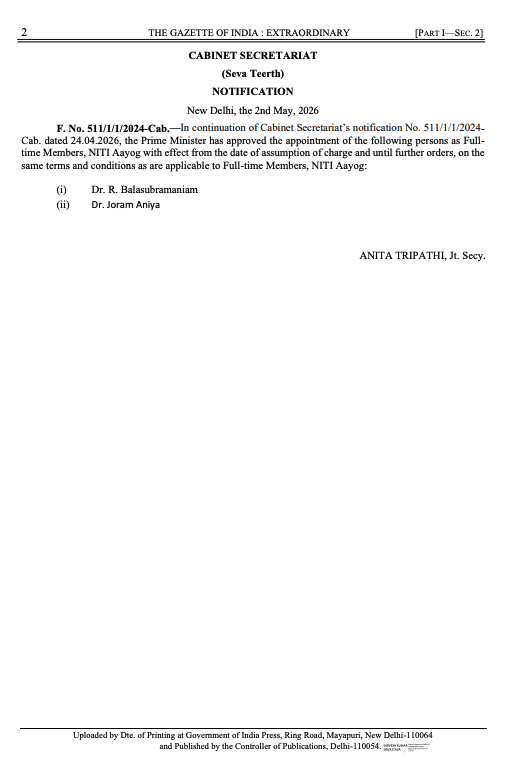
Dr. Joram Aniya’s inclusion in @NITIAayog marks a historic moment, bringing an eminent intellectual voice from Arunachal Pradesh to the highest level of national policymaking.
An accomplished academician, Associate Professor, and member of the Arunachal Pradesh Private Educational Regulatory Commission, she has over 18 years of experience in teaching, research, and public policy engagement.
Notably, she is the first woman from the Nyishi community to earn a Ph.D. and the first in Hindi language in the state, with significant contributions to literature, culture, and indigenous knowledge systems.
She has authored and edited many books on Nyishi literature and culture, along with numerous research publications.
The Mughal Princess of Mexico
In the central Mexican city of Puebla, a short drive from the largest pyramid ever built, stands the world’s most unexpected Mughal tomb.
The most striking statistic in UN's latest WESP 2026 report is an unprecedented $2.7 trillion in global military expenditure in 2024: steepest annual increase since 1988. A sobering reminder of how little has changed since I was my daughters' age... https://t.co/9nyzCXT2nE
India’s progress in cutting child poverty shows the power of social protection, digital delivery & strong safety nets. Scaling last-mile access & investing in human capital can drive inclusive growth. @chelnikov@UN@UNinIndia@UNICEF@UNICEFIndia@ILO https://t.co/RRsON69Wsq
There is a lot of misinformation spreading right now, which can put lives at risk. A small share can have big consequences.
Pause and verify before you share.
Ask yourself:
WHO made it?
WHAT is the source?
WHERE did it come from?
WHY are you sharing this?
WHEN was it published?
The pink paper isn't cheap, but it is a bargain --
Absolutely superb reporting on the biggest story around (other than the tariffs)
https://t.co/MjK3fumoeh
Other prominent speakers were Mr Chris Garroway, Economist and Development Coordinator, United Nations, Sh Surajit Dey, Smt Anita Sinha, & Sh D.K. Nim, former Registrar (Law) and Joint Secretaries of the NHRC respectively. The participants also shared their experiences.
1/ India’s economy remains resilient
Despite recent moderation, India’s GDP growth stood at 6% YoY in the first half of FY24/25. Growth is projected at 6.5% for both FY24/25 & FY25/26, supported by private consumption & financial stability.
Full Report: https://t.co/wi8Jd0EeVx
Session 3 of Day 2 📊 Measuring progress in #SocialSecurity coverage requires robust data collection, focusing on inclusion, sectoral coverage, and participation rates. (1/2)
Lovely article about the loveliest person I know : ‘I’m just a Punjabi peasant,’ says Mohanjeet, whose creations adorned Jane Fonda, Brigitte Bardot, Cameron Diaz and YSL | Fashion News - The Indian Express https://t.co/xuNh70uAQs