As we will be observing the memorial day of Veera Vanchinathan this week, here is a tribute to a forgotten martyr whose courage, sacrifice and uncompromising commitment to India’s freedom deserve to be remembered.
https://t.co/tvbFoJyFSR
The connection b/w the South Indian Murukku (that crunchy, coiled, savory snack we all love) & the ancient medical treatise of the Sushruta Samhita is 1 of the most brilliant, hidden examples of how ancient Indian snack food was originally engineered as preventative medicine.
When people think of the Sushruta Samhita, they immediately think of plastic surgery, rhinoplasty & complex surgical tools. But Sushruta was a holistic genius. He knew that the ultimate goal of medicine was to ensure a patient never needed surgery in the 1st place.
Volume 1 (Sutra Sthana, Chapter 46) contains an entire, massive section dedicated to Ahara-tattva (the nutritional science of food). And this is where the fascinating origin story of the Murukku begins.
In the Sushruta Samhita, Sushruta categorizes deep-fried pastry items under the broad family of Bhakshyas (cooked, chewable foods). Among them, he singles out a distinct item called Śaṣkulī. Over centuries, as the Sanskrit word Śaṣkulī traveled across different regions of India, it underwent phonetic shifts: In the North & West, the word evolved through Prakrit into Chakli (retaining the circular, coiled meaning).
In the South cultures translated the physical action of making it, twisting the dough giving us the beautiful descriptive name Murukku (which literally means twisted in Tamil).
Sushruta was deeply concerned with the concept of Agni (metabolic digestive fire). He categorized foods based on whether they were Guru (heavy to digest)/Laghu (light to digest). He noted that deep-frying grain dough in ghee makes it highly caloric & strength-giving (Bala-vardhana), but it can be incredibly heavy for the stomach.
To fix this chemical problem, ancient Indian cooks did something brilliant that Sushruta documented: they introduced Masha (Black Gram/Urad Dal) into the rice flour matrix. By mixing rice flour with roasted, ground urad dal, they created a complete amino acid profile (rice is low in lysine but high in methionine, while dal is high in lysine but low in methionine).
A few might think why did Sushruta spend time documenting a fried, coiled snack in a medical text meant for surgeons? Because of shelf-life & thermodynamics.
In ancient India, monks, traders & soldiers traveling across vast empires needed food that met 3 strict scientific conditions:
- It could not contain moisture (water causes bacterial spoilage).
- It had to be compact & physically rigid so it would not crumble into dust in a horse carriage.
- It had to be nutrient-dense to sustain high physical exertion.
By taking the Śaṣkulī dough, piping it into tight, concentric, interlocking coils (which structurally reinforces the snack against breaking) & deep-frying it until 100% of the water content evaporated, ancient Indians invented the ultimate preservative-free, shelf-stable survival ration.
When you hear the crunch of a Murukku today, you are literally tasting a recipe that was vetted, chemically balanced & medically approved by the Father of Surgery himself, Acharya Sushruta, 1000s yrs ago.
So, the next time you serve Murukku/Chakli with tea, you can proudly tell your guests: You are not just eating a snack. You are consuming a highly engineered, ancient Ayurvedic military ration designed to preserve human tissue :))
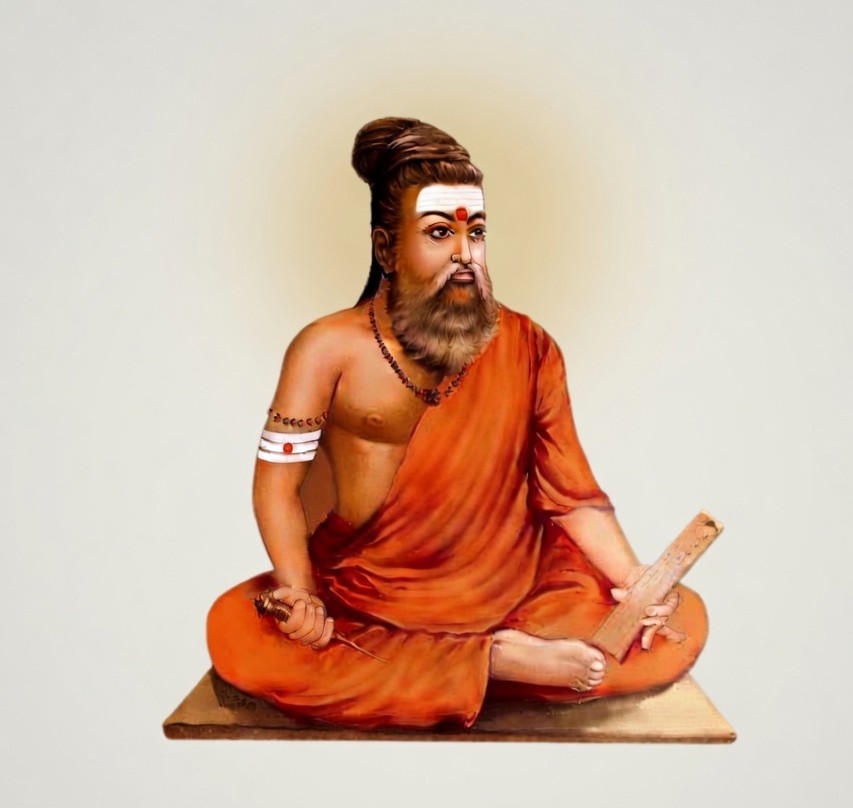
Mr.Ravi, you haven't learnt not even one Kural from his 1330 poems. You can't even understand a one minute Tamil speech. Yet, you have the audacity to tamper the very fabric of Thirukural. Its about equality, fraternity and democratic ruling, which your RSS couldn't and wouldn't inherit.
Thirukural is all against Sanatana System. Thiruvalluvar strongly condemns the very foundation if Sanatana philosophy. While Sanatana founded on discriminating people on four level hierarchical corrupt model, Thiruvalluvar stood tall to call all humans are equal.
Calling Thiruvalluvar as Sanatani is like calling Lord Ram as anti-Sanatani. Both are not true. Ram is not popular among Tamils since Tamils hate Sanatana system and fought against it.
On the auspicious occasion of Thiruvalluvar Jayanti Vaikasi Anusham, the Nation pays its deep reverence to Thiruvalluvar, the great Tamil saint-poet of the Bharatiya Sanatan tradition. Thiruvalluvar’s Thirukkural stands as an eternal confluence of Dharma and Niti, guiding righteous living, ethical governance, and the values that shape both individual conduct and collective life. His teachings continue to guide humanity, shaping the spiritual evolution of Bharat with global resonance.
#SaintThiruvalluvar #VaikasiAnusham #Thirukkural #GovernorRavi #LokBhavan
DVG's failproof recipe for Brahmanas today
---
Today, the Brahmin must be a cleaner man, live a purer life, be more devoted to learning & higher things of the spirit. It is only then he can win respect & remove the blame cast on him. Be gentle, polite & respectful, but don’t expect anything in return. 🕉️🪔
@labstamil Reason I asked is yday i could not think beyond jemo, sr, Charu Nivedita, suve (haven’t read him. Have had his book for a while now). But these are 2 decade old names. Curious, What’s the next gen names look like?
@labstamil Where does Tamil literary world stand today? I remember many popular writers used to write thodar kathais in mags. Did fall of weekly mag culture with web/social media did the last rites? Has there been tamil writers in the literary horizon? Whats your read?
Did you know that the U.S. defaulted on its sovereign obligations in 1971 when it unilaterally reneged on dollar-gold convertibility.
Russia defaulted in 1998 and 2022.
Argentina: 9 times since independence.
Pakistan: required IMF bailouts 23 times.
Greece defaulted in 2012.
And India? Zero defaults. Not even in 1991!
Yet Western investors classify India as "emerging risk" and call U.S. Treasuries the "risk-free rate."
This isn't risk analysis. This is cognitive bias a la Daniel Kahneman's book "Thinking, Fast and Slow". Humans systematically overweight culturally proximate information while underweighting statistical patterns that don't fit our mental models.
Western strategic planners trust Western partners not because the data supports it, but because the cultural markers feel familiar.
Three facts that challenge everything about how we assess partnership risk:
FACT 1: Across 5,000 years of recorded history, India has rarely waged wars of territorial conquest. Not in 3000 BCE when the Indus Valley Civilization had technological superiority. Not in 1000 CE when Indian mathematics and metallurgy exceeded Europe by centuries. Not in 2026 when it possesses nuclear weapons and the world's 4th-largest military. Not in 2047 when it projects to be a top-two economy.
Compare: China (annexed Tibet 1950, 14 territorial disputes, South China Sea expansion). Russia (Georgia 2008, Crimea 2014, Ukraine 2022). Europe (500 years of colonial conquest across three continents). U.S. (military interventions in 20+ countries since 1945).
This pattern is observable strategic behavior anchored in the Arthashastra, Kautilya's 2,300-year-old treatise arguing that short-term territorial expansion undermines the systemic conditions for sustained prosperity. The concept of "mandala" (circle of states) recognizes that each power's long-term interest depends on system equilibrium.
FACT 2: India has never defaulted on debt, treaties, or security guarantees since independence in 1947. The most revealing test: 1991 balance of payments crisis. Reserves fell to $1.2 billion = just three weeks of imports. Default appeared certain. Instead, India implemented painful reforms, honored every obligation. India didn't use political costs as an excuse to default. Commitments were kept.
This behavior isn't accidental. It's anchored in the Sanskrit concept of ṛṇānubandhaḥ, that obligations are metaphysically binding across time. The Mahabharata established 2,000 years ago that rulers who break commitments violate cosmic order and create systemic instability.
Philosophy became institutional architecture: investment-grade credit through multiple crises, $600B forex reserves (6th globally), zero defaults on government securities across 77 years.
FACT 3: During COVID-19, India exported 300 million vaccine doses to 110 countries while its own vaccination was incomplete. 96 countries received doses free through "Vaccine Maitri."
Meanwhile: U.S. ordered 1.2 billion doses for 330 million people (4x population). EU ordered 4.6 billion for 450 million (10x population). Canada ordered 400 million for 38 million people (10x population).
Western nations didn't begin international distribution until domestic targets were substantially met.
The distinction? India's Economic Survey 2020-21 quoted Sanskrit: "āpadā hi prāṇa rakṣā hi dharmasya prathama aṅkuraḥ" (in calamity, protecting life is the first duty). Not Indian life. Life in general.
This aligns with Vasudhaiva Kutumbakam (the world as one family), not as rhetoric but as policy. India supplies 60% of global vaccines and 20% of generic medicines normally, maintained production during its own constraints, built digital public infrastructure (UPI processes more transactions than all nations combined) and offers it open-source to developing countries.
WHY THIS MATTERS NOW:
Every CFO, sovereign wealth fund, and policymaker is asking: "Who can we depend on for the next 50 years?"
Ukraine shattered the illusion that economic integration prevents aggression. COVID exposed single-source dependencies. Taiwan reveals semiconductor concentration risk.
The global economy is re-optimizing from efficiency to trust.
But here's where Kahneman's research becomes critical: most strategic planners are making decisions using "System 1" thinking (fast, intuitive, pattern-matching based on cultural familiarity) rather than "System 2" thinking (slow, analytical, data-driven assessment of long-horizon behavioral patterns).
The result? Systematic mispricing of partnership risk.
Strategic planners face a choice:
- China: manufacturing efficiency + demonstrated willingness to weaponize interdependence (sanctions on South Korea over THAAD, Australia over COVID inquiry, Lithuania over Taiwan, Belt & Road debt traps in 60+ countries)
- Russia: resource access + repeated weaponization (invaded Ukraine despite economic integration, cut gas to freeze European cities)
- U.S.: innovation + extraterritorial enforcement (billions in fines on European banks for transactions legal in Europe, CLOUD Act overrides local privacy laws, "America First" tariffs hit Canada, Mexico, EU alongside rivals)
- India: 5,000-year track record of territorial restraint + zero defaults + systemic thinking during crises +
challenges (infrastructure gaps, bureaucratic complexity, uneven state capacity).
The question isn't perfection. It is: which risk profile aligns with 50-year partnership objectives when analyzed through System 2 rather than System 1 thinking?
THE UNCOMFORTABLE TRUTH:
If India's pattern suggests lower long-duration risk, why is trust in India still "emerging"?
Kahneman would predict exactly this outcome. Three cognitive biases at work:
1. **Availability bias:** We assess risk based on vivid, recent, culturally proximate information. NATO expansion incorporated Poland, Czech Republic, Hungary rapidly because they registered as "European." India's democracy, rule of law, English-language business environment gets discounted because cultural markers differ.
2. **Confirmation bias:** Western institutions have decades of frameworks built around current partnerships. New data contradicting established models gets filtered out rather than integrated.
3. **Status quo bias:** Existing relationships are comfortable. The U.S.-Europe alliance, U.S.-Japan partnership, Five Eyes intelligence sharing operate with established protocols. Structural change requires crisis-level disruption to overcome inertia.
The crisis arrived.
For boards evaluating long-term partnerships—semiconductors, pharmaceuticals, digital infrastructure, maritime security, critical minerals—India presents a risk profile worth systematic, System 2 analysis.
Because of demonstrated behavior across sufficient time horizons to be statistically meaningful.
In an era of fragmentation, weaponized interdependence, and trust deficits, historical patterns become predictive indicators.
Kahneman spent decades showing that intuitive judgments systematically diverge from statistical reality. Strategic partnership assessment is no exception.
The question is: Are we assessing risk based on data, or based on what feels familiar?
In the 21st century, power matters. But trust may matter more.
And trust should be measured by track record, not by cultural proximity.
Every day I see video of one MLA doing such surprise inspection. The last time I saw such things was a decade ago when AAP came to power taking help of congress support. 🙂
''நீங்கெல்லாம் ஒரு அதிகாரியா..? 2 கி.மீ நீங்க நடப்பீங்களா.. உங்க வீட்டு பெண்கள் நடப்பாங்களா.. அடிக்குற வெயில்ல ஒரு அம்மா மயக்கம் போட்டு இருக்காங்க.. நேரடியாக பஸ் ஸ்டாண்டிற்கு சென்று அதிகாரியை ரெய்டு விட்ட துணை சபாநாயகர் ரவிசங்கர்
#Trichy#TVK#RaviShankar#BusStand#Summer #Newstamil24x7
Hindutva is nothing new for DMK.
In 2002, during the Gujarat riot, DMK sent representatives to Gujarat, to provide moral support for Narendra Modi.
Karunainidhi wrote numerous Q&A and columns to support Narendra Modi during the peak of the riot.
Only Hindutva can save the DMK from becoming a 9% vote share party.
@TughlaqBinMohd Bang on. This is exactly what JJ did when DMK was alpha Drav anti-Hindu. With TVK now alpha-drav, dmk is only choice is to be a Soft drav Hindu leaning party else BJP or someone else will be there to encash it. But both Stalin or US is no Karuna to play this with finesse
@MathewJoey55763@labstamil@AJA_Cortes From the day, the new power brokers in the Roman empire hijacked Peter's newly made up religion which was crafted out of one of the 100 Jewish motley groups.
@labstamil@AJA_Cortes A theory so true that even Vatican denies it. Bactria (Balochistan) is as east as he got. Between the gospel of Thomas is considered “haram” in Christianity due to Gnosticism. Gnostic Christianity branch was a early thriving branch declared heretical by the early power centres
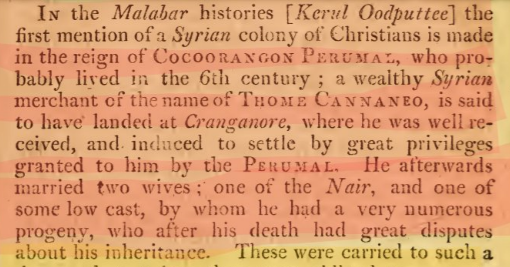
@AJA_Cortes This "bro science" backed post sounds historical but is actually fake. Apostle Thomas never visited Kerala nor India. The Thomas christians are named after a wealthy Syrian merchant Thome Cannaneo who did land at Kerala
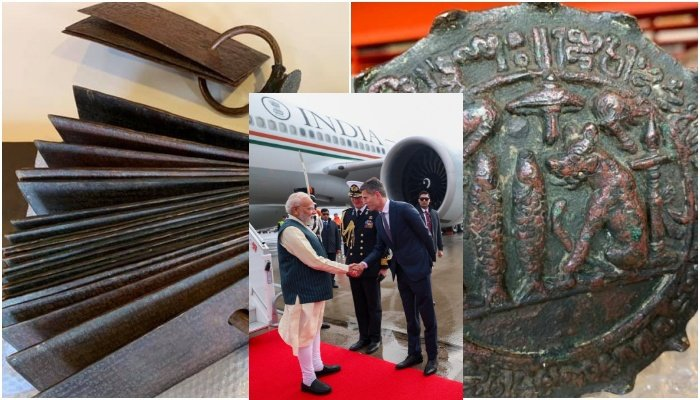
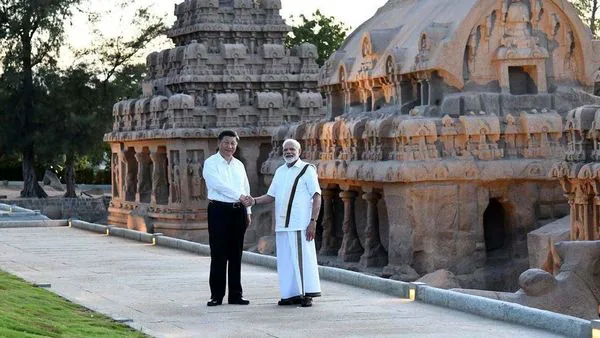
Many think NaMo installing Sengol in the new parliament with Shavite saints singing Tirumurai, meeting Xi Jinping at Mahabalipuram, running Kashi Tamil sangamam and today getting our Chola copper plates back from Netherlands are for scoring political brownie points in TN.
He will not get a single vote more in TN due to these things. Then why does he do them?
Because he does not think merely about the electoral math of the modern Indian union. Only a man who thinks about the culture and history of this great civilizational state called Bharat and is inspired by her memory can pull off these things.
He is a Rajarishi. A priest king. A watchful protector of this glorious nation. As the world looks to the rain cloud for sustenance, the people look to the king’s scepter for protection. வானோக்கி வாழும் உலகெல்லாம் மன்னவன் கோல்நோக்கி வாழுங் குடி.
சமூக சீர்திருத்தவாதியும், சிறந்த சுதந்திர போராட்ட வீரருமான திரு.வைத்தியநாத ஐயர் அவர்களின் பிறந்தநாள் இன்று.
அனைத்து தரப்பு மக்களுக்கும் ஆலய உரிமை கிடைக்க வேண்டும் என்பதற்காக, 1939-ஆம் ஆண்டு வரலாற்றுச் சிறப்புமிக்க மதுரை மீனாட்சி அம்மன் ஆலய நுழைவுப் போராட்டத்தை அவர் வெற்றிகரமாக முன்னின்று நடத்தினார். இதற்குப் பக்கபலமாக நின்று, "ஆலய நுழைவை தடுப்பவர்களை நான் பார்த்துக்கொள்கிறேன்" என பசும்பொன் முத்துராமலிங்கத் தேவர் அவர்கள் அளித்த துணிச்சலான ஆதரவும் அரவணைப்பும் இந்த வரலாற்றுச் சாதனைக்கு முத்தாய்ப்பாக அமைந்தது. மேடைக்கு மேடை சமூக நீதி பேசிய நீதிக் கட்சி ஆட்சியில் கூட நடக்காத இந்த ஆலய நுழைவு உரிமை, திரு.வைத்தியநாத ஐயர் அவர்களின் அயராத முயற்சியாலும், தேவர் அவர்களின் அரணாலும் மட்டுமே சாத்தியமானது என்பது மறுக்க முடியாத உண்மை.
அனைவரையும் இறைவனின் சந்நிதியில் சமமாக நிறுத்திய இவர்களின் இந்தச் செயல், சனாதன தர்மத்தின் உண்மையான மாண்பை உலகுக்கு உணர்த்துகிறது. சனாதன தர்மம் என்பது ஏற்றத்தாழ்வுகளைக் கற்பிப்பதல்ல; அனைவரையும் சமமாக அரவணைப்பதே ஆகும். இன்று சனாதன தர்மத்தைத் தவறாகச் சித்தரித்து அரசியல் வியாபாரம் செய்யும் உதயநிதி, முஸ்தபா போன்ற நபர்களுக்கு திரு.வைத்தியநாத ஐயர் மற்றும் முத்துராமலிங்க தேவர் ஐயா போன்ற தேசபக்தர்களின் சமூகப் பணியே மிகச் சிறந்த பதிலடி.
அவரின் பிறந்தநாளில் அவர் ஆற்றிய மாபெரும் சீர்திருத்தப் பணிகளை நினைவுகூர்ந்து வணங்குவோம்!
#SanathanaDharma
@ramg75@labstamil We all agree it's a d-adulterated movie but atleast its nationalistic movie by a mainstream tamil ecosystem which is a welcome breather. Currently the bar is set to anti-national/separtist/NaarthIndianHateinducing +anti-Hindu or shortly D-principle level
Outsource getting airport land to one of apartment/real estate builders. They will get it done. I’m sure this latest lake map would be an apartment map
TVK ppl: We will find a new land near Chennai that doesn’t affect water bodies and agri land. Meanwhile Chennai’s lake map 👇
Will TVK govt propose this?