On the shoulders of giants... 🧑🏼🚀
The Artemis II crew aboard Integrity have officially traveled farther into space than any humans before, passing the record set during Apollo. Our live coverage continues:
https://t.co/do2p0Gvxdu
@TrendingEx Terrible human being. She has no idea what cancer is or what it does to a person. If she had cancer, not even a 1 billion naira donation would put a smile on her face
@officialEFCC It is impossible for Foreigners all the way from Asia to come to Nigeria and start mining without authorisation from state or non state actors. Now that the Chinese have been arrested, what happens to the illegal authorities that authorized them to mine?
For anyone interested in using eDNA to detect all forms of life, here’s a new article & webtool by Tournayre et al. (2024) to help you select the optimal number of primers needed for particular taxon groups, & also show which species may be missed if you leave any out! 👇
The article, by Tournayre et al. (2024), aimed to make it easier for eDNA metabarcoding practitioners to decide on the optimal set of primers needed for their projects, especially if they were trying to maximise the biodiversity detected when doing multi-marker community studies using multiple primer sets.
And in particular, the authors wanted to do this in a way that allowed the use of highly customisable datasets and actual metabarcoding data, whether they were from mock communities or real samples, rather than just using in-silico tools based on available DNA sequences.
To achieve these goals, the authors:
⭐ Created an eDNA metabarcoding dataset with 14 validated primer pairs from natural freshwater bodies in Eastern Canada
⭐ Designed an online webtool (SNIPE - Selecting Novel Informative Primer-sets for e-DNA) to allow them to analyse their data
⭐ Used SNIPE to determine, for their datasets, what the most effective combination of primers would be for given taxon groups, and what taxa might be missed by excluding primer sets
After analysis, the found that four primer pairs were sufficient to recover almost 75% of the species found in their datasets, but 13 or 14 primer pairs were needed to capture 100% of the species detectable in their samples.
The SNIPE webtool does looks very user-friendly and easy to use, and you can use their dataset (selectable from SNIPE) to see how it works, so it’s well worth a look and a few clicks to see if it might be useful to you!
You can read the article here:
Tournayre et al. (2024). Enhancing metabarcoding of freshwater biotic communities: A new online tool for primer selection and exploring data from 14 primer pairs. Environmental DNA, 6(4), e590.
https://t.co/zRiiyy0nMR
And find the webtool here:
https://t.co/6OyOugmlzF
The gene editing revolution continues with the transposon highlighted this time (not surprised). It'll be interesting to see whether this works in mammalian cells. https://t.co/VAV5y67hro
What if we could universally recombine, insert, delete, or invert any two pieces of DNA?
In back-to-back @Nature papers, we report the discovery of bridge RNAs and 3 atomic structures of the first natural RNA-guided recombinase - a new mechanism for programmable genome design
I am very pleased to share our second and largest contribution to “The Human Breast Cell Atlas” (HBCA) project. Buckle up a longish thread ahead!
https://t.co/hEmnIJKNsr
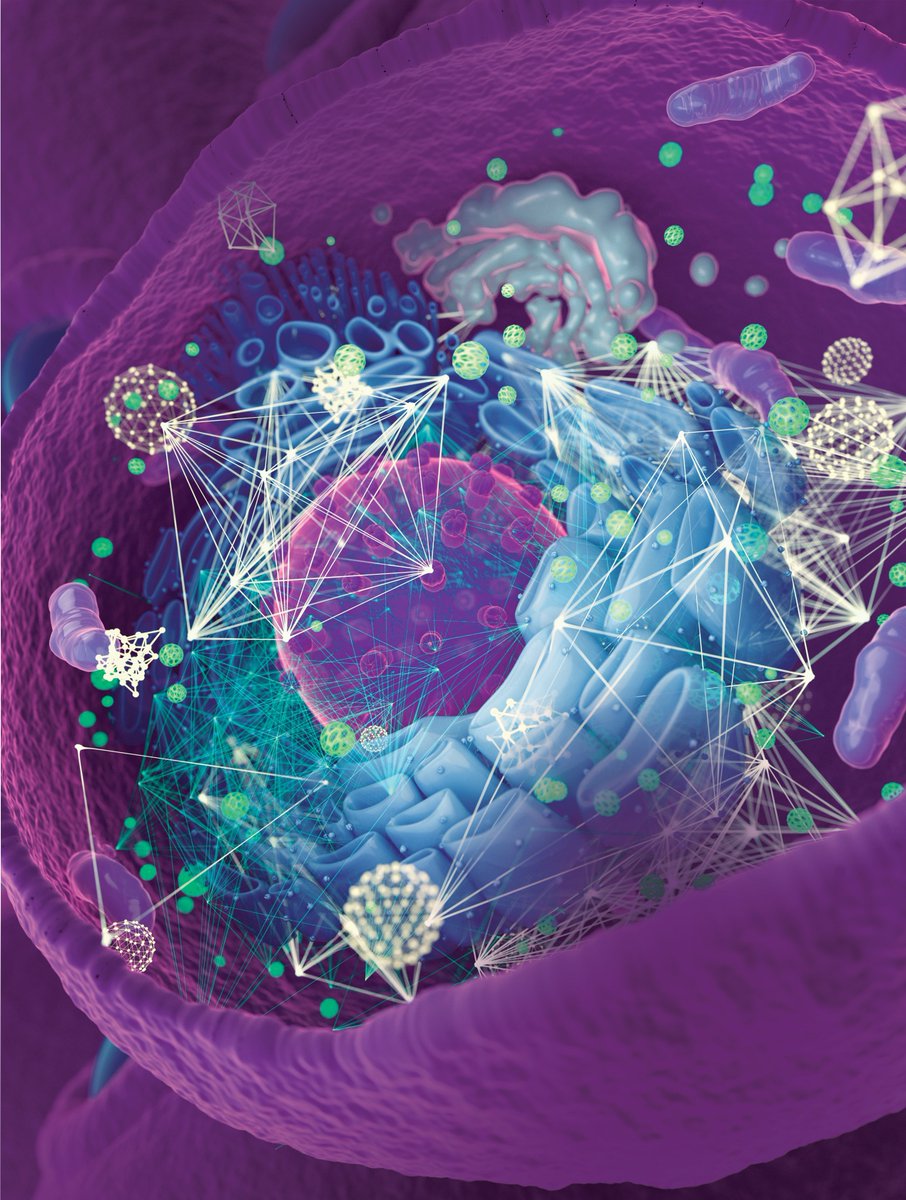
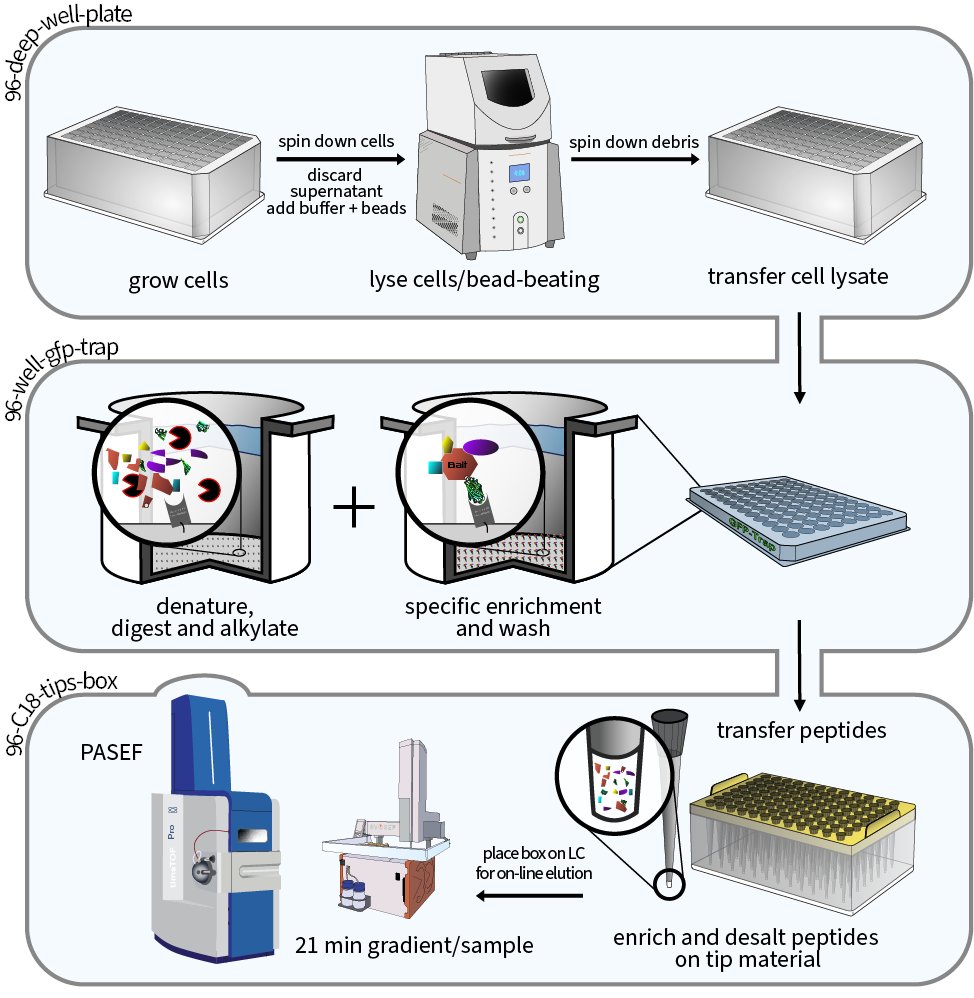
Protein interactions are the foundation of functional and healthy cells. We @labs_mann are proud that our work for mapping the cellular yeast #interactome on a global scale is now published @nature.
https://t.co/xCZz2TPlCt
https://t.co/sfsWHgZ0aY
#proteomics#massspectrometry
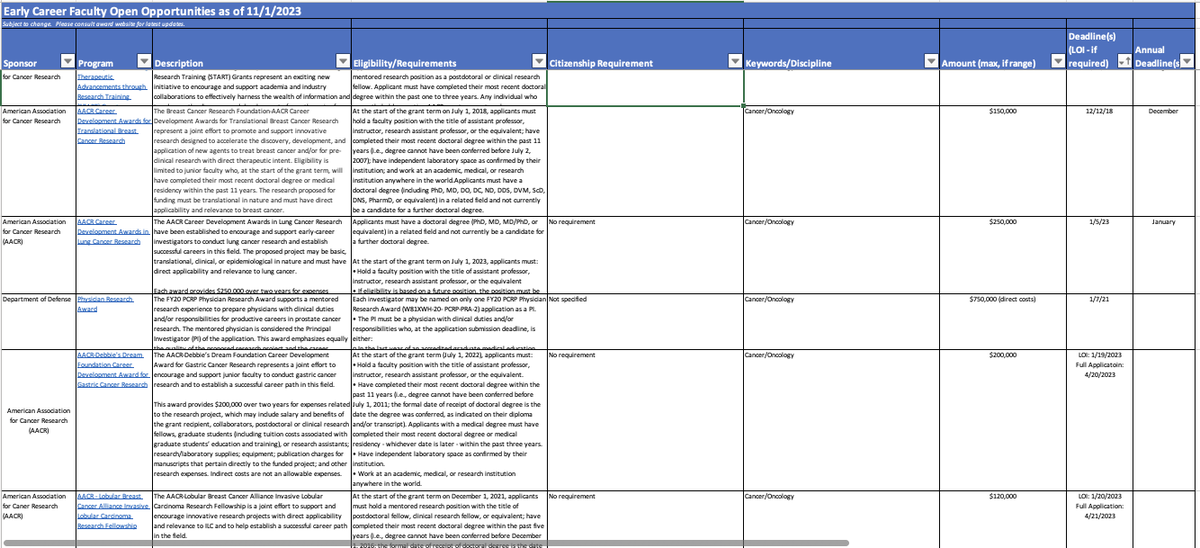
UPDATED: database of 76 opportunities for early-career faculty/researchers in CANCER RESEARCH.
For each opportunity, we provide description, deadline, $ amount, link, and eligibility criteria.
Download this database here: https://t.co/RGXGrdpAjN
Here’s a recipe for a cheap but effective DNA and RNA preservative solution for preserving animal tissues, their associated microbiomes, and possibly other tissue and DNA sources as well.
The solution is known as “Nucleic Acid Preservation” or NAP buffer, and is more fully described in the article below:
Camacho‐Sanchez, M., Burraco, P., Gomez‐Mestre, I., & Leonard, J. A. (2013). Preservation of RNA and DNA from mammal samples under field conditions. Molecular ecology resources, 13(4), 663-673.
Link: https://t.co/CrlP8W0mzC
NAP buffer contains 7.44 g of EDTA, 7.35 g of sodium citrate tri-sodium salt dihydrate, and 700 g of ammonium sulphate in 1 L of water, adjusted to pH 5.2 using sulphuric acid.
The authors reported that samples stored in NAP at ambient temperatures contained high-quality DNA for up to 10 months, and tissue DNA concentrations were significantly higher in NAP than in tissues stored in 95% ethanol or cryopreserved.
RNA losses were higher but there was no significant difference between NAP and a commercial RNA preservation solution (RNALater), which possibly has a very similar chemical composition.
The solution appears to be relatively rarely cited compared to commercial alternatives, but it has been used for quite a few diverse applications:
Menke et al. (2017) used it for sheep dung microbiome studies and found NAP gave better preservation results than commercially available alternatives: https://t.co/mMHRbgfcPY
Huaman et al. (2021) used it for preserving lung, trachea, and spleen samples of deer for testing of Picobirnavirus during sampling at field sites before the return home:
https://t.co/p5PgIJM7Ez
Segura-Wang et al. (2021) used it for metagenomic studies of chicken gut microbiomes:
https://t.co/s6V7VqXarg
Hofmann et al. (2023) used it for swabs of biofilms from tree bark surfaces:
https://t.co/4qvM0isNDk
Ward et al. (2023) compared FTA cards, chlorhexidine digluconate solution, cold packs, and NAP for preserving equine faecal microbiota over time, and they found that only “NAP buffer inhibited the significant changes in microbial abundance that occurred by 72 h of room temperature storage.”
https://t.co/AXRTY6wgZm
The chemicals needed to make NAP buffer are inexpensive, safe, and widely available, except for the sulphuric acid for pH adjustment. And it seems quite simple to make if you have the chemicals, a pH meter, and some sulphuric acid to adjust the pH.
So, if you need a cheap DNA and RNA preservative solution, then maybe this is one to try out!