The biggest cash shock in US importing isn't the goods anymore. It's the duty bill at entry.
So we built a free planner that models the whole shipment: deposit, supplier balance, ocean freight, duties, and the day your customer's cash lands.
Check it out!
https://t.co/j7D62A0zAq
Trade finance barely loses money on average, yet it stays out of the securitisation market. Here's the real reason.
Every so often a shipment hides a risk you can't see or price: a fake invoice, cargo that isn't there, a receivable financed twice. Securitisation can't handle that kind of tail, because you can't put a number on it. The only fix is to check every shipment properly, and for most cargo the economics of that never worked.
That's finally changing. Cheap AI underwriting, enforceable digital trade documents and trustworthy logistics data make verifying each shipment affordable. The tail you couldn't measure turns into ordinary credit risk, and SME trade finance can reach capital markets at scale.
Biggest opportunity I see in private credit.
https://t.co/al2vTiTUg1
Most SME shippers wait 60–90 days to get paid after their cargo delivers, while their growth capital sits frozen. We're building Rhofin: embedded cargo finance, powered by the shipment data that already exists inside logistics platforms. Looking for early shippers to build with
🦞 OpenClaw hit 100K GitHub stars in 2 days. 180K in 3 weeks. Fastest-growing open-source project ever.
For PE: The security gap IS the investment thesis. 30K+ exposed instances, 60% exploitable via RCE, hundreds of malicious plugins.
Open-source captures demand. Commercial layer monetises it. The enterprise wrapper market — security, compliance, governance around autonomous agents — is wide open.
Agent security = meaningful M&A target within 18 months.
A PROPOSAL FOR UNIVERSAL HIGH INCOME (UHI): During my recent Moonshots podcast with @elonmusk, we dove into his notion of Universal High Income (UHI) – Elon’s proposal that an AI and Robotics will enable a world of sustainable abundance for all... a life beyond basic income, towards high income and standards of living.
When I asked him how this might work, he said: “You know, this is my intuition but I don’t know how to do it. I welcome ideas.”
That single statement has been ringing in my head ever since. Here’s why: the economics of scarcity are flipping to the economics of Abundance. I do believe that AI and humanoid robots can produce nearly anything we need—goods, services, healthcare, education—at costs approaching zero.
But there’s a gap between that vision and getting there. How do we actually fund and distribute Abundance to everyone?
Today, I’m excited to share one compelling answer. I’ve been talking to Daniel Schreiber, CEO of Lemonade (the AI-insurance company that just launched 50% off premiums for Tesla FSD drivers), about a framework called the MOSAIC Model: a concrete proposal for how governments could implement Universal High Income without raising taxes on workers or businesses. (See the components of MOSAIC in my P.S. below.)
Here’s the core insight that makes the math work:
1/ THE AUTOMATION PARADOX: AI Unemployment ≠ Traditional Unemployment
When most people hear “mass job displacement,” they picture economic collapse: bread lines, depression, social chaos. That’s because they’re thinking about traditional unemployment, where workers disappear and nothing replaces them.
AI unemployment is fundamentally different.
Think of it this way: imagine sending a digital twin to work in your place. It performs your tasks faster, cheaper, and better. The company’s output increases. GDP grows. The resources exist – they just need to be redistributed.
This is the Automation Paradox: AI can raise productivity while displacing labor.
When workers are replaced by more productive capital, GDP rises even as fewer humans work.
The challenge is not affordability. It’s capture and distribution.
2/ “AI DIVIDEND”: Where the Money Actually Comes From
Daniel’s framework identifies two places the AI surplus shows up, and how to capture it without disrupting consumers or raising statutory tax rates:
Channel 1: Dynamic VAT (The Deflation Dividend)
AI is deflationary. When AI cuts the cost of producing something by 30%, that value creation can either flow entirely to shareholders – or be partially recaptured for society.
Dynamic VAT works like this: as AI drives quality-adjusted price declines in goods and services, the VAT rate adjusts upward by exactly enough to keep consumer prices stable. Consumers pay the same. But the government captures part of the deflation dividend.
It’s frictionless redistribution. Prices don’t rise. No one feels it.
Channel 2: Over-Trend Profit Ring-Fencing
AI is generating windfall profits for companies at the frontier. Rather than raising corporate tax rates (which drives capital flight), the MOSAIC Model proposes ring-fencing only the above-trend portion of capital income tax receipts.
Baseline profits? Untouched. Normal corporate taxes? Unchanged. But what about the incremental surge in profits attributable to AI? A portion gets earmarked for the “Universal High Income” fund.
Statutory rates stay the same. Companies keep most of their windfall. But society captures enough to fund a universal floor.
3/ WHAT THIS MEANS FOR FAMILIES:
Here’s where it gets real. Under the MOSAIC Model’s basic implementation (before any additional policy choices), a household with two non-working parents and two children would receive income equivalent to today’s fourth decile: roughly the 30-40th percentile of current household income.
To be clear, that’s not survival-level subsistence. It’s lower-middle-class security. For doing nothing.
This creates a Universal Basic Floor – funded entirely by the two low-friction channels above.
But this is just the starting line, not the finish line.
If society chooses to capture more of the AI dividend through additional mechanisms (windfall levies, land-value capture, AI-services taxation), the floor could rise to what Daniel calls the “the UHI Benchmark”: approximately 120% of median wages. Upper-middle-class income.
Universal.
The surplus exists. The question is: how much do we collectively choose to redistribute?
4/ WHY TIMING IS EVERYTHING:
Here’s what keeps both Daniel and me up at night: the political window for implementing this is closing.
The MOSAIC Model’s political economy analysis shows something counterintuitive: feasibility is highest early in the AI transition – before capital consolidates opposition, before tech incumbents organize billion-dollar lobbying efforts, before the status quo hardens.
Wait until mass displacement is undeniable? By then, it may be too late to pass anything.
Act early or not at all.
A good system passed in 2026 beats a perfect system proposed in 2030 that fails.
5/ THE INVITATION:
Elon said he welcomes ideas. This is one.
The MOSAIC Model isn’t the only answer, but it’s a rigorous, economically grounded starting point. It demonstrates that Universal High Income is not utopian dreaming. It’s an engineering problem with identifiable solutions.
The AI dividend is real. The fiscal math works. The question is whether we have the collective will to build the capture mechanisms before the window closes.
The full MOSAIC Model is available today at https://t.co/foAZ0mToPw for policymakers, economists, and fellow entrepreneurs to critique, improve, and implement.
Read the full plan, verify the math, and let’s debate this. Because this is not a matter of any single country or company getting it right. It’s about humanity navigating the biggest economic transition in history.
When AI takes our jobs, it should also pay our wages.
Let’s make that happen.
Peter Diamandis (in collaboration with Daniel Schreiber, @daschreiber, CEO of Lemonade and Chair of the MOSAIC AI Policy Institute)
P.S. The detailed components of MOSAIC that make the model affordable:
M – Multi-channel / Mechanism (Implied): The core philosophy that no single tax can fund UHI alone; it requires a “mosaic” of multiple bases.
O – Over-trend Ring-fencing: Earmarking 85% of the “windfall” capital-income tax receipts (profits and capital gains) that exceed historical trends.
S – Savings (Government Automation Dividend - GAD): capturing the cost savings from automating government bureaucracy (e.g., using AI for back-office admin).
A – AI-linked Deflation (Captured via Dynamic VAT): The largest tile. As AI drives prices down, the VAT rate adjusts upward to capture the “deflation gap,” keeping prices stable for consumers while generating revenue.
I – Income (Negative Income Tax): The distribution mechanism itself, ensuring work always pays.
C – Consolidation: Rolling existing, overlapping welfare transfers into the new single payment to avoid double-spending.
In short: The MOSAIC is the Fiscal Architecture. It argues that while one tax (like a “wealth tax”) is politically impossible or insufficient, a mosaic of VAT + Windfall Profits + Efficiency Savings + Legacy Consolidation creates a robust funding base for a poverty-ending income floor.
@NYSE While the current focus remains on public stocks, the infrastructure being built by @NYSE, @BNY, and @Citi will ultimately dismantle the three biggest hurdles that keep #PrivateEquity and #VentureCapital illiquid and inaccessible to the broader investor base
Two massive visionaries in one room. The section on the chip shortage and the acceleration of AI toward the singularity was eye-opening. Great to hear such an optimistic take on the future of humanity for a change!
https://t.co/TeUSCqSfLi
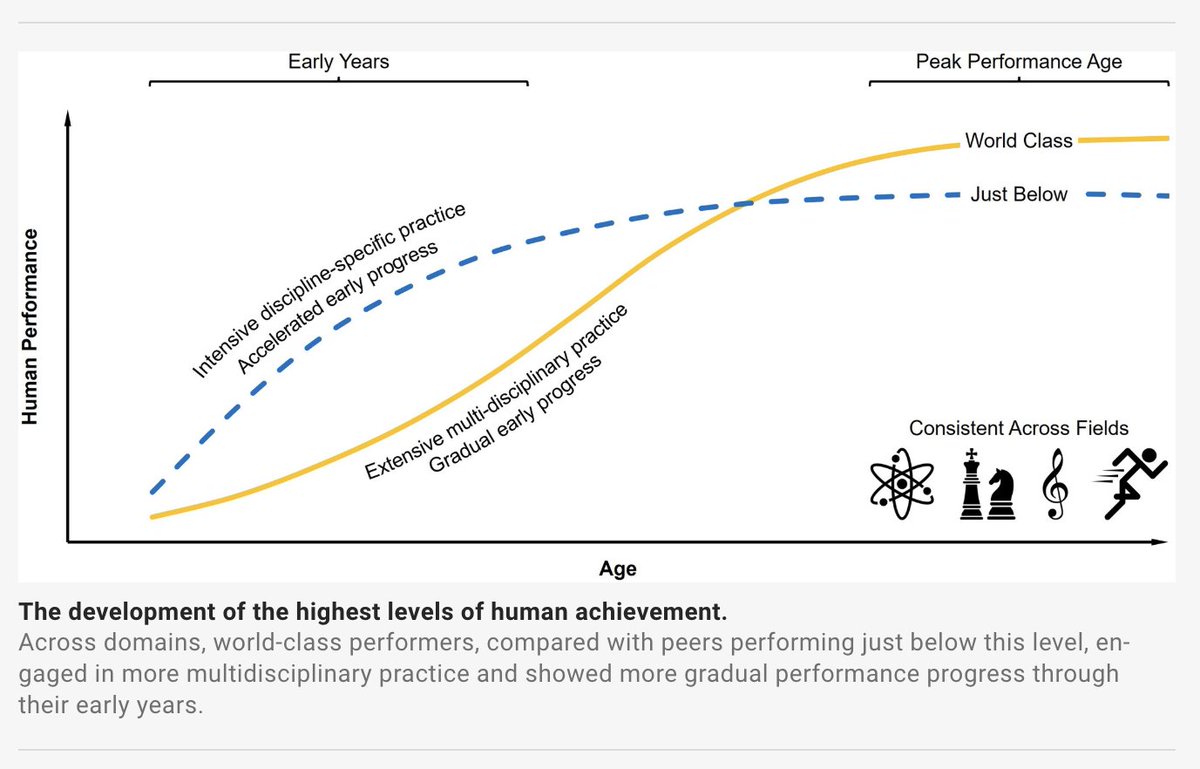
A massive new study on peak performance included 34,000 international top performers: Nobel laureates, renowned classical music composers, Olympic champs, and the world’s best chess players. It shows early specialization is a trap, and the road to greatness is long and varied.
@OpenAI Huge improvement! The 400k token context window means you can finally drop an entire novel, a massive legal contract, or your whole company's documentation into the AI and trust it to actually remember and understand every single detail ....
What does an agent first IDE look like?
Our Head of Product Engineering breaks down the unique interaction surfaces that make Antigravity work: the Editor, the Browser, and the Agent Manager.
The AI Boom is the catalyst driving the SMR revolution! ⚛️ Small Modular Reactors (SMRs) are shifting from 'niche' to necessary infrastructure to deliver 24/7 clean energy abundance. We're powering a new era of tech growth sustainably. #SMRs#AIBoom#EnergyTransition
#AI moves at light speed, but its foundation (data centers, power) moves at the pace of private infrastructure. Larry Fink is right: only #PE/Infra can fund the $Trillion gap. The risk is now illiquidity, not innovation. Are LPs prepared for 15-year hold times? #VC
Stablecoins & Agentic AI are quietly rewiring global finance.
→ #Stablecoins: >$300B cap, ~$1.25T/mo.
→ #AgenticAI: Across tax, legal, energy & cloud, set to automate ~68% of support workflows by 2028.
This isn’t “crypto” or “AI” hype. It’s infrastructure.
Ben Horowitz: Computing has always needed two pillars, machines and networks. AI has the machines but not the network.
Crypto is the missing layer, giving AI money, identity, provenance against deepfakes.
Source: @bhorowitz at @Columbia_Biz
Watching the US committing to “Genesis” — a national #AI engine linking supercomputers, federal data and all 17 national labs — feels like a genuine inflection point.
If this works, breakthrough cycles won’t take years anymore… they’ll take months.
Energy, biotech, materials — all could accelerate at a pace we’ve never seen.
Feels like the start of a new era in AI-driven discovery.
#GenesisMission #DeepTech #Innovation #Science
#Innovation #DeepTech #Policy
#HedgeFunds are pouring serious capital into #agenticAI — systems that can research, reason and iterate without waiting for a human prompt.
#Markets are slowly moving from human-paced to machine-paced.
When machines start outperforming isn’t a theory anymore.
It’s a timeline.