I'm Chris Collins, Co-Founder and Co-CEO of ALLSERV. I write about MRO spare parts, master data, and storerooms at industrial plants — physical asset management, not finance. For people in maintenance, reliability, and spare-parts inventory.
For MRO spare parts, country of origin often lives only on the part itself. With tariffs and sanctions, purchasing needs it on the master data record, not on a nameplate in bin 14 of the plant storeroom.
Most plant acquisitions bring a second spare-parts catalog. Merge the two by description alone and you often end up with more duplicates in the item master after the integration than you had before it.
@_HalalTrader_ Plants see the same pattern in the storeroom. When lead times stretch, the critical spare gets ordered twice to be safe, sometimes under two different numbers. When things ease, it's hard to tell what's a spare and what's surplus.
Day 2 of the Outlook outage.
Zero "just circling back." Zero "per my last email." I've had two original thoughts and finished a hot cup of coffee.
Microsoft, I miss you. Please hurry.
The people who knew the spares by sight are retiring. The new folks know the CMMS screens, not the shelf. If the record is thin, that knowledge retires with them. What's one part in your storeroom only one person can identify?
@EnergyAspects Beating a turnaround plan by a week takes a lot going right. One piece that rarely gets credit: the spares staged before shutdown. When the kitted parts match the work orders and the records match the shelf, the crew isn't hunting the storeroom mid-outage.
@Gaurab Scarcity also changes how plants should treat the critical spares they already own. When a replacement is years out, the insurance spare sitting in the yard needs a record that says exactly what it is, what shape it's in, and where it is. Too often only one person knows.
Critical spare on the CMMS. Empty bin in the plant storeroom. That usually isn't a surprise failure. It's an item master that never matched the shelf, plus a team too lean to catch it between issues.
Two failure modes I see in plant spare-parts inventory: the part is on the shelf and nobody can find it, or the ERP shows stock and the bin is empty. Both start as master data and storeroom problems. Which one bites your plant more often?
@wcooper19 Plants feel this on the maintenance side too. When a cast pump casing or forged valve body is 70+ weeks out, the spare you already own is worth more, but only if you can prove it's the right one. That starts with the true manufacturer's part number, checked at the shelf.
Two failure modes I see in plant spare-parts inventory: the part is on the shelf and nobody can find it, or the ERP shows stock and the bin is empty. Both start as master data and storeroom problems. Which one bites your plant more often?
@IFS_AD "A material problem in a labor uniform." Best MRO line I've heard this year. Often the part is already on the shelf, but the record calls it something else, so nobody finds it. AI can only help when the item master tells the truth.
Aftermarket deals like this put two spare-parts catalogs under one roof. The hard part isn't the brands. It's knowing which part numbers are the same part. Match on description alone and the merged catalog can end up with more duplicates than either had. https://t.co/O9fCPkslA6
🚜 Epiroc agrees to acquire France-based Aramine SAS, strengthening its global aftermarket services for underground mining equipment.
The deal will expand spare parts, maintenance and remanufacturing support.
Read more: https://t.co/U3cEWNJ1Ge
#Epiroc#Aramine#MiningEquipment
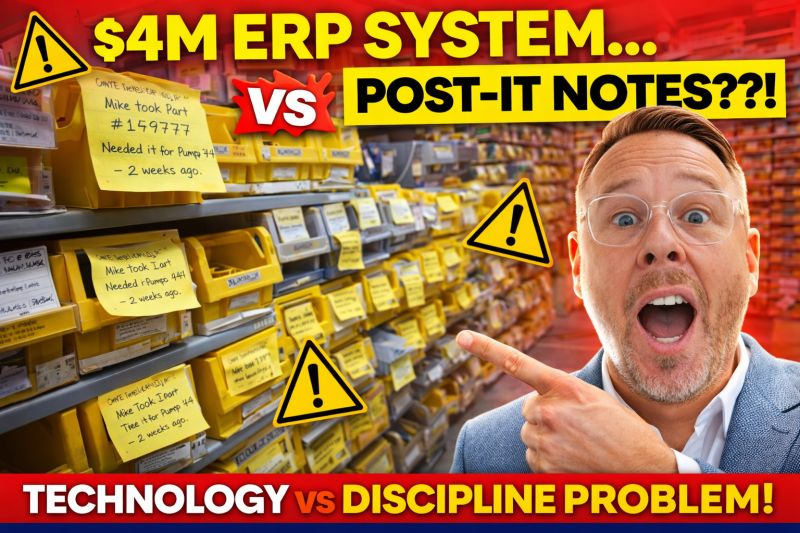
I've walked plants with a multi-million-dollar ERP and Post-it notes all over the bins. The real system of record was taped to the shelf. That isn't a software problem. It's master data and storeroom discipline.
"AI needs decent data to function." Rob Mather, @ifs. In spare parts, decent data starts with the true manufacturer's part number, captured at the shelf. That's what ARIVA fixes, so AI in IFS has something real to work with. @IFS_AD https://t.co/krYdGWOTtU