@GagnonMacro@Alea_@NidhishKSugumar Yea it doesn’t look great. But I think they were just following the Handbook of Methods. And deviating from established methods would have introduced its own problems and could have appeared political too. Worth revisiting the approach ahead of next time.
https://t.co/L01ar3ITtE
@GagnonMacro@Alea_@NidhishKSugumar BLS housing sample uses 6 rotating panels. Each mo, rent and oer cpi is based on 6th root of panel's 6-mo % chg. With no Oct data, BLS used 0% chg for panel, leaving index flat. But Nov didn't make up for it because the panel rotated. Oct panel will be repriced in Apr & lift cpi
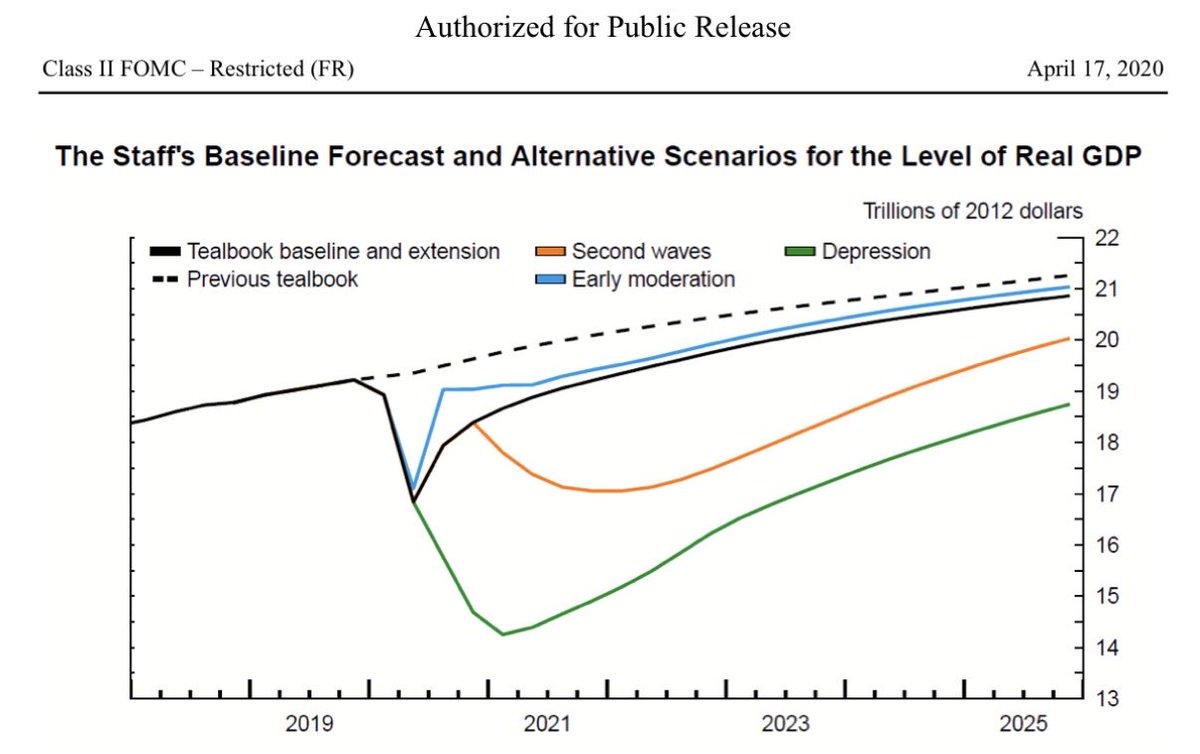
Today’s release of historical FOMC materials shows the Fed staff prepared a DEPRESSION scenario in the April 2020 Tealbook.
Thankful that outcome was averted
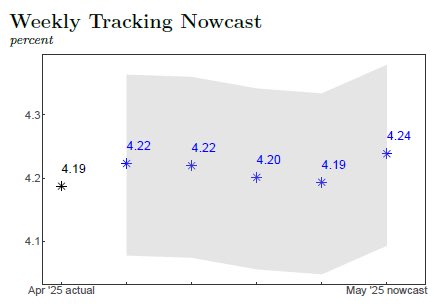
I have a new @ChicagoFed Letter out today with @EzraKarger describing a new weekly tracking model for the U.S. unemployment rate that we call CHURN. See the link in the first reply.
Underlying core CPI inflation is around 0.25% m/m and the trend continues to be for inflation to slow gradually. There will be the usual interruption of that in Q1 '25, but that - like in early 2023 and 2024 - will just be residual seasonality via start-of-year price resets...
@econjared46@ernietedeschi “There will be a Bureau of Labor Statistics that will publish the data.”
“And a Bureau of Price Statistics for the prices?”
“No. Labor will publish the prices.”
TOMORROW, Sept. 27 at 1 PM ET: @jasonfurman delivers the 2nd annual Richard N. Cooper Lecture, "In Defense of the Dismal Science," focusing on neoliberalism, post-neoliberalism, populism, & the stakes for economic policy.
Register to watch live: https://t.co/cUa8RPWUoo
@jc_econ@LavBuketic@fcastofthemonth@ernietedeschi@NickTimiraos@BobEUnlimited Thank you both! To be clear, I agree it’s unlikely immigration explains the revision. But I think a belief that it did does not require a belief that firms have 2 sets of payrolls (as GS speculates). I think 1 set of payrolls and a nonresponse bias in CES could also do it
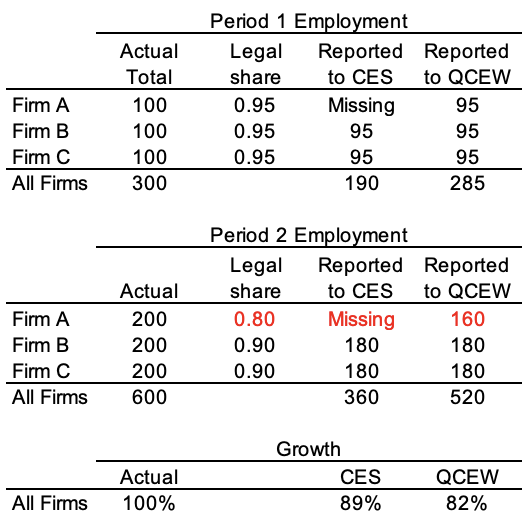
@LavBuketic@fcastofthemonth@jc_econ@ernietedeschi@NickTimiraos@BobEUnlimited I think these 2 things could both be true:
(1) CES & QCEW exclude unauthorized immigrants
(2) employment growth of unauthorized immigrants drives a wedge between CES & QCEW
If firms that employ more unauthorized immigrants have lower CES response rates.
Something like this:
Thrilled to announce my new book “Teaching Effectively with ChatGPT” with @angelaperezalb! Full of practical strategies and real examples to integrate ChatGPT into your teaching and enhance your students’ learning 🧵
Check it out: https://t.co/Ijd3eQGLc9
Measurement issues of nonfarm payroll should rise onto the top of Fed's policy work agenda.
For this May's nonfarm, we took a different approach to forecasting nonfarm payrolls, by forecasting both the "false" number, and the "true number" (the latter guided our unemployment rate). And it worked out well -- we're the only shop that forecasted this dueling narrative of rising unemployment rate and robust nonfarm payrolls....and yes, that's after hard lessons from last year.
Today at 9:45 AM ET: Drawing on @cepr_org's new book Monetary Policy Responses to the Post-Pandemic Inflation, experts explore how central banks across the globe responded to these challenges. Featuring @ojblanchard1, @AngelUbide, & more.
Register: https://t.co/s4whVKeqTI
Great new paper from Gagnon & Madi Sarsanbayev @piie. Key points:
1/ CBs have consistently overestimated U* because they use a linear, not nonlinear, PC
2/ This has meant on avg too tight monetary policy & too much slack.
3/ This is particularly costly w/ low inflation target.