Anyone else feel like Australian corporate life has become completely cooked?
Not sure if this is a rant or if I’m just burnt out, but Australian corporate life feels genuinely cooked at the moment.
Hiring is a mess. So many jobs feel like they’re already filled before they’re advertised, but you still have to jump through 3–4 interviews, do the awkward “why do you want to work here” dance, then get ghosted or sent a generic rejection three weeks later.
Then you finally get a job and half the time it’s endless restructures, new priorities, new managers, new acronyms, new “ways of working”, but somehow the actual workload only ever goes one way.
The fake positivity does my head in too. Everyone pretending to be excited about “change” and “culture” while quietly drowning. Morning teas, RUOK emails, wellness webinars, all while people are doing the work of two or three roles and stressing about rent, groceries, fuel, mortgages, insurance, whatever else has gone up this week.
And the commute stuff is insane. Dragging people back into offices so they can sit on Teams calls, lose two hours a day travelling, and spend more money they don’t have, all for “collaboration”.
I don’t know. It just feels like the social contract has completely fallen apart. Work harder, get paid less in real terms, live further away, own less, pretend to be grateful, and keep smiling.
Maybe I’m just jaded, but it honestly feels like a lot of us are becoming strangers in our own country. Like everything is technically “fine”, but it doesn’t feel like it’s built for normal people anymore.
Anyone else feeling this, or have I just had one too many corporate town halls?
@JosephNWalker I agree the knowledge on migration in the general public is pretty low. I just built this model using only government sources. It might help. https://t.co/rvVBe8hktd
I am surprised how my tweet below entered the political spheres of Australians.
It means that many Australians actually care about their country. But if you want to do something about it, the first thing to understand is that the answer is not the other party.
The two parties run the visible layer. The operators underneath is the same regardless of who is in office.
Same mining multinationals. Same four banks. Same supermarket duopoly. Same media owners. Same property speculation engine. Same gas exporters paying almost no resource rent. The faces rotate. The arrangement does not.
So voting harder for Labor when the Liberals disappoint you, or harder for the Liberals when Labor disappoints you,
is not resistance. It is the trap.
It is the pressure-release valve doing exactly what it was built to do.
The way to move the operators in Australia, is how you move any operator in any country.
Stop voting tribally.
Strengthen the cross bench. Vote for community independents and minor parties willing to put structural questions on the table that the majors have agreed never to discuss.
A senate full of crossbenchers extracting concessions is worth more than another majority for either side.
Learn who owns what.
Find out who owns your bank, your supermarket, your toll road, your energy retailer, your superannuation, your media.
Most Australians have no idea how much of the country routes back to a small handful of foreign asset managers and resource multinationals.
Once you see it, the arguments between the parties stop looking like a contest and start looking like theatre.
Build parallel structures. Move your money to a credit union or mutual bank. Buy from local cooperatives where you can. Read independent media. Put solar and battery on your own roof so you stop buying back your own gas at a markup from the people who exported it.
Demand specific reforms, not vague good intentions.
Ask every candidate, federal and state, whether they will support a real Petroleum Resource Rent Tax.
Whether they will support a Norway-style sovereign wealth fund built on actual resource royalties.
Whether they will support ending negative gearing and the capital gains discount.
Whether they will support breaking up the media monopolies.
Whether they will support foreign investment screening with teeth.
Whether they will support rebuilding domestic refining capacity and downstream processing of the minerals that's shipped out raw.
Vote on the answers. Politicians respond to specificity.
They absorb and neutralise vagueness.
Tell the truth in your daily conversations.
The deepest defense of the system is the conditioning that tells Australians their own sovereignty over their own resources, their own currency, their own land and their own future is the unrealistic option.
Norway did it. South Korea did it. Singapore did it. Australia chose, repeatedly, through both parties, not to. That is a choice.
Choices can be made differently. Saying so out loud, in private and in public, in conversations with family and friends and colleagues, slowly breaks the spell.
Australia is managed. That is the bad news and that is also the good news.
Anything that can be managed can be unmanaged.
But not by waiting for the next election to deliver a saviour from inside the same recruiting pipeline that produced the current arrangement.
The change starts when enough citizens stop voting for the marketing departments and start asking who actually owns the building.
LIDAR is the equivalent of Marxism applied to the economy. A planned solution that claims to explicitly model what should emerge from a distributed and adaptive system. It reassures engineers who want to specify everything upfront, just like planning reassured Soviet economists.
People oddly assumed that I didn’t understand LiDAR, even though I oversaw the custom LiDAR development that Dragon uses to dock with the Space Station
Das größte Problem mit Friedrich Merz lässt sich ganz einfach zusammenfassen: Ihm fehlt der politische Schneid, weil jegliche notwendige Maßnahmen und Reformen seinen Lebenstraum vom Kanzleramt gefährden. Er hat Angst, als Kanzler-Versager in die Geschichte einzugehen – deswegen handelt er kleinmütig und tut damit alles dafür, als Kanzler-Versager in die Geschichte einzugehen. Eine klassische Tragödie aus Angst vor Lars und den Linken und zu Lasten unseres Landes. Die beiden Phänomene, mit denen Merz zu kämpfen hat, sind die Mathematik ("Brandmauer") und die Physik (Strompreise und "Energiewende"). Mathematik und Physik sind unbezwingbar. Mit "Brandmauer" wird es auf ewig nur linke Politik in Deutschland geben. Mit "Energiewende" wird es auf ewig nur teure Energie in Deutschland geben. Friedrich Merz hätte riesige gesellschaftliche Mehrheiten, um "Brandmauer" und "Energiewende" zu durchbrechen und zu einer Politik der Vernunft zurückzukehren. Dass er dazu kaum in der Lage ist, erkennt man an seinem Umgang mit Katherina Reiche. Friedrich Merz ist eine kleinmütige Geisel der Linken. Er könnte Lars Klingbeil heute eine unverhandelbare Agenda für Deutschland vorlegen, take it or leave it, denn die Mehrheiten für eine solche Agenda hat er im Bundestag. Aber Friedrich Merz ist leider bereit, das Land seinen persönlichen Wünschen zu unterwerfen und die Wirtschaft seinem Kleinmut zu opfern.
Australia is the largest importer of diesel fuel in the world. It also holds the lowest fuel reserves of any IEA member nation — dead last out of 28 developed economies. Japan stockpiles 260 days. We're at ~26 and falling.
Six of eight refineries have closed since 2013. We import over 90% of our refined fuel, mostly through a single chokepoint that's been closed for 37 days.
I built https://t.co/KYzH1ebsSu to track what's actually happening — in real time, from primary sources:
— Live AIS tanker tracking (750+ vessels, 40+ confirmed inbound)
— Government reserve data direct from DCCEEW Power BI
— 90-day depletion projections with vessel delivery modelling
— Daily intelligence briefings synthesised from 80+ sources
— Cargo type inference, multi-source vessel fusion, confidence grading
— 28 evidence-backed policy solutions stress-tested against expert review
Every data point sourced. Every claim confidence-graded. Independent and non partisan.
Follow @FuelAustralia for daily briefings.
Credit to @JohnGWensveen for doing the Space Cafe. Tough questions in hard times. Though as a former VC "let me know how I can be helpful" and not offering $$$ at the same time is still traumatizing. Better to say "I can offer <insert tangible help>. Call me when its needed."
The space economy is booming, it’s now more critical than ever to ensure the talent pipeline keeps pace with demand.
On March 31, @SpaceWatchGL sit down with ISU President Dr. John Wensveen on space education's future. Live AMA follows.
Register 👇
https://t.co/UYB44Na9kt
5 years ago, do you think I was right?
The Senate on 22 June 2021. Senator HANSON (Queensland—Leader of Pauline Hanson's One Nation) (13:07): I rise to speak on the Fuel Security Bill 2021. When I came into the Senate in 2016 I raised the importance of fuel security for all Australians.
This and previous governments have continually failed to meet the internationally mandated 90 days stockpile of fuel for the people of this nation. That means this government has put at risk the fuel security of our daily transport needs: our defence, our aviation industry, our mining and our commuter needs.
Without this internationally mandated 90-day stockpile of fuel, Australia risks coming to a grinding halt. My concerns were echoed by Senator Jim Molan when he entered the parliament in December 2017. What has happened over the last five years? Nothing.
If we go back to the year 2000, Australia had eight refineries that literally met the entire needs of our domestic refined fuel requirements. That is the same year Australia was manufacturing more than 320,000 new cars and over 23,000 commercial vehicles.
Fast forward two decades, and Australia's self-sufficiency in the fuel space is going the same way as manufacturing. It's almost dead. Shamefully, in the space of four months, Australian oil refineries in Altona, owned by ExxonMobil, and Kwinana, owned by BP, announced they were closing half of this nation's remaining oil refineries.
They suggested the facilities were no longer economically viable. How is that possible?
When I looked at the consolidated income statements of each of these oil companies operating in Australia, I saw that each of them is pulling in tens of billions of dollars of revenue each year from Australians.
They drill the oil and gas. They send the bulk of it overseas to Asian markets that have cheap labour. Then we're forced to buy it back from foreign markets, where the oil companies have extracted the bulk of the jobs and profits that should belong to Australians.
Successive governments have squandered the opportunity to negotiate better deals for Australians off the back of these highly sought-after resources.
And here we are today expected to pass legislation that will pay these same multinational oil companies $2.3 billion of taxpayers' money to continue refining activities until 2027 and, if we're lucky, until 2030.
Well, I've got some bad news for this government: I'm not going to help pass a bill that takes us down the same path as the car industry, which received billions and billions of taxpayers' money only to close. I make no apologies for looking out for the best interests of Australian taxpayers.
If we're going to pay $2.3 billion to secure Australia's fuel supply, the government should buy the Brisbane refinery in Lytton and let it become an asset owned by the Commonwealth. It would be a hell of a lot cheaper, and this government could then claim it has secured our refining capabilities well beyond 2030.
John F Kennedy was famous for saying: 'Let us never negotiate out of fear. But let us never fear to negotiate.' The truth is this government fears proper negotiations, because multinational companies have walked all over Scott Morrison, just as they did with Malcolm Turnbull, Tony Abbott, Julia Gillard and Kevin Rudd.
I'll say it again: these overseas corporations come here, they drill and mine our resources, and then they pay little to no taxes. Paying oil refineries $2.3 billion to keep operating in this country is hardly in Australia's best interests. We don't get a single share in these facilities. Instead we hand over the cash and simply kiss it goodbye.
Again I remind Labor and the Liberal and National parties what happened to Australia's car industry after they had been given tens of billions of dollars in subsidies. They took the cash and buggered off when it suited them. (1/3)
@elonmusk
You commented on the @StarHabProject concept which we started working during @ISUnet SSP21.
We’ve engineered a ~2,500 m³, 3-level HLS surface habitat leveraging existing #Starship systems - scalable lunar infrastructure with minimal added complexity.
Where’s the best place to share the technical package with the @SpaceX team?
If you’re in Israel soon, glad to walk you through it in person.
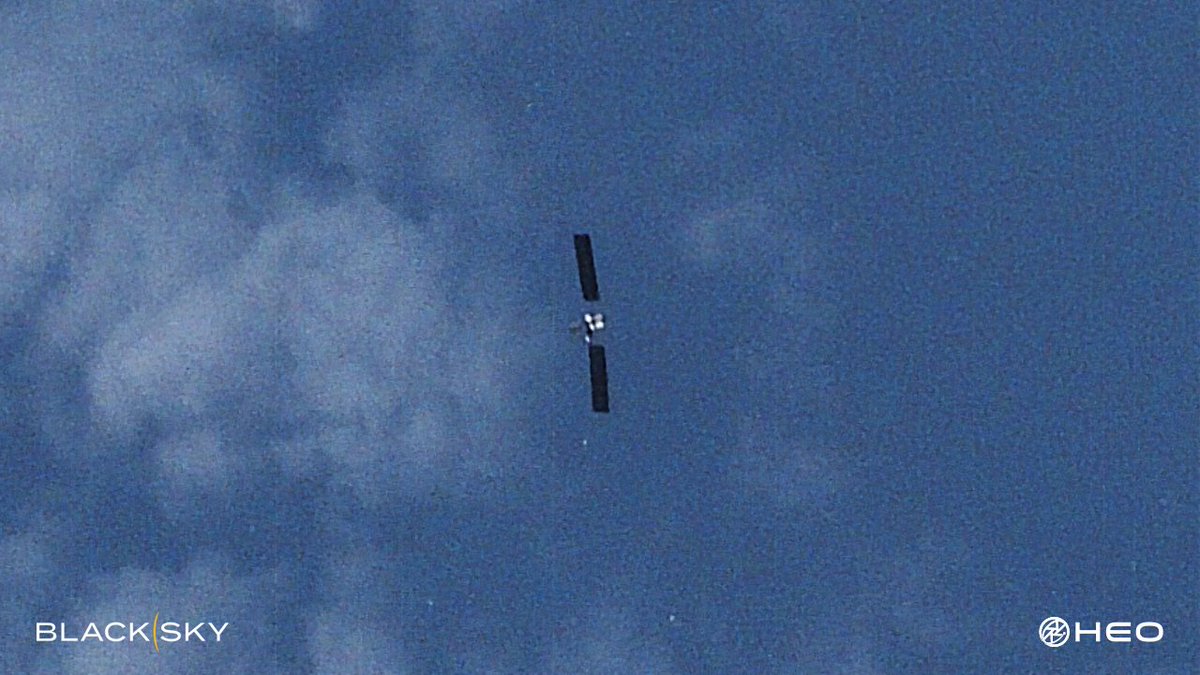
Non-Earth imaging provides the best view of satellites in space 🤩
We captured this image of the ISS as it passed over the Indian Ocean from a satellite 69.06 km away.
This is an important project for us and we are looking forward to continue this work to make space safe using non-Earth imaging.
Loved working with the dedicated team at @spacegovuk!
We are working with @heospace as part of ongoing research to support safe and sustainable space operations. 🤝
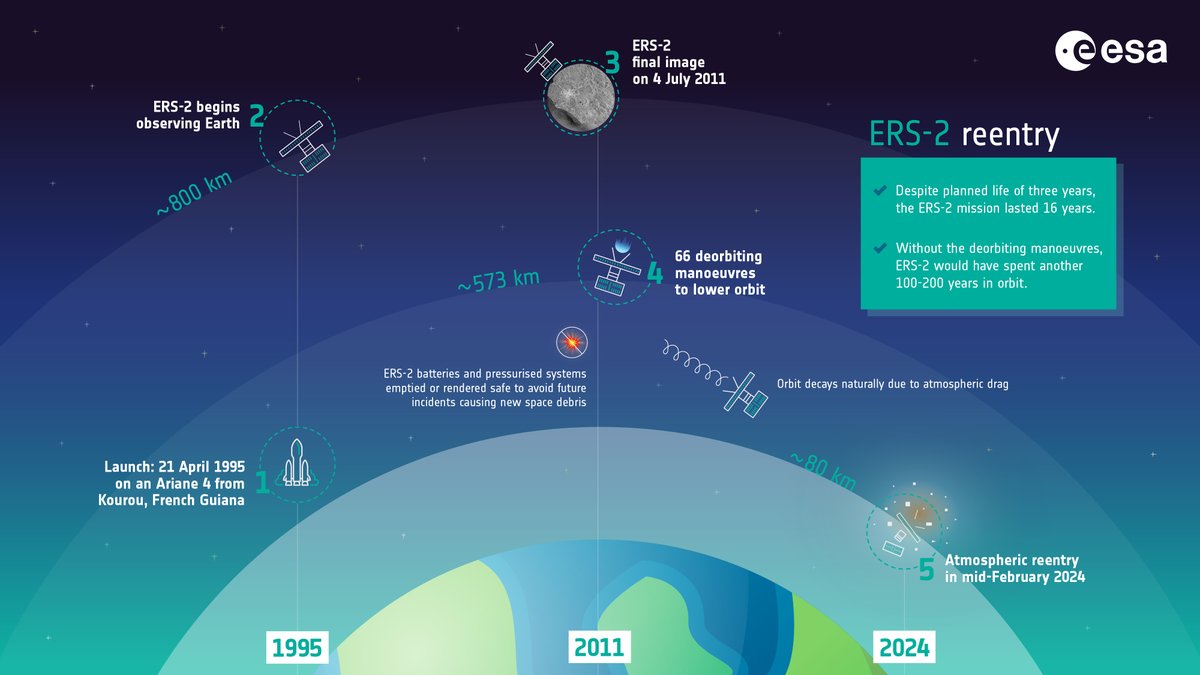
The images have been shared with @ESA who are tracking the re-entry of the ERS-2 satellite. 🛰️
Follow ESA’s live blog on the re-entry 👉https://t.co/XYYQwKYO4l
Super hard to figure out where incoming space debris will land. @heospace is partnering with @spacegovuk to persistently monitor ERS 2 as it deorbits this week: https://t.co/O3RMs0SEFV