We persist in treating international law as a set of universal constraints when in reality it functions with a veneer of legitimacy that sanitizes imperial violence. It is bureaucratic theater used by the powerful to narrate their dominance, allowing them to pretend there exists some 'rule-based order' whereby the weak can formalize their grievances.
The attacks across south Lebanon, Gaza, the occupied West Bank, et al. being violations of international law does not matter because, for those in the crosshairs of the metropole, international law does not exist.
While you spend your energy invoking legal arguments, the settler spends his energy refining the material occupation.
The Lebanese government bears direct responsibility for the martyrdom of al-Akhbar journalist Amal Khalil. Its participation in the surrender talks with Israel, its co-signing of the 16 April State Department document, which it has not disavowed, and its declared intent to shamelessly proceed to a second round of talks with our nation's longstanding enemy tomorrow together constitute the political context within which her killing was legitimised. It does so by granting Israel alone the right to self-defence, authorising it to strike “at any time,” while denying Lebanon any reciprocal right, thereby rendering journalists and civilians killable in a manner that exceeds even the May 17, 1983 agreement, which, for all its capitulatory and treasonous character, at least paid lip service to Lebanon’s security as a reciprocal right and tied it, however nominally, to Israeli withdrawal.
But given that this is framed by Lebanon’s president as a “war of others” driven by “suicidal instincts” rather than the “rational” choice he locates in the now ritualised submission he calls “negotiations,” the Lebanese government has clearly absolved itself of any obligation to protect its territory or its people, and instead persists in prostrating itself before its “friend,” Trump, appearing resigned to accepting Israel’s genocidal policies as a price it is willing to pay for its perverse notion of sovereignty, while congratulating itself on “negotiating for ourselves.”
VIDEO | Hezbollah published footage of its fighters repelling an Israeli army incursion into the town of Qantara in southern Lebanon, using guided missiles, artillery shells, and rockets.
“I call you ‘comrades’ rather than ‘brothers and sisters’ because if we are brothers and sisters it’s not from choice, it’s no commitment; but if you are my comrade, I am your comrade too, and that’s a commitment and a responsibility.” ~Amilcar Cabral
My Resistance Report: Strait of Hormuz mapping; IRGC air defence ops vs US fighter jets; missile attacks vs Dimona; drones vs strategic tanker aircraft at Ben Gurion airport; Iraqi resistance vs US bases; Hezbollah battles IDF invasion of South Lebanon. https://t.co/N2PGHppvJF
⚡️ The Bahraini authorities, to appease Netanyahu and Trump, arrest and torture to death their own Bahraini citizens. The martyrdom of the young man Sayed Mohammed Al-Mousawi as a result of his injury due to torture in the prisons of the Bahraini Zionist authorities, against the backdrop of the current events.
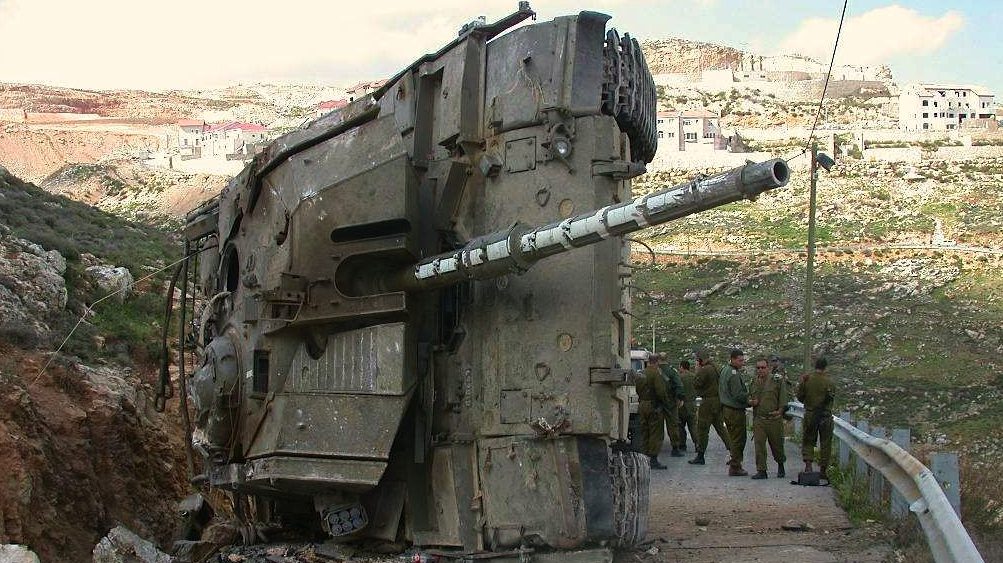
Hezbollah releases footage of their fighters targeting an Israeli Merkava tank in the southern Lebanese village of Al-Qouzah, in the district of Bint Jbeil.
Thousands upon thousands of Yemenis in the capital Sana'a chanting in solidarity with Iran, Lebanon, and Gaza:
"Tell the Epstein governments
We will not abandon the people of Palestine"
Breaking | Hezbollah Carries Out 80 Operations Against Israeli Occupation So Far – Record Single-Day Operations
Hezbollah has claimed responsibility for 80 operations against Israeli occupation forces, marking the highest number of operations in a single day in its history.
The operations targeted settlements and military bases across northern occupied Palestine and in Lebanese border villages.
The group also announced the destruction of at least eight Merkava tanks attempting to invade southern Lebanon, inflicting direct casualties, including deaths and injuries, among Israeli soldiers and officers.
The 401st armored brigade, the brigade that killed Hind Rajab, is now in Lebanon.
Today, the Lebanese resistance struck 14 tanks, mostly belonging to the 401st. This is a full company.
Israel’s Channel 15 has reported multiple casualties, including an officer from the 401st.
NATO withdraws all troops from Iraq advisory mission
——
NATO has pulled all of its troops out of an advisory mission in Iraq, the military alliance said on Friday.
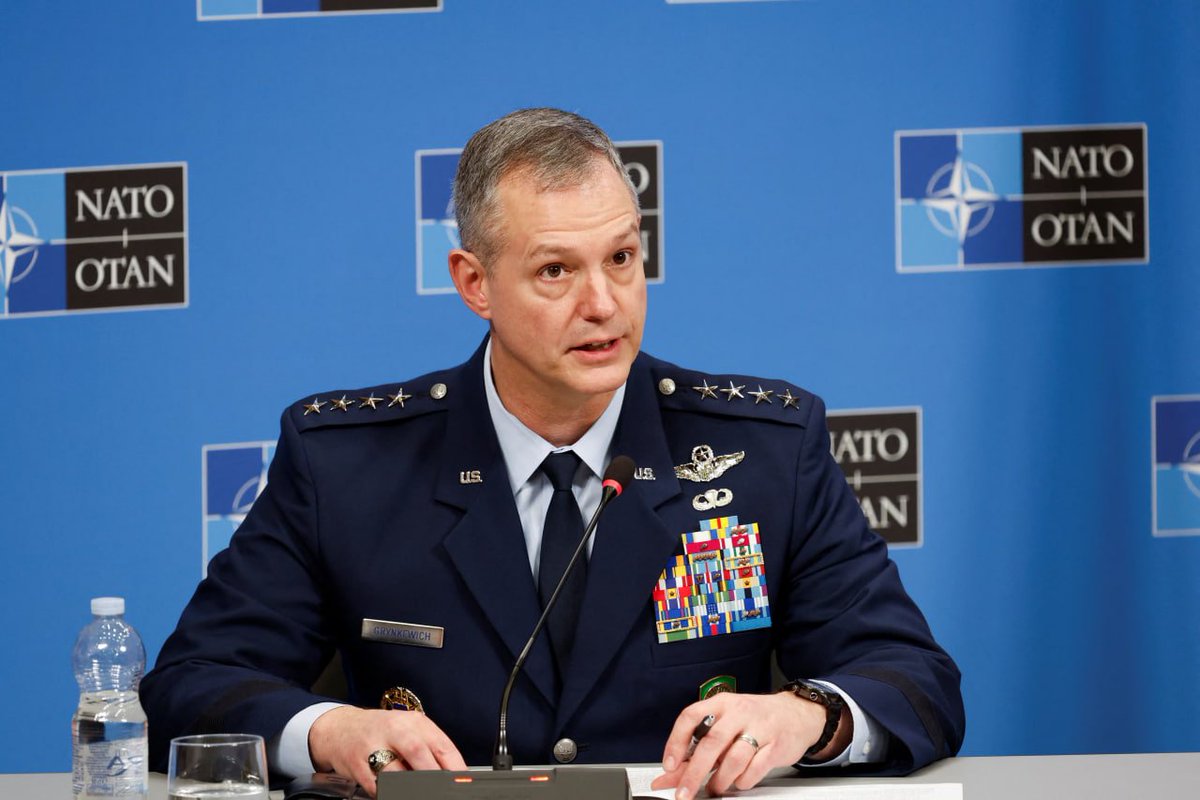
"I would like to thank the Republic of Iraq and all the Allies who assisted in the safe relocation of NATO personnel from Iraq," US Air Force Gen. Alexus Grynkewich, NATO's Supreme Allied Commander Europe, said in a statement.
The statement confirmed that the mission had moved "all its personnel" from West Asia to Europe. A NATO official, speaking on condition of anonymity, said this involved "several hundred" troops.
In recent days, countries such as Poland, Spain, and Croatia have also pulled their troops from the region.
NATO said the mission will now continue from a military headquarters in Naples, Italy. The operation is non-combat in nature and is focused on advising Iraqi security forces and supporting their capacity-building efforts, according to NATO.
I am excited to share my freely available translation of Yahya al-Sinwar's 1991 book, "Ashraf al-Balouji," a literary biography of the titular young resistance fighter, Ashraf Hassan al-Baʿlūjī. This book, one of al-Sinwar's first published writings, has previously neither been translated into English nor publicly circulated.
I have appended a short translator's note about the conditions of the book's writing and the author's intentions. The book was authored during al-Sinwar's period of solitary confinement and was the byproduct of myriad interviews and conversations he had with al-Baʿlūjī's comrades. This biographical effort was precipitated by al-Sinwar's belief that literary-historical commemoration is itself an act of resistance that must accompany any struggle. For al-Sinwar maintained that history is rendered actual through its recording.
Al-Baʿlūjī was born in the Tuffah neighborhood of Gaza City on 17 February 1972. He was part of a small cadre during the First Intifada and carried out one of the early successful resistance operations once the uprising began. He was wounded and pursued for several months until the occupation forces arrested him on 25 February 1991. He was sentenced to three life terms (and seven additional years) in prison, and his home was demolished. Al-Baʿlūjī became a leader within the prison bloc while in the occupation’s carceral system. He was released in the “Wafa al-Ahrar” prisoner exchange in 2011, alongside al-Sinwar and other charismatic and prominent leaders, such as Rawhi Mushtaha, Tawfiq Abu Naim, Husam Badran, Jihad Yaghmur, and Zi’ad ‘Awad.
As I note in my translator's introduction, this text is exemplary of al-Sinwar’s literary prowess. This book dovetails elements of poetry and prose, fitting given al-Sinwar’s training in Arabic studies and literature at the Islamic University of Gaza. I have, unfortunately, not been able to retain all of the polysemous metaphors and myriad literary devices that permeate the pages of this short book. This translation effort, inevitably, required making exegetical choices; where confronted with idioms that do not have cognates, I have opted to retain the Arabic. Any shortcomings in this translation are wholly my own.
EXCERPT:
"Have you ever visited Gaza as a guest and walked through one of its nights? Have you breathed in the redolent lemon fragrance carried in its air, or felt the sudden rush of jasmine flitting on its winds? Have the night breezes of the Mediterranean touched your face—breezes heavy with the salt of the sea and filled with the memories of our ancestors? For Gaza is unique in its history. Its lineage is linked to Hāshim ibn ʿAbd Manāf, from the line of the father of the Arabs, Ismāʿīl, peace be upon him, and to the prophet Ibrāhīm, upon whom be God’s prayers and peace. Our noble Messenger himself—of Hāshimite lineage—traces his ancestry to Hāshim ibn ʿAbd Manāf, the pride of Arab lineage. Before that, its name was already Gaza, a name meaning strength and fortification. The name 'Gaza' passed easily from one tongue to another, its appellation shaped by the simplicity with which people pronounce the letter ʿayn. It is said that as early as 3,500 years before the birth of al-Masīḥ, peace be upon him, the city was surrounded by a wall that protected it, stretching from Dayr Saʿīd and enclosing every inch of its ground.
Every pool of water springs forth from the blood of the martyrs. On every wall are pieces of flesh, thatched into its very being—whether from the martyrs themselves or from the corpses of their enemies. [...] And here on Salah al-Din Street, only a few meters from where you stand, the spark of the 'War of Knives' burst forth, opening a new chapter in the history [...]"
Below is the first part (i.e., the Introduction) of what will hopefully be a six-part translation, with each section corresponding to a chapter.


![MujammaHaraket's tweet photo. I am excited to share my freely available translation of Yahya al-Sinwar's 1991 book, "Ashraf al-Balouji," a literary biography of the titular young resistance fighter, Ashraf Hassan al-Baʿlūjī. This book, one of al-Sinwar's first published writings, has previously neither been translated into English nor publicly circulated.
I have appended a short translator's note about the conditions of the book's writing and the author's intentions. The book was authored during al-Sinwar's period of solitary confinement and was the byproduct of myriad interviews and conversations he had with al-Baʿlūjī's comrades. This biographical effort was precipitated by al-Sinwar's belief that literary-historical commemoration is itself an act of resistance that must accompany any struggle. For al-Sinwar maintained that history is rendered actual through its recording.
Al-Baʿlūjī was born in the Tuffah neighborhood of Gaza City on 17 February 1972. He was part of a small cadre during the First Intifada and carried out one of the early successful resistance operations once the uprising began. He was wounded and pursued for several months until the occupation forces arrested him on 25 February 1991. He was sentenced to three life terms (and seven additional years) in prison, and his home was demolished. Al-Baʿlūjī became a leader within the prison bloc while in the occupation’s carceral system. He was released in the “Wafa al-Ahrar” prisoner exchange in 2011, alongside al-Sinwar and other charismatic and prominent leaders, such as Rawhi Mushtaha, Tawfiq Abu Naim, Husam Badran, Jihad Yaghmur, and Zi’ad ‘Awad.
As I note in my translator's introduction, this text is exemplary of al-Sinwar’s literary prowess. This book dovetails elements of poetry and prose, fitting given al-Sinwar’s training in Arabic studies and literature at the Islamic University of Gaza. I have, unfortunately, not been able to retain all of the polysemous metaphors and myriad literary devices that permeate the pages of this short book. This translation effort, inevitably, required making exegetical choices; where confronted with idioms that do not have cognates, I have opted to retain the Arabic. Any shortcomings in this translation are wholly my own.
EXCERPT:
"Have you ever visited Gaza as a guest and walked through one of its nights? Have you breathed in the redolent lemon fragrance carried in its air, or felt the sudden rush of jasmine flitting on its winds? Have the night breezes of the Mediterranean touched your face—breezes heavy with the salt of the sea and filled with the memories of our ancestors? For Gaza is unique in its history. Its lineage is linked to Hāshim ibn ʿAbd Manāf, from the line of the father of the Arabs, Ismāʿīl, peace be upon him, and to the prophet Ibrāhīm, upon whom be God’s prayers and peace. Our noble Messenger himself—of Hāshimite lineage—traces his ancestry to Hāshim ibn ʿAbd Manāf, the pride of Arab lineage. Before that, its name was already Gaza, a name meaning strength and fortification. The name 'Gaza' passed easily from one tongue to another, its appellation shaped by the simplicity with which people pronounce the letter ʿayn. It is said that as early as 3,500 years before the birth of al-Masīḥ, peace be upon him, the city was surrounded by a wall that protected it, stretching from Dayr Saʿīd and enclosing every inch of its ground.
Every pool of water springs forth from the blood of the martyrs. On every wall are pieces of flesh, thatched into its very being—whether from the martyrs themselves or from the corpses of their enemies. [...] And here on Salah al-Din Street, only a few meters from where you stand, the spark of the 'War of Knives' burst forth, opening a new chapter in the history [...]"
Below is the first part (i.e., the Introduction) of what will hopefully be a six-part translation, with each section corresponding to a chapter.](https://pbs.twimg.com/media/HDg9eQZawAAe3Ui.jpg)





