The Sculptor Galaxy (NGC 253): A Starburst in Disguise 🌌
Meet one of the most dynamic galaxies in our cosmic neighborhood: NGC 253, known as the Sculptor Galaxy.
Lying just 11.4 million light-years away in the southern constellation Sculptor, it is the brightest and largest member of the Sculptor Group — the nearest galaxy group to our own Local Group. Viewed nearly edge-on, this large barred spiral looks deceptively calm at first glance… but it’s hiding a powerful secret.
A Starburst Galaxy in Full Bloom
Despite its elegant spiral appearance, NGC 253 is one of the most intensely star-forming large galaxies near us. It is classified as a starburst galaxy — a system where stars are being born at an extraordinary rate.
In visible light, you can already see a bright, mottled central region packed with star formation, crossed by dark dust lanes. But the real fireworks are revealed at other wavelengths:
Infrared**: Warm dust glows brightly, heated by thousands of young, massive stars.
Radio**: Intense emission from supernova remnants — the explosive deaths of those short-lived massive stars.
X-ray**: Superheated gas being blasted outward by the collective fury of countless supernovae.
The Superwind
The most dramatic feature is the superwind — a powerful outflow of gas and dust driven perpendicular to the galaxy’s disk by the relentless energy of the starburst. This wind launches filaments of hot gas thousands of light-years above and below the plane, visible in H-alpha and X-ray light.
It’s carrying heavy elements forged in supernovae out of the galaxy and into the surrounding intergalactic space — helping chemically enrich the universe itself.
A Perfect Cosmic Laboratory
Because it’s so close, NGC 253 offers astronomers one of the best opportunities to study feedback processes in galaxies: how intense star formation regulates itself by injecting energy and momentum into the surrounding gas, eventually slowing down or shutting off further star birth.
Beautiful, powerful, and incredibly active — the Sculptor Galaxy is a vivid example of how even “normal-looking” spirals can harbor extraordinary levels of cosmic violence and creation.
A starburst wearing a spiral disguise, just 11 million light-years from home.
Echoes from the Edge
A sudden burst of light from V838 Mon ripples through surrounding dust shells, gradually revealing farther and farther reaches of space.
(Credit: NASA, ESA)
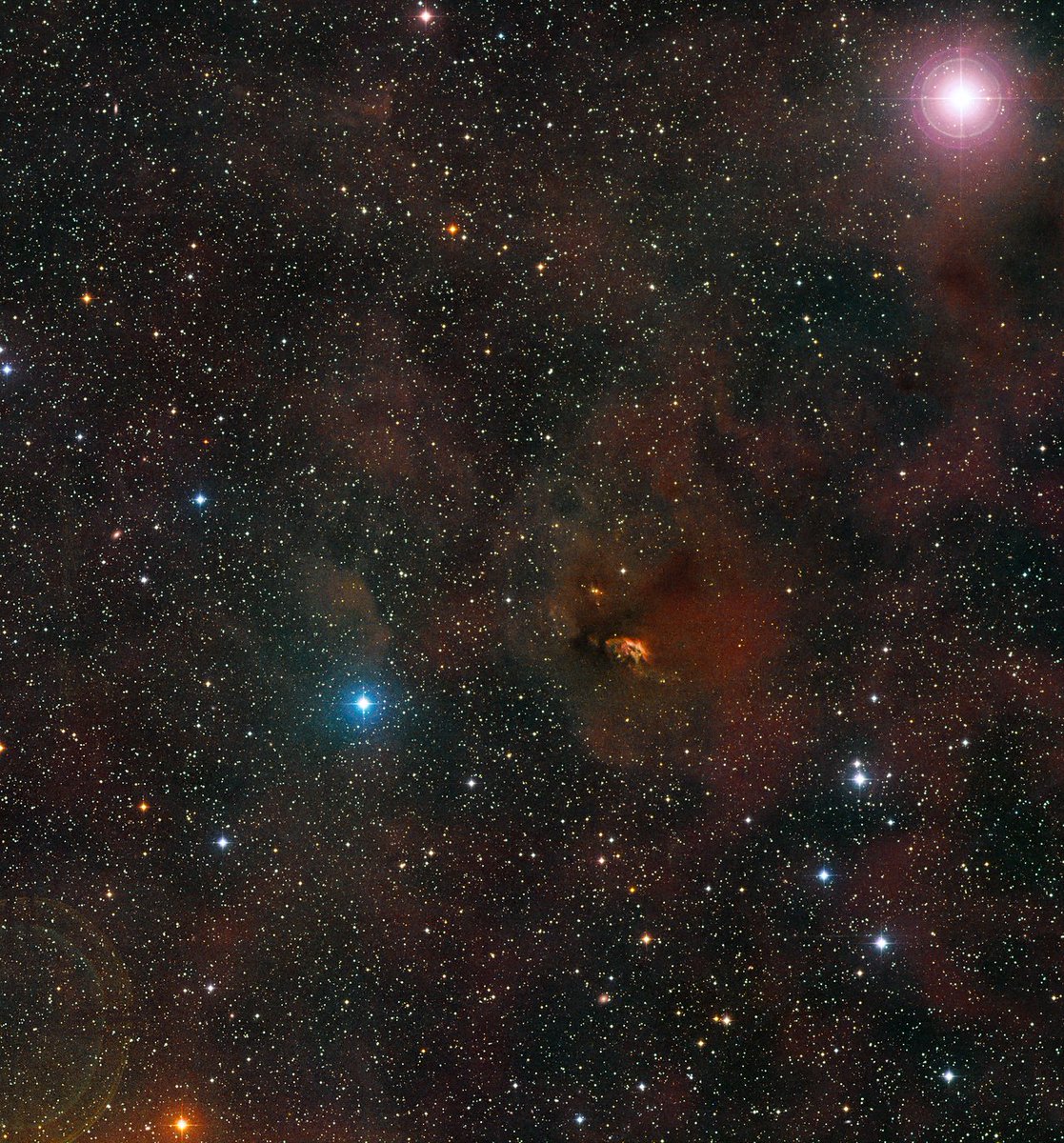
Stunning: HL Tauri, one of the closest regions of star formation to Earth, rich in young stars and dust clouds, from the Digitized Sky Survey.
(Credit: ESO/Digitized Sky Survey 2)
Bluegrass has always been part of who I am. I can’t wait for y’all to hear “What If You Loved Me” with Molly Tuttle & Dan Tyminski this Friday. 🤍
Pre-save it now: https://t.co/5a3lR0QaIk
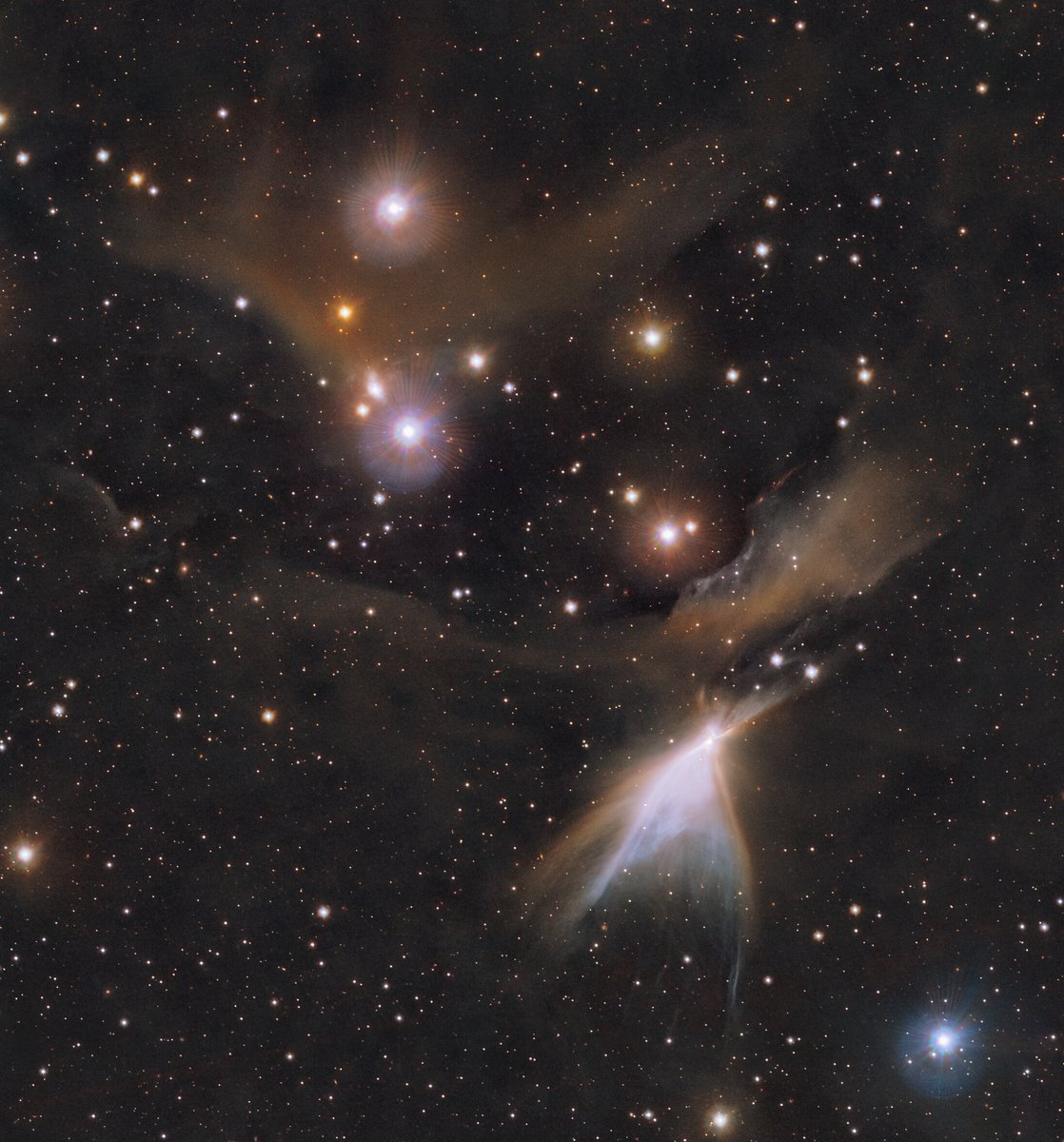
Gorgeous: An infrared glimpse of HH 909 A in the Chamaeleon constellation, where new-born stars emerge from vibrant clouds of gas and dust.
This view reveals hidden details usually concealed by cosmic dust.
(Credit: ESO/Meingast et al.)
✨ M17 — The Swan Nebula
Glowing with intricate filaments of ionized gas and rich SHO color, this stunning capture reveals the remarkable structure of one of the Milky Way's most iconic star-forming regions.
40 × 300s per SHO channel
12 × 300s per RGB channel
🔭 Equipment
• Skywatcher Quattro 200P F4
• ZWO AM5
• ZWO ASI2600MM Pro
• ZWO ASI120MM Mini
• ZWO ASIAIR Plus
• ZWO EAF
• ZWO EFW
• ZWO OAG
Processed in PixInsight.
Credit: Manuel Alejandro Chavarria Silva
#ZWO #ASIWEEK #Astrophotography #M17 #SwanNebula #SHO #DeepSky #Astronomy
In 2022, @NASAWebb discovered a new, mysterious type of object in the universe – abundant red objects that emerged millions of years after the big bang.
Scientists have explored multiple explanations for these little red dots, and one in particular may connect it all >> https://t.co/ijhlJzAAgG
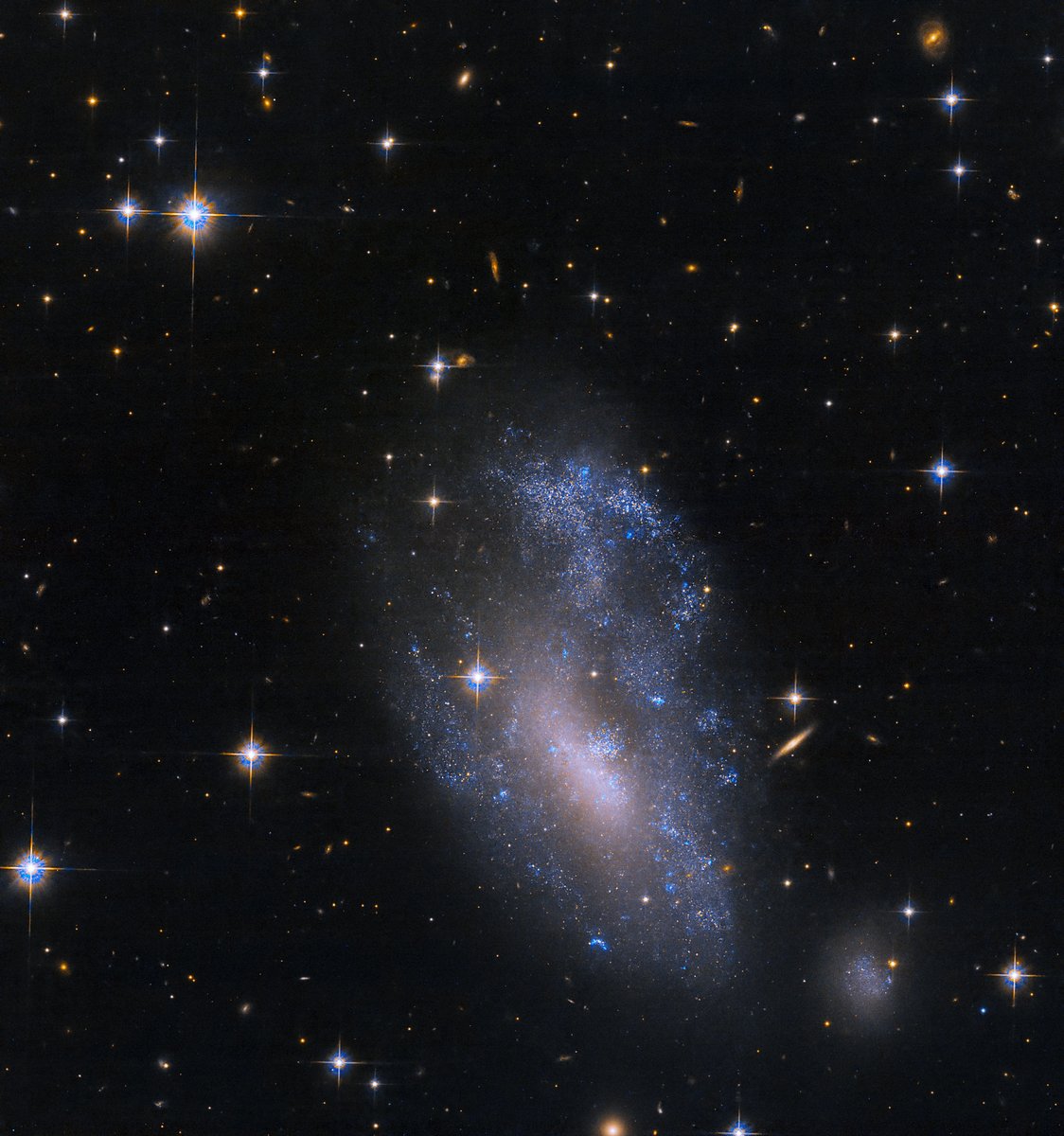
UGC 3912 offers an intriguing case where a gravitational brush has bent its spiral shape but left its stellar population intact.
Credit: NASA, ESA, and C. Kilpatrick (Northwestern University); Processing: Gladys Kober (NASA/Catholic University of America)
Spectacular: Two massive galaxies are colliding 50 million light-years away from our planet!
Credit: NASA, ESA, and the Hubble Heritage Team (STScI/AURA)
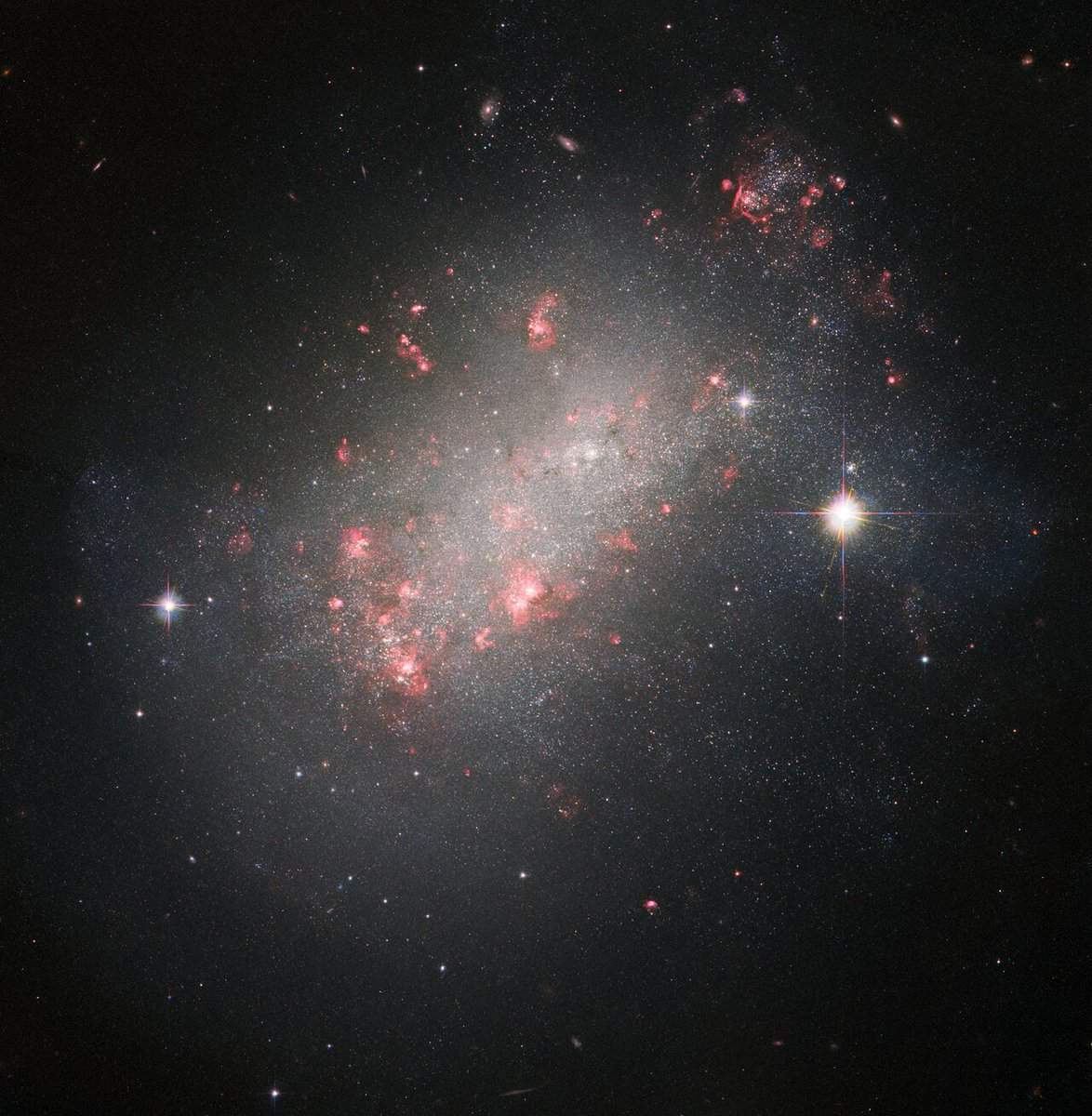
Spot the supernova! 💥
In the top right corner, it's so bright that it could be mistaken for a foreground star located in our galaxy, but its home is in the outskirts of a galaxy located 11 million light-years from Earth: https://t.co/SYye2JViCS
Absolutely breathtaking!
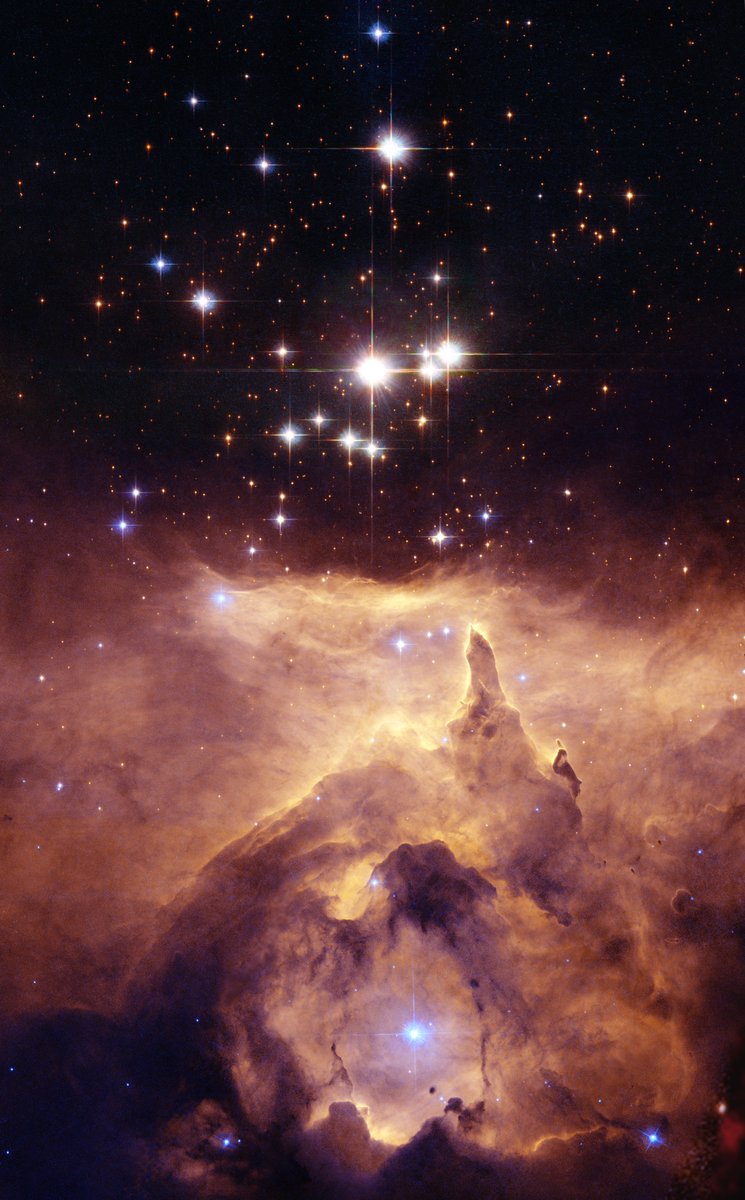
Feast your eyes on the colossal star system Pismis 24-1, glowing from within the vibrant emission nebula NGC 6357
(Credit: NASA, ESA, Jesœs Maz Apellÿniz, Davide De Martin)