It's been official for years, but @DjokerNole acts spoiled, insecure, classless, & desperately wants to be remembered as the best when that honor will forever be Roger's & Rafa's. The fans are the true weather vane. "If you ain't first, you're last." @rolandgarros#RickyBobby
@elonmusk Until you restore incremental (precise) cruise control to the FSD, it is years away from truly being worthwhile. Taking something away that we already had is not progress.
@elonmusk@Tesla_AI Whatever you do, please give FSD owners the ability to control speed precisely again. Taking an ability away that we already had is a step backward.
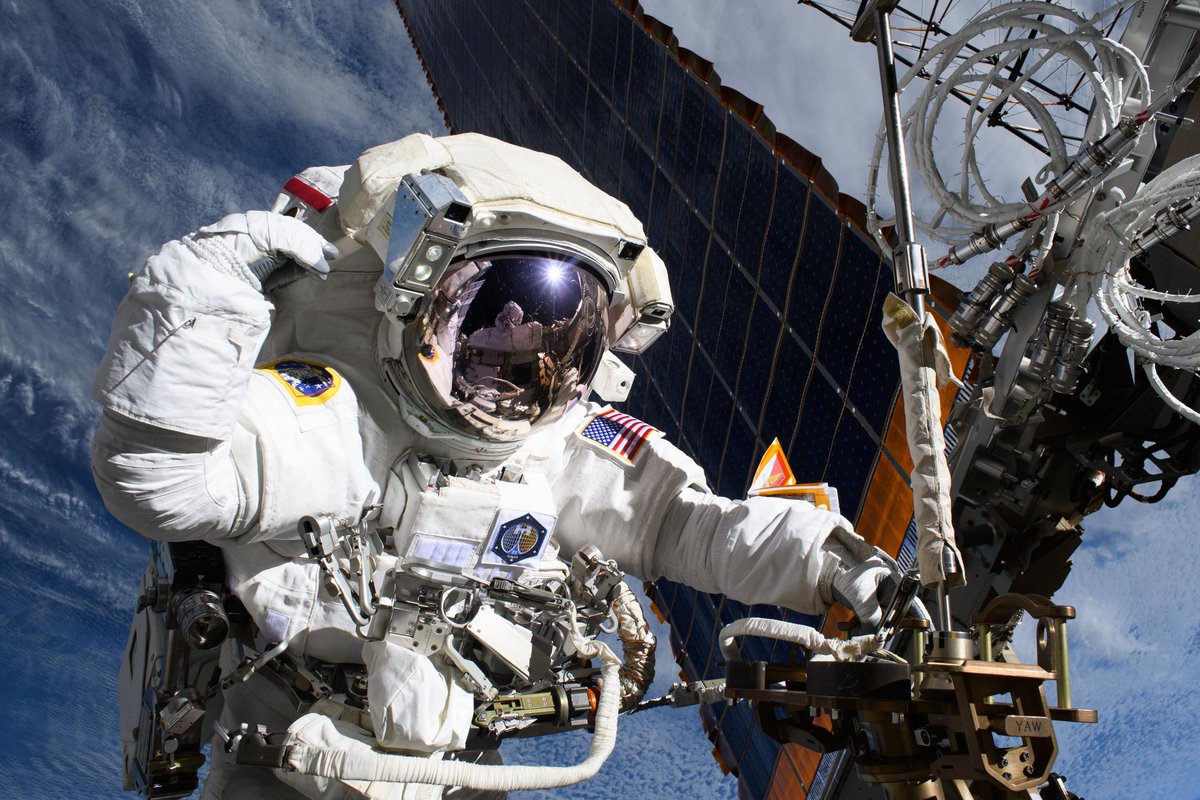
.@NASA astronauts will conduct a pair of spacewalks beginning Wednesday, March 18, outside of the @Space_Station to prepare for the installation of two roll-out solar arrays. Experts from NASA will preview the spacewalks during a news conference at 2 p.m. EDT, Monday, March 16, at @NASA_Johnson in Houston.
Learn more: https://t.co/aEAkoxjBiQ
My annual appeal regarding #DaylightSavingsTime: Instead of springing forward at 2 am Sunday, move the time ahead at 4 pm on Friday. Now it's 5 pm, time to leave work and enjoy the weekend!
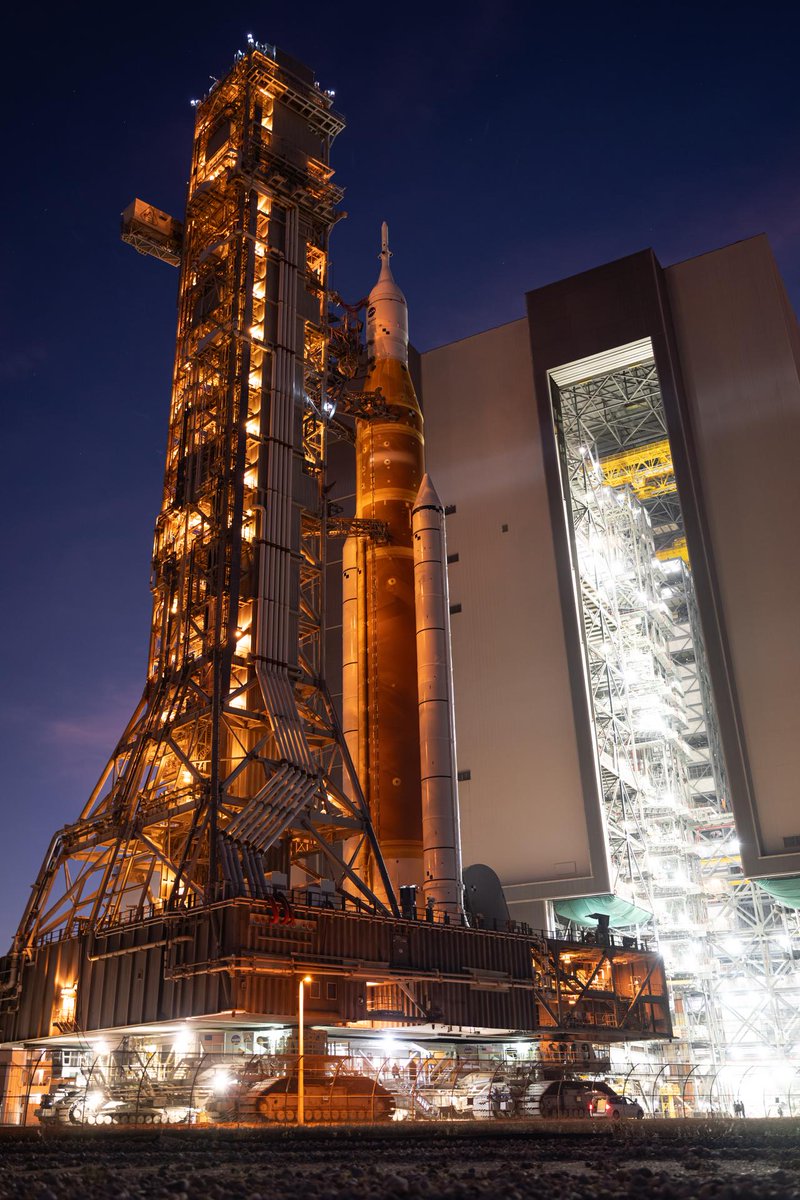
April 1 launch time for Artemis II is about 6:24 pm EDT if all goes well with troubleshooting and return to LC-39B. No kidding! @NASAArtemis@NASASpaceOps@NASAKennedy @NASA_Johnson
As an update to my earlier post.
- The ICPS helium bottles are used to purge the engines, as well as for LH2 and LOX tank pressurization. The systems did work correctly during WDR1 and WDR2.
- Last evening, the team was unable to get helium flow through the vehicle. This occurred during a routine operation to repressurize the system.
- We observed a similar failure signature on Artemis I.
- The Artemis II vehicle is in a safe configuration, using ground ECS purge for the engines versus the onboard helium supply.
- Potential faults could include the final filter between the ground and flight vehicle, located on the umbilical, though this seems least likely based on the failure signature. It could also be a failed QD umbilical interface, where similar issues have been observed. It could also be a failed check valve onboard the vehicle, which would be consistent with Artemis I, though corrective actions were taken to minimize reoccurrence on Artemis II.
Regardless of the potential fault, accessing and remediating any of these issues can only be performed in the VAB.
As mentioned previously, we will begin preparations for rollback, and this will take the March launch window out of consideration.
I understand people are disappointed by this development. That disappointment is felt most by the team at NASA, who have been working tirelessly to prepare for this great endeavor. During the 1960s, when NASA achieved what most thought was impossible, and what has never been repeated since, there were many setbacks. One historic example is that Neil Armstrong spent less than 11 hours in space on Gemini 8 before his mission ended prematurely due to a technical issue. A little over three years later, he became the first man to walk on the Moon.
There are many differences between the 1960s and today, and expectations should rightfully be high after the time and expense invested in this program. I will say again, the President created Artemis as a program that will far surpass what America achieved during Apollo. We will return in the years ahead, we will build a Moon base, and undertake what should be continuous missions to and from the lunar environment. Where we begin with this architecture and flight rate is not where it will end.
Please expect a more extensive briefing later this week as we outline the path forward, not just for Artemis II, but for subsequent missions, to ensure NASA meets the President’s vision to return to the Moon and, this time, to stay.
The fact this rocket's guidance system and hardware continued on safely should be studied carefully by any company wishing to be successful in the launch business! @ulalaunch Remarkable resiliency.
The successful NSSL launch of USSF-87 today delivered critical capabilities, including GSSAP, which will support #USSPACECOM’s space surveillance operations & enhance space domain awareness— strengthening 🇺🇸 national security.
👉https://t.co/o05KsM2RCa
.@NASA will stream live coverage of the upcoming prelaunch, launch, and docking activities for the agency’s SpaceX Crew-12 mission to the @Space_Station. Liftoff is targeted for no earlier than 6:01 a.m. EST on Wednesday, Feb. 11, from Space Launch Complex 40 at Cape Canaveral Space Force Station in Florida. The targeted docking time is approximately 10:30 a.m., Thursday, Feb. 12.
Watch agency launch coverage on NASA+, Amazon Prime, and the agency’s YouTube channel.
Learn more: https://t.co/aVbIdLDg4L
UFB...For only the second time EVER (1968 Gator Bowl vs Missouri), @AlabamaFTBL rushed for minus yards in a game. So bad, the team rushed AWAY from Georgia's defense instead of toward it! #NotCFP@ESPNCFB
27 yrs ago today I watched the @Space_Station first module launch atop a Russian Proton rocket from the Baikonur Cosmodrome in Kazakhstan along with 100 news media. Two weeks later, Space Shuttle Endeavour launched Dec 4 with another segment to begin the assembly process. @NASA
New Glenn is fueled for its second mission carrying @NASA’s ESCAPADE and a technology demonstration for @Viasat in support of @NASASpaceOps’ Communications Services Project.
@sternshow Monday marks 50 yrs since the sinking of the Edmund Fitzgerald. The tragedy was made lasting famous by the Gordon Lightfoot ballad in 1976. Fast forward and Billy Syrings performed a riveting, yet haunting version in concert. It would be nice to play them!