When you sell your business, never ever agree on an earn out
Always get it in cash!
I know lots of horror stories of earn outs and have always rejected them
DeKUT Establishes Semiconductor Collaboration with LAAS CNRS, France
The Vice Chancellor of DeKUT, Prof. Eng. Peter Muchiri, EBS led a delegation of DeKUT Staff to a collaboration visit to LAAS CNRS, for collaboration on training, research and innovation in Semiconductor and Micro-electronics Engineering
Laboratory for Analysis and Architecture of Systems (LAAS) is a major public research laboratory based in Toulouse, France, and is part of the French National Centre for Scientific Research (Centre National de la Recherche Scientifique - CNRS) network. LAAS has a class 10 clean room that can support the entire flow of the 14nm MOS process up to packaging.
The collaboration with DeKUT will be coordinated by the DeKUT Center for Integrated Circuits Engineering, which trains in Microchip design and fabrication.
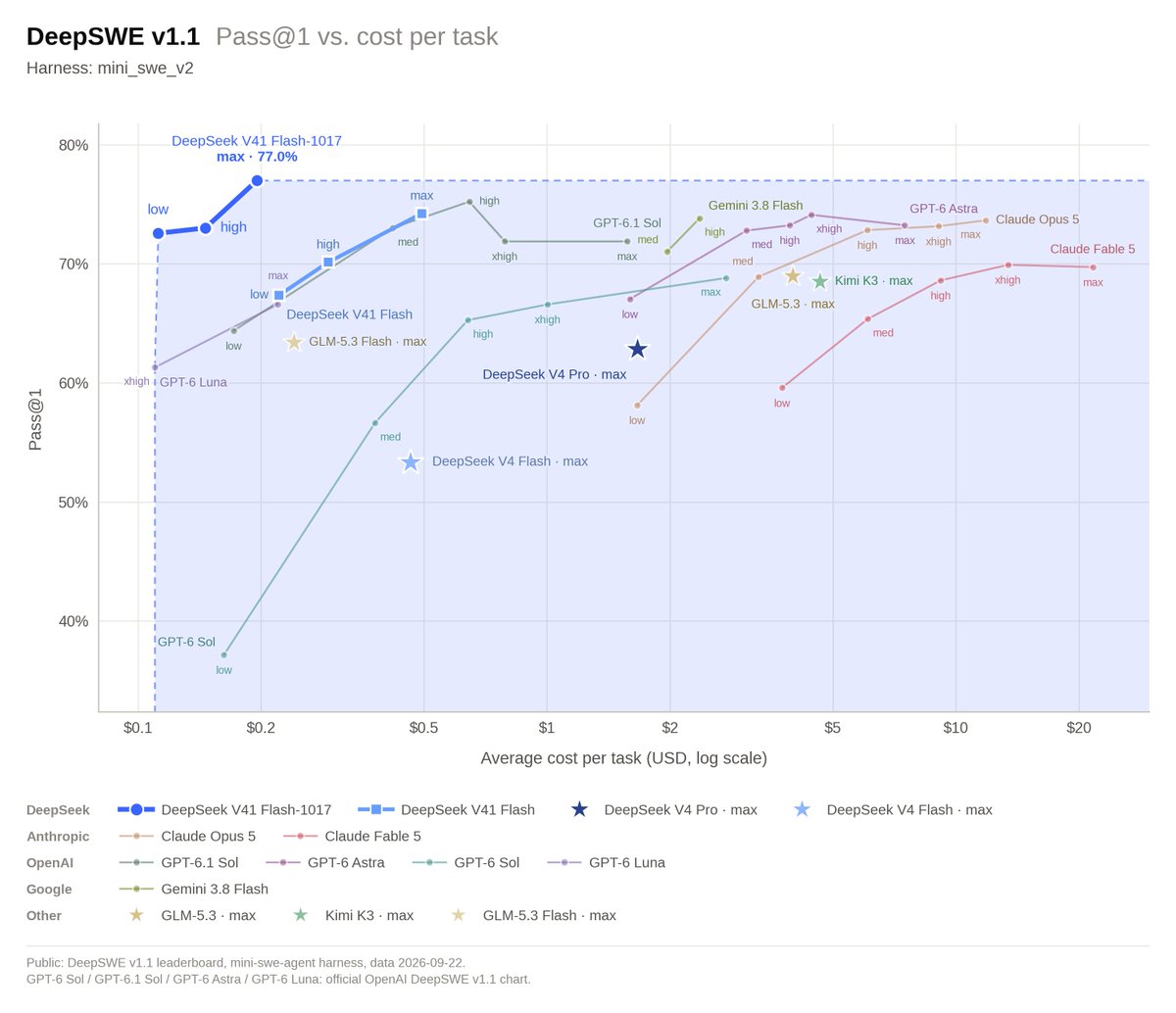
🚀 DeepSeek-V4.1-Flash-1017 is here!
Stronger benchmark performance, faster task completion, and shorter outputs than the previous version—a Pareto improvement in performance and cost. Now live on our website, app, and API.
🛠️ Optimized for @DeepSeekHarness, Tencent CodeBuddy, WorkBuddy, and more. Upgrade to DeepSeek Harness v0.2.1-rc.1 or later for the best experience with the new model.
1/4
3AM PRAYER
Our merciful and loving Father, we come before You today, asking You to deliver us from ourselves. Sometimes the greatest battles we face are not from the people around us but from within us. Deliver us from our own thoughts, fears, weaknesses, pride, impatience, poor decisions, and the habits that keep pulling us away from Your purpose for our lives.
Father, save us from the things we do that unknowingly destroy our blessings. Deliver us from self-sabotage, from making decisions out of anger, fear, desperation, and temporary emotions. Give us the wisdom to know when to speak, when to remain silent, when to move, and when to wait upon You.
LORD, deliver us from the version of ourselves that resists change, rejects correction, wastes time, misses opportunities, and settles for less than what You have prepared for us. Remove every attitude, mindset, and behavior that stands between us and the good future You have planned for us.
Father, when our hearts lead us in the wrong direction, redirect us. When our emotions threaten to ruin what You are building, give us self-control. When our thoughts become our enemies, fill our minds with Your truth. When our weaknesses threaten to make us lose what we have prayed for, strengthen us by Your Holy Spirit.
Our God, do not allow us to become the reason our praying is yers remain unanswered. Do not let us destroy with our own hands what You have taken years to build. Teach us how to protect our blessings, nurture our relationships, manage our opportunities wisely, and remain humble in seasons of elevation.
From today, may we cooperate with Your purpose for our lives. Let our minds, hearts, words, and actions align with Your will. Where we have been our own stumbling blocks, LORD, turn us into instruments of our own progress.
Lead us, correct us, transform us, and make us who You created us to be.
We have prayed all this through the mighty name of Jesus Christ.
Amen🙏
#MukyalaTusimbudde
I spent 48 hours in SF hanging out with billionaires, data labs and AI founders and execs running $1B to $100B companies.
My observations:
1. Sooo MANY stories of data brokers making like $2M a WEEK selling company data to labs. I can't tell if it's the beginning or a bubble, and I kept wondering which niches are left. Digging into it actively.
2. At dinner, someone asked the table, "If a new model drops next month, does your company get better or worse?" HALF the table went quiet! I think that's the best question to ask about any AI startup right now.
3. The bar people talk about now is hitting $1B in revenue in 12 months (I guess that's the new unicorn?). What I didn't hear much about is retention. AI revenue can come in fast and leave fast, and I think we're going to see a lot of stories of AI companies with huge revenue and terrible retention.
4. It's pretty clear we're living through the reinvention of the computer. The model is the CPU, the harness is the operating system, and skills and plugins are the apps. Thinking about it that way makes it easier to see where the whitespace is.
5. We're maybe 12 months from an agent that can watch you work for a week and then do your job without any instructions. The screen recording plus agent memory plus local model combination makes this possible right now.
6. Agent harnesses feel like the new GPT wrappers, in a good way, especially vertical ones. The best teams I talked to treat the model as swappable. One founder walked me through routing different models to different jobs: one for taste and visuals, a cheaper one for the everyday stuff, another for text.
They use prompts they can move across models over fine-tuning, and A/B test the output on what users actually do with it: do they edit it, export it, share it? A vertical harness is basically four things: the connectors for that industry's data, evals written by people who know the work, rules for what the agent can and can't touch, and a clean screen for a human to review. The model is maybe 20% of it.
7. There's a lot of reverse engineering going on/cloning going on more than I've ever seen. People are decompiling software and rebuilding it with agents, and someone showed a suite of like 10 apps that are worth $5B+ each all that he cloned open source. Me and everyone are still thinking through what it means when software gets this easy to copy.
8. My guess is the value moves to data. If the software can be rebuilt quickly, what's worth paying for in a legacy SaaS company is the years of customer data and workflows inside it. Some SaaS companies are secretly data companies.
Gets me thinking about how do you truly value data for this saas companies? Like if we were buying these dying saas companies at 2x ARR before (as example), maybe there is a better metric. Idk, just thinking out loud here.
9. It feels like a good chunk of legacy software won't make it to the agentic era, especially anything built around people clicking through a lot of screens.
10. Every company I talked to wants to pipe its internal data into one place and expose it to agents through MCP. Then they look at the data and realize it's a mess: five versions of the same customer, old Slack channels, PDFs nobody can search. Cleaning that up feels like a big consulting opportunity!
11. A lot of founders are building the basic building blocks for agents: APIs, data layers and tools. Some of the companies I saw barely have a UI because the main user is an agent. I really believe the startups that build primitives to this agentic era will do extremely well. Building blocks is the best way to think about it.
12. Labs can get plenty of training data, but it's harder to get real examples of agents failing inside companies. Whoever has those logs has something valuable.
13. Someone running a big consumer company told me the next fight is over memory. The model that remembers the most about you wins, and the smartest model matters less than people think.
14. Physical AI came up a lot. Astra I think was the first model that got people into AI can actually do CAD, and I think a lot of people are thinking what does vibe manufacturing really look like. The line I keep thinking about came from a robotics founder: the hardest problems in AI are deployment problems now, not research problems. Their robots work on their own, call a human when they get stuck, and every one of those calls becomes training data.
15. Cybersecurity companies are having a moment and are actually cool companies to build now, especially the ones that clean up after a breach. Every agent with access to your systems is a new door into your company, and a lot of those doors were left open.
16. Some startups are worth more dead than alive now. A shutdown company with 5 years of Slack, email and code can get paid for licensing all of it. I wouldn't be surprised if founders start factoring that into when they shut down.
17. People are starting to talk about monetizing the agent web. It feels really early, but when the most popular user of the internet is an agent, what startups should you be building?
18. I think agent insurance is coming. Once an agent makes an expensive mistake, insurers will want audits before they cover anyone.
19. Several people said the hire they want most is someone with taste who can write evals. The models are getting good at generating ideas, so the hard part is judging which ones are good.
20. New trend I observed: startup raises VC, uses venture dollars to become a creator, startup fails, founder falls back on being a full-time creator and incubates other products bootstrapped.
21. Getting SIGNIFICANT distribution is HARD right now. Founders are sponsoring buses, buying billboards like crazy and throwing parties with famous DJs to get noticed. Kinda feels dotcom era in that sense.
Attention is what's scarce! The growth guy going viral sharing his UGC strategy from Wispr Flow is a good example. It's the sauce everyone wants, and I truly believe there are probably only 50 people on the planet who know how to scale these types of businesses efficiently in this era.
Always good to get that dose of SF. I felt sooo lucky to have such an incredible trip during such an incredible time in building businesses. Surreal in so many ways.
Happy to be home and locked in.
Until next time!
IMF & WB policy on education is exactly what you are seeing. Introduce CBC, change the higher education funding model, ensure less students allocated to Arts based courses. Offer TVETS as a solution thus creating a service based system to export workers for remittances allegedly.
it is an unwritten rule of life that after every prolonged period of hardship and uncertainty, there is going to be a period when you are going to achieve quantum leaps across multiple areas of your life. the only requirement is that you do not give up on yourself.
Very, very true. I clocked this at age 7. People never put effort into things that will really make them great; they get distracted by things that won't. At 7, I read a lot about great men and what set them apart. It was three things:
1. Organization - Most great people I know have very organized and focused minds, leaving little room for distractions.
2. Consistency - You really become the greatest by constantly improving on your best. Most great people don't do one thing, get applause, and then go back to mediocrity. They consistently improve. Wahab Sarumi proved this in university. He saved me.
3. Discipline - Most great people need discipline to achieve the two things above. Sometimes what we call “hard work” is just discipline in action. Disciplined people always work hard, but hardworking people are not always disciplined.
Lack of discipline and a lack of delayed gratification are what typically lead to most failures. I have seen people who work hard and still do not improve because, in one area of their life, they try to overcompensate for that effort with overindulgence.
It could be liquor, leisure, or leverage, according to Charlie Munger. The three deadly sins are subtly being advertised to us daily by people who have made fortunes by capitalizing on human weakness.
Very few fortunes are made from “selling human discipline.” People buy things like gym memberships and never follow through. Most fortunes are made by people who sell to “human weakness” and they are also never high on their own supply. The biggest tech billionaires try to get their kids to largely avoid the tech they sell because they know the dangers of their product.
Discipline is all conquering, and the greatest battlefield is the mind. Our temptations change over time. Once, I was a slave to my hormones, but I was making enough money to support the habit.
I later became addicted to crisis, thinking it was hard work. So-called workaholics also lack discipline. It takes a lot of effort to say no at both extremes. I eventually found the middle way, at great cost.
I am great to my family, and that is the most important thing in the world to me.
2023 Lexus RX350h Version L – Ready For Import
Luxury, comfort, and hybrid efficiency in one package.
Color: Black
Mileage: 53,000 km
Engine Size: 2500cc, Petrol Hybrid
Cost Breakdown:
C&F till Mombasa Port: US$ 42,521 (KSH 5,527,772)
Duty Payable: KSH 3,977,228
Port & Carrier Charges: KSH 145,000
Approximated landing cost till Nairobi: KSH 9,650,000
📞 Call/WhatsApp: 0795 222 111
📍 Bishop Magua Building, Ngong Road, Nairobi
✅ Import Financing Available
✅ Duty-Free Import Support for PWD's, Expats, and Diplomats Available
📲 Speak to our team today
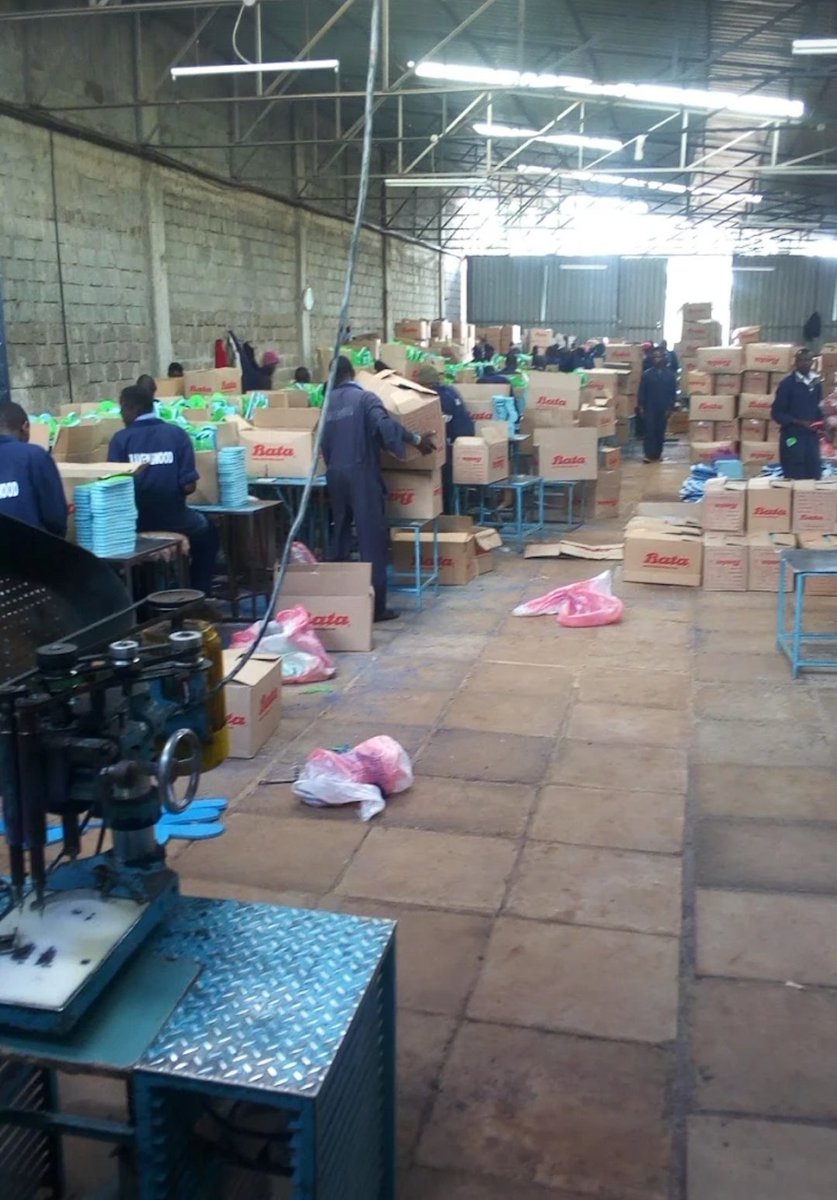
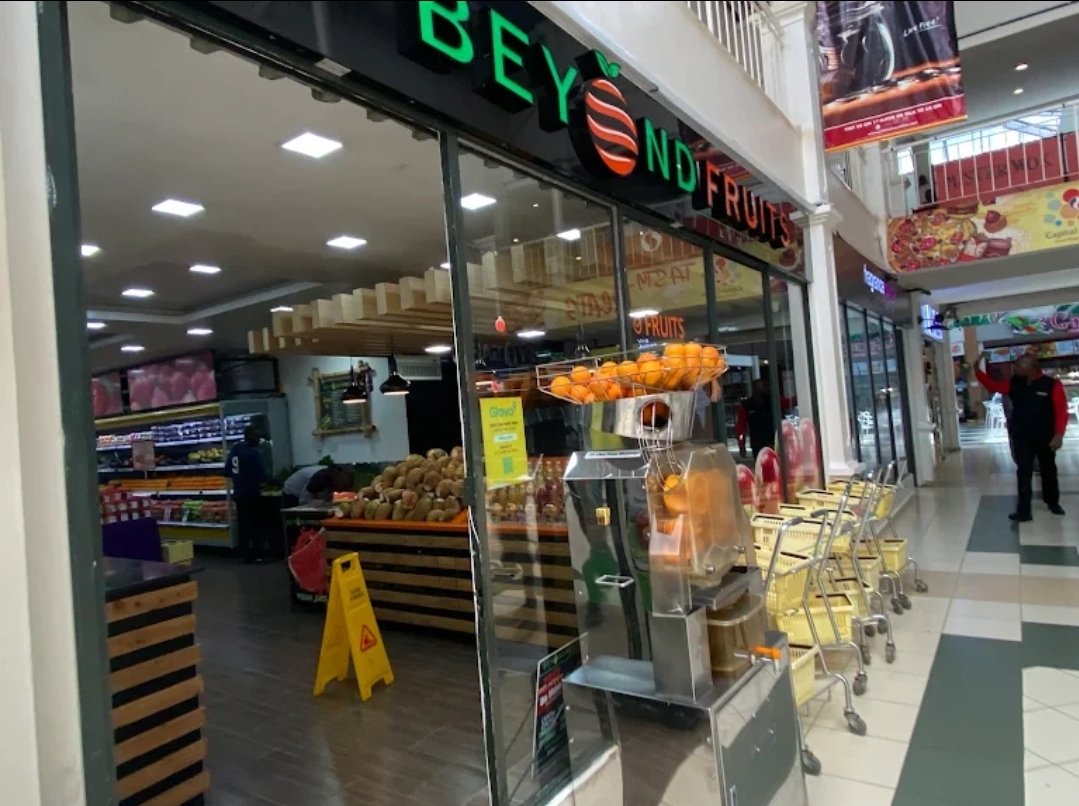
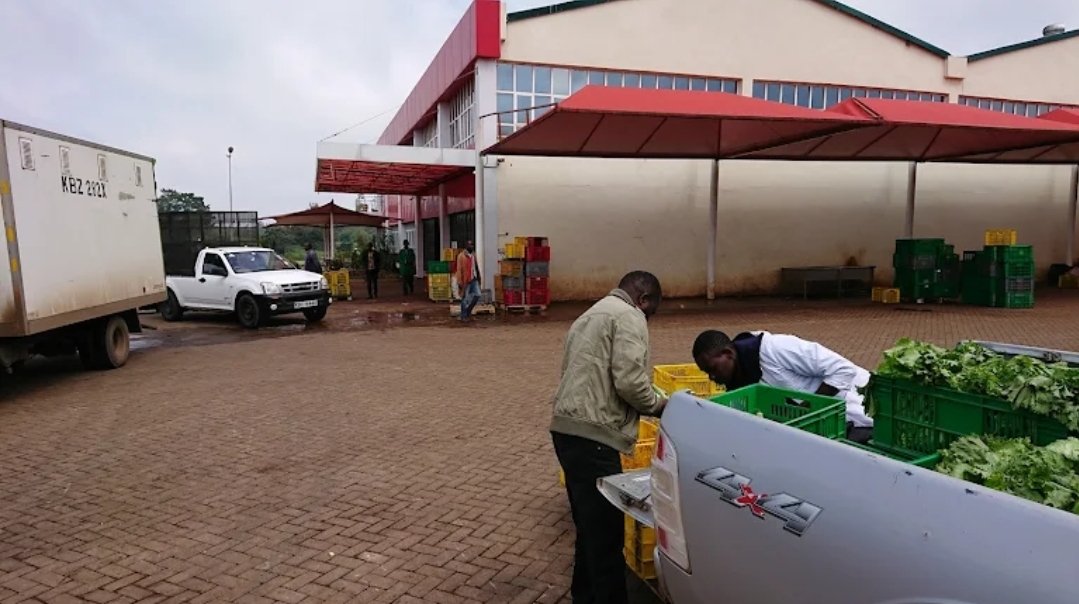
Fruit and Juice [also called Beyond Fruits] has had an advanced facilicity at Limuru for this since early 90s.
-They supplied Nakumatt, Tuskys, naivas etc and still supply till today
-Today they have their own branded outlets called beyond fruits shops 30+ outlets
-They focus on logistics and proper sourcing & distribution across Kenya. They do very little farming mostly of mushrooms and herbs at Ndeiya
-They also import oranges, mangoes, kiwis, berries, and other exotic fruits and have an elaborate cold chain
-Twiga did not get to this scale in volume and throughput
-In 2020, the Entire Fruit and Juici operation was valued at Kes. 1 billion. A PE called Barak was looking at putting in Capital
So Fruiti and Juici, highly profitable and efficient with a visible business model is worth 1 billion. Twiga spent kes. 25 billion trying to become Fruit and Juici. They should have just spent 5billipn to buy off Fruot and Juice and keep Change. Call Paresh Shah for a chat
Agreed. Twiga over-estimated market size, no one verified this. They then over-invested in infrastructure and technology to serve a market that simply wasn’t big enough to support the economics. The irony is that the hard part - sourcing, cold chain, distribution and volume - already existed in businesses like Fruit & Juice & even Zucchini. The better strategy may have been to buy the infrastructure, preserve the cash-generating business, and build the tech layer on top.
They failed at strategic level, and tried to then validate that by building more and more white elephants.
FMCG looks simple from outside. It isn't.
Margins are thin, competition is brutal, logistics are expensive.
Almost every region has its own 'boss' , a traditional FMCG company that knows the customers, routes, prices and competition inside out.
Folks, startups in Kenya have raised more than Kes. 62 billion to solve one problem -Last mile distribution.
After the burn, they failed:
8 tech-enabled startups set out to solve the exact same problem in Kenya: last-mile distribution to informal retailers and consumers.
Here is the capital breakdown:
• Wasoko: $152M (KES 19.8B)
• Copia Global: $123M (KES 16.0B)
• Twiga Foods: $110M (KES 14.3B)
• MarketForce: $42.5M (KES 5.5B)
• Sendy: $29M (KES 3.8B)
• Kyosk: $12M+ (KES 1.6B)
• Duhqa: $2.15M (KES 280M)
• Kune Food: $1M (~KES 130M)
Total Raised: $471.6 Million (KES 61.3 Billion)
So, how did nearly $500M evaporate across mega-funded giants and nimble early-stage plays alike?
1️⃣ Razor-Thin Margins: FMCG distribution runs on 3–5% margins. Digitizing an order form doesn't eliminate the physical cost of moving rice, flour, or meals over congested roads.
2️⃣ Subsidized Growth: VC cash was burned to subsidize delivery costs and undercut traditional wholesalers instead of fixing core unit economics.
3️⃣ Zero Loyalty: Dukas buy purely on price—down to the shilling. Retailers simply jumped between platforms depending on who was offering the biggest subsidy that week.
4️⃣ The BNPL Trap: Extending uncollateralized trade credit to informal kiosks led to massive default rates that wiped out profits.
5️⃣ The VC Winter: When global interest rates spiked and VC funding dried up, high-burn business models collapsed like a house of cards.
As MarketForce CEO Tesh Mbaabu @teshmbaabu candidly reflected after shutting down RejaReja:
"Under perfect competition, almost no company makes an economic profit in the long run... Everybody loses when the war isn't one worth fighting."
Published after he stepped down from Twiga, by Peter Njinjo @njonjo2012 this piece takes a broader and more personal look at the fallout of macro shocks, strategy disagreements on the board, public scrutiny, and starting over:
"In early 2022, the ground shifted. The U.S. rapidly increased interest rates, global capital retreated, and business models built for patient growth were suddenly exposed. Inside Twiga, disagreements about strategy and survival intensified. I believed the company needed to evolve decisively. Others disagreed... Eventually, I stepped away to pursue a different path..." "When external markers fall away—title, status, validation—you are forced to ask harder questions. What actually matters?
Whether it was a $150M giant or a $1M pre-seed attempt, this isn't just a story about failed startups—it's a masterclass in capital efficiency, the harsh realities of informal retail, and what happens when Silicon Valley playbooks collide with African markets.
I’m dropping a deep-dive breakdown uncovering the full story, the operational debacles, and the crucial lessons for the next generation of African founders.
Stay tuned. Full piece drops soon! 🧵👇
How to destroy a beloved brand.
Step 1: Put a soulless, data-driven consultant who has never even seen a basketball court or a running track up close in charge.
Step 2: He goes direct! And increase profits while destroying the retail distribution system and betraying a multitude of 20-year-long partnerships.
Step 3: Motivated and innovative competitors like On Running and Hoka rush to fill the distribution gap Nike left by abandoning its trusted partners.
Step 4: Not satisfied, he fires all the stupid creative people who can't prove any of their ideas work with hard data. What could they possibly know?
Step 5: Celebrate when milking the brand for every last cent works for about 18 months, even though the data quickly show a disaster is looming.
Step 6: OMG? Wut?
Step 7: Fire the old CEO and bring in a new one who's been with the brand since day one. He tries his best, but just too much damage was done.
Step 8: Get delisted... Go down in history as the greatest example of data-driven idiots destroying one of the most successful creative brands of all time.
The end.
Sending lots of love to the Apple community on my last day as CEO. My title changes tomorrow, but the love I have for the Apple community never will. Thank you for being a constant source of inspiration. My gratitude is endless, and I’m excited for the next chapter!