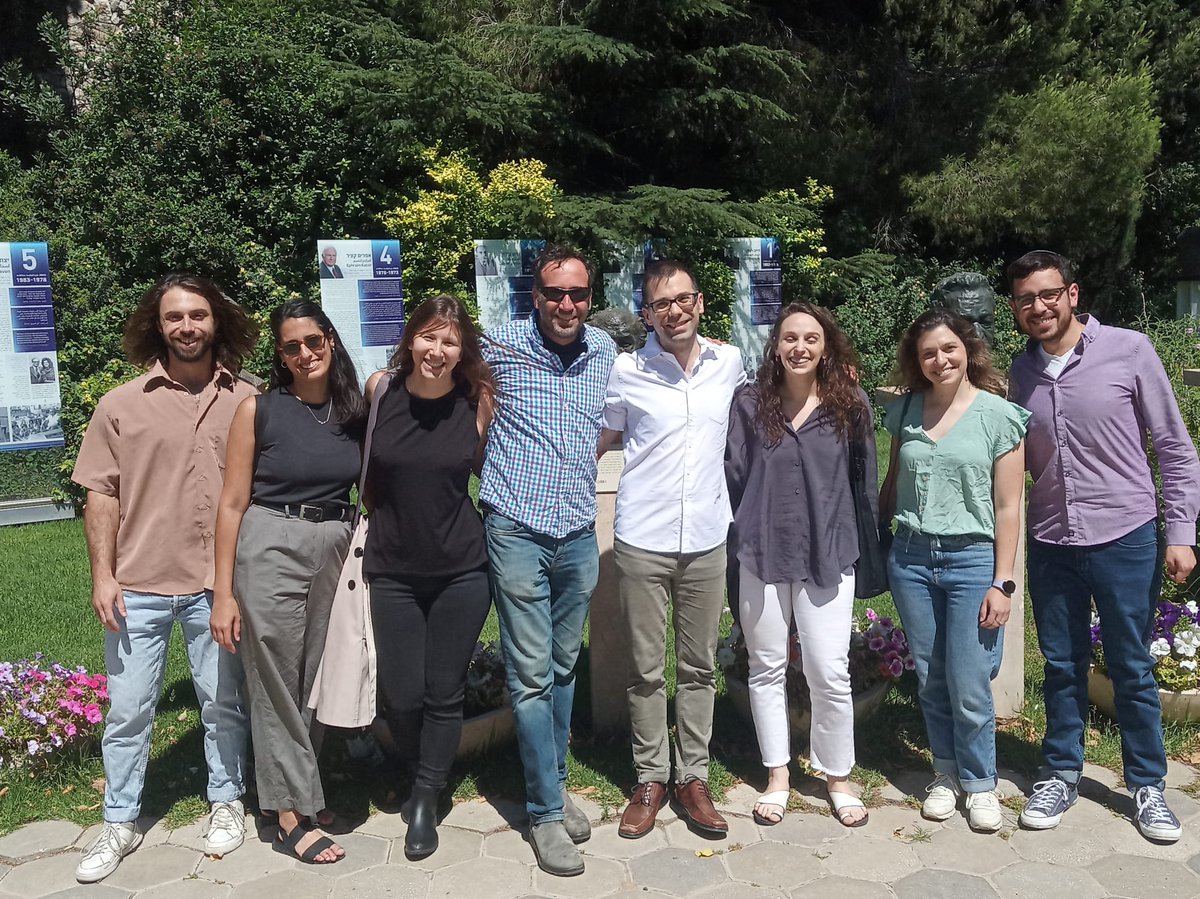
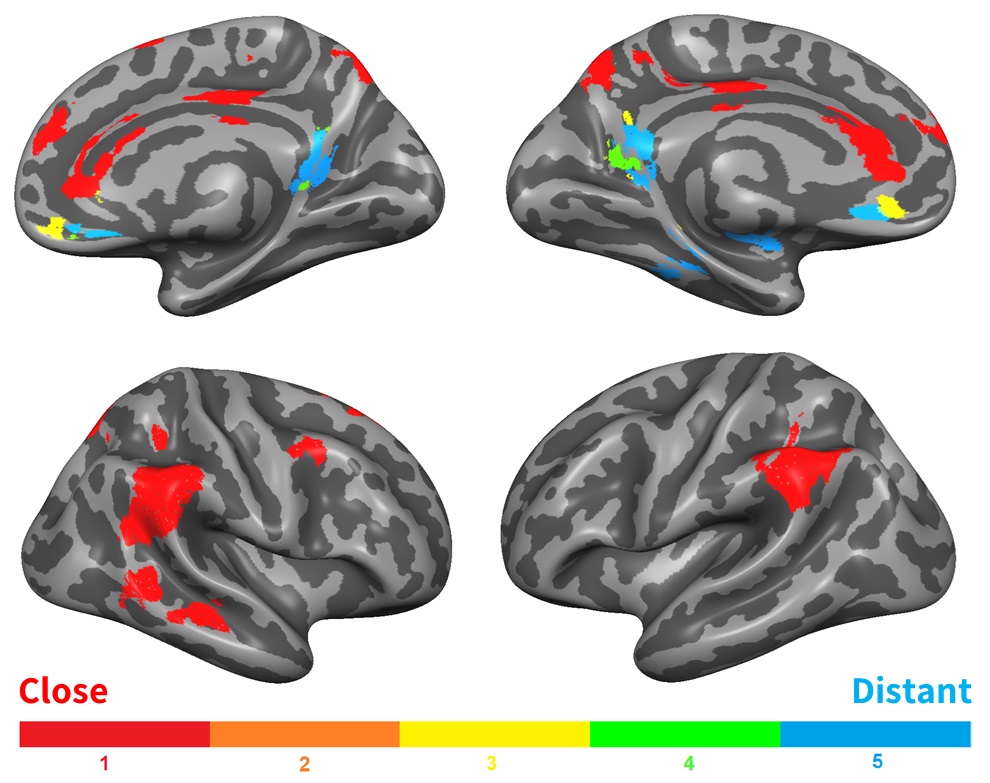
Exciting news from our lab! Check out our latest paper 'Processing of social closeness in the human brain', now published in @CommsBio. Congrats to @MosheRoseman, @ShaharArzy, and our amazing collaborator @RobinDunbar10! https://t.co/Ma6zNEx8Nv
Thrilled to share our latest publication in @CommsBio: 'Processing of social closeness in the human brain', where we show how brain processing of very close friends differs from others. Huge thanks to the legendary @RobinDunbar10 and brilliant @ShaharArzy! https://t.co/FVJpiJmZJ6
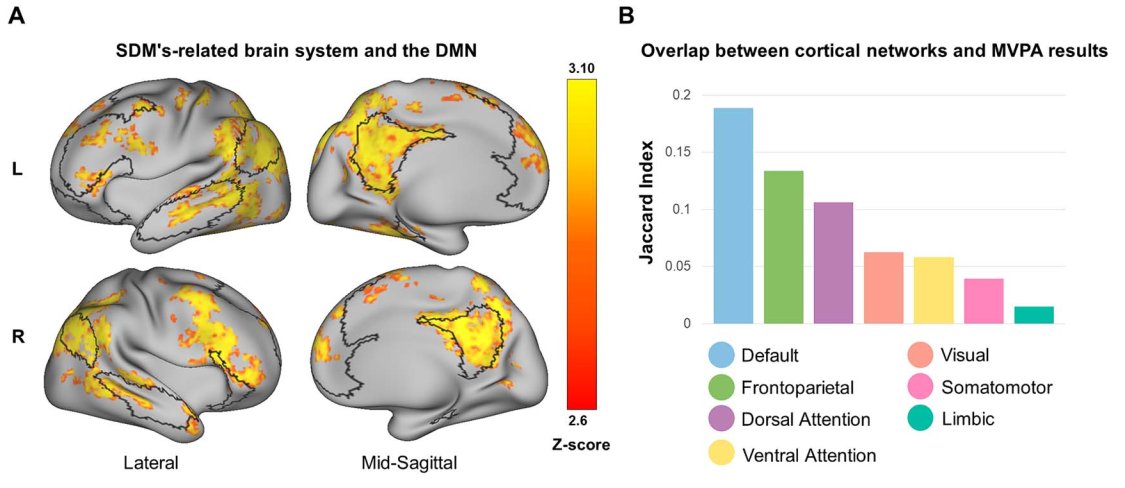
📢New Publication Alert! While we naturally consider time as the fourth dimension on top of the three spatial dimensions, our recent study explores the multi-dimensional processing of time by the grid-cell-related brain system using fMRI.
Read here: https://t.co/xFcPnDJKXg
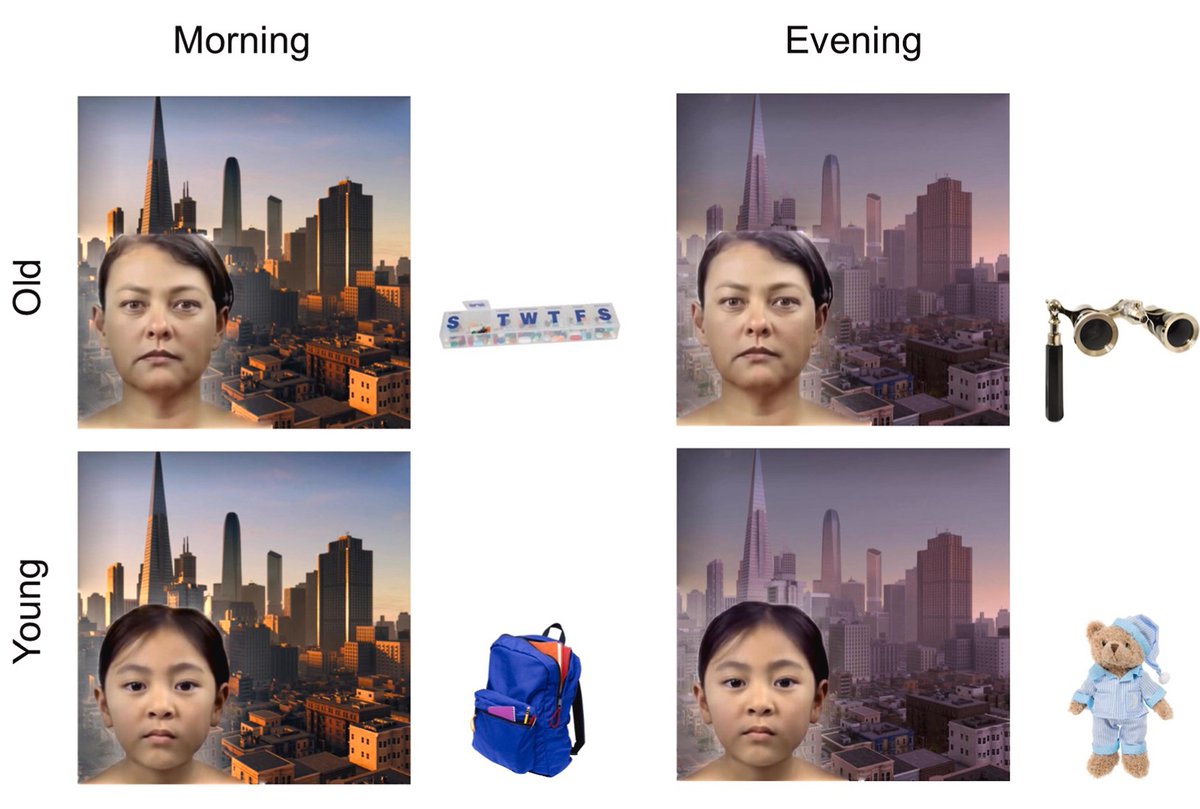
📢Excited to announce our new publication in Cerebral Cortex! This fMRI study by Rotem Monsa, @Amnon_Dafni, and @ShaharArzy, delves into the neural basis of self-defining memories and highlight the role of self-reflection in them. Read more: https://t.co/ybecYihyE0
We are happy to report that our latest paper, 'Evidence for grid-cell-like activity in the time domain', has just been published in Neuropsychologia! Congrats to the talented researchers Greg, @Amnon_Dafni, Rotem & @ShaharArzy. Find the paper here: https://t.co/EHORe0XiJA
Happy to share that Cerebral Cortex just published our new paper uncovering the brain's spatial orientation system based on lesions. Congrats @MosheRoseman and Uri! Thanks to our amazing collaborators @IsaiahNeurology@neuromichael@foxmdphd @hugospiers
https://t.co/yq6WFhqMnN
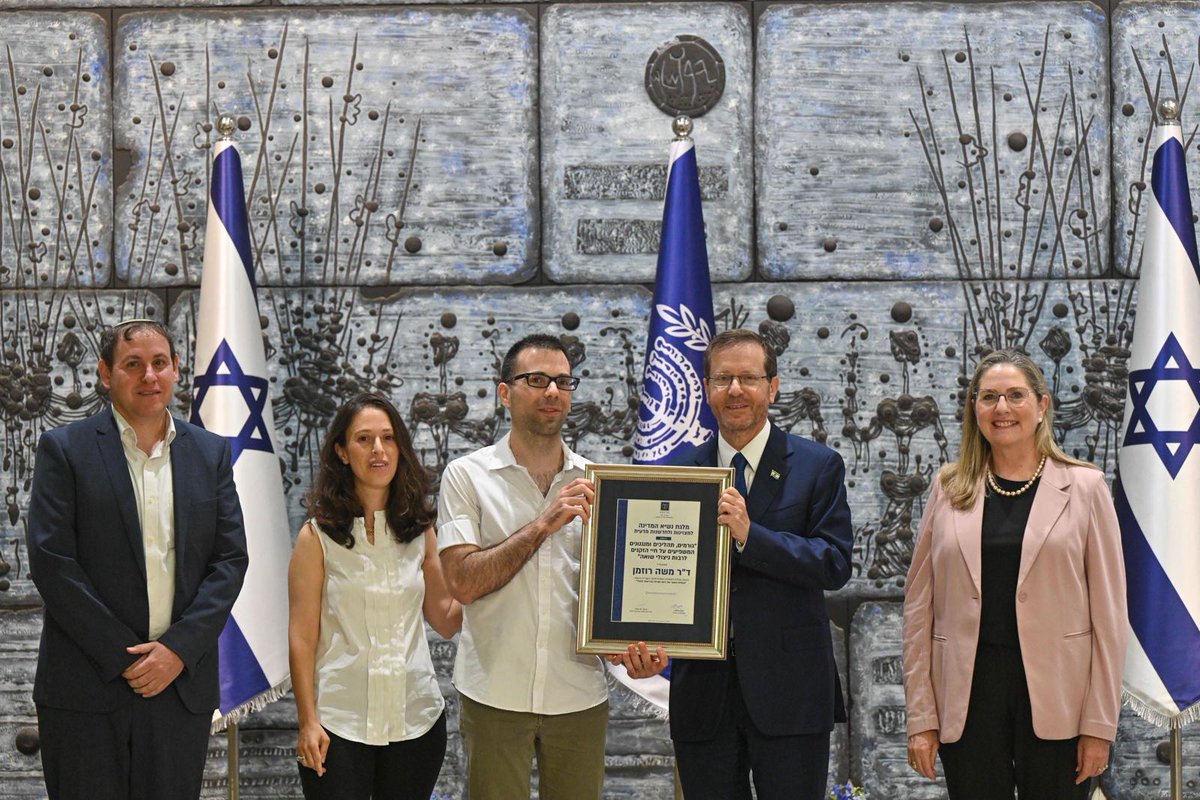
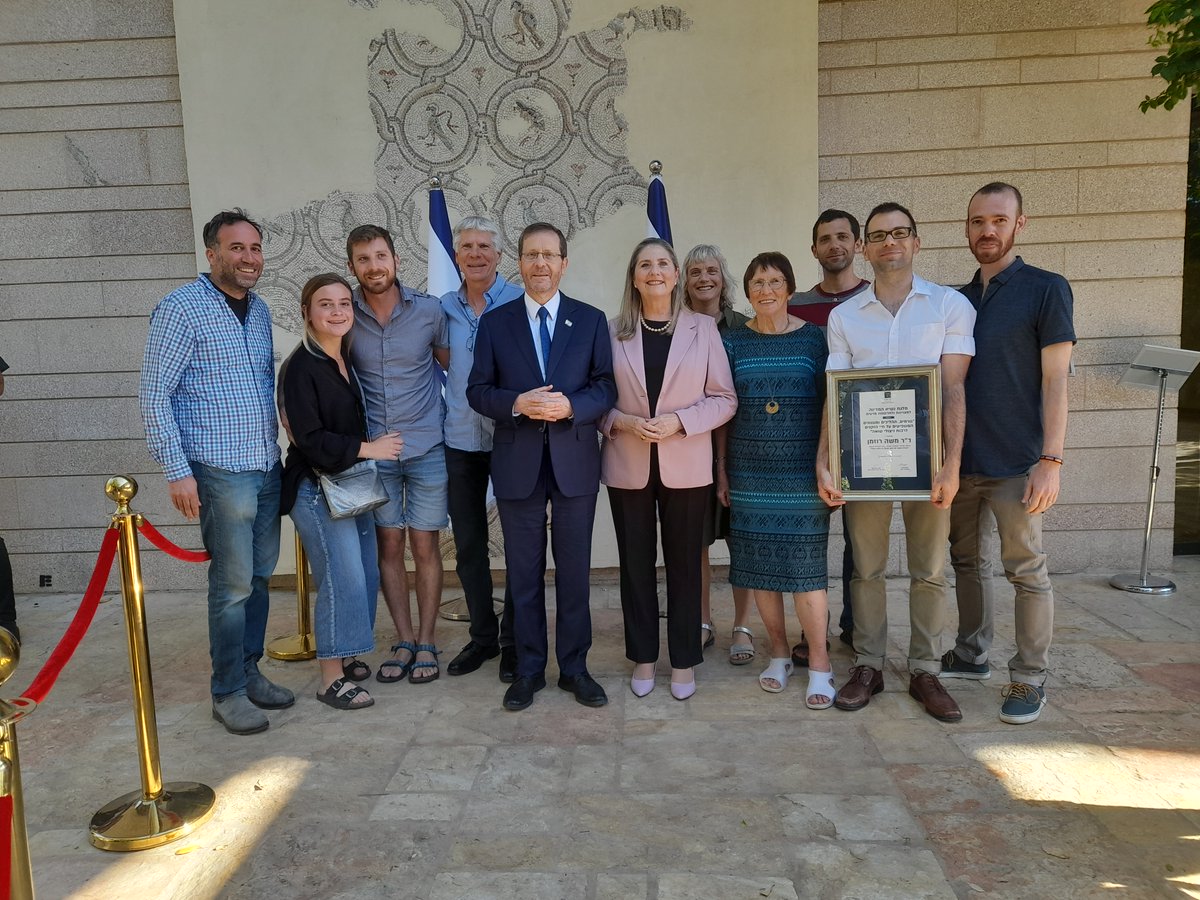
Congratulations to our very own @MosheRoseman on being awarded the prestigious Presidential Scholarship! It's wonderful to witness Israel's commitment to tackling Alzheimer's disease and improving the lives of the elderly.
Honored to have been awarded the Presidential Scholarship for excellence and scientific innovation. I'm grateful to the President, his wife, and the scholarship committee for supporting Alzheimer's research. Thanks to my legendary mentor @ShaharArzy and all @cnplab members!
Honored to have been awarded the Presidential Scholarship for excellence and scientific innovation. I'm grateful to the President, his wife, and the scholarship committee for supporting Alzheimer's research. Thanks to my legendary mentor @ShaharArzy and all @cnplab members!
Super excited to share my first preprint! We used fMRI to examine levels of personal closeness, and found that the majority of our social mind is dedicated to only a few closest relationships. Thanks to my mentor @ShaharArzy and the great @RobinDunbar10 https://t.co/2WHbEc0vWF
🚨New lab paper!!🚨 Just out in @TrendsCognSci, we discuss how oculomotor behaviour potentially informs our understanding of memory and prospection. Led by superstar PhD student Federica Conti!
https://t.co/bXl3Ocehlh
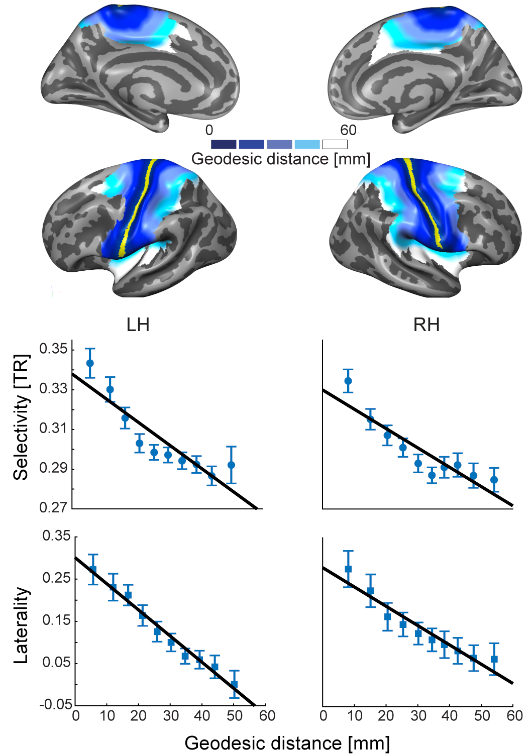
Streams in the cortical visual system are well known, but what about the somatosensory system? @NoamSaadon & @ShaharArzy applied full-body stimulation under fMRI, quantified hierarchy measures and found evidence for 3 somatosensory hierarchical gradients. https://t.co/zGoQps5Jla
New release! The "Cambridge Handbook of the Imagination", edited by Anna Abraham, features an interesting collection of interdisciplinary perspectives. We invite you to read chapter 20 "Imagining and Experiencing the Self on Cognitive Maps" by @ShaharArzy and @Amnon_Dafni
Looking to take concrete steps to recruit, support, & advance underrep'd minoritized scientists? @GregoryRSL@falklab et al. & I pulled together some resources. Caveats: it's biased toward psyc/neuro & is a WIP. Feedback is MOST welcome; please share!
https://t.co/ByX8GLPvHe
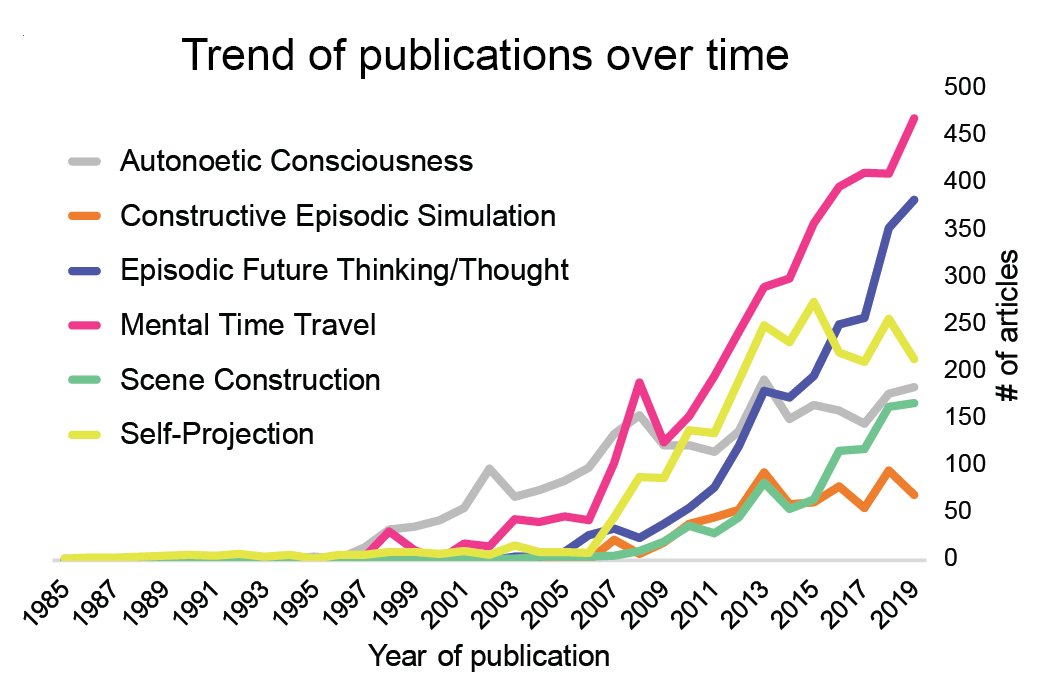
Happy to share with you our new paper by @Amnon_Dafni & @ShaharArzy, “The Radiation of Autonoetic Consciousness in Cognitive Neuroscience: A Functional Neuroanatomy Perspective”, which is now out in Neuropsychologia’s special issue honoring Endel Tulving.
https://t.co/2APdozbzSD
New in @PLOSCompBiol from postdoc Mirko Klukas!
Representing higher-dimensional cognitive variables with grid cells:
If grid cells encode non-spatial cognitive variables, they should be able to represent spaces of dimension greater than two.
(1/5)