"I've met with him in person... I'm an adult. I've made mistakes. We all have things we'd like to do differently... Now is the time he needs more love from the adults in his life than at any point..." - Nate Oats on his conversations with Aden Holloway since his arrest
Brad Stevens said, "This game is about how you act as a teammate. This game is about embracing roles and accepting roles."
Great teams have great teammates.
• They care about each other.
• They commit to the team.
• They own their roles.
How to be a great teammate:
Late to the party, but I resigned as the head coach at PHU, a few weeks ago. It was time for me to step away and take care of my mental health and put me first. I am so grateful to have led an amazing group of young women and led that program to a better future.
If I had a vote it would be between Coach @coachrougier at PHU, Coach Ashlin at Countryside or Coach King at Keswick. All of those teams got better being built from the ground up.
"Practicing hard is a choice. Watching extra film is a choice. Lifting weights, being coachable, and going to class are a choice. Your choices here are going to force me to either play you, or sit you on the bench. You’ll get exactly what you want." (Pat Summitt)
"I can control how hard I play.
This is how I respond to coaching.
This is how I respond to my teammates.
If I focus on that, the other things that come with that are going to come."
Great things happen when you focus on being the best for the team NOT the best on the team.
#JalenBrunson #knicks
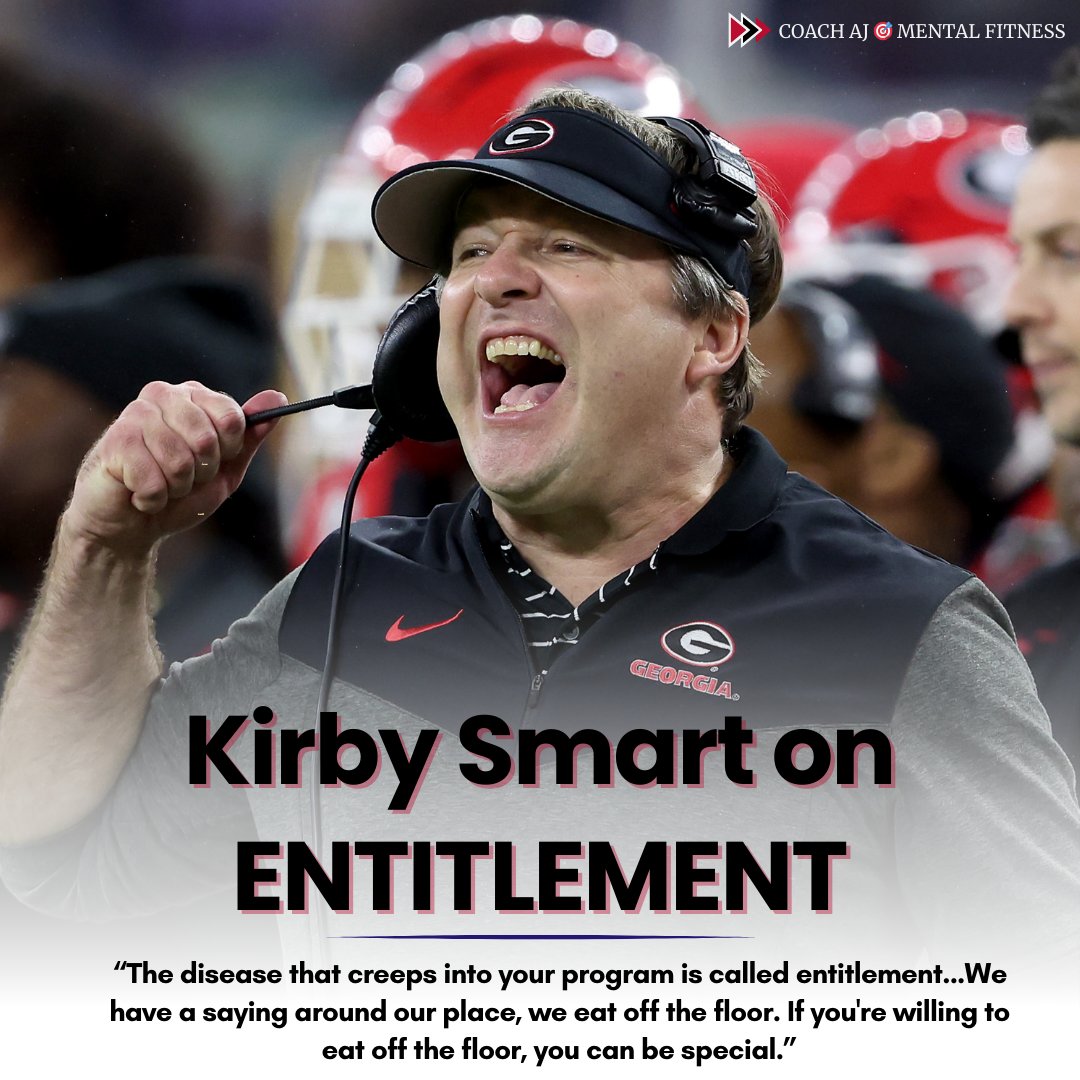
Kirby Smart said, "The disease that creeps into your program is called entitlement...We have a saying around our place, we eat off the floor. If you're willing to eat off the floor, you can be special."
Entitlement is the enemy of hard work.
It's the delusion that you deserve something that you haven't earned.
• Entitlement is the enemy of progress.
• Entitlement means you're lacking in gratitude.
• Entitlement means you're not living with a growth-mindset.
6 Ways to Get Entitlement Out of Your Culture
1. Lead by Example - Leaders should demonstrate humility and a non-entitled attitude. Leading by example is not about your position or title, it's about your behavior. When leaders show they don't consider themselves above others, it sets a tone for the team, discouraging entitlement.
2. Create a Culture of Growth - When you have a mindset of excellence and improvement then the growth will never stop. Encourage a place where learning from failures, continuous self-improvement, and personal development are valued. This promotes humility and helps people understand that effort and learning are key to success, not just inherent talent or privilege.
3. Foster a Culture of Gratitude - Create an environment where gratitude and humility are valued. Encourage people to appreciate what they have and the efforts of others. You can be entitled when you are grateful for every day and every opportunity. This mindset will reduce the feelings of entitlement and promote a more cooperative and appreciative culture.
4. Set Clear Expectations and Accountability - When people know what to expect, they know how to act. Clearly define roles, responsibilities, and goals. When team members know what is expected, they understand that success is a result of meeting these objectives, not just a default outcome.
5. Encourage Service and Empathy - Promote activities that involve serving others or contributing to the team. When people know each other and care for each other, they connect and lack feelings of entitlements. It helps drive collaboration, empathy, and service to the team. People understand the value of contributing, as opposed to expecting things without effort.
6. Regularly Assess and Adjust - Continuously evaluate the team's culture and make adjustments as needed. Regular assessment helps identify entitlement issues early and allows for timely interventions to maintain a healthy, collaborative team environment.
"We don't run from hard work; our kids don't run from work. As long as you don't have entitlement in your program, you got a shot." - Kirby Smart
- - -
Follow @coachajkings for more posts like this!
Winning has a Way.
What are the components of Winning?
Here are 5 of them.
1: Sacrifice ME for WE
This is the beauty of team sports. Winning teams are WE first. It is just that simple. There is a culture of TEAM. Everything is bigger than the individual.
2: Player Leadership
Winning teams always have great player leadership. Why? Because player lead teams win. While there may be one or two people who stick out as leaders, there’s also a sense of collective leadership amongst the team. Teammates are accountable to each other.
3: Culture is Every Day!
Culture WINS. And developing the Culture is the number one job of Coach.
Culture is:
- What you allow
- What you emphasize
- Every Day!
Winning teams have winning cultures.
4: A Winning Mindset
Mindset matters. How you do things matters on winning teams. There are no shortcuts. Everything is competitive. There is a grit and toughness that allows teams to achieve at high-level.
5: Resilience and Toughness
Winning teams have a toughness about them. They never give up. They will fight for each other till the very end. This toughness is ingrained in their culture. It is part of who they are. It becomes a tradition.
_____
Follow me @gregberge for more actionable ideas on Coaching, Leadership, and Personal Growth.
Subscribe to 🏆 Great Teams Better Leaders 123 for free. Become a better coach, leader, and person in under 5 minutes per week. Check profile for link.