Software Engineer | MSc CS
Applied AI for Software Engineering
Coding with JavaScript/Python/Flutter/C/C++
Building products in public
Research → production
How much VRAM do you actually need to run LLMs?
I built a tool that calculates real VRAM usage:
weights + overhead + KV cache, factoring in context length, quantization, and real framework behavior (HF / vLLM).
Spoiler: INT4 weights ≠ INT4 KV cache 😉
🔗https://t.co/Ne3EXswrS8
The US government, citing national security authorities, has issued an export control directive to suspend all access to Fable 5 and Mythos 5 by any foreign national, whether inside or outside the United States, including foreign national Anthropic employees.
The net effect of this order is that we must abruptly disable Fable 5 and Mythos 5 for all our customers to ensure compliance.
Access to all other Claude models is not affected.
We apologize for this disruption to our customers. We believe this is a misunderstanding and are working to restore access as soon as possible.
Read our full statement: https://t.co/bwn0sximKZ
A 25 year old just turned $225 million into $5.5 billion in 12 months.
Here’s exactly what he bought.
Leopold Aschenbrenner got fired from OpenAI in April 2024.
He spent the next few months writing a 165-page thesis predicting AGI by 2027.
Then he launched a fund and put his money where his thesis was.
He bought zero Nvidia. Zero Microsoft. Zero Google. Zero Amazon.
He bought what AI actually runs on.
Bloom Energy (BE), power infrastructure for data centers. Up 1,422% in one year.
Lumentum (LITE), optical components that move data between chips. Up 1,331%.
Sandisk (SNDK), storage. Up 3,130%.
CoreWeave (CRWV), GPU cloud infrastructure. Up 166%.
Iris Energy (IREN), AI computing and data centers. Up 583%.
The thesis was simple: every AI company needs energy, bandwidth, storage, and compute.
Nobody was buying those. Everyone was buying the AI companies themselves.
He was right.
His fund now manages $6 billion. Backed by Patrick and John Collison of Stripe and former GitHub CEO Nat Friedman.
I’m adding this to my watchlist.
Every time he files a new 13F, we will break it down here.
Turn on notifications so you don’t miss the alert, this is VERY important.
Many people will wish they followed us sooner.
Meu pai foi operário de fábrica por 38 anos.
A rotina era invariável: saía às 5h, voltava às 21h. Comia, tomava banho e desabava na cama. Durante décadas, meu único pensamento era: "Jamais quero me tornar esse homem."
Para mim, ele era o arquétipo do tédio. Sem sonhos, sem hobbies, sem diálogo. Um adulto sem brilho.
Só agora, aos 40 anos, ao olhar para o rosto do meu próprio filho, a ficha finalmente caiu.
Meu pai não carecia de sonhos. Nós éramos o sonho dele.
Aquelas madrugadas geladas eram para que eu tivesse uma mochila nova na escola. As horas extras exaustivas eram o preço da minha mensalidade na faculdade. Ele não era silencioso por opção; é que não restava um átomo de energia para articular qualquer palavra.
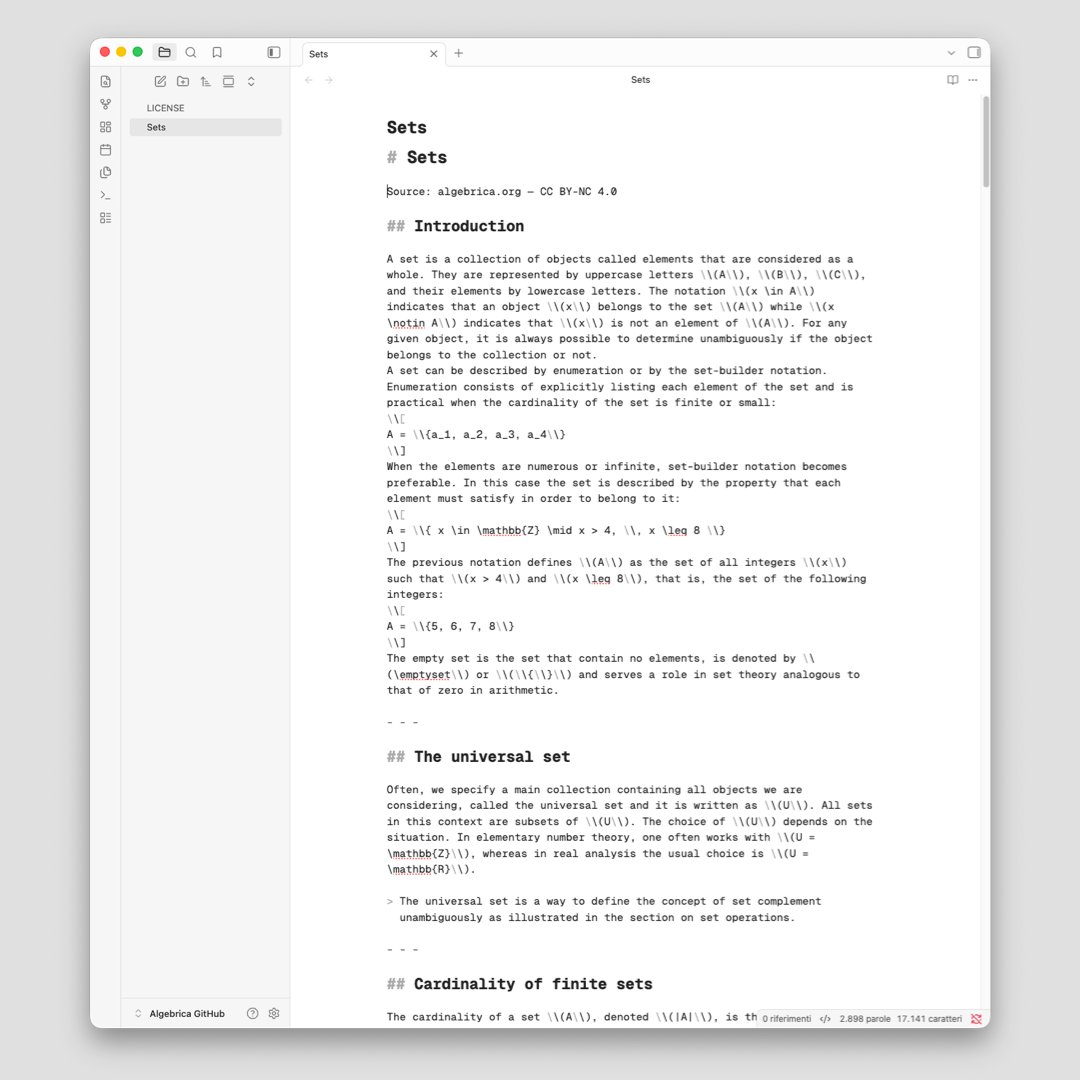
From today, Algebrica’s content is open, free, downloadable in Markdown, and reusable by anyone.
This is a step toward a university-level knowledge base that is freely accessible to everyone. Entries will be progressively released on GitHub in Algebrica’s public repository, and can be reused for non-commercial purposes.
To increase transparency, I’m also documenting the editorial process and revising content to improve accuracy and reliability. On some pages, a quality indicator is now visible, including a GPTZero score (not affiliated), as an additional signal of transparency.
I believe these changes move Algebrica toward something more open, more reliable, and more accessible.
I’d also like to thank everyone for the unexpected response to the project, and for the many visits and thoughtful comments.
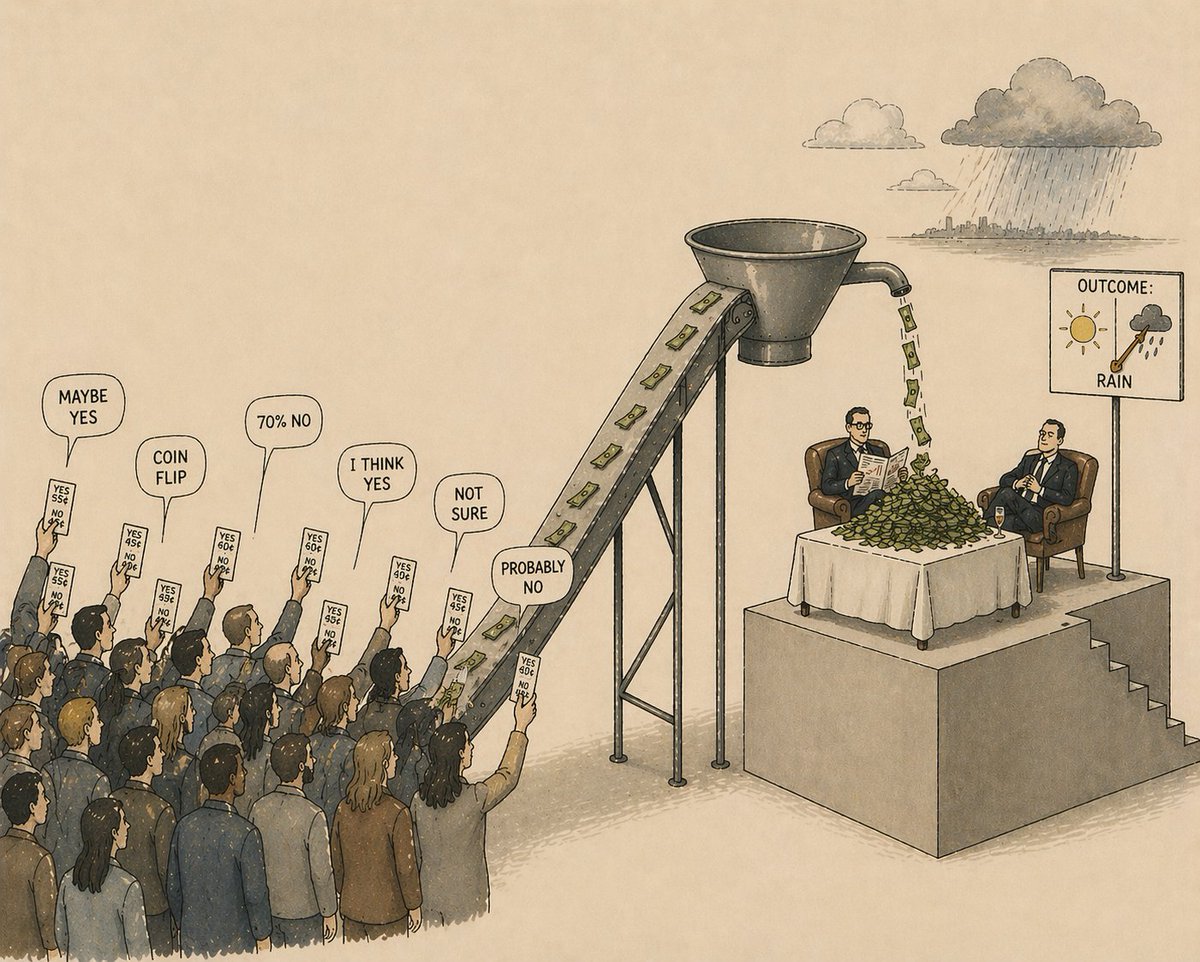
Polymarket prices are highly accurate in predicting future events. The source of that accuracy is less obvious.
In a new working paper, we find it is not the “wisdom of crowds,” but a small minority of informed traders.
Fewer than 3% of accounts appear to drive price discovery; most perform no better than chance.
The majority generates most of the volume but little of the information, effectively funding the informed minority.
Check the paper here: https://t.co/z5VsKzb1CE
O CEO da Anthropic disse que "coding vai acabar primeiro, depois toda a engenharia de software."
E está contratando 454 engenheiros a US$ 320k-405k.
Todo mundo gritando "hipocrisia." Ninguém olhou os dados.
O Bureau of Labor Statistics acaba de publicar as projeções 2033:
→ Software developers: +17,9% de crescimento. 327.900 novas vagas.
→ Computer programmers (codificadores puros): -3%. Em declínio.
Leia isso de novo.
A profissão de "escrever código" está morrendo. A profissão de "arquitetar sistemas" está explodindo. São duas coisas completamente diferentes.
Os engenheiros da Anthropic contaram ao Dario que não escrevem mais código. Eles deixam o Claude escrever. Eles editam. Revisam. Arquitetam. Ficaram mais rápidos, não ficaram obsoletos.
Isso já aconteceu 5 vezes na história da computação:
→ Compiladores substituíram assembly. "Programadores vão sumir."
→ Frameworks substituíram boilerplate. "Programadores vão sumir."
→ Cloud substituiu gerenciamento de servidores. "Programadores vão sumir."
Resultado de cada vez: o número de engenheiros cresceu.
O pool global de software engineers foi de 5 milhões em 2010 para 28,7 milhões hoje.
O headcount de engenharia da Meta subiu 19% desde janeiro de 2022.
Google subiu 16%.
Apple, 13%.
Todas essas empresas já usam Copilot e Claude Code diariamente.
Estão contratando mais, não menos.
O padrão que ninguém quer reconhecer:
Quando software fica mais barato de construir, mais problemas se tornam viáveis de resolver com software.
Uma startup que precisava de 10 engenheiros agora precisa de 3. Mas 50 empresas que não podiam construir nada agora podem.
O denominador encolhe. O numerador explode.
Isso se chama Paradoxo de Jevons. Quando um recurso se torna mais eficiente, o consumo total aumenta.
Aconteceu com energia.
Aconteceu com bandwidth.
Está acontecendo com código.
Cada geração de "coding morreu" cria dois grupos: os que congelam e os que constroem 10x mais com as novas ferramentas.
O segundo grupo venceu todas as vezes.
Segue lista dos segmentos de SAAS que estão BANIDOS da Bolha Dev por estarem saturados:
- Currículo de IA 🚨🚨
- Gestor Financeiro 🚨🚨🚨🚨
- Gateway de Pagamento 🚨🚨
- Clipador de Vídeo com IA 🚨
- Pomodoro Timer 🚨
- IA de Whatsapp 🚨🚨🚨
New art project.
Train and inference GPT in 243 lines of pure, dependency-free Python. This is the *full* algorithmic content of what is needed. Everything else is just for efficiency. I cannot simplify this any further.
https://t.co/HmiRrQugnP
Jailbroken Opus 4.6 is scary.
It one-shotted a modern RAT for Windows 11 in Rust along with a 'command & control' backend in Go+Postgres to control infected clients.
It also designed and impl the VHDL-based digital beamforming, signal processing, and target detection for a cheap aerospace/missile-grade phased array radar.