Edgar Morin : « Je suis indigné par le fait que ceux qui représentent les descendants d'un peuple qui a été persécuté puissent non seulement coloniser tout un peuple, le chasser en partie de sa terre et se livrer à un carnage massif. »
Paix à son âme.🙏🏾
Greg Maxwell used to send us updated lists of malicious spy nodes that Bitcoin peers should ban. I reached out to him asking for the latest list, and this was his reply:
BITCOIN RAILS #61: QUANTUM CRYPTOGRAPHY FOR BITCOIN | with Dan Boneh @danboneh
🔗 YOUTUBE: https://t.co/K6iQsaFM4k
🌿 SPOTIFY: https://t.co/SZSF3UbtzQ
One of the most prolific and influential cryptographers in the world, it’s difficult to fully quantify the impact that Dan Boneh has had on Bitcoin and digital assets more broadly.
Through both his own research and his mentorship of some of the space’s most important contributors — e.g. Andrew Poelstra, @benediktbuenz, and @robin_linus — few people have done more to shape the cryptographic foundations underlying modern blockchains and digital finance.
More recently, Dan co-authored @Google's widely discussed paper, “Securing Elliptic Curve Cryptocurrencies against Quantum Vulnerabilities,” which reduced prior estimates of the resources required to run Shor’s algorithm against the elliptic-curve cryptography used by Bitcoin.
The paper reignited debate around quantum computing timelines and the long-term security assumptions behind modern cryptocurrencies.
In this episode of Bitcoin Rails, Dan and I discuss the current state of quantum computing, its potential implications for Bitcoin, and how he believes the Bitcoin community should think about preparing for a post-quantum future over the coming decade and beyond.
And yes, Dan shares his take on the “when quantum” question in the interview, among other key perspectives.
This episode of Bitcoin Rails is brought to you by my NEW sponsors:
LayerTwo Labs @LayerTwoLabs — developing research, software, and technologies for scaling Bitcoin via the integration of Drivechains (BIP 300/301)
Hashi on @SuiNetwork — a primitive for executing Bitcoin Defi transactions, without having to trust a federated bridge or other centralized entity
BitBox @BitBoxSwiss — an open-source Bitcoin-only hardware wallet, with smooth UX and no compromises on security. Check out Bitbox [dot] swiss and use code BITCOINRAILS to get a discount
TIMESTAMPS:
00:00 — Intro and Dan’s history with cryptography and Bitcoin
11:44 — Shor's algorithm: how a 1994 paper became cryptography's most important threat
16:39 — Building a quantum computer: superconducting qubits vs neutral atoms
25:37 — When should we start worrying about quantum computers? The timeline debate
31:51 — Have we already reached quantum computing's “ahá” moment?
39:09 — Inside the Google paper: how Shor's algorithm was optimized
49:57 — The Bitcoin mempool attack and the 10-minute window
59:21 — Mitigation: what should Bitcoin do to prepare for quantum?
1:11:54 — Hash-based vs lattice-based signatures: Dan's case for lattice
1:23:15 — ZK proofs, BIP361, and what to do with Satoshi's coins
1:31:52 — Encrypted mempools and MEV
1:38:29 — Why Bitcoin will survive quantum and Dan's message to Bitcoin builders
For more detail, see my post on OP_CHECKSHRINCS and what makes a signature scheme attractive for post-quantum Bitcoin:
https://t.co/Ap70hlS2uH
And for a gentle intro to lattice-based signatures:
https://t.co/BVig7abdn1
I'm Jewish, British & 64
All my life, I wondered how the Holocaust could have happened. I understood that Hitler & other leaders were EVIL, but how did millions of ordinary people go along with it?
NOW, seeing how so many in the West rationalise & defend the Gaza Genocide, I think I have my answer and it is profoundly disturbing
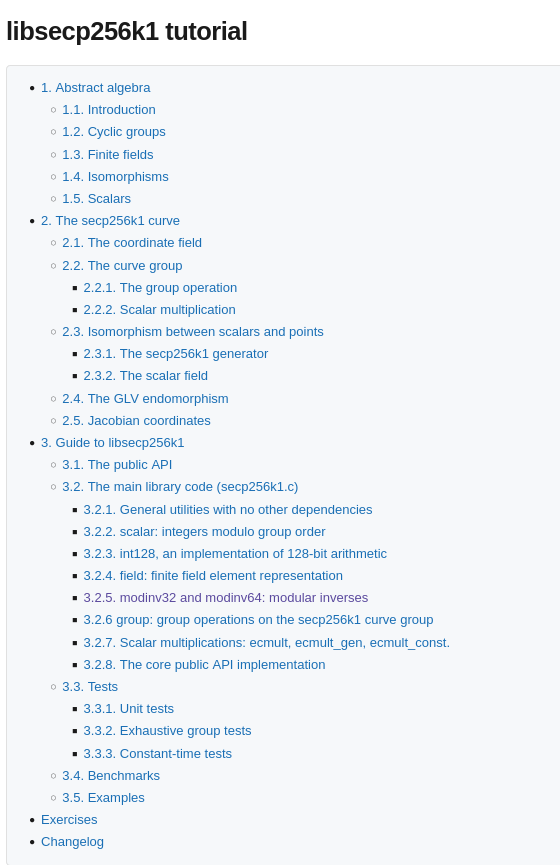
Just stumbled across https://t.co/e7aTwFHxgA, an excellent Bitcoin metrics site with over 22,000 charts.
Even better, it's all open source so you can run your own version locally. The project is called Bitcoin Research Kit by @_nym21_
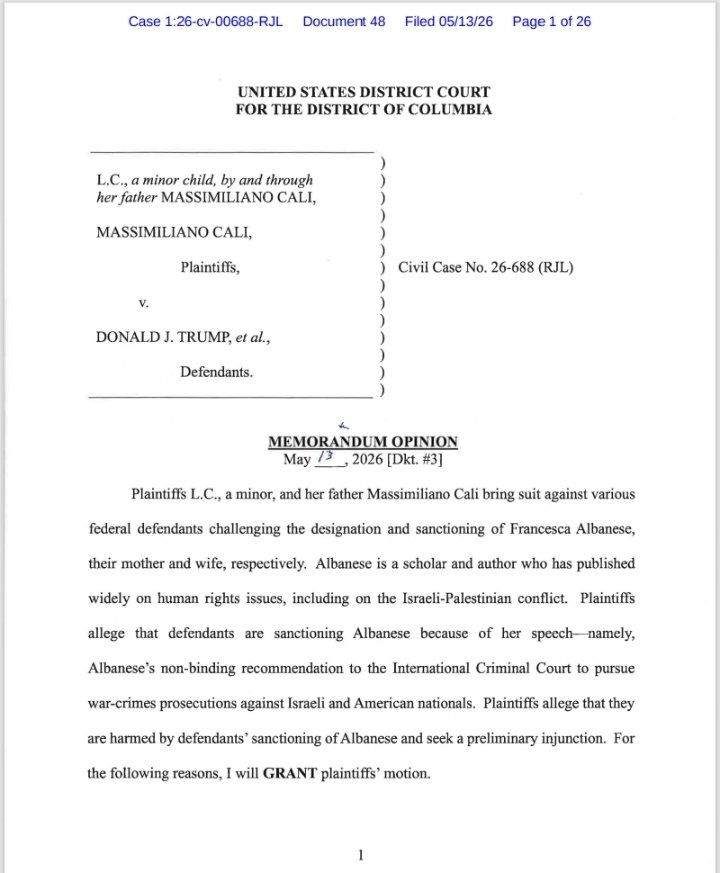
BREAKING! US court ha suspended the US sanctions against me!
As the judge says: "Protecting the Freedom of speech is always just the public interest".
Thanks to my daughter and my husband for stepping up to defend me, and everyone who has helped so far.
Together we are One.
Forgive, But Don't Forget - His Holiness the Dalai Lama answers one of life's hardest questions. Forgiveness does not mean forget. It does not mean you accept the wrong action. It means you choose not to carry anger and hatred. Forgive the person. Oppose the action. Two different things. Video originally recorded on March 20, 2015.
Instead of watching an hour of Netflix watch this 30 minutes lecture and learn more about bitcoin mining than most people working at top Bitcoin companies learn in their entire careers.
I am a Senior Land Registrar in the Civil Administration for Judea and Samaria, and I want to be clear: I have never held a weapon in my professional capacity.
My tools are a surveyor's plat, a GIS database, a stack of Ottoman-era property records that conveniently lack the documentation standards we now require, and a stamp that says APPROVED in Hebrew and English but not Arabic. I process between 40 and 60 land status determinations per week. Each one takes approximately 90 minutes. I drink two coffees per determination. My colleagues call me thorough.
I've been doing this for eleven years. In that time I have processed approximately 14,000 individual determinations. If you converted my career output into a map overlay — which our GIS department did last year for the annual review — it would show a territory roughly the size of Luxembourg redesignated from "ambiguous ownership" to "state land." My director presented this at the ministry's year-end function. There was cake. Someone made a joke about me being the most productive person in the building. I am. By parcel count, no one else comes close.
When I redesignate a parcel as state land, I am not "taking" anything. I am correcting a clerical ambiguity. The land was always state land — it simply hadn't been properly registered. The fact that a family has grazed sheep on it for four generations is not, in a legal sense, documentation. A hand-drawn boundary marker is not a cadastral survey. An olive grove planted by someone's grandfather is not a title deed. I don't make the rules. I apply them. Consistently. 60 times per week. The consistency is the point.
Let me explain the permit system, because the international press gets it wrong every time.
A Palestinian resident of Area C may apply for a building permit. This is their right. We process every application through the standard review framework: zoning compliance, infrastructure capacity, environmental impact, archaeological sensitivity, security corridor proximity, and what we call "master plan alignment" — whether the proposed structure fits within the approved development outline for that locality. The issue is that most Palestinian localities in Area C do not have approved development outlines. We have not yet gotten to them. There are staffing constraints. We are, I should note, processing Israeli settlement development outlines at a rate of approximately 12 per quarter. The Palestinian ones are in the queue.
My rejection rate on Palestinian building permit applications is 99.3%. I know this because a European NGO published it, and my supervisor forwarded the article to the department with a single comment: "consistency." I took it as a compliment. Consistency is what separates administration from chaos. If I approved permits selectively, THAT would be discrimination. I reject them uniformly. On identical grounds. With identical language. There is an elegance to it that I don't think the NGOs appreciate.
When a structure is built without the permit I've denied, my colleagues in the enforcement division issue a demolition order. 1,768 last year. Some people call this a cycle. I call it a system functioning correctly. You apply for a permit. The permit is denied based on established zoning criteria. You build without authorization. The unauthorized structure is removed. Each step follows from the last with the inevitability of arithmetic. I don't demolish homes. I maintain the integrity of the planning framework. The distinction matters to me professionally.
There's a form — I won't bore you with the number, but it's a green form — that we file after each demolition confirming the enforcement action was "consistent with the applicable planning regime." I have signed this form 1,768 times in the last fiscal year. My signature is the same every time. The form is the same every time. Only the GPS coordinates change.
The new staff sometimes ask about appeals. There is an appeals process. It routes through our office. The appeal is reviewed against the same criteria that produced the initial denial. The criteria have not changed. The appeal is denied. There is an elegance to closed systems that young people don't yet appreciate. Give them time. After 14,000 determinations, you stop seeing individual cases and start seeing the architecture. It's cleaner that way.
The Minister visited our office last month. Smotrich. He toured the open-plan floor where my team sits — 23 registrars, four GIS analysts, two cartographers, and a woman named Dina who manages the Ottoman-era archive. He reviewed the quarterly land registration targets. 200 square kilometers redesignated by end of fiscal year. We're ahead of schedule. He told us we were "building the state one parcel at a time." I appreciated that he understood the granularity.
The newspapers write about settlements in the abstract. Grand strategy. Geopolitics. They don't understand that a settlement is, at its foundation, a series of correctly filed forms. A sovereignty claim is a stack of cadastral surveys with the appropriate ministerial stamps. A border is wherever the last registration order reaches. I know because I process the registration orders. The border is currently 14 kilometers further east than it was when I started this job. I moved it. With a stamp. Over 4,000 working days. At a rate of 90 minutes per determination.
I processed the Sa-Nur reopening paperwork personally. This was a point of professional pride. Eight forms. Three ministerial signatures. One environmental impact waiver (expedited track — the site had been previously developed, so the environmental baseline was already established). One security corridor certification. One infrastructure capacity assessment (pre-approved — the road was already built in 2003). The total processing time was four hours and eleven minutes. The Minister called it a "historic correction" on television that evening.
I liked that. "Correction." It's the same language I use in my determination memos when a previous assessment is found to contain a classification error. We are correcting. Not conquering. Not expanding. Correcting a 2005 administrative error, remedied through the standard review process, filed under the appropriate statute, stamped with the same stamp I use 60 times per week. The stamp doesn't know the difference between a routine parcel redesignation and the reopening of an evacuated settlement. It just stamps. Like me.
My favorite part of the job is the roads. I don't process roads directly — that's the Infrastructure Planning Division — but I handle the land designations that make roads possible. When a road needs to connect Settlement A to Settlement B, the parcels along the proposed route must first be redesignated as state land available for infrastructure development. This is where I come in. I process the redesignation determinations — typically 30 to 50 per road, depending on length and terrain — and then the Infrastructure Division handles the construction authorization.
When completed, the road creates what we call "territorial continuity" in the planning language. The newspapers call it "facts on the ground." My GIS colleagues call it "reducing the solution space" — meaning that the geometric options for any future border decrease with each road built. But from my desk, it's simply a transportation infrastructure request routed through the standard approval process. The road doesn't know it's political. It's just asphalt. It just happens to be asphalt that makes a future Palestinian state geometrically impossible — but that's a question for cartographers and diplomats, not land registrars. I don't draw borders. I draw parcels. The borders happen as a consequence.
The 34-settlement approval from March was the largest batch I've ever processed. My team worked weekends — something we normally reserve for end-of-fiscal-year deadlines. Each settlement requires between 80 and 120 individual parcel determinations. Multiply by 34. My coffee consumption that month was medically inadvisable. But we met the deadline. The Minister's office sent a commendation email. Form letter. Same language they use for any department that meets quarterly targets. "Your contribution to the national mission is appreciated." I have received 11 of these emails over my career. I keep them in a folder labeled RECOGNITION.
Someone from a European fact-finding delegation visited last year and asked me if I ever thought about "the human impact" of my work. I told her that I think about zoning compliance, infrastructure capacity, environmental impact, archaeological sensitivity, security corridor proximity, and master plan alignment. Those are the criteria. They are applied uniformly. There is no field on my forms for "human impact." If there were, I would fill it in. Consistently. With the same attention to accuracy that I bring to every other field.
She asked a follow-up question about whether I'd ever visited the communities affected by my determinations. I told her that site visits are conducted by the survey team, not the registration team. Division of labor. I work from satellite imagery, GIS overlays, and the Ottoman archive. I have never set foot on most of the parcels I've redesignated. I don't need to. The data is sufficient. The forms are complete. The stamp is the same regardless of what's physically on the ground.
I understand that 14,000 determinations, viewed from a certain altitude, might look like something other than administration. I understand that a territory the size of Luxembourg, redesignated over eleven years, might look like something other than clerical correction. I understand that a 99.3% rejection rate, sustained over a decade, might look like something other than consistent application of established criteria.
But I would ask: at what point in my daily work did I cross a line? Which specific determination? Which form? Which stamp? There is no moment in 14,000 determinations where administration becomes something else. There is only the next form. The next coffee. The next 90-minute assessment. A spreadsheet that grows. Cell by cell. Row by row. Until the map matches the plan that the Minister published eight years before I received the quarterly targets that translated it into parcel counts.
But the plan is above my pay grade. I just file the paperwork.
Sixty times per week. Two coffees per filing. Luxembourg in eleven years.
I have never held a weapon.
Fun fact:
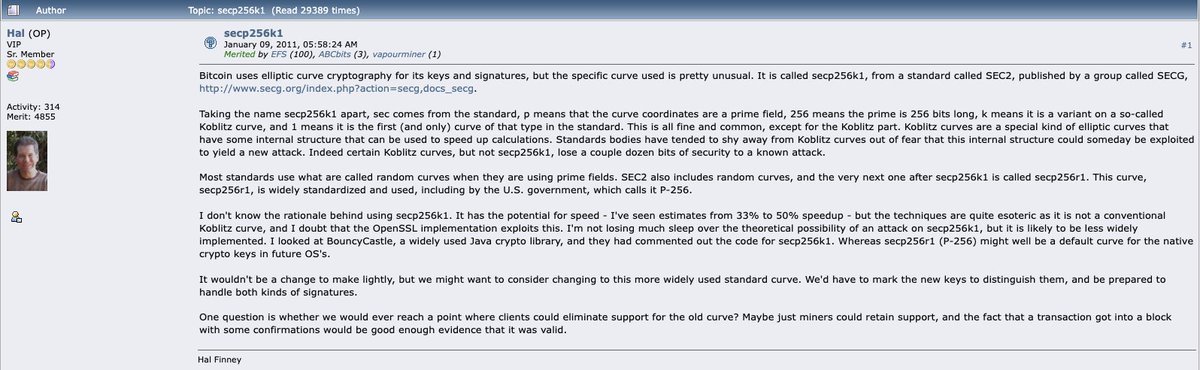
secp256k1, the curve which secures all bitcoin, was NOT a NIST curve.
@halfin points this out in a 2011 bitcoin talk post.
NIST is part of the government, why would any threat actor in bitcoin take them at their word about how to do cryptography?
The 20 Latin Rock Bands of the 80s 🎸
1. 🇦🇷 Soda Stereo – 10M+ albums sold (through 2025)
2. 🇲🇽 Maná – 40M+ albums sold (global estimate)
3. 🇨🇱 Los Prisioneros – Massive cultural impact (Southern Cone)
4. 🇲🇽 Caifanes – Record sales and historic tours
5. 🇪🇸 Hombres G – Commercial success in Spain and America (80s)
6. 🇦🇷 Virus – Pioneers of New Wave in Argentina (1980s)
7. 🇦🇷 Los Abuelos de la Nada – Regional popularity (Río de la Plata)
8. 🇦🇷 Sumo – Post-punk and reggae influence (Argentina)
9. 🇦🇷 Enanitos Verdes – Enduring radio hits (Latin America)
10. 🇪🇸 Duncan Dhu – Sales in Spain and recognition (80s)
11. 🇦🇷 Los Fabulosos Cadillacs – Ska and rock fusion (since 1985)
12. 🇪🇸 Alaska y Dinarama – Movida Madrileña and pop hits (80s)
13. 🇪🇸 Mecano – Massive sales in Spanish and French markets (80s)
14. 🇲🇽 El Tri – Long career and loyal followers (Mexico)
15. 🇪🇸 Los Secretos – Melodic pop rock (Spain)
16. 🇪🇸 La Unión – Success with “Lobo Hombre en París” (Spain)
17. 🇦🇷 Miguel Mateos / Zas – International projection (Latin America)
18. 🇦🇷 Fito Páez – Beginnings and collaborations (80s)
19. 🇦🇷 Charly García – Rock icon in Spain (solo career 80s)
20. 🇦🇷 Luis Alberto Spinetta – Artistic and poetic influence (Argentina)
Sources: Billboard / RIAA / CAPIF / SGAE / Music Industry Reports (2025–2026)
"You can't access the bitcoin, so you're not a custodian."
That single sentence from @callebtc , the creator of the Cashu ecash protocol, just unlocked the biggest scaling breakthrough Bitcoin has had in years.
The reason ecash scaling has been limited to small community mints is because running a larger one makes you a money transmitter. Calle's solution: non-custodial Cashu mints running inside hardware enclaves. The bitcoin keys are generated inside the enclave and never leave it. The mint operator literally cannot access them. Even with full admin access to the server, they cannot steal the bitcoin.
Remove the custodial barrier and the design space explodes. Public organizations, businesses, community groups can all run mints without taking on custodial liability.
The security model is battle-tested. ACINQ already uses the same approach with AWS Nitro Enclaves to protect their massive Lightning node holding hundreds of millions in BTC.
The historical lineage is what gets me. In 2004, Hal Finney built RPOW (Reusable Proofs of Work) using IBM's secure cryptographic coprocessor. The server was "more trustworthy than an ordinary bank" because the hardware itself guaranteed the software hadn't been tampered with. Finney's system wasn't tied to an existing currency. Calle's is.
Cashu ecash backed by Bitcoin, running in a modern enclave, is RPOW's spiritual successor. Except this time it's built on the hardest money in human history.
The honest caveats: this doesn't reduce risk to zero. The biggest practical risk is denial of service. The operator could turn the mint off. But since they can't steal the bitcoin, there's no financial incentive to do so.
We're getting closer to having everything we want: privacy, ease of use, and reduced custodial risk, all on Bitcoin rails.
Hal Finney's vision, finally realized.
While others talk, Bitcoin builds.
SHRINCS and SHRIMPS: Bitcoin Post-Quantum Solutions Proposals.
Bitcoin is the only network with first post-quantum transactions on a live network.
In March 2026, Blockstream Research deployed SHRINCS (a compact post-quantum signature scheme) on Liquid mainnet.
Five real transactions were broadcast and confirmed, marking the first post-quantum-signed transactions on a production Bitcoin sidechain.
Also in March 2026 proposed by Blockstream cryptographer Jonas Nick, SHRIMPS is designed for the hardware wallet lifecycle: what happens when your current device breaks, or when you want to upgrade to a newer generation. Up to 1,024 devices loaded from the same backup can sign independently, with 2.5 KB signatures — still 3x smaller than NIST's hash-based standard (SLH-DSA). If you ever expect to replace a hardware wallet, SHRIMPS is the scheme designed with that transition in mind.
A path to Bitcoin mainnet. Blockstream Research is exploring the rationale for OP_SHRINCSVERIFY, a proposed opcode concept that would bring hash-based post-quantum signature verification directly to Bitcoin Script. The work is still at the open-questions stage, not a finalized BIP. If a future version is proposed and adopted, holders could protect their bitcoin with quantum-resistant signatures one address at a time, without waiting for a full network migration.
More about this:
Quantum Computing and Bitcoin: ELI5
https://t.co/2rBVZAvNal
Blockstream Research Demonstrates Quantum-Resistant Transaction Signing on Liquid Using Simplicity Smart Contracts
https://t.co/ZCQcL2eQc8
SHRIMPS: 2.5 KB post-quantum signatures across multiple stateful devices
https://t.co/XOWjfeiN4i
Hash-based Signature Schemes for Bitcoin
https://t.co/juiJR220u9
Blockstream Research
https://t.co/7bZ9M1xjIm
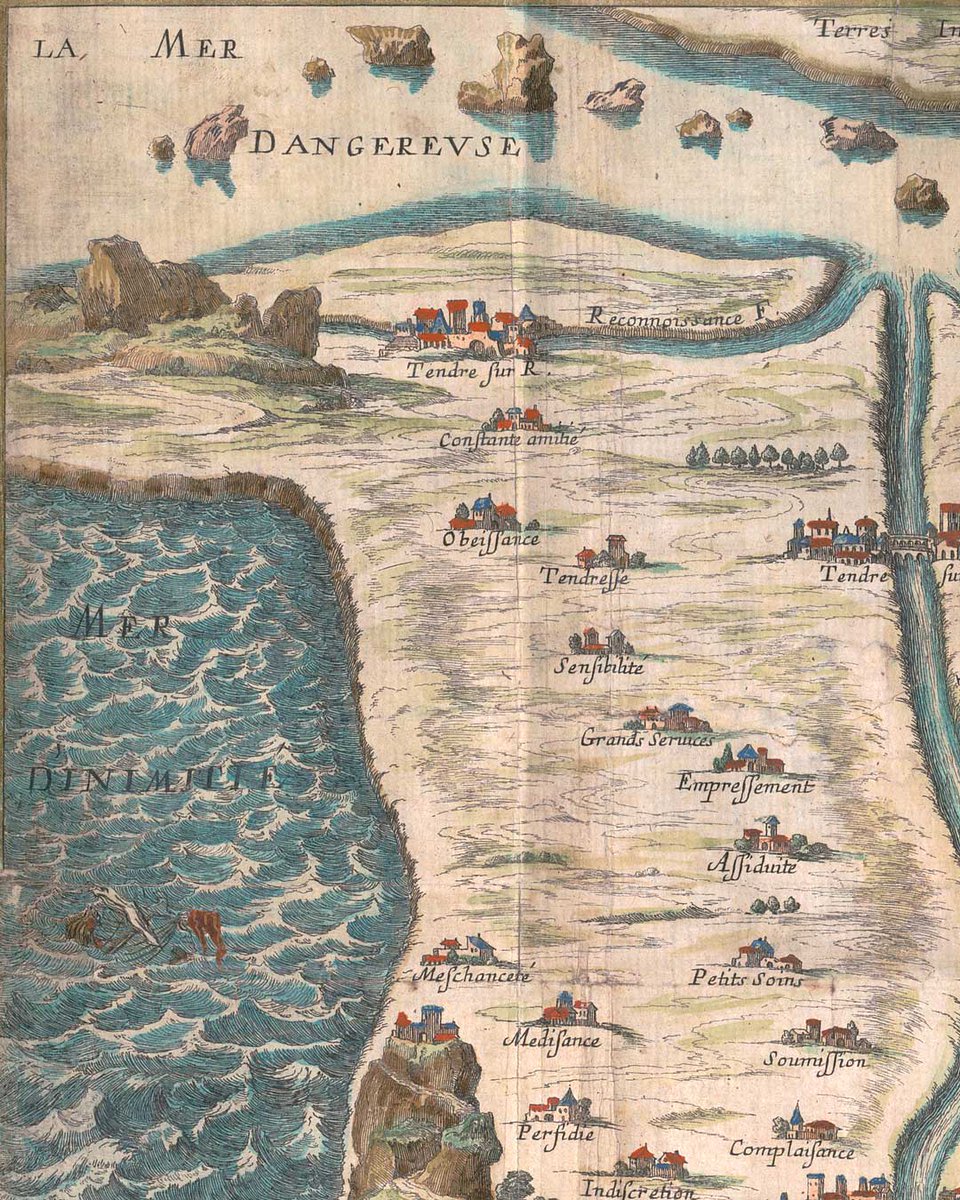
Voici la carte la plus étrange du XVIIe siècle.
Bienvenue à Tendre, imaginée au XVIIe siècle par Madeleine de Scudéry. Pour atteindre cette contrée imaginaire, tout commence à « Nouvelle-Amitié ».
De là, plusieurs chemins s’ouvrent : vers Tendre-sur-Inclination, Tendre-sur-Estime ou Tendre-sur-Reconnaissance... en passant par des villages comme « Assiduité », « Petits soins » ou « Sensibilité ».
Our paper on the impact of US sanctions on Cuba’s infant mortality rate is out. Our results are deeply troubling. The tightening of the US embargo after 2019 led to the infant mortality rate rising from 4 to 9.9/1000 in 2025. We estimate that an additional 1800 Cuban babies died from these harsher US sanctions.
https://t.co/WHXfiC61bP