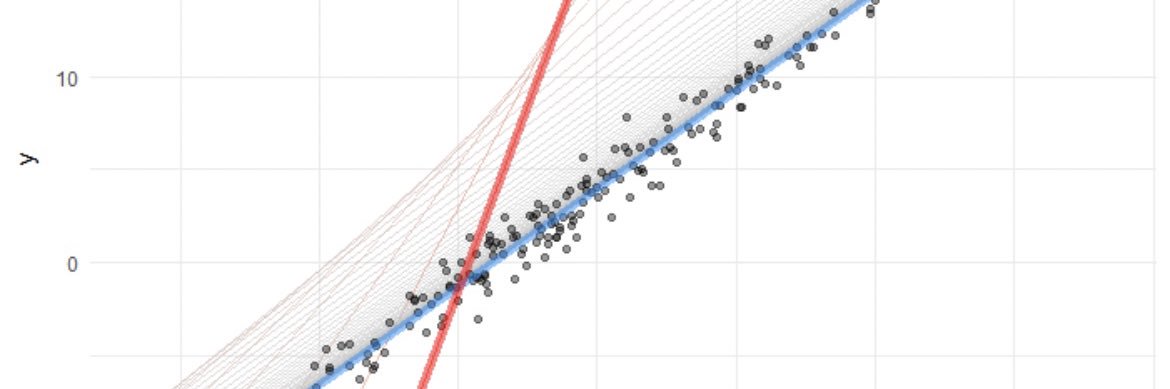
Paired bar charts suck at comparing values. The only reason they're used all the time is because they are easy to create.
But there are better alternatives that are just as easy.
Here's how to create 4 better alternatives with #rstats.
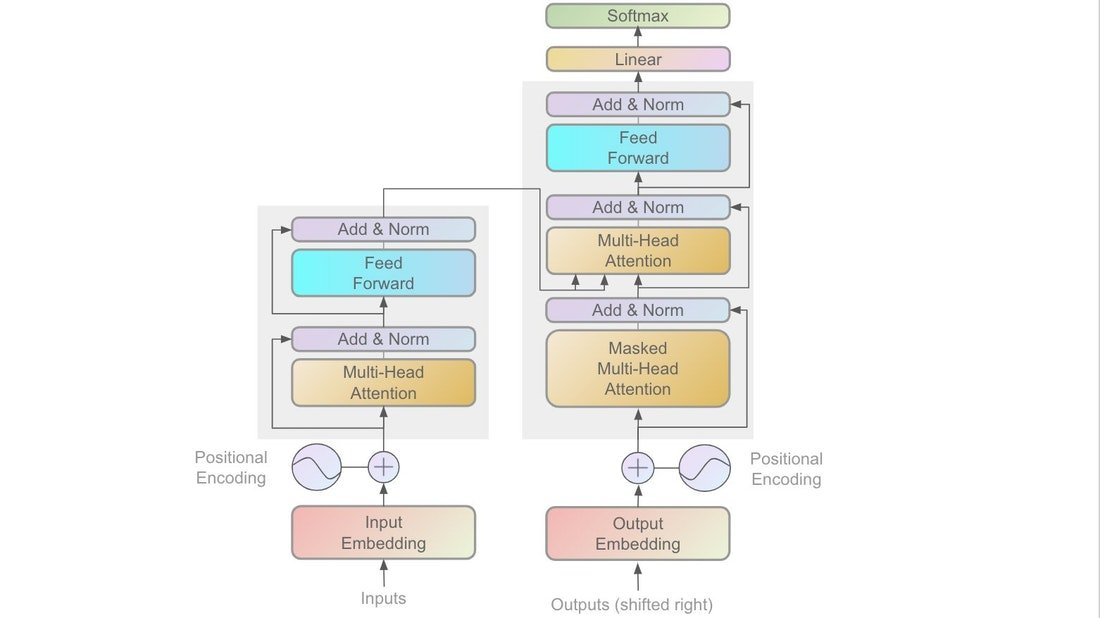
Since self-attention is now everywhere, it's important to understand how it works.
And there is no better and more fun way than coding it from scratch!
My new article on "Understanding the Self-Attention Mechanism of Large Language Models From Scratch"
👉 https://t.co/zFsWH4orpa
If you are looking for a study guide on Transformers, look no further!
Includes notes, readings, and high-quality references to create a solid study plan for Transformers.
https://t.co/sIANvrdoU6
Today, we are opening up public access to a new AI product we have been building called Poe. Poe lets people ask questions, get instant answers, and have back-and-forth conversations with several AI-powered bots. (1/n)
𝚖𝚊𝚛𝚐𝚒𝚗𝚊𝚕𝚎𝚏𝚏𝚎𝚌𝚝𝚜 0.9.0 is a BIG📦release! Simple yet powerful tools to help you interpret the results of over 70 classes of models in #RStats (LM, GLM, GAM, discrete choice, mixed-effects, bayesian, etc.) 🧵 on some cool new stuff. https://t.co/OwBLCPgovN
⚠️A widespread confusion: calibration of predictors, as measured by expected calibration error, does not control completely that the predictor gives perfect probabilities P(y|X):
A predictor may be overconfident on some individuals and underconfident on others
🧵
1/10
Instructor looks very promising 😊
It’s an instruction-finetuned text embedding model that can you can generate text embeddings tailored to any task and domains (e.g., science, finance, etc.) by simply providing the task instruction.
Available on 🤗
https://t.co/41wdWKrUFb
As a developer I spend a lot of hours trying to understand codebases, clicking through spiraling callstacks in mind-boggling fashion to add a change. What if AI can read the codebase instead and tell you exactly what to change where? @nuwandavek & I built https://t.co/b2rDXcCTBd
I just found a super useful stable diffusion CLI that can efficiently perform image generation, masking, editing, outpainting, and more with no coding required. Here's some cool stuff you can do with it... 🧵[1/7]
Raster Vision is an open source Python library and framework for building computer vision models on satellite, aerial, and other large imagery sets (including oblique drone imagery).
https://t.co/zhoqehRKCH
Built with PyTorch 🔥
Our benchmark of tree-based models vs deep learning for tabular data: final version.
TL:DR: from small compute budget, @scikit_learn's HistGradientBoosting is best. With finer tuning of hyperparams, XGBoost brings a gain (here n ranges from 3,000 to 10,000)