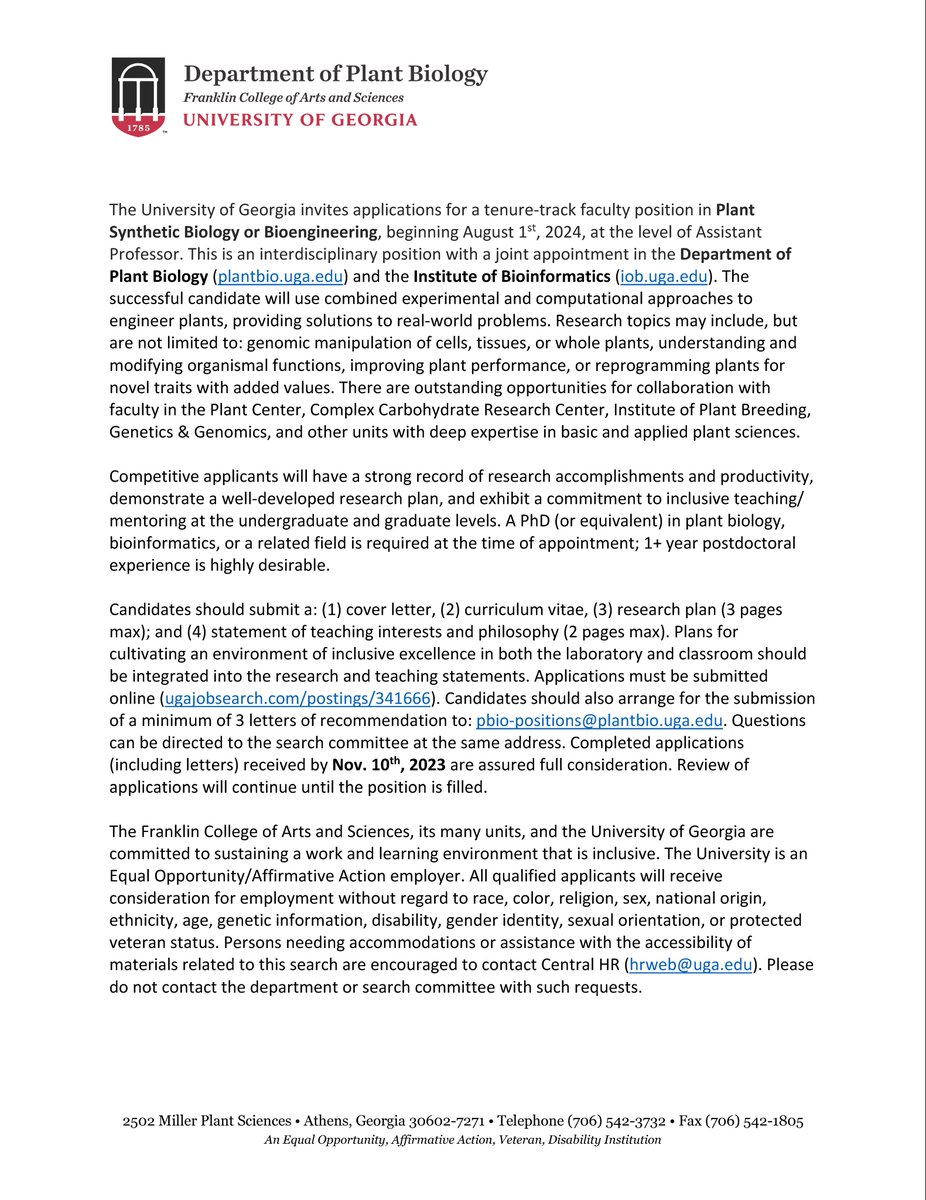
We're hiring! Please help spread the word. We have an opening for an Assistant Professor in Plant Synthetic Biology for Strategic Resources Research. See ad for details – and join us here in Athens, GA! #PlantBiology#SyntheticBiology#PlantScience#FacultyJobs#UGA
@MaizeZynskiHI@agentindeed No, just too-tall corn. Seems they often stretch out like that in the summer. And its so hot now the tassels are frying up there.
Thank you André for hosting me. It was great to visit Max Planck and meet all the great scientists and see the wonderful facilities. Also nice to see the sights of Cologne.
I am very grateful and glad for the visit of Kelly Dawe @corncolors to @mpipz_cologne as our special seminar speaker! Thanks a lot for the inspiring discussions 🙌
And here is my perspective on the new human artificial chromosome work. The methods deployed by Gambogi et al should be directly applicable to plants.
https://t.co/KlzNrkVUY4
Ben Black's lab describes a superior method for preparing human artificial chromosomes. The chromosomes are small enough to be engineered in yeast, but large enough to carry multiple genes and segregate like normal human chromosomes in cultured cells
https://t.co/7CH8UJv88I
New! Methylation-controlled gene regulation in maize pollen, led by Jonathan Gent (@corncolors group). Tldr: Two maize DNA glycosylases (DNGs, which demethylate DNA) redundantly enable high transcript levels of a small set (~50) of pollen-specific genes, https://t.co/Yo0cnU5FGk
We’re hiring! We’re searching for an Assistant Professor in Plant Synthetic Biology to start Aug 1, 2024. The position will be a joint appointment b/t UGA Plant Biology and @uga_iob. For full consideration, apply by Nov 10, 2023. Please spread the word!
We are thrilled to announce the election of 120 members and 23 international members to the National Academy of Sciences in recognition of their distinguished and continued achievements in original research. https://t.co/Uei58ej6WI
Congratulations to our new #NASmembers! #NAS160
Much of the maize pan-genome is ancient. We show that about a third of the pan-genome diverged earlier than ~100 kya and another third diverged ~10-30 kya, with centromere haplotypes appearing as evolutionary strata https://t.co/cv2JJFzh60
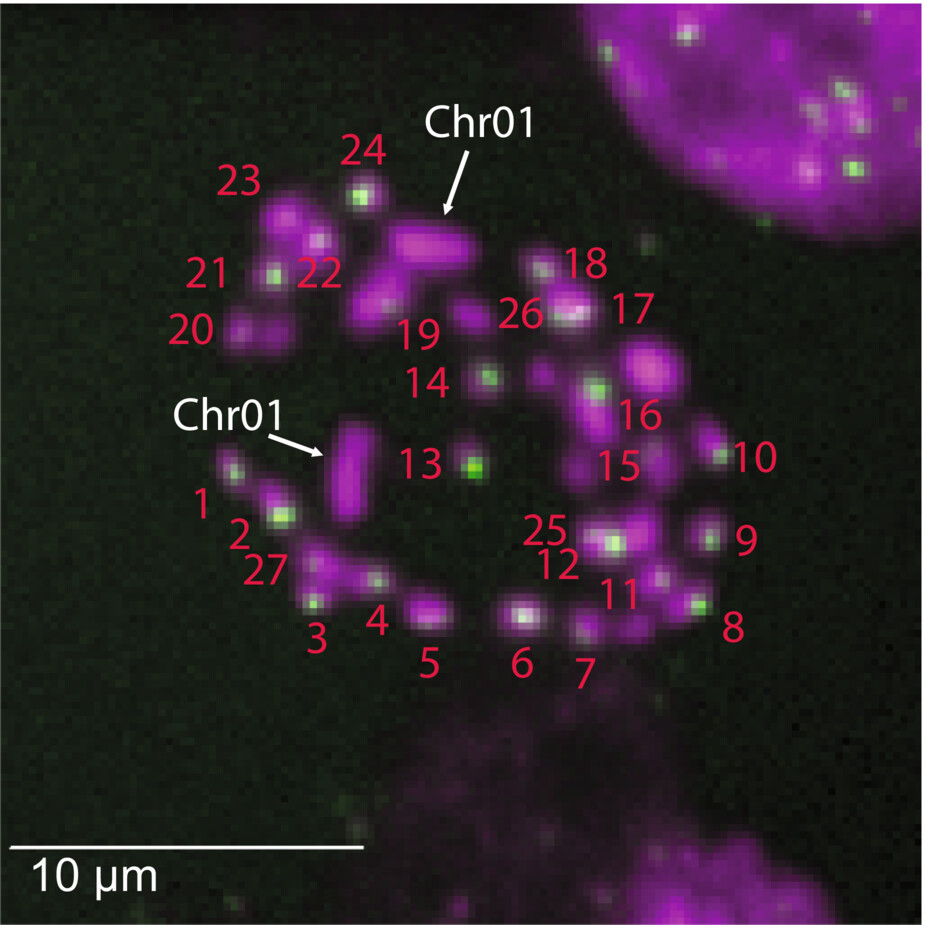
New Article: "Synthetic maize centromeres transmit chromosomes across generations" https://t.co/6IA7B55980
N&V: "Plant genetics: Creating synthetic maize centromeres" https://t.co/jzHvPME21z
Based on a LexA–CENH3 fusion; stably inherited and self-sustaining neochromosomes.
Our successful effort to create synthetic maize centromeres is now published! We hope to use this method to alter karyotypes in maize and other plants. And one day engineer entire chromosomes. https://t.co/tYfoA1BLlE