Out now @NatureComms:
We knew that interoceptive signals guide motivation, but it was not known if we can boost motivation by emulating vagal signals.
Here, we show that non-invasive stimulation increases invigoration.
W/ @eudaimonja@glassybrain
https://t.co/sJqG4R0Rp2
Your stomach called – your striatum picked up!
But does this actually happen in humans?
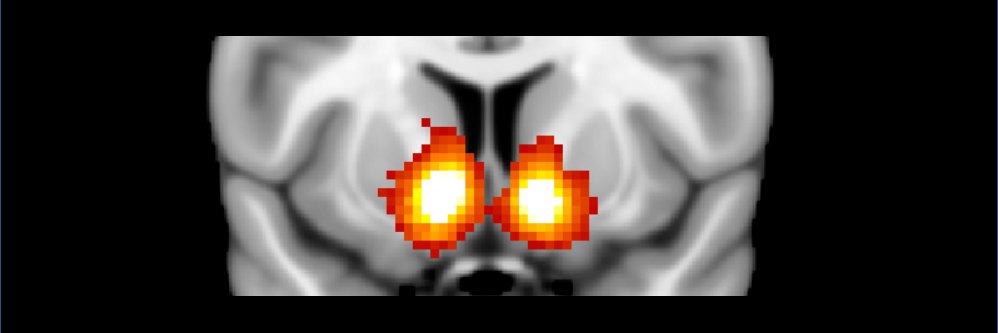
Using simultaneous dopamine PET/fMRI, we show that the gut hormone #ghrelin helps the brain adjust motivation to current metabolic need.
Here’s what we found👇
https://t.co/qEyakRO18Z
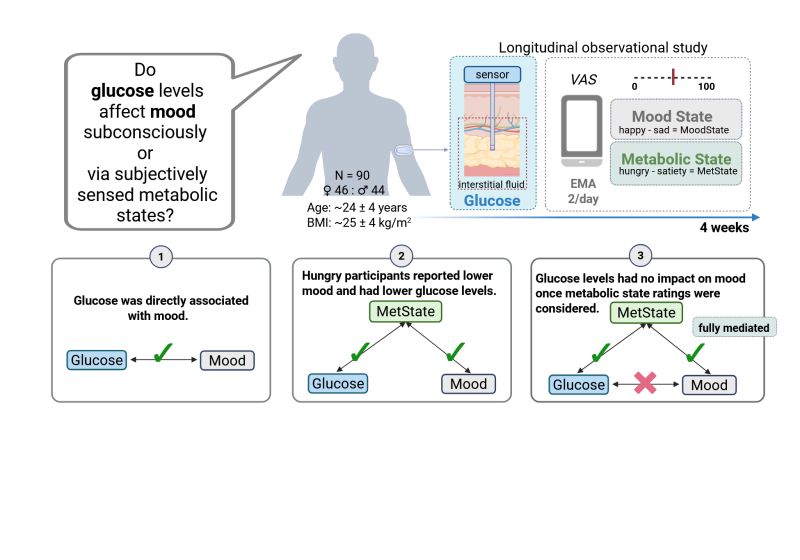
Do you get hangry because glucose levels drop or is it due to hunger?
We collected EMA+CGM over four weeks and found that mood swings are best explained by conscious ratings of metabolic states. A lower interoceptive sensitivity was associated with higher mood variability.
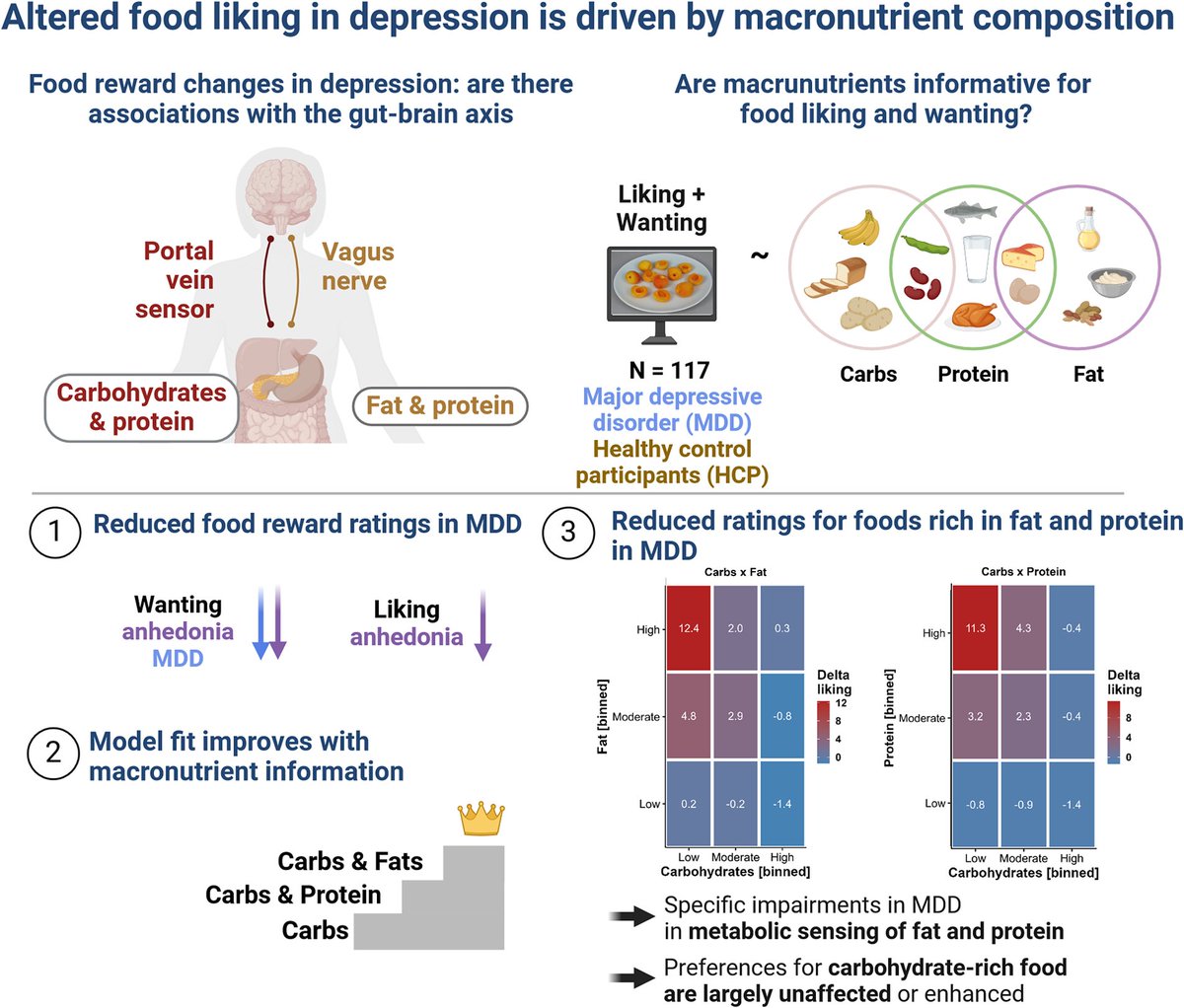
🧠 Depression is linked to rewired food cravings.
People with depression crave carbs more and find less reward in fats & proteins.
Could the gut-brain axis explain this? 🧵1/14
Outstanding & fact-rich article by @jenapincott in @sciam about the #vagus nerve, #depression, #inflammation and the important progress in the field of bioelectronic medicine. Fresh hope for millions who should benefit from VNS in the near future. https://t.co/2FX7e26pTN.
The first paper from the lab! In collaboration with @HyungJinChoi_ , we derived the need and motivation component from homeostatic RL, and showed that AgRP neurons and lateral hypothalamus LepR neurons encode need and motivation, respectively. https://t.co/0lW58xlNKK
Ever questioned whether fMRI might not reveal the whole picture about human cognition? Check out our new paper in which we address this issue using novel simultaneous fMRI/fPET. https://t.co/gSAvKndcXZ @SharnaJamadar@emmaxliang@misicbata@gary_egan
New paper in Imaging Neuroscience by J Hall, D Shahnazian, and R Krebs:
Exploring distinct and joint contributions of the locus coeruleus and the substantia nigra/ventral tegmental area complex to reward and valence processing using high-resolution fMRI
https://t.co/73ossETo8J
Viewpoint discusses clinical trial results of GLP-1 receptor agonists for treating the weight gain and cardiovascular disease risk of psychiatric medications. https://t.co/RlgH1htl4l
Body and brain must communicate to adapt behavior efficiently. Using the fly, we discover a bidirectional pathway between the fat body and the brain and show that fat body-produced dopamine changes food preference.
Temporal dynamics of nucleus accumbens neurons in male mice during reward seeking
Inhibiting D1-neurons at −5 sec or D2-neurons at −2.5 sec, but not at other timepoints, reduced sucrose-motivated lever-pressing
https://t.co/gIjXTEBp1d
🔥Happy to share our latest work just published in Science Advances! Our team explored the dopaminergic system and its role in brain function by combining fMRI with [18F]FDG-fPET and optogenetic stimulations.
https://t.co/XR9rkODBcN
🚨New pub out now! 🚨In this study we showed that performance level moderated learners’ sensitivity to reward-prediction errors. For some insights into what this might mean for instructors interested in motor skill acquisition, grab a free copy here 👇
https://t.co/QCWGmBfrw8
I am super excited to share this pre-print on the neurocomputational and neuroendocrine mechanisms of affect-based impulsivity!!
If you're interested in how affective states alters decision-making via RL systems, take a look! 🙃
https://t.co/QqsgPvo8dA
Only a few days remain to apply for our open PhD position(s). Join @neuroMADLAB in developing and investigating innovative treatments for motivational dysfunctions (B2 level German required for this position).
https://t.co/bj427QQ8vJ