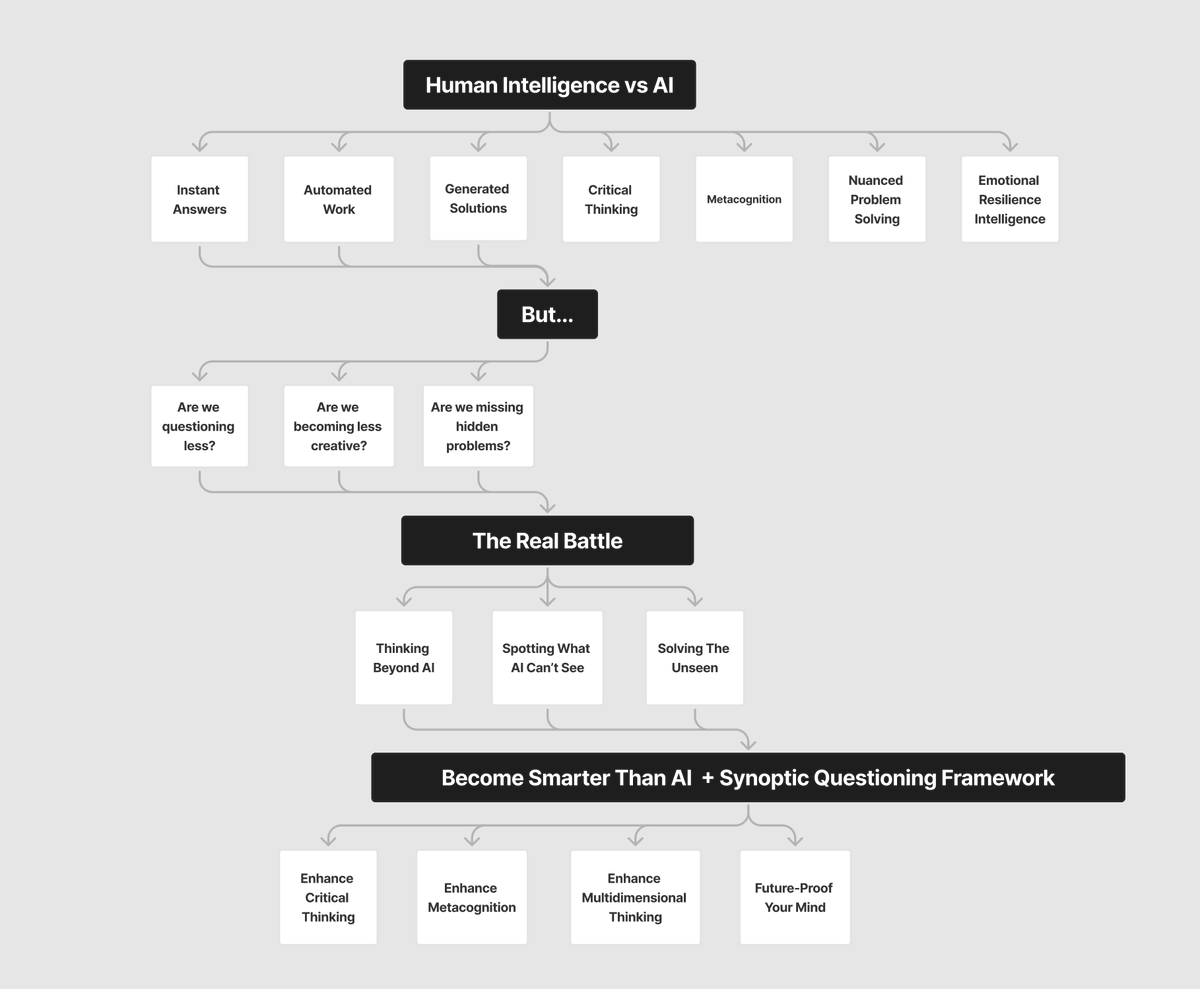
@ProblemSolvae AI is optimizing, but humans are outsourcing their thinking. The real danger isn’t AI surpassing us, it’s us surrendering cognitive control. Without structured reasoning like SQF, we risk a future of passive obedience rather than informed decision-making.
Is AI becoming better at thinking?
Is that dangerous for humans?
The real danger isn’t AI replacing humans, it’s humans forgetting how to think.
Without structured reasoning like SQF, humans are walking into a future where they obey and not decide. #AI
Brain’s Memory Maps Constantly Evolve to Capture Changing Experiences
A new study reveals that memory representations in the brain are not fixed but constantly evolving, even after learning.
Researchers observed hippocampal "place cells" in mice, which activate when they recognize familiar locations, and found that these cells continuously shift their activity patterns over time.
Using computational models, the team determined that this shifting is best explained by Behavioral Timescale Synaptic Plasticity (BTSP), rather than the traditional Hebbian learning model.
BTSP, triggered by calcium spikes in neurons, helps encode subtle differences in experiences, such as changes in time, context, and environmental details.
This process may prevent memory confusion by distinguishing similar experiences that occur in the same place at different times.
The findings highlight how memories are not just about locations but also about capturing the entire experience.
@EagleAIView@slavov_n That bridge is AI augmented thinking/brainstorming. Tools like the Synoptic Questioning Framework are already being used by researchers to do more in life sciences.
@sama Emotional clarity is a skill that requires training. One tool I use is the Synoptic Questioning Framework. @ProblemSolvae has proven to be very useful in this area.
Congratulations to @AnnaCiaunica@drmichaellevin@_fernando_rosas@karlfriston Nested Selves on co-embodied and immune processing in utero. Named one of top 3 most-read and engaging articles in TOPICS in Cognitive Science! 😎
https://t.co/Cb9ksRHY9x
Your brain is constantly predicting, adapting, and rewiring itself. The question isn’t whether you can change—it’s how intentionally you shape that change. Train your mind, challenge your thinking, and watch your cognition evolve. #Neuroscience#CognitiveFlexibility"
@rosscoulthart Mind reading’ isn’t magic—it’s the brain’s ability to decode subtle cues, predict intentions, and simulate others' thoughts. Understanding this could revolutionize AI, human-computer interaction, and adaptive systems.
@MacrinePhD Nature has already solved some of the hardest problems in adaptability. Leveraging cancer’s dynamic survival strategies—mutation, metastasis, and resilience—could redefine how we build self-evolving, fault-tolerant computing systems.
New paper alert!
We developed the first automated theorem-proving framework for (hyperbolic) PDE solvers: now you can build *formally verified* physics simulations, with provable mathematical and physical correctness properties.
arXiv link and explanation in thread... (1/10)
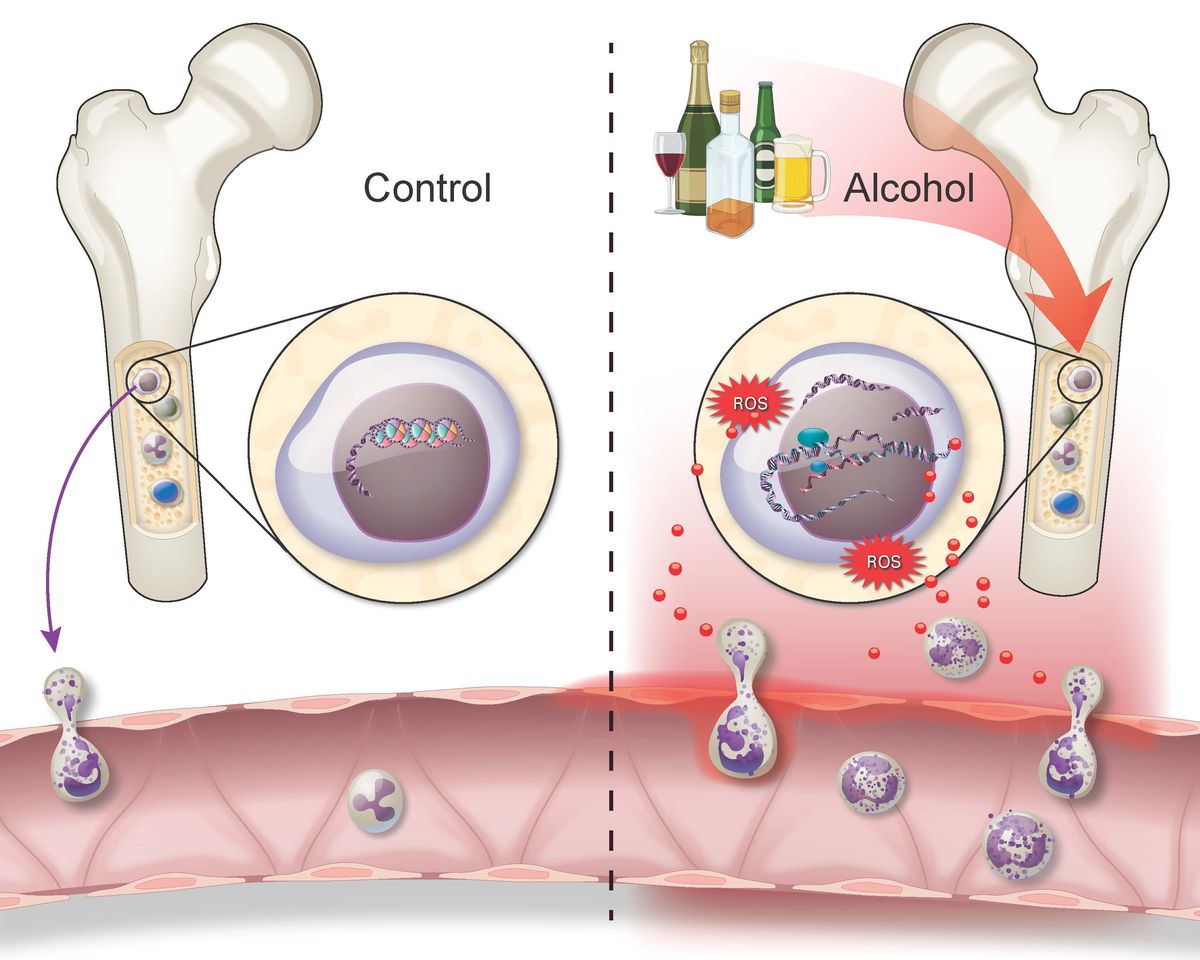
⚠️ If you want to protect your immune system, stop drinking.
Even a single binge can trigger inflammation within 20 minutes.
Moderate drinking alters immune responses, while chronic use weakens defenses and fuels long-term inflammation 🧵 1/9
@ProblemSolvae AI excels at pattern recognition, but human intelligence thrives on abstraction, intuition, and adaptive reasoning. The future belongs to those who can think beyond algorithms. SQF trains the brain to question deeper, spot unseen variables, and solve what AI overlooks.
AI vs. Human Intelligence – The Battle You’re Not Paying Attention To
Most people fear AI taking jobs. The real problem? AI is changing the way we think.
📌 AI gives instant answers – but does that mean we’re questioning less?
Contd.