What's That?
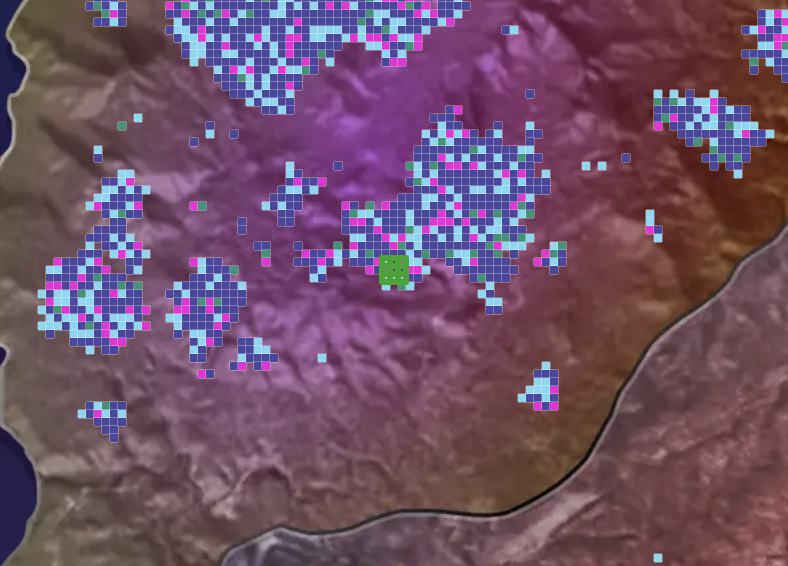
KS Guild just completed a 3x3 Mega City in Brightland Steppes!!!
Sometimes the Bear eats you... Sometimes you eat the Bear 😜
@illuviumio#illuvium#illuviumzero#eatthebear
I think it’s time to revisit the accredited investor laws in the US.
Companies are staying private longer, where only accredited investors (aka rich people!) can invest. Retail investors can only come in after IPO, when much of the upside has already been captured.
These rules were created with the best of intentions, to protect regular people from scams - a noble idea. Unfortunately, in practice they've often made it illegal to get richer, unless you're already rich. A regressive tax!
We have to judge policies based on their outcomes, not on their intentions.
These are two possible routes I see:
1) Replace the rule with something merit-based, like a financial literacy test. Pass it and you're accredited. Having a qualification based on competency rather than your bank balance or income seems far more fair.
2) Remove the rule entirely. Let consenting adults assess their own risk. Disclosure requirements stay and fraud enforcement stays to punish bad actors.
@Picolas_Caged A year ago, @TrustlessState warned his listeners not to be "a chaser."
He admitted that chasing the latest hot coin/narrative had cost him money in the past.
Well, relapse is part of recovery, my brother.
but...
Being able to admit that you have a problem is step 1
Tom Lee: Ethereum DATs can use ~$500 million in annual staking rewards to fund grants for Ethereum ecosystem
“The Ethereum Treasuries — Bitmine and Sharplink among others — now own 7% of the Ethereum supply… Treasury stock is essentially supply permanently taken out from the ecosystem, but we also own the yield. The yield is around 3% so today these public treasuries are generating ~$500 million in rewards, and that is what we can use to fund and grant the crypto ecosystem.”
Lee believes that the Ethereum Foundation narrowing its focus to CROPs (censorship resistance, openness, privacy and security) is the right decision.
“Ethereum is a $240 billion network value entity. It has been operating for 11 years without a single day of downtime. There’s 11,500 nodes in 89 different countries. And there’s 15,000 developers. I think this is too big to be coordinated by a single foundation.”
As Ethereum continues to scale, he believes the ecosystem will move beyond a foundation-centric model and points to private companies like Etherealize, Optimism, Consensys, Enterprise Ethereum Alliance, and Offchain Labs that represent the Ethereum ecosystem and are already doing enterprise engagement.
“This list doesn’t yet reflect the spinoffs coming from the Ethereum Foundation. There’s at least five, and I think Bitmine will play a role in granting and supporting any of those that come out.”
“I think Ethereum is in good hands because the foundation is going to be stronger by staying focused. We have a lot of private sector companies already building products and important L2s on Ethereum. And of course, the treasuries are here to help with funding and granting… If you’re bearish, you are selling at the bottom.”
Vitalik shared his perspective on where @ethereumfndn is heading. Here is mine, another part of the same story.
The EF Mandate from the board was something I proposed late last year. Two main things prompted me. First, debates that were meant to be technical had started to become political and personal, and at times shaped by quieter incentives. Second, as EF grew, more and more versions of "what EF should be" began pulling at the core of the organization from every direction at once. I became convinced that trying to satisfy all of them would leave us achieving nothing at all. It was time for us to restate our role and underlying principles clearly, both the parts that have been clear from the start and those that have been informed by over a decade of experience.
We have said it many times: EF is one of many nodes in Ethereum. I know that is hard to hear for some, because EF was the first group, and in the early years it was essential for making things happen. But it was never meant to stay that way.
I have been in crypto since 2012, before it became an "industry." I joined Kraken in 2013, shortly before the implosion of Mt. Gox, which I helped to clean up. I am very aware of how real growth works, and also aware of the real risks of centralization. So when I became ED in 2018, I understood that Ethereum growing beyond EF would be essential to fulfill its real promise as a public blockchain. The goal I set for myself was to ensure that this happens.
The opposite path has always been untenable: Ethereum's future is too big for any single organization to bring about. So EF made deliberate choices to distribute power. We did incubate and release, like Uniswap and ENS. Support to seed a new norm, like ETHGlobal and the hackathons that are now everywhere. Funding the funders, like Gitcoin and Moloch. We always asked the same question: how does this stand on its own, without us?
Those experiments, alongside the work of countless others, contributed to where we are today. Ethereum is now far bigger than anything EF could coordinate alone. EF now holds less than 0.2% of all ETH, and the return on all of that shared work, together with extraordinary people across the ecosystem, has been beyond anything we could have built by ourselves.
That is exactly why a focused EF is possible now. The Mandate states simply the one thing EF must keep carrying: preserving and accelerating the properties and goals that keep Ethereum uniquely valuable, competitive, and worth building on. That is: CROPS - for the sake of inalienable user self-sovereignty and self-sovereign coordination. We cannot do it alone, and we do not intend to. But defining this as the north star for the mission, and coordinating with the allies who share it, is the responsibility we are keeping.
None of this means EF stops caring about adoption, for everyday users or for institutions. The opposite is true: everything we do is ultimately for the people who use Ethereum. Supporting adoption, including institutional adoption, remains part of our work, pursued in the ways that fit our mission. The value proposition of Ethereum for both everyday users and institutions rests heavily on this.
As EF becomes more focused and more opinionated, the team naturally becomes smaller and more concentrated. That is part of the choice. New leaders are already stepping into this mission and growing within it, and you will hear more from our management in the coming weeks, about what they are doing, and about the new structure and strategy taking shape.
The mission we carry is not a smaller one, but a clearer one. Special thanks to those who have stepped in to support, defend and advance it.
Once again: @VitalikButerin proving he's more intelligent and more visionary than the influencers and moonboys.
It shouldn't have to be said. But for all the Chicken Littles on X, there it is.
Some of my perspective on where the @ethereumfndn is going.
First of all, this is only my own view. The board is not just me, and I have no extra special powers on the board that the other board members do not. @aerugoettinea is the one executing much of this transition. My input has been largely on technical questions. The board is in the process of expanding, and my own power within the org will continue to decrease, which is honestly what I want.
The 2025 era brought many important improvements to EF and its ability to execute. Many issues were resolved, and EF continues to benefit from its improved efficiency and greater focus on concrete goals to this day. And so with those problems resolved, early this year, the largest remaining hole that I perceived was something different nagging at me: I would regularly spot people saying things like "vitalik says these beautiful things about ethereum needing to be decentralized, and have privacy, and be a sanctuary technology, but why do the EF's actions not reflect that?"
Now, you may have been hearing something different. You may not have been sensing a feeling of crisis at all, and maybe were hearing people saying that finally we were taking execution and BD seriously and the main task for us is to keep going that way and be even better and faster. Then probably there is genuine difference between you and me, in what kinds of criticism I take most seriously, and what kinds of critics through their criticism are most able to make me feel pain.
As an analogy, let's briefly switch over to a different domain.
One belief you can have about Google is that it is a success story, and has brought a lot of good to humanity in organizing the world's information. Another belief you can have about Google is that they had a beautiful idealistic beginning, but at some point the corruption of mainstream corporate attitudes seeped in, and they slowly bit by bit completely abandoned the "don't be evil" slogan.
My belief on Google specifically is probably somewhere between the two. BUT, if you had taken me back in time to ~2008, and offered me a button to press to make Google one or two standard deviations more "dogmatic", eg. give Richard Stallman permanent veto power over some key policies, I would immediately press it.
Why? Because a choice for one company is not a choice for the world, or even one country. Google existed and exists in the context of a technology industry generally drifting away from early idealistic don't-be-evil roots and toward greed for financial gain, totalizing visions of accelerated superintelligence, infiltration by sociopaths, and craven capitulation to (or worse, active participation in) government pressure for ideological control, surveillance and war. And so *one company* doing something different, positioning itself to be what George Bernard Shaw calls the Unreasonable Man, resisting the trend of the times, would have been better for freedom, balance of power and stability of society as a whole, than *all* large companies bending to dominant trends. This is a part of my version of pluralism.
This line of thinking is not just mine, but I also is not too far off from what Aya and others had in mind with the Mandate.
Now how does this all get to the role of the EF?
EF is not a "center of Ethereum", rather EF is "one node, with a defined purpose, alongside other nodes". We've always said that the EF should be the latter, but many in the Ethereum ecosystem (and even within the EF) wanted us to be the former. Now, we are taking action to ensure that we will be the latter.
This is particularly important because EF is a limited organization, with limited resources and limited organizational capacity. The EF has only ~0.16% of all ETH (less than many other individual ETH holders), whereas among other blockchains it's common for "the central foundation" to have 10-50%. Fiscally, the EF was originally designed to fulfill a limited work scope defined in the token sale docs and other pre-launch materials (building the chain software; getting through Frontier, Homestead, Metropolis, Serenity), which was fully completed in 2022; it was not designed to be an eternal steward.
And so today, the EF is choosing to use its remaining resources to pursue longevity over breadth (yes, this means we sell less ETH). The EF focuses *specifically* on those activities critical to the success of ethereum as a censorship/capture-resistant, open, private and secure system, that would not happen otherwise. This means making hard choices, and in some cases even activities that we highly approve of and people that we highly respect becoming outside of the EF. People of great technical talent, public respect and even alignment with the mission and CROPS being outside of the EF is in fact necessary if we want important tasks to be able to attract outside capital. This also means the EF taking opinionated stands culturally.
This is all intended in cooperation with all other parts of ethereum. We recognize that many other parts of the ethereum world highly respect CROPS and related values. But highly respecting is not the same as choosing to specialize and totally dedicate to a domain (Compare in a different domain: I think reducing animal cruelty is important, and I like vegan food, but am not full unconditional vegan myself)
EF is still in a transition period, and we expect its new long-term form to stabilize over the next few months. What are the guiding principles of this new form? Again, I am only one person, but I can give my answer from a technical perspective (there are also critical non-technical aspects).
At the core, *Ethereum must be impressive*. We are living in an age of highly intelligent AI and all kinds of other technological acceleration. "Status quo EVM, with a hard fork or two a year to optimize for short-term needs of users" is not interesting.
To some, "impressive" means: 250ms latency and 1M TPS. I think Ethereum trying to go that route is a mistake. Being as fast and as scalable as possible, and only a small epsilon more decentralized than the others, is a route to mediocrity, and if we try it we will lose.
I think Ethereum should scale. But I think Ethereum should strive the hardest to be deeply impressive in a different dimension: the CROPS dimension. This means things like:
* Provably bug-free Ethereum. This is a goal that all cybersecurity researchers would have thought is absurd and impossible, up until roughly 6 months ago. Now, it's on the cusp of being possible, thanks to AI-assisted formal verification. So we should be frontrunners in doing this.
* Available chain consensus. Ethereum is, and with lean consensus will cotninue to be, the ONLY chain that has both (i) traditional-BFT style properties that it's safe under asynchrony up to a high level of fault tolerance, and (ii) the bitcoin PoW-style property that under synchrony it's safe up to 49% attackers. As far as I can tell, literally no other chain has this or is planning for it; bitcoin goes for (ii) only and most other chains go for (i) only. Some will remember I fought hard for this, Unreasonably insisting that it is not OK for ethereum to rely on social consensus and hard forks to rescue ethereum from 34% of nodes going offline. It's OK for chains like hyperledger, bnb, solana, tempo, etc. It's not OK for bitcoin or ethereum or eg. zcash.
* Intermediary minimization. The fact that smart contract wallets, protocols like railgun, etc have to send transactions through intermediaries to get included onchain is honestly embarrassing, and it's a constant point of fragility. Hence the work on FOCIL and EIP-8141 (and 7701 and years of work before) to make transaction sending intermediary-minimized with public mempool and strong inclusion properties, in a truly general-purpose way, that covers not just eg. secp256r1, but also privacy protocols and much more. Kohaku is pushing intermediary minimization at the user layer, pulling Ethereum away from the dystopian status quo world where our wallets don't even verify the chain, send our private data out to a dozen third-party servers, and toward a brighter CROPS future.
Some of these goals are Unreasonable - maybe Ethereum would be "fine" getting only 50% of the way - what if we depend on intermediaries, but make it easy to switch? But going 50% of the way would not make Ethereum Deeply Impressive in the CROPS way. So we push for 100%.
Fortunately all these goals are compatible with high TPS, this is a major focus of research (esp. on scaling the state). Well-designed L2s can also help, especially L2s optimized for specific applications (eg. high-volume trading, privacy...). These goals are even compatible with significantly lower slot times, thanks to Raul's work on erasure-coded P2P, and many other optimizations.
The most high-value "product" of the ethereum blockchain, financially speaking, is ETH the asset. Ethereum secures $250 billion of ETH. The types of properties of Ethereum that I mentioned above are very good for ETH the asset. Nearly 90% of my net worth is in ETH, and most of the remainder is ~$40m of onchain fiat of which every dollar has already been allocated for some open-source biotech or software or hardware initiative. That said, there are aspects of supporting ETH the asset - *necessary* aspects even - that are outside the scope of the EF. This is where we need other heroes (some of whom hold more ETH than the EF does) to step in and help. EF has been recently thinking more about how it will relate to other such organizations, and give them needed initial support.
EF will be a smaller ship than in previous years, a more opinionated one - in some cases more opinionated in ways that might be difficult to comprehend - but a longer-lasting one, and one suited to making sure that ethereum brings something meaningful to the world. We are grateful to all those inside and outside the EF who are helping to make this happen.
Aave is my life's work and we're working nonstop to find the best possible outcome for users.
I’m personally contributing 5000 ETH to DeFi United as we continue working together with partners on formalizing more commitments. I’m working to see this resolved and market conditions normalized as soon as possible.
DeFi United.
Ethereum Researcher Justin Drake, who co-authored Google's recent quantum paper:
"I've stopped thinking about post-quantum as a hurdle that we have to overcome, and I think of it more as an opportunity. It's an opportunity for Ethereum to stand out as the very first global financial system that is post-quantum secure — not just relative to its competitors, but also relative to fiat and tradfi."
Justin also believes quantum presents an opportunity for Ethereum to become the best version of itself: “The move to post-quantum is essentially a rewrite, and that’s a massive opportunity to start with a clean slate and wipe our technical debt.”
The rewrite bundles post-quantum security with a new ZK virtual machine (LeanVM) that can snarkify the entire consensus layer in real time. The result is that the Ethereum L1 can scale to 10,000 TPS at 1 gigagas/second — while simultaneously becoming quantum-secure.
Source: @Bankless (Mar 2026)
From private payments to tokenized funds and AI standards, Ethereum builders kept shipping.
Here are 25 things the ecosystem delivered this month.
0/ @payy_link announced Payy Network, a privacy-first Ethereum enabled EVM L2.
It features default private token transfers and a cheaper way to build privacy-preserving applications, strengthening Ethereum’s privacy ecosystem.
1/ @RobinhoodApp launched the public testnet for Robinhood Chain, an Ethereum L2 powered by @arbitrum.
Institutional settlement on Ethereum rollups continues to bridge traditional finance and public infrastructure.
2/ The @ethereumfndn Protocol Cluster published its 2026 priorities: Scale, Improve UX, and Harden the L1.
Ethereum continues coordinating long-term technical upgrades in public to help steward the protocol forward.
3/ @l2beat launched L2BEAT Interop, a dashboard tracking cross-chain connectivity,value, and highlighting interoperability risks, helping the ecosystem stay connected to interoperability progress.
4/ @drakefjustin introduced Strawmap, a roadmap of proposed L1 protocol upgrades. It acts as a technical resource for researchers, developers, and participants in Ethereum governance.
5/ @Starknet integrated Nightfall, bringing confidential institutional DeFi to the Starknet stack. ZK privacy continues advancing Ethereum’s institutional use cases.
6/ @hinkal_protocol enabled private ETH and stablecoin payments on @arbitrum, demonstrating how private transactions are expanding across Ethereum L2s.
7/ @StartaleGroup introduced JPYSC, the first trust bank–backed JPY stablecoin.
8/ The One Trillion Dollar Security Dashboard was released by the @ethereumfndn. It is a comprehensive view of Ethereum’s security across the ecosystem.
9/ @builders_garden introduced Sign In With Agent (SIWA), a trustless identity standard for AI agents.
10/ @blockscout launched a Tor-native onion service: a privacy-first way to observe and verify Ethereum state. Blockscout’s .onion domain for Ethereum provides a way to view blocks, transactions and accounts.
11/ @MetaLeX_Labs launched cyberSign, letting users sign any legal agreement with @ethereum / @base.
12/ @Rocket_Pool activated Saturn One, introducing 4 ETH megapool validators. Improved capital efficiency strengthens Ethereum’s decentralized staking layer.
13/ @BNPParibas launched a euro-denominated money market fund on Ethereum. Tokenized funds on public blockchain infrastructure signal growing institutional confidence in Ethereum.
14/ Tokenized RWAs on Ethereum mainnet surpassed $15B in market cap.
15/ @aave crossed $1 trillion in all-time loans.
16/ @OndoFinance tokenized stocks (SPYon, QQQon) went live as DeFi collateral on @Morpho. Tokenized equities are now usable inside onchain credit markets.
17/ @eulerfinance enabled tokenized equities as collateral, built with @OndoFinance, @SentoraHQ, and @chainlink.
Traditional financial exposure is now composable inside Ethereum-native lending markets.
18/ @Uniswap integrated with @Securitize to make @BlackRock’s BUIDL fund tradable via UniswapX.
19/ @LineaBuild sustained 100+ mGas/s throughput, peaking at 218 mGas/s, showing how rollups are scaling Ethereum in practice.
20/ @Starknet released Starkzap, an open-source SDK that turns apps into onchain consumer apps.
21/ @base announced @YCombinator startups can now get funded in USDC on Base.
22/ @Optimism shipped Upgrade 18 setting the foundation for a more performant, customizable, and operationally efficient OP Stack.
23/ @ether_fi released its Android app. Native mobile access lowers the barrier to staking and DeFi participation.
24/ The next Ethereum Community Hub is launching in Rome, hosted by @urbeEth. Local builder ecosystems continue expanding globally.
I think it's healthy for us in the Ethereum world to have a more bold and open mindset to many things, particularly on the application layer and on how we see ourselves in the world.
We should not compromise on core properties: censorship resistance, open source, privacy, security (CROPS). We should not have "open mindedness" of the type that leaves people with no confidence of what security properties the L1 will still have one year from now. We should not ask ourselves questions like "do we really need light clients to be able to trustlessly verify correctness of the chain?". But especially on the layer of applications and Ethereum's interface to the world, we should be more willing to radically rethink various concepts and step outside our comfort zone.
This includes issues of technological direction, eg. "what if AI basically means that wallets as browser extensions and mobile extensions are dead within a year?"
One example last year was the shift to thinking about privacy as a first-class consideration, something we value equally to the other types of security. This implies a radically different Ethereum application stack, because the entire stack so far has not been built around privacy. Great, let's build a radically different Ethereum application stack!
An example this year is the growing work on the networking side of privacy, both inside the EF and outside.
It includes application-layer issues, eg. "what if the rest of defi is basically just universal futures markets on top of a good decentralized oracle and letting users self-organize on top of that?", and "what if the ideal decentralized oracle is just a SNARK over M-of-N small LLMs over zk-TLSes of some major news sites?"
(BTW this is interrelated with the AI issue: one consequence of AI is that it moves "applications" away from being discrete categories of behavior with discrete UIs, and more toward being a continuous space, so "build fewer apps and rely on users to self-organize around them" should inevitably expand as a pattern)
One example this year is rethinking from zero the role of L2s, and what kind of L2s are actually most synergistic and additive to Ethereum.
It also includes culture. This is a big part of "the whole milady thing" for myself, @AyaMiyagotchi and others. Yes, it's a silly meme. Yes, I find the political takes of some milady partisans cringe and sometimes outright bootlickerish (though other milady partisans are quite the opposite). But the core underlying subtext, the message behind the message, is: rip off the suit and tie. If you have your suit and tie on, be willing to grab the nearest wine glass and spill it all over your suit and tie, so you have no choice but to rip it off and reclaim your body's full flexibility and freedom. Actually imagine yourself doing this the next time you get invited to a richpeopleslop formal gala dinner. Take the preconception that you are "respectable", write it down on a piece of paper, crumble it up and burn it. The psychological baptism of doing this leads to the intellectual baptism of unlocking greater creativity and expanding overton windows.
For too long, our algorithm in Ethereum has been: we have this existing ecosystem, what's the logical next step to make it one step better? Now, our algorithm should be: we have this L1 that is amazing and will become more amazing, we have a growing array of tools, both those built within our ecosystem and outside it, what are the most valuable things to build, knowing what we know now? If YOU had to write the section of the 2014 Ethereum whitepaper that talked about applications, and take a first-principles perspective of what makes sense in defi, decentralized social, identity, and elsewhere, what would you write? At least take the step of marking all path-dependence concerns down to zero, pretend for a brief moment that the Ethereum chain today has exactly zero usage and you're the one suggesting or building the first apps, and see what comes out. Do this even if you're the one building today's existing apps. This is how Ethereum can grow back stronger.
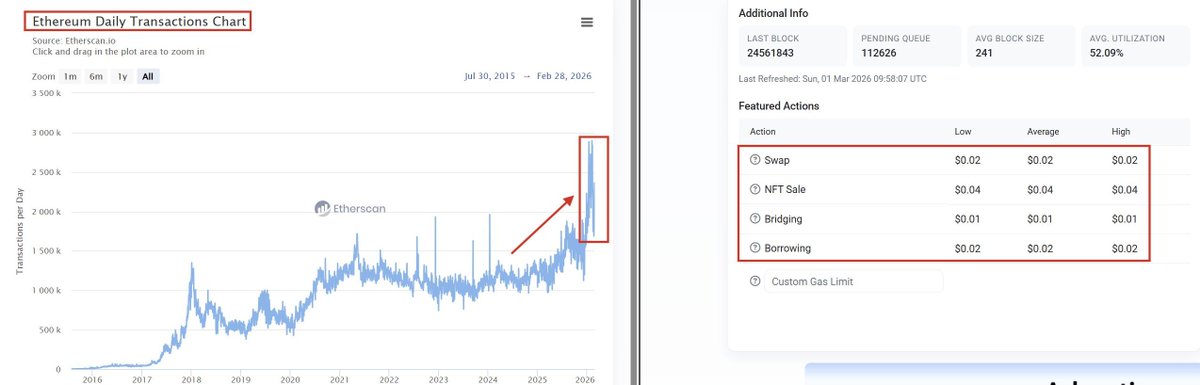
Ethereum Mainnet transactions are at all-time high levels! 📈
While fees are at all-time lows.
🔹 Swap: $0.02.
🔹 Bridge: $0.01.
🔹 Borrow: $0.02.
More activity than ever.
Cheaper than ever.
Now, account abstraction.
We have been talking about account abstraction ever since early 2016, see the original EIP-86: https://t.co/E4xJymAxiH
Now, we finally have EIP-8141 ( https://t.co/YD9nIpsxcC ), an omnibus that wraps up and solves every remaining problem that AA was intended to address (plus more). Let's talk again about what it does.
The concept, "Frame Transactions", is about as simple as you can get while still being highly general purpose. A transaction is N calls, which can read each other's calldata, and which have the ability to authorize a sender and authorize a gas payer. At the protocol layer, *that's it*.
Now, let's see how to use it.
First, a "normal transaction from a normal account" (eg. a multisig, or an account with changeable keys, or with a quantum-resistant signature scheme). This would have two frames:
* Validation (check the signature, and return using the ACCEPT opcode with flags set to signal approval of sender and of gas payment)
* Execution
You could have multiple execution frames, atomic operations (eg. approve then spend) become trivial now.
If the account does not exist yet, then you prepend another frame, "Deployment", which calls a proxy to create the contract (EIP-7997 https://t.co/sIQrtJDXLt is good for this, as it would also let the contract address reliably be consistent across chains).
Now, suppose you want to pay gas in RAI. You use a paymaster contract, which is a special-purpose onchain DEX that provides the ETH in real time. The tx frames are:
* Deployment [if needed]
* Validation (ACCEPT approves sender only, not gas payment)
* Paymaster validation (paymaster checks that the immediate next op sends enough RAI to the paymaster and that the final op exists)
* Send RAI to the paymaster
* Execution [can be multiple]
* Paymaster refunds unused RAI, and converts to ETH
Basically the same thing that is done in existing sponsored transactions mechanisms, but with no intermediaries required (!!!!). Intermediary minimization is a core principle of non-ugly cypherpunk ethereum: maximize what you can do even if all the world's infrastructure except the ethereum chain itself goes down.
Now, privacy protocols. Two strategies here. First, we can have a paymaster contract, which checks for a valid ZK-SNARK and pays for gas if it sees one. Second, we could add 2D nonces (see https://t.co/1cRegaXpHM ), which allow an individual account to function as a privacy protocol, and receive txs in parallel from many users.
Basically, the mechanism is extremely flexible, and solves for all the use cases. But is it safe? At the onchain level, yes, obviously so: a tx is only valid to include if it contains a validation frame that returns ACCEPT with the flag to pay gas. The more challenging question is at the mempool level.
If a tx contains a first frame which calls into 10000 accounts and rejects if any of them have different values, this cannot be broadcasted safely. But all of the examples above can. There is a similar notion here to "standard transactions" in bitcoin, where the chain itself only enforces a very limited set of rules, but there are more rules at the mempool layer.
There are specific rulesets (eg. "validation frame must come before execution frames, and cannot call out to outside contracts") that are known to be safe, but are limited. For paymasters, there has been deep thought about a staking mechanism to limit DoS attacks in a very general-purpose way. Realistically, when 8141 is rolled out, the mempool rules will be very conservative, and there will be a second optional more aggressive mempool. The former will expand over time.
For privacy protocol users, this means that we can completely remove "public broadcasters" that are the source of massive UX pain in railgun/PP/TC, and replace them with a general-purpose public mempool.
For quantum-resistant signatures, we also have to solve one more problem: efficiency. Here's are posts about the ideas we have for that: https://t.co/xzG3Jp7Yky https://t.co/WikL7gJ5qg
AA is also highly complementary with FOCIL: FOCIL ensures rapid inclusion guarantees for transactions, and AA ensures that all of the more complex operations people want to make actually can be made directly as first-class transactions.
Another interesting topic is EOA compatibility in 8141. This is being discussed, in principle it is possible, so all accounts incl existing ones can be put into the same framework and gain the ability to do batch operations, transaction sponsorship, etc, all as first-class transactions that fully benefit from FOCIL.
Finally, after over a decade of research and refinement of these techniques, this all looks possible to make happen within a year (Hegota fork).
https://t.co/p7XOgId5NN
Now, the quantum resistance roadmap.
Today, four things in Ethereum are quantum-vulnerable:
* consensus-layer BLS signatures
* data availability (KZG commitments+proofs)
* EOA signatures (ECDSA)
* Application-layer ZK proofs (KZG or groth16)
We can tackle these step by step:
## Consensus-layer signatures
Lean consensus includes fully replacing BLS signatures with hash-based signatures (some variant of Winternitz), and using STARKs to do aggregation.
Before lean finality, we stand a good chance of getting the Lean available chain. This also involves hash-based signatures, but there are much fewer signatures (eg. 256-1024 per slot), so we do not need STARKs for aggregation.
One important thing upstream of this is choosing the hash function. This may be "Ethereum's last hash function", so it's important to choose wisely. Conventional hashes are too slow, and the most aggressive forms of Poseidon have taken hits on their security analysis recently. Likely options are:
* Poseidon2 plus extra rounds, potentially non-arithmetic layers (eg. Monolith) mixed in
* Poseidon1 (the older version of Poseidon, not vulnerable to any of the recent attacks on Poseidon2, but 2x slower)
* BLAKE3 or similar (take the most efficient conventional hash we know)
## Data availability
Today, we rely pretty heavily on KZG for erasure coding. We could move to STARKs, but this has two problems:
1. If we want to do 2D DAS, then our current setup for this relies on the "linearity" property of KZG commitments; with STARKs we don't have that. However, our current thinking is that it should be sufficient given our scale targets to just max out 1D DAS (ie. PeerDAS). Ethereum is taking a more conservative posture, it's not trying to be a high-scale data layer for the world.
2. We need proofs that erasure coded blobs are correctly constructed. KZG does this "for free". STARKs can substitute, but a STARK is ... bigger than a blob. So you need recursive starks (though there's also alternative techniques, that have their own tradeoffs). This is okay, but the logistics of this get harder if you want to support distributed blob selection.
Summary: it's manageable, but there's a lot of engineering work to do.
## EOA signatures
Here, the answer is clear: we add native AA (see https://t.co/YD9nIpsxcC ), so that we get first-class accounts that can use any signature algorithm.
However, to make this work, we also need quantum-resistant signature algorithms to actually be viable. ECDSA signature verification costs 3000 gas. Quantum-resistant signatures are ... much much larger and heavier to verify.
We know of quantum-resistant hash-based signatures that are in the ~200k gas range to verify.
We also know of lattice-based quantum-resistant signatures. Today, these are extremely inefficient to verify. However, there is work on vectorized math precompiles, that let you perform operations (+, *, %, dot product, also NTT / butterfly permutations) that are at the core of lattice math, and also STARKs. This could greatly reduce the gas cost of lattice-based signatures to a similar range, and potentially go even lower.
The long-term fix is protocol-layer recursive signature and proof aggregation, which could reduce these gas overheads to near-zero.
## Proofs
Today, a ZK-SNARK costs ~300-500k gas. A quantum-resistant STARK is more like 10m gas. The latter is unacceptable for privacy protocols, L2s, and other users of proofs.
The solution again is protocol-layer recursive signature and proof aggregation. So let's talk about what this is.
In EIP-8141, transactions have the ability to include a "validation frame", during which signature verifications and similar operations are supposed to happen. Validation frames cannot access the outside world, they can only look at their calldata and return a value, and nothing else can look at their calldata. This is designed so that it's possible to replace any validation frame (and its calldata) with a STARK that verifies it (potentially a single STARK for all the validation frames in a block).
This way, a block could "contain" a thousand validation frames, each of which contains either a 3 kB signature or even a 256 kB proof, but that 3-256 MB (and the computation needed to verify it) would never come onchain. Instead, it would all get replaced by a proof verifying that the computation is correct.
Potentially, this proving does not even need to be done by the block builder. Instead, I envision that it happens at mempool layer: every 500ms, each node could pass along the new valid transactions that it has seen, along with a proof verifying that they are all valid (including having validation frames that match their stated effects). The overhead is static: only one proof per 500ms. Here's a post where I talk about this:
https://t.co/rAUSJjW7WL
https://t.co/EtXpkaDll5
In these five years, the Ethereum Foundation is entering a period of mild austerity, in order to be able to simultaneously meet two goals:
1. Deliver on an aggressive roadmap that ensures Ethereum's status as a performant and scalable world computer that does not compromise on robustness, sustainability and decentralization.
2. Ensures the Ethereum Foundation's own ability to sustain into the long term, and protect Ethereum's core mission and goals, including both the core blockchain layer as well as users' ability to access and use the chain with self-sovereignty, security and privacy.
To this end, my own share of the austerity is that I am personally taking on responsibilities that might in another time have been "special projects" of the EF. Specifically, we are seeking the existence of an open-source, secure and verifiable full stack of software and hardware that can protect both our personal lives and our public environments ( see https://t.co/GzgBS9sh87 ). This includes applications such as finance, communication and governance, blockchains, operating systems, secure hardware, biotech (including both personal and public health), and more. If you have seen the Vensa announcement (seeking to make open silicon a commercially viable reality at least for security-critical applications), the https://t.co/cuyU9Chs1y including recent versions with built in ZK + FHE + differential-privacy features, the air quality work, my donations to encrypted messaging apps, my own enthusiasm and use for privacy-preserving, walkaway-test-friendly and local-first software (including operating systems), then you know the general spirit of what I am planning to support.
For this reason I have just withdrawn 16,384 ETH, which will be deployed toward these goals over the next few years. I am also exploring secure decentralized staking options that will allow even more capital from staking rewards to be put toward these goals in the long term.
Ethereum itself is an indispensable part of the "full-stack openness and verifiability" vision. The Ethereum Foundation will continue with a steadfast focus on developing Ethereum, with that goal in mind. "Ethereum everywhere" is nice, but the primary priority is "Ethereum for people who need it". Not corposlop, but self-sovereignty, and the baseline infrastructure that enables cooperation without domination.
In a world where many people's default mindset is that we need to race to become a big strong bully, because otherwise the existing big strong bullies will eat you first, this is the needed alternative. It will involve much more than technology to succeed, but the technical layer is something which is in our control to make happen. The tools to ensure your, and your community's, autonomy and safety, as a basic right that belongs to everyone. Open not in a bullshit "open means everyone has the right to buy it from us and use our API for $200/month" way, but actually open, and secure and verifiable so that you know that your technology is working for you.
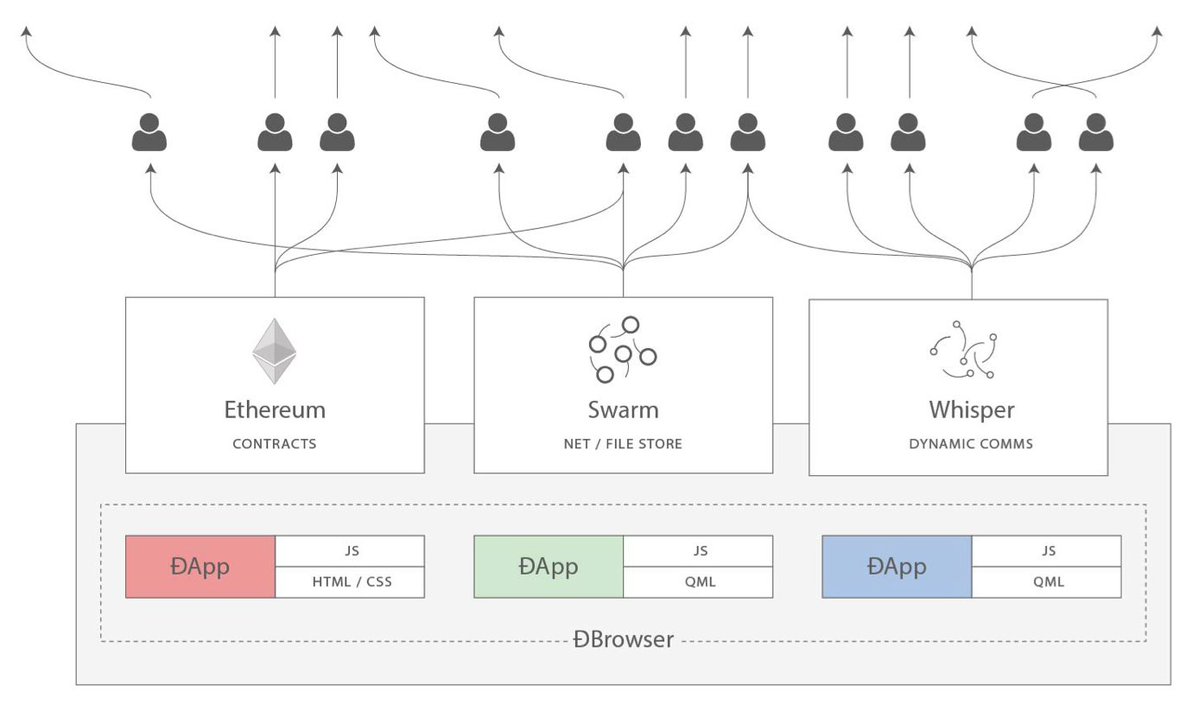
In 2014, there was a vision: you can have permissionless, decentralized applications that could support finance, social media, ride sharing, governing organizations, crowdfunding, potentially create an entire alternative web, all on the backs of a suite of technologies.
Ethereum: the blockchain. The world computer that could give any application its shared memory.
Whisper: the data layer. Messages too expensive for a blockchain, that do no need consensus.
Swarm: the storage layer. Store files for long-term access.
Over the last five years, this core vision has at times become obscured, with various "metas" and "narratives" at various times taking center stage. But the core vision has never died. And in fact, the core technologies behind it are only growing stronger.
Ethereum is now proof of stake. Ethereum is now scaling, it is now cheap, and it is on track to get more scalable and cheaper thanks to the power of ZK-EVMs. Thanks to ZK-EVM + PeerDAS, the "sharding" vision is effectively being realized. And L2s can give additional and different kinds of gains in speed on top.
Whisper is now Waku ( https://t.co/uj5h9iSpIL ), and already powers many applications (eg. https://t.co/owlo5yoS68, https://t.co/hDizYCFjuq just to name two I use). Even outside of Waku, the quality of decentralized messaging has increased. Fileverse (decentralized Google Docs and Sheets alternative: https://t.co/ZIKj4U5pQe ) has seen massive gains in usability over the past year.
IPFS is now highly performant and robust as a decentralized way of retrieving files, though IPFS alone does not solve the storage problem. Hence, there is still room to improve there.
All of the prerequisites for the original web3 vision are here, in full force, and are continuing to get stronger over the next few years. Hence, it's time to buidl, and buidl decentralized.
Fileverse is an excellent example of the right way to do things:
* It uses Ethereum and Gnosis Chain for what they are good for: names, accounts and permissioning, document registration
* It uses decentralized messaging and file storage to store documents and propagate changes to documents
* The application passes the walkaway test: https://t.co/xO1dNLlnhf (even if Fileverse disappears, you can still retrieve them and even keep editing them with the open source UI)
This is what we mean by "build a hammer that is a tool you buy once and it's yours, not a corposlop AI dishwasher that requires you to register for a google account and charges a subscription fee per month for extra washing modes, and probably spies on you and stops working if you get politically disfavored by a foreign country".
If you think this criticism of corposlop is hyperbolic, well turns out, it's literally a concatenation of these three:
* https://t.co/GBNaXOa454
* https://t.co/saD3cNp4Ae
* https://t.co/skoJ58vbqz
In 2014, decentralized applications were toys, hundreds of times more difficult to use in web2. In 2026, fileverse is now usable enough that I regularly write documents in it and send them to other people to collaborate. The decentralized renaissance is coming, and you can be part of making it happen.
Fusaka is live on Ethereum mainnet!
- PeerDAS now unlocks 8x data throughput for rollups
- UX improvements via the R1 curve & pre-confirmatons
- Prep for scaling the L1 with gas limit increase & more
Community members will continue to monitor for issues over the next 24 hrs.