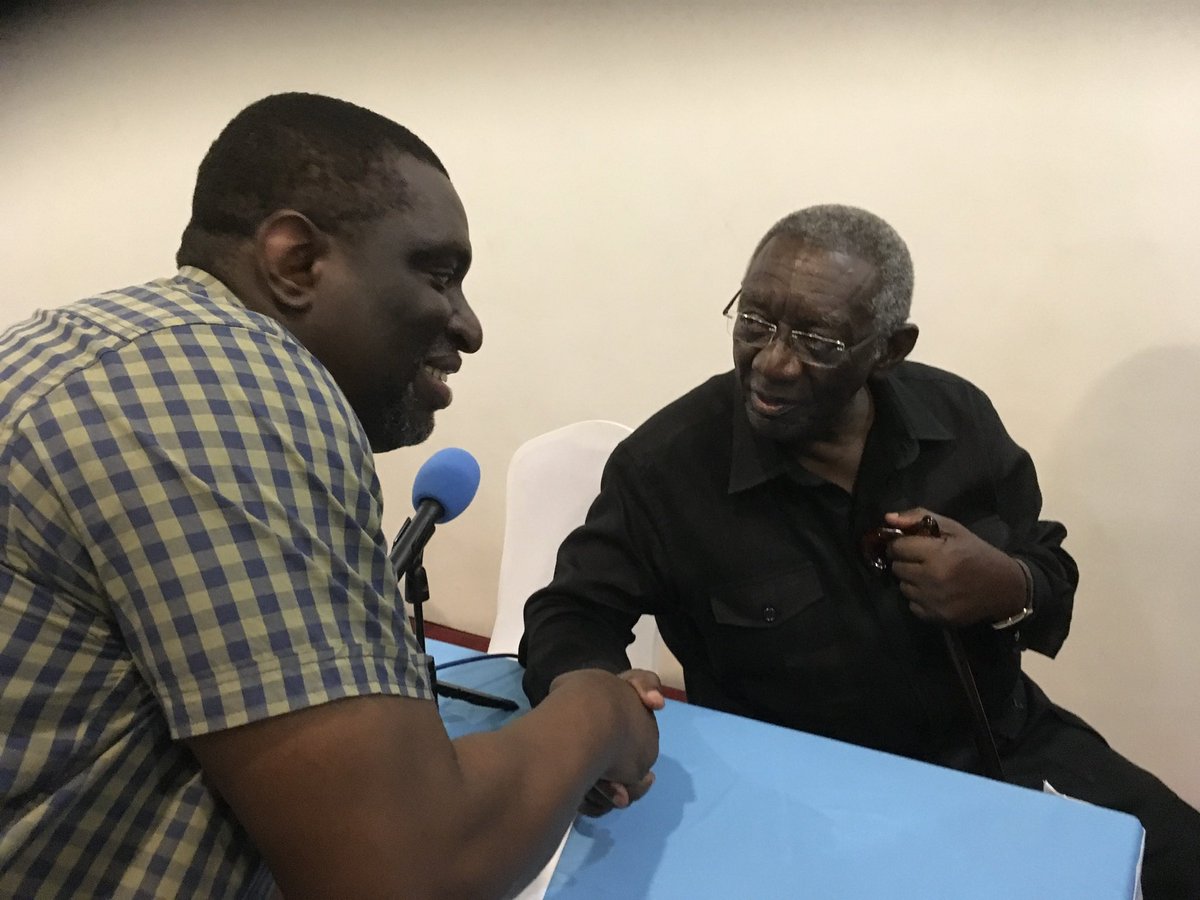
Celebrating My Eldest Brother at 75
Today, 30th August 2026, I celebrate my eldest brother, Dominic Ositadimma Obi, who turns 75. I celebrate him not merely because he is my elder brother or because of his age, but because he is an exemplary human being.
When I was Governor of Anambra State for eight years, he never came to my office or the Governor’s Lodge for a day seeking favours, as many might have expected. He is a planner and contractor who builds homes for people, yet not once did he ask me for a government contract.
Whenever we met, he would warmly embrace me and tell me that he was fine. He would then solemnly remind me to keep doing what I promised the people and never bring a bad name to the family and my community. He would tell me that whatever difficulties he was going through, many others were worse off, and that I should do my best for society.
I later came to understand that this was not peculiar to him alone. My family members had actually held a meeting and resolved that none of them would take advantage of my position as Governor. They decided that whatever good name I was building for the Obi family and Agulu must be protected. The same principle extended to my children.
Today, at 75, my beloved brother remains deeply concerned about Nigeria. Whenever we speak, he is full of prayers and good wishes. He constantly reminds me that if I have the opportunity to serve Nigeria, I should do so with honesty, integrity, and the interest of the people at heart.
Brother Dom, I thank God for the gift of your life and for the example you have set for our family. Your integrity, humility, contentment, and sense of responsibility are qualities worthy of celebration.
May God Almighty, who has graciously been with you all these years, grant you good health, His abundant grace, and blessings.
Happy 75th birthday, my dearest brother. -PO
repetition is the only language your brain understands. neuroplasticity doesn't care about your potential or your dreams, it only counts how many times you fired the same circuit today.
The "worst" investments of your life aren't about losing money, they are about the personal growth that you never lived through, and the thrilling stories that you never wrote, just because you lacked the courage to believe in something at least once in your life.
Love how seamlessly Bending Spoons articulated their entire playbook
"Luck plays a big role in finding product-market fit; Luck is irrelevant when pursuing operational excellence"
Coca-Cola saw telco as the biggest threat when those umbrella people became more prolific than the roadside coke seller. The recharge card seller outsold the soft drink seller in traffic. This detailed distribution helped them to pick up changes early. They knew when sales fell.
@gkbalogs Pioneers create the market, challengers study it, improve on the experience, and often grow much faster.
........We've had to keep reinventing and evolving to stay at the top.
Being first gives you an advantage, but staying relevant is what keeps you there
"Short-term loan from family or friends saved our business" — this is the most underrated line here. In Cameroon, that community layer IS the funding round. No term sheets. Just trust built over years and people who bet on you because you never burned them. That infrastructure is invisible but it's everything.
The market is pricing Iran risk.
It is not pricing Taiwan risk.
A Taiwan disruption touches semiconductors, electronics and global supply chains, a different category of damage than oil.
Longer to repair. Less substitutable.
One crisis at a time is how markets think. Geopolitics rarely obliges.
The 4 Systems Every Small Business Must Build to Scale
Most small businesses don’t fail because the idea is bad. They fail because the systems behind the execution of the ideas are weak or missing. As a business grows, hustling must give way to structure. At the core of that structure are four critical systems every small business needs to deliberately design.
1. Operating Systems
How work actually gets done
Operating systems cover your SOPs, workflows, and quality controls. They define how tasks are performed.
For small businesses, this means:
- Documenting key processes (sales, production, delivery, customer service)
- Reducing reliance on “tribal knowledge.”
- Ensuring consistency even when the owner is not present
2. People Systems
Who does what, and how performance is managed
People systems clarify roles, reporting lines, and performance expectations. Without them, confusion, duplication, and resentment grow.
Strong people systems ensure:
- Everyone knows their responsibilities
- Managers are accountable for results
- Performance is measured, not guessed
In small businesses, this is the difference between a “family-style” setup and a professional organisation.
3. Decision Systems
Who decides what and when to escalate
Many businesses stall because decisions are either too centralized or completely chaotic.
Decision systems define:
- What decisions frontline staff can make
- What requires management approval
- When issues should be escalated
Clear decision rules speed up execution, reduce bottlenecks, and prevent the owner from becoming the system.
4. Financial Systems
How money is tracked, protected, and optimized
Financial systems go from bookkeeping to focusing on cost control, unit economics, inventory management, and cash visibility.
For small businesses, this means:
- Knowing which products actually make money
- Managing inventory to avoid cash traps
- Having real-time visibility into cash flow
A profitable business can still collapse without strong financial systems.
Growth does not come from working harder only, it comes from building systems that work even when you’re not there. Small businesses that intentionally build these four systems can scale with confidence.
You lose leverage the moment you reveal how badly you need a particular outcome. Need compresses your strategy space and expands your opponent’s. Optionality is power because it allows you to walk away, which is often the strongest move on the board.
If you have a choice, provide a service only to people who value you and the service you offer, and are willing to pay more to receive more. Never provide a service to people who want to cheat you because they feel you are stupid, and it is a bargain. They also believe they are doing you a favor. Many Africans are in the latter group.
I would rather do something for free for someone who values it than to do it for peanuts for someone who thinks they are cheating me. This has been my consulting philosophy.
When we set our daily consulting rates with MTN in 2008, they were premium rates at the time, and people thought we were stupid. I adopted the principle of Proximate Value Pricing, and it was interesting that the OPCOs in smaller countries were willing to pay those rates before the larger countries, as they saw value rather than price. We typically sent them more people than they paid for, and the entire team supported them.
The relationships we built with people in those small OPCOs became much more valuable later on. Those in the bigger OPCOs felt they were doing us a favor, as we were competing with bigger fish—the niche of the market where you can dominate matters. Small becomes big. MTN Ghana was one of the smaller OPCOs in the past, and each day I use MoMo here, I am proud of what we have achieved.
Remember, if it is not working, try something else. The greatest gift to man after time is choice.
We also have the ability to choose to be doomed or not. Choose progress always and find a way towards it.
My grace lead us all to our true paths. 🙏🏿
Game theory teaches: never enter a game you haven’t studied, never reveal your strategy until the incentives are locked, and never play to be liked, play to make the rules irrelevant by building leverage.
Distribution is the key to success in any product. Even if your product is average, it can still win if you have excellent distribution. Conversely, even if your product is perfect, it can still fail if your distribution is poor.