I’m 20.
67 followers.
No funding. No team. No safety net.
Just me, my laptop, and a clear goal:
Build SaaS products and startups from scratch, and reach $3–5K MRR in the next 5–6 months.
I’ll be posting everything here:
What I’m building.
What works.
What fails.
What I learn.
What I’ll do next.
Let’s see how far this goes.
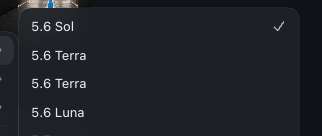
@thsottiaux Good move resetting the limits and being upfront about it. Sol being more agentic and willing to keep working is exactly why people want these models, so higher token burn was predictable.
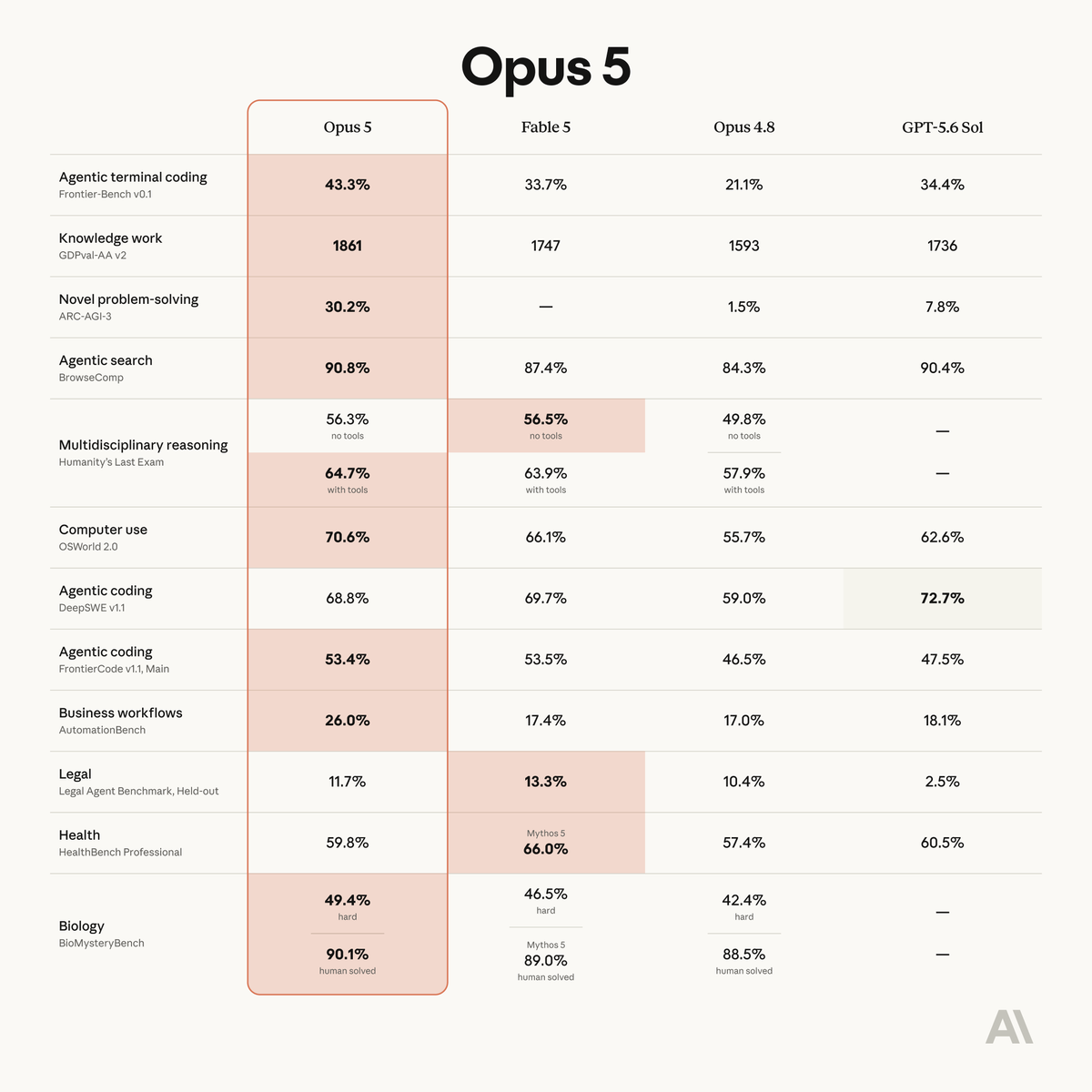
@arena The jump from 4.5 already showed real agentic progress now we get the next iteration.
Looking forward to seeing the live rankings on Arena. This is how the frontier actually moves.
I asked Opus 5 for a rocket launch animation.
It came back with a full cinematic sequence:
Countdown. Ignition. Liftoff. Stage separation. Fairing jettison. Orbit. Payload deployment.
One HTML file.
Three.js.
Zero edits.
I asked Opus 5 for a rocket launch animation.
It came back with a full cinematic sequence:
Countdown. Ignition. Liftoff. Stage separation. Fairing jettison. Orbit. Payload deployment.
One HTML file.
Three.js.
Zero edits.
@thsottiaux , please add the ability to pin a chat inside a specific Codex project. Currently, pinning a chat moves it to the top of the main list instead of keeping it within its project. This would make project-related chats much easier to organize.
One pattern I find useful for working with LLMs is a nice long ramble session. Sometimes the LLM needs more bits to understand what you're trying to achieve, but you're too lazy to type them. In these cases I like to lean back, switch to /voice and just ramble for like 10 minutes, total mess, anything goes, full stream of consciousness. Sometimes I declare it up top, something like "switching to speech recognition sorry for any typos...". Sometimes I turn it into a small interview of a few turns. But I find that the LLMs are somehow very good at reconstructing long incoherent rambles and often their echo of your own tangle of thoughts comes out quite a bit cleaner than what you started with. The result is that you improve the mind meld and have to correct things less from that point on.
GPT-5.6 Sol > Claude Fable 5 > Kimi K3 > Grok 4.5 > Gemini 3.6 Flash
The plot twist: Kimi is already near the frontier. Closed-model moats are shrinking way faster than expected.
Once we have completed our review for security vulnerabilities, we will make the entire codebase of 𝕏 open source, with no exceptions.
Moreover, we will invite third party reviewers to examine the system that is running to confirm that the open source code is what is running.
Trust through total transparency is the only thing that should be believed.
OpenAI just temporarily removed Codex’s 5-hour usage limits for everyone.
This is a much bigger product change than it might sound.
In practice, Codex now feels almost unlimited: you can keep agents running, debugging, refactoring, and shipping without repeatedly hitting a rolling 5-hour wall at least until you reach your weekly limit.
Obviously, these aren’t actually infinite tokens. But a weekly compute budget is far more developer-friendly than a short session-based limit.
Developers don’t work in perfectly distributed 5-hour windows. We work in bursts. When you’re deep in a problem and the agent is producing useful work, the last thing you want is an artificial interruption.
This is also where Codex currently has a clear advantage over Claude Code.
Claude Code still combines 5-hour session limits with weekly limits. Codex temporarily lets you use your weekly allocation much more freely, which makes it feel significantly less restrictive.
Model quality still matters.
But as coding agents become more capable, the competition will increasingly be about access to compute, uninterrupted workflows, and one simple question:
How long can the agent keep working before the product stops you?
OpenAI just temporarily removed Codex’s 5-hour usage limits for everyone.
This is a much bigger product change than it might sound.
In practice, Codex now feels almost unlimited: you can keep agents running, debugging, refactoring, and shipping without repeatedly hitting a rolling 5-hour wall at least until you reach your weekly limit.
Obviously, these aren’t actually infinite tokens. But a weekly compute budget is far more developer-friendly than a short session-based limit.
Developers don’t work in perfectly distributed 5-hour windows. We work in bursts. When you’re deep in a problem and the agent is producing useful work, the last thing you want is an artificial interruption.
This is also where Codex currently has a clear advantage over Claude Code.
Claude Code still combines 5-hour session limits with weekly limits. Codex temporarily lets you use your weekly allocation much more freely, which makes it feel significantly less restrictive.
Model quality still matters.
But as coding agents become more capable, the competition will increasingly be about access to compute, uninterrupted workflows, and one simple question:
How long can the agent keep working before the product stops you?
Morning. The last 48 hours of Codex and ChatGPT Work have been intense! Three important updates:
- Temporarily removing the 5 hour usage limit restriction for all Plus, Business and Pro plans
- Rolling out changes that will make GPT 5.6 Sol more efficient across the board and that will be reflected in less usage being used so that it can take you further. Exact impact to be quantified and shared
- We hit 6M active users, and are landing a usage reset in the next hour
Go do things
Build a complete Tower Defense game as a single HTML file (HTML + CSS + JavaScript,
2D Canvas or Three.js — your choice).
Requirements:
- A fixed path from a spawn point to a base that enemies follow.
- Waves of enemies with increasing count/health; a visible "Wave N" indicator and a
"Start Wave" button between waves.
- A build grid: click empty tiles to place towers (block them on the path itself).
- At least 3 tower types with different range, fire rate, and damage, each with a cost.
- An economy: earn gold per kill, spend it to build and to upgrade towers.
- Tower targeting: towers auto-target the nearest/first enemy in range and fire visible
projectiles that reduce enemy health.
- Lose a life when an enemy reaches the base; game over at 0 lives; track score.
- A clear, styled UI: gold, lives, wave, tower shop, and upgrade panel.
The game must be balanced enough to actually play and win with good tower placement.
Output: one complete index.html, plus a comment on how you tuned the difficulty curve.