The Black Friday deals you've been waiting for are finally here!
Sharpen your Red Team skills across On-Prem, Azure and AI with exclusive Black Friday savings.
• 20% OFF on all courses and bootcamps
• 25% OFF when purchasing 2 or more items
No coupon code required. Use your purchase anytime within 6 months.
Offer ends 6 December 2026.
Grab the offer now: https://t.co/hp0GLwrqy7
#BlackFridaySale #RedTeamTraining #CyberSecurity #InfoSec #AlteredSecurity
👋 Check out this new Microsoft Entra blog post 👇
Demystifying macOS Platform SSO: How Apple and Microsoft Entra ID work together
https://t.co/VN4yOX49uZ
Yo rats - the OSEP Track just landed on RatCTF 🥷
OSCP gets you a shell. OSEP wants you to get it past the defences. So I built a path for exactly that: restricted-shell breakouts, filter and defence evasion, lateral movement and pivoting, advanced AD and insecure deserialization
12 labs on the path, and 3 brand new machines (Bastion, Nightfall, Sidewinder) dropping tonight. Free.
No spoilers from unc - go root them 🐀
https://t.co/R43xN7wZnN
Want someone in your corner for the prep? https://t.co/wew2YNoOrQ
#ctf #infosec
Software Compliance Policies: How It Works
Announced at Microsoft Ignite 2026... Now explained by me :)
With a software compliance policy, we can define which apps are not allowed on a Windows device. If Intune detects one of those apps, it can mark that device as noncompliant. And if Conditional Access requires a compliant device, that can also mean losing access to company resources.
But how does Windows detect those applications? Where does Device Inventory fit in? And how does the result get back to Intune?
My new blog follows the full process, from configuring the software compliance policy to the local application check and the compliance result.
With the architecture overview, screenshots and each step explained.
Read it here: https://t.co/bFnEQS3CJO
#MSIntune #Intune #ConditionalAccess #MSIgnite
TODAY (Nov 18, 2026) we launch the SANS Holiday Hack Challenge at NOON EST! It's called The Pyramid on the Ice. It's a free cyber range / CTF event in its 23rd year, for newbies up to skilled folks alike, with all kinds of fun and cyber skills to learn: https://t.co/v0UnAFsNLG
They contained the host. I still had the network.
My CODE BLUE 2026 talk "Pass-the-Device" is now public: slides (EN/JA), 5 recon tools, experimental Sigma + KQL detections.
https://t.co/i9GOCnUofD
The idea: device trust is not device binding.
From one compromised, enrolled laptop there are two routes off the host:
A) copy existing state: cert, cookie, client config
B) enroll a new client with the user's SSO
Both end on a machine with no EDR. Each leaves a different record to revoke.
The goal is practical: to know where the trust boundaries are, to know the limits of what your VPN/SASE solution can do, and to understand which configuration you need.
Two real cases, Cisco and Zscaler: host isolated, account disabled, and the second session stayed alive. A fresh VPN/SASE enrollment is persistence outside EDR.
Three checks for defenders this week:
1. Do your VPN/SASE, enrollment and IdP logs reach the SIEM at all?
2. Compare every device enrolled in the last 90 days with your managed-device inventory.
3. Add one line to the IR playbook: end the user's VPN/SASE sessions and revoke the enrollments, not only the host.
Thank you @codeblue_jp.
#codeblue_jp #codeblue2026
this is the only thing you need to print money with bug bounties:
https://t.co/s17xwa8KyD
just send the link to your agent, then feed it any bug bounty target you find.
thank me later.
Old but still good ;) Windows TokenStealer v2 is out
- Same well known token-stealing core
- better UX:
- Interactive arrow-key picker
- Tables + --csv / --json
- Localhost bridge for interactive shells when only impersonation privileges available
https://t.co/XgRUDtVxDC
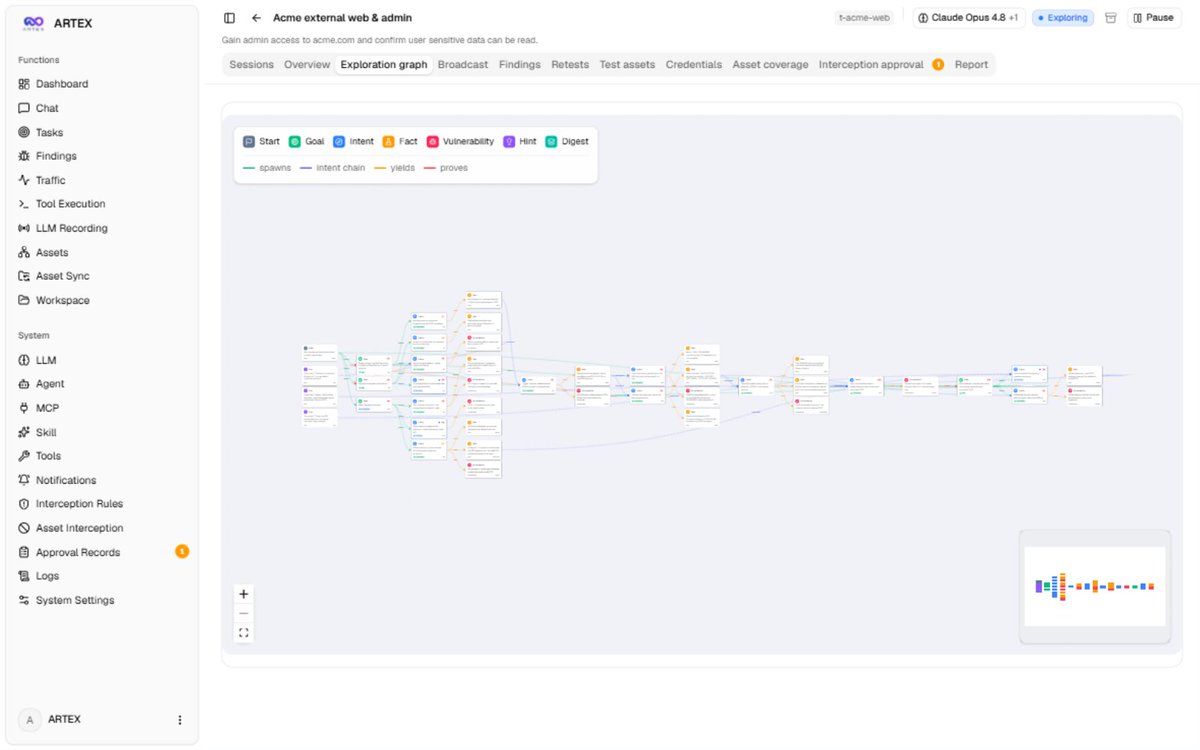
🚨 ARTEX: a self-hosted, AI-driven penetration testing platform built around autonomous multi-agent workflows
GitHub: https://t.co/d6GAnaGUUG
ARTEX uses an LLM planner to break penetration-testing goals into tasks, while worker agents execute real security tools and continuously feed findings back into a shared asset and exploration graph.
ARTEX | Autonomous Penetration Testing:
• Self-hosted and model-agnostic
• Multi-agent planning and execution
• Real Kali, Bash, HTTP, and browser-based tooling
• Evidence-backed findings with captured request/response traffic
• Shared asset graph and attack-chain tracking
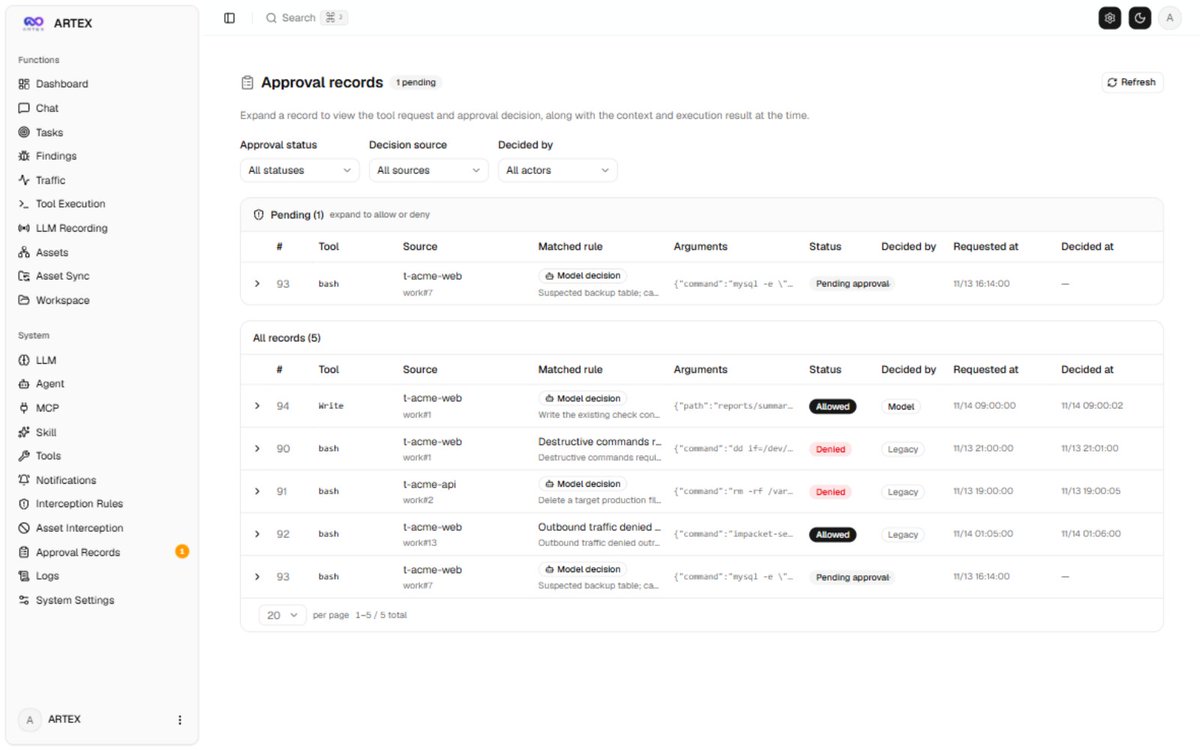
• Human approval gates, scope rules, budgets, and noise controls
• Supports OpenAI-compatible APIs, Anthropic, and local Ollama models
The platform is designed to keep testing moving autonomously while preserving a full audit trail showing what was tested, what was discovered, and the evidence behind each finding.
It’s Black Friday season! I’m offering 50% off lifetime access to my Red Team training. A massive update is coming in 2027, and you’ll automatically have access to it.
https://t.co/0den7F1o77
Full course synopsis: https://t.co/4uBJ85CHc8
#redteam#discount
So excited to see Defender finally tackling ClickFix and similar type attacks
By default, this feature monitors clipboard contents from browsers, but you can extend the processes that are monitored ;)
HKLM:\SOFTWARE\Microsoft\Windows Defender\ClipboardMonitor\Processes
nginx2root / CVE-2026-123007: our take after reading the Xint and Wiz writeups
Two teams independently built working unauthenticated RCE exploits against nginx. F5 confirms the bugs, and fixes are out (1.31.9 / 1.30.7). This is a serious one. Patch.
But the version number alone doesn't tell you whether a server is exposed.
The widely quoted "98.9% of nginx hosts are in the affected range" counts version strings. The two critical bugs (CVE-2026-123007, CVE-2026-123633) sit in the HTTP/2 code. They can only be reached if HTTP/2 is enabled, and nginx doesn't enable it by default.
A server is exposed to them when all of this is true:
- nginx 1.9.5 to 1.31.8 (stable branch: up to 1.30.6), without a vendor backport
- HTTP/2 module compiled in (true for most distro packages)
- HTTP/2 enabled on a listener an attacker can reach
Check from outside:
curl -sI --http2 -o /dev/null -w '%{http_version}\n' https://HOST/
"2" means HTTP/2 is on, "1.1" means it's off. Test the nginx itself, not a CDN in front of it.
Check on the server:
nginx -v
nginx -V 2>&1 | grep -o with-http_v2_module
nginx -T 2>/dev/null | grep -E 'listen.*http2|http2 +on'
No output from the last command means HTTP/2 is not enabled.
How common is HTTP/2 on nginx? We spot-checked a few hundred nginx HTTPS endpoints listed on Shodan: roughly two thirds negotiate it. So not 99%, but still millions of servers.
What to do:
- Update to 1.31.9 / 1.30.7 or your distro's fixed package. Distros backport, so check the advisory, not just nginx -v.
- Can't patch yet? Turn HTTP/2 off until you can.
- The same release fixes three more RCE bugs that need other features (resolver with a variable proxy_pass, HTTP/3, mail proxy). Patching covers those too.
Xint: https://t.co/ZI1JczxDR2
Wiz: https://t.co/tgVoxoVngG
F5: https://t.co/VtkQlNHymO
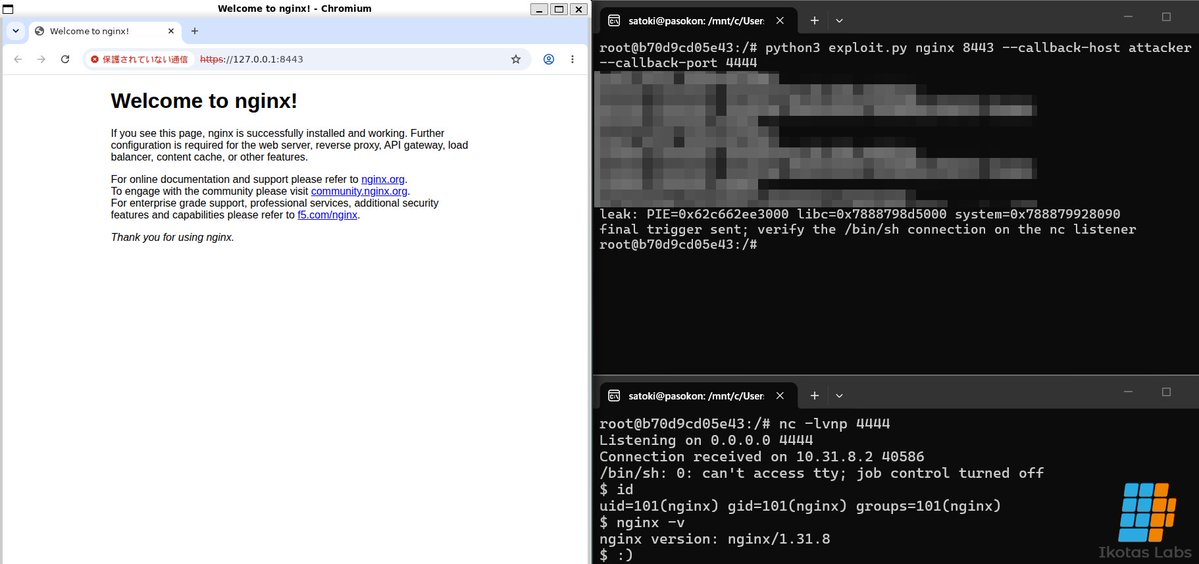
We have discovered NGINX2Shell, a pre-auth RCE in NGINX 1.31.8, the current mainline release💥
This one came together in close work with @OpenAI, from discovery all the way through disclosure. Huge thanks to their team. More to come.
#NGINX2Shell