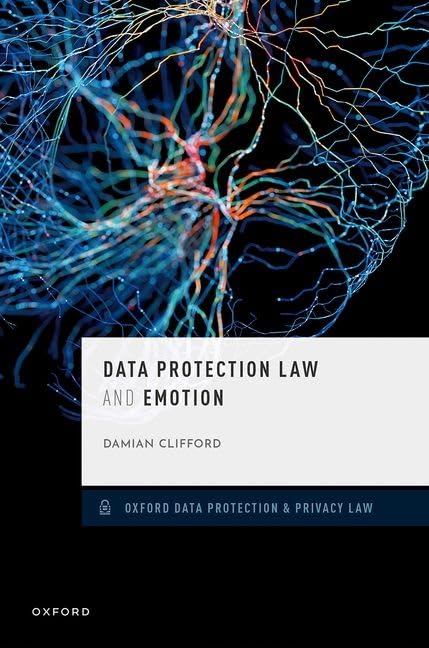
In this chapter, @damicli highlights the importance of a more accurate understanding of the role of emotion in decision-making in the analysis and reform of data protection laws by introducing insights from ‘law and emotion’ scholarship.
Read now: https://t.co/CntHlTzAqM
A whole week of data protection stuff in Amsterdam! 24-25 October PLSC-E, and on 22 October @damicli will discuss his new book with @SilviaPetulante & @MarijnSax !
https://t.co/B7rPl1HDNQ
🆕Online First #OpenAccess article:
Contact-tracing technologies - To what extent can difficulties be ascribed to a lack of public trust undermining the technologies’ effectiveness and legitimacy? #privacy#HumanRights#pandemics#trust#COVID
🔗https://t.co/NZJeWYoC8U
We are recruiting for two postdocs to join the project, hoping for one more techie one more humanistic. Loads of flexibility about workload and location between CBR and SYD. 2 yr position easiest for someone w 🇦🇺 work rights but we’ll sponsor a visa for right candidate.
Should humans know when they are dealing with a bot? Is a little friction in the interface with virtual assistant useful? Taster of our new project with @damicli@ymaker and Megan Richardson @CAIDE_UoM https://t.co/nqNcOueEmA
Join us @ANU_Law tomorrow at 5:30pm as Prof Lee Bygrave presents a (hybrid format) seminar on Machine Learning, Cognitive Sovereignty and Data Protection Rights @ANUcass@ANUBellSchool@ANUComputing@ourANU
https://t.co/wFvAUygFU9
For a short video summary of our article on Adtech and Children's Data Rights, please listen to the UNSW Law Journal Launch of Issue 44(3) https://t.co/uhBoQ6FP80 (from 29:05). Great collaboration with @lisa_j_archbold, @damicli, Moira Paterson and Megan Richardson @CCTL_CUHKLaw
@Elibietti Depends on what you mean by opt in. Like the aim is that there will be data altruism service providers which essentially facilitate access to personal data (and non personal data held by orgs) to be then shared with others for public interest based purposes like research
@Elibietti Nah it’s not a basis but provides for the “data altruism consent form”. Not sure what this means in reality as consent isn’t the only possible basis for eg research (is seen as a compatible purpose and legitimate interest may be appropriate plus stuff in art 89 re sensitive data)
@Elibietti It applies to non-perso data as well but consent for scientific research purposes has been criticised eg in the recitals of GDPR it indicates that more general consent is permissible for scientific research but this isn’t in the articles so creating mechanisms aims to facilitate
2⃣0⃣ The next event in the series focuses on fairness in the use of data and artificial intelligence.
Join @AggieBalayn, @damicli & @SandraWachter5 to discuss.
Find out more and register:
https://t.co/3lJyQpzo3f