The attached heart boggling video is from my hometown, Ekanyi community in Ibaji Local Government area of Kogi state.
The school and the hospital which are the only government facilities in the area had been abandoned by successive governments in Kogi despite public outcry and appeals from the natives.
As a result pupils no longer go to school while the sick are rushed on motorcycles to Idah for medical attention. Pregnant women die before getting to Idah.
The community lacks every basic amenity for healthy living including electricity, motorable road, functional school, health centre.
Ibaji LG has done nothing to make people feel the impact of government just as the Kogi government has abandoned its responsibility of providing infrastructure in the villages. Virtually all schools in Ibaji LGA had been shutdown since 2012 flood disaster. Yet they come to the Local govt for massive votes of the poor natives during elections.
Please help talk to the Nigerian authorities about the plights of these neglected citizens.
Here are a whole bunch of very cool hacks. Im personally going to have to bookmark this one because I wont remember what to do by the time one of these situations arrives. Guess I will remember the wrench bucket handle atleast. 🤣🤣🤣
C-Section vs Normal Delivery -The Truth Nobody Tells You!🤰🏽
Your mother says "push that baby out!"
Your friend says "just do CS, it's easier!"
And you're sitting there confused 😂
Let me give you the REAL fact
👶🏽 Vagînal Delivery - Real Talk:
✅ Shorter hospital stay & faster recovery
✅ Baby gets beneficial bacteria from birth canal
✅ Easier breastfeeding start
❌ Painful without epidural 😂
❌ Rîsk of tearing and stitches 😬
❌ Can be long and exhausting!
🏥 C-Section - Real Talk:
✅ Planned & scheduled - no surprise 3am labour! 😂
✅ No tearing
✅ Lifesaving when medically necessary
❌ Major surgery - 4 to 6 weeks recovery!
❌ That incision pain is NO joke 😬
❌ Higher r!sk of infection and blood clots
😂 Things That Need To Stop:
❌ "CS mamas didn't really give birth" - She had her abdomen cut open. SHE GAVE BIRTH! 👏🏽
❌ "Vag!nal delivery makes you loose" - False and very rūde 😂
❌ "CS is the easy way out" - Try recovering from surgery with a newborn first 😂
❌ "Natural is always better" - The SAFEST delivery is always the best one!
💬 There is NO trophy for how you delivered your baby! 🏆
No gold medal for pushing through pain.
No shame in having a C-section.
The only goal is a healthy mama and a healthy baby! 👶🏽
VIEWER DISCRETION STRONGLY ADVISED - PLEASE DO NOT WATCH IF YOU’RE SQUEAMISH
This reportedly happened about two days ago in Plateau state. So yes, this is very very recent. I’m here waiting for any genocide denier to please explain this to me. These are Christians! Every single one of them. Explain it.
@POTUS@JDVance@SecRubio@SecWar@DNIGabbard@RepRileyMoore@TomColeOK04@SenTedCruz@RepNancyMace
For decades, the script was simple:
Africa drills the oil,
the West refines it,
and Africa buys it back at triple the price, with gratitude. Imagine that!
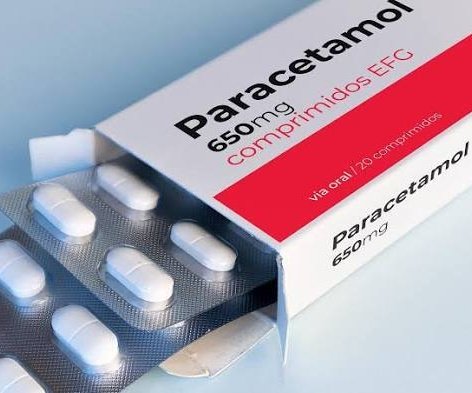
Now Dangote came with a 650,000-barrel-per-day “plot twist.”
-The first migraine hit when U.S. fuel export numbers started twitching. West Africa, that loyal customer, suddenly said, “No thanks, we’ll refine it at home.” Imagine selling umbrellas in a desert, that’s how America feels right now in the diesel market.
-Then came the second headache, the petrodollar sneeze. If Nigeria starts trading refined products in naira, yuan, or even “AfriPay,” that’s a direct jab at Uncle Sam’s global ATM. The dollar doesn’t like competition; it catches inflation fever when others sneeze independence.
-Third pain: The geopolitical thermometer just went up. Africa’s biggest refinery means fewer oil tankers from Texas, and more from Lagos to Lome, under African control. That’s not energy trade; that’s energy freedom. And freedom, apparently, is bad for business.
-Fourth dose: The U.S. isn’t happy seeing Nigeria shaking hands with China and India on refinery deals. It’s like watching your ex build a mansion with your rival. The refinery runs on Chinese funding and Indian technology, two things America used to monopolize.
-And finally, the fifth and deadliest headache, the symbolism.
Dangote didn’t just build a refinery; he built a mirror, showing Africa what it could’ve been decades ago if it stopped outsourcing its future.
Now Washington can’t just send “economic advisers” and “development loans” with fancy conditions anymore. Africa might soon say, “Thanks, but we’ve got this.”
So Dangote’s refinery isn’t just refining oil, it’s refining pride, power, and perspective.
And for the first time, the biggest gas leak in the room isn’t from Nigeria, it’s from America’s nerves.
_____
MAB✍️
May Nigeria Succeed
God bless Africa
God bless the black race
In 2017, a conspiracy theory that Nigerian President Muhammadu Buhari had died in a London hospital and was replaced with a body double called ‘Jubril’ from Sudan surfaced in popular discourse. This occurred after Buhari had spent three months undergoing medical treatment in London for an undisclosed illness. The President’s location outside of Nigeria, in the country that was its former coloniser, gave shape to different versions of the conspiracy theory, with suggestions that British and/or Nigerian political elites were behind the replacement of the President and were hiding his alleged death.
Anxieties around the President were initially provoked by a tweet on 19 May 2017, in which Eric Joyce, a British politician, tweeted that the President was dead. President Buhari had last been seen in public two weeks earlier. Eric Joyce’s tweet triggered Nigerians who were looking to escape a repeat of the power vacuum that had been experienced in the country after the death of a previous sitting president, Umaru Yar’Adua, who died in similar and somewhat mysterious circumstances in 2010.
Narratives that the President was a clone emerged in public discourse following President Buhari's public reappearance and return to Nigeria from the UK in August 2017. The first identified online appearance of the clone conspiracy theory was a YouTube video created by Nnamdi Kanu, leader of the Indigenous People of Biafra (IPOB), a secessionist group in southeastern Nigeria, in September 2017. The group had been seizing opportunities during election windows to insert itself into broader political debates by whipping up regional sentiments of marginalisation and political apathy. It had used a range of mainstream and social media channels to call the attention of the international community to its agitations and illegal detention/trial of its leader. The body double conspiracy theory was picked up in the Nigerian media and widely spread through different forms of popular communication in Nigeria, resulting in Buhari publicly acknowledging and confronting the conspiracy theory. On 2 December 2018, Buhari insisted during an event in Poland: ‘It’s [the] real me, I assure you’. The IPOB leader responded, tweeting:
If Buhari is not dead and replaced by Jubril from Sudan, why won't the Nigerian government sue Eric Joyce, a former British lawmaker for peddling lies? They can’t because they know I am speaking the truth. @AsoRock @ericjoyce@NGRPresident@UKParliament@NGRSenate@WhiteHouse
In this article, this conspiracy theory that President Buhari was a clone is addressed as an opportunity to question the superficial confidence with which conspiracy theories have been dismissed as aberrations and negative externalities of digital ecosystems, and their supporters as threats to an ostensibly deliberative public sphere. While not pitched in defence of conspiracy theories, it seeks to examine them without the comfortable protection of post-enlightenment normativity, and to remind how injunctions to ‘speak civil’ or ‘think rational’ tend to reproduce tropes from a colonial past, dismissing or erasing other forms of knowledge/reasoning used to make sense of the world and/or to speak to power.
The arguments and analyses we advance here are closely related to those we presented in a previous article (Gagliardone et al.,
Citation
2021), where we empirically illustrated how this explorative, rather than normative, approach allows us to grasp how individuals do not simply fall for, embrace or support a conspiracy theory, but can ‘do’ specific and distinct things with/through them. In that article, we comparatively analysed how conspiracy theories circulating at the outset of the COVID-19 pandemic were seized by some Nigerian users and politicians as opportunities to criticise the ruling party, while in South Africa the same conspiracy theories became a vehicle to voice deep-rooted resentment towards the West and corporate interests.







![ruffydfire's tweet photo. In 2017, a conspiracy theory that Nigerian President Muhammadu Buhari had died in a London hospital and was replaced with a body double called ‘Jubril’ from Sudan surfaced in popular discourse. This occurred after Buhari had spent three months undergoing medical treatment in London for an undisclosed illness. The President’s location outside of Nigeria, in the country that was its former coloniser, gave shape to different versions of the conspiracy theory, with suggestions that British and/or Nigerian political elites were behind the replacement of the President and were hiding his alleged death.
Anxieties around the President were initially provoked by a tweet on 19 May 2017, in which Eric Joyce, a British politician, tweeted that the President was dead. President Buhari had last been seen in public two weeks earlier. Eric Joyce’s tweet triggered Nigerians who were looking to escape a repeat of the power vacuum that had been experienced in the country after the death of a previous sitting president, Umaru Yar’Adua, who died in similar and somewhat mysterious circumstances in 2010.
Narratives that the President was a clone emerged in public discourse following President Buhari's public reappearance and return to Nigeria from the UK in August 2017. The first identified online appearance of the clone conspiracy theory was a YouTube video created by Nnamdi Kanu, leader of the Indigenous People of Biafra (IPOB), a secessionist group in southeastern Nigeria, in September 2017. The group had been seizing opportunities during election windows to insert itself into broader political debates by whipping up regional sentiments of marginalisation and political apathy. It had used a range of mainstream and social media channels to call the attention of the international community to its agitations and illegal detention/trial of its leader. The body double conspiracy theory was picked up in the Nigerian media and widely spread through different forms of popular communication in Nigeria, resulting in Buhari publicly acknowledging and confronting the conspiracy theory. On 2 December 2018, Buhari insisted during an event in Poland: ‘It’s [the] real me, I assure you’. The IPOB leader responded, tweeting:
If Buhari is not dead and replaced by Jubril from Sudan, why won't the Nigerian government sue Eric Joyce, a former British lawmaker for peddling lies? They can’t because they know I am speaking the truth. @AsoRock @ericjoyce @NGRPresident @UKParliament @NGRSenate @WhiteHouse https://t.co/snwECSTqfR
In this article, this conspiracy theory that President Buhari was a clone is addressed as an opportunity to question the superficial confidence with which conspiracy theories have been dismissed as aberrations and negative externalities of digital ecosystems, and their supporters as threats to an ostensibly deliberative public sphere. While not pitched in defence of conspiracy theories, it seeks to examine them without the comfortable protection of post-enlightenment normativity, and to remind how injunctions to ‘speak civil’ or ‘think rational’ tend to reproduce tropes from a colonial past, dismissing or erasing other forms of knowledge/reasoning used to make sense of the world and/or to speak to power.
The arguments and analyses we advance here are closely related to those we presented in a previous article (Gagliardone et al.,
Citation
2021), where we empirically illustrated how this explorative, rather than normative, approach allows us to grasp how individuals do not simply fall for, embrace or support a conspiracy theory, but can ‘do’ specific and distinct things with/through them. In that article, we comparatively analysed how conspiracy theories circulating at the outset of the COVID-19 pandemic were seized by some Nigerian users and politicians as opportunities to criticise the ruling party, while in South Africa the same conspiracy theories became a vehicle to voice deep-rooted resentment towards the West and corporate interests.](https://pbs.twimg.com/media/DrtunZsW4AIm1SA.jpg)


