Koopman operator learning accelerates gradient-based quantum optimization! We present our novel algorithm QuACK at #NeurIPS2023, @NeurIPSConf. Join us on Wednesday, Dec 13 at our Spotlight Poster presentation @ Great Hall & Hall B1+B2 (level 1) #413 from 10:45am to 12:45 pm CST.
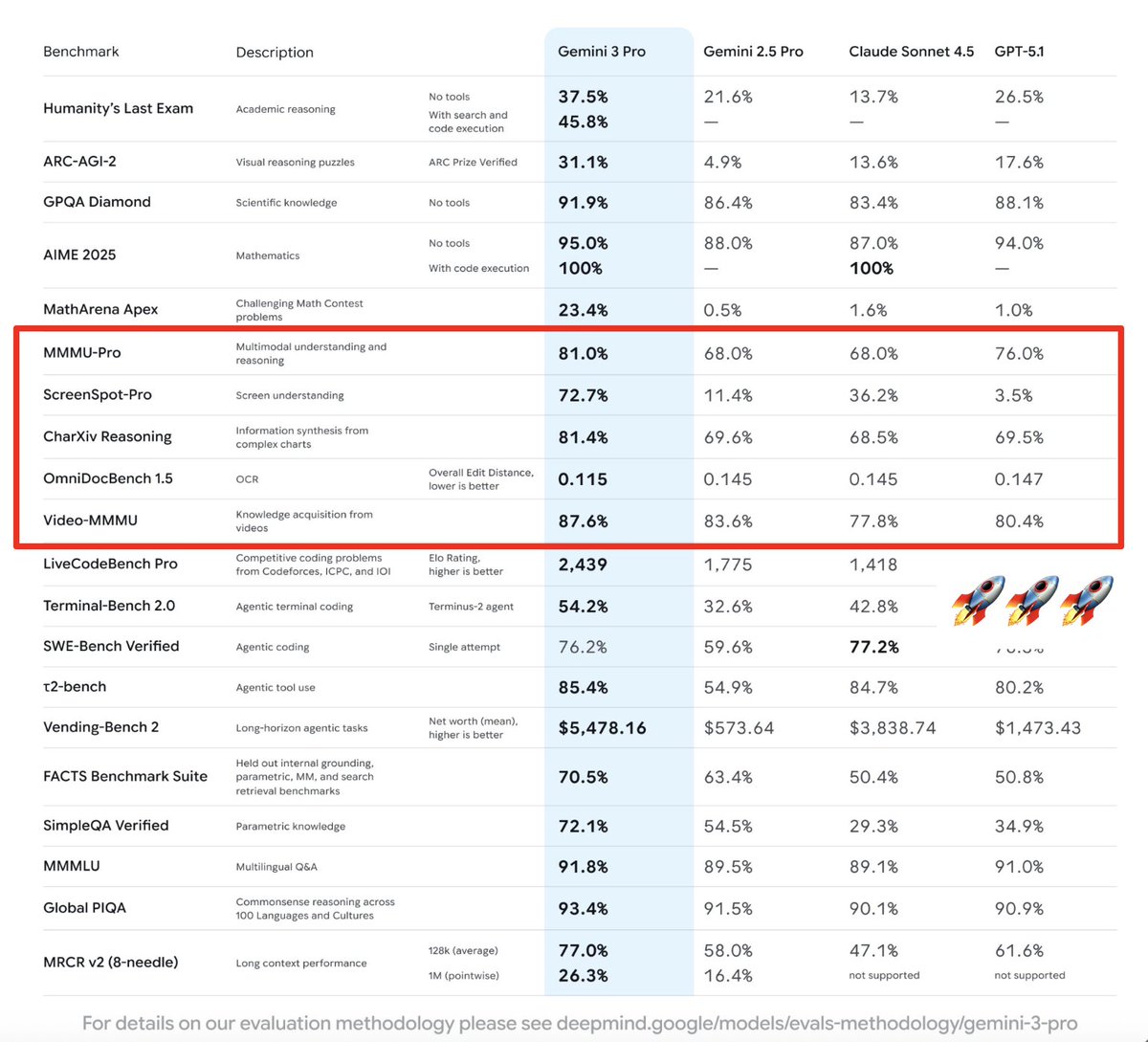
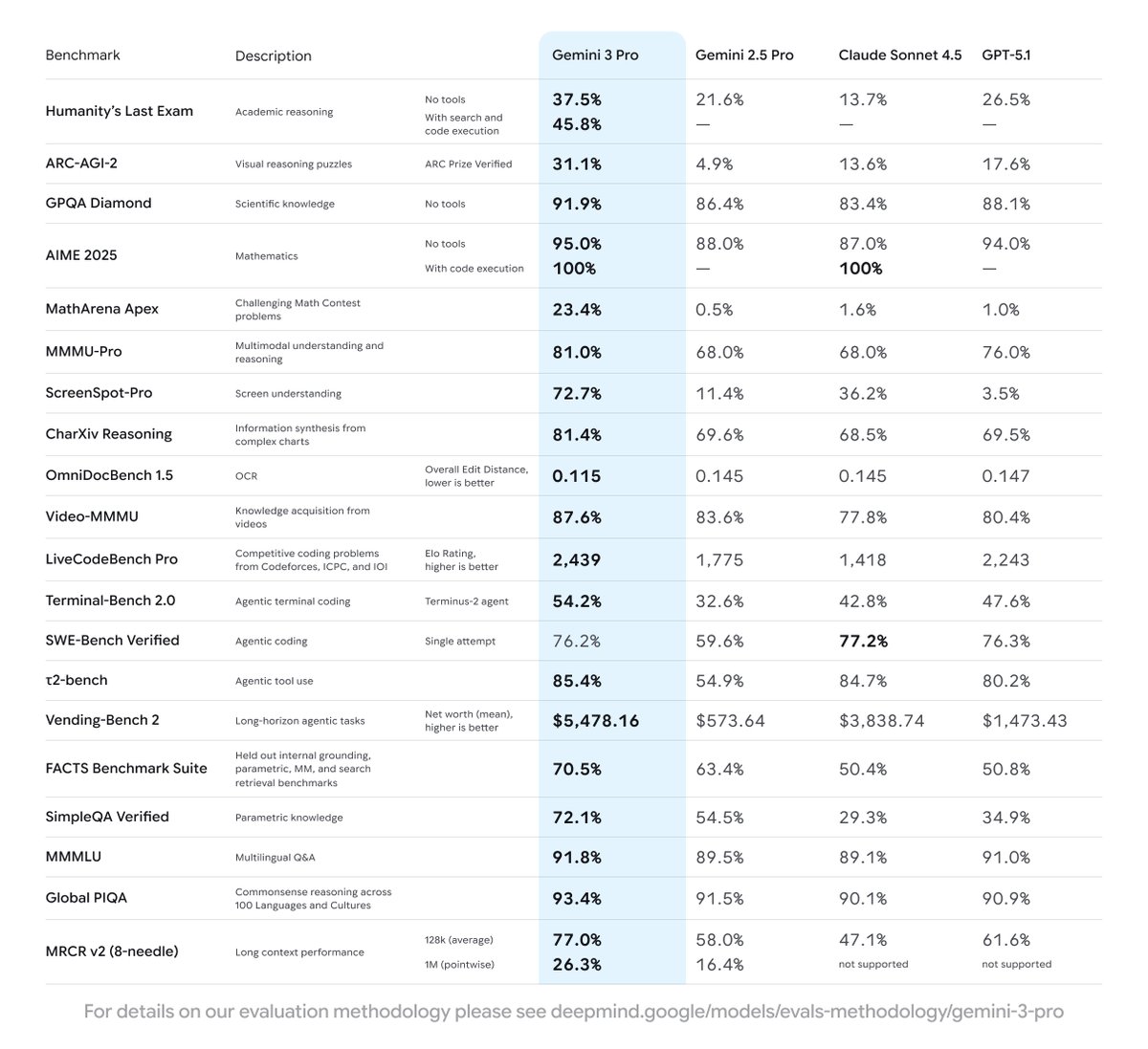
Really proud of what we have achieved with Gemini 3 🚀!
The Gemini MM team has worked relentlessly across image 🖼️ and video 🎥 from pre-training to post-training to simply deliver the best multimodal in the world 👏!
Looking forward to what you will build🫡!
The secret behind Gemini 3?
Simple: Improving pre-training & post-training 🤯
Pre-training: Contra the popular belief that scaling is over—which we discussed in our NeurIPS '25 talk with @ilyasut and @quocleix—the team delivered a drastic jump. The delta between 2.5 and 3.0 is as big as we've ever seen. No walls in sight!
Post-training: Still a total greenfield. There's lots of room for algorithmic progress and improvement, and 3.0 hasn't been an exception, thanks to our stellar team.
Congratulations to the whole team 💙💙💙
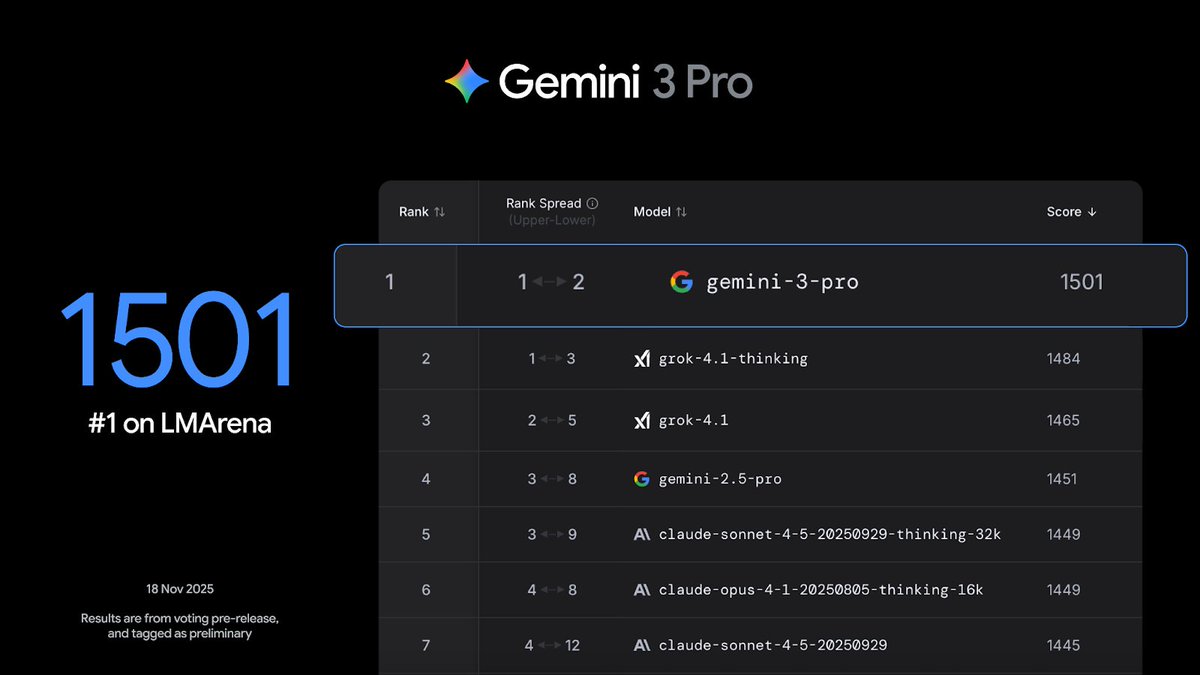
We’ve been intensely cooking Gemini 3 for a while now, and we’re so excited and proud to share the results with you all. Of course it tops the leaderboards, including @arena, HLE, GPQA etc, but beyond the benchmarks it’s been by far my favourite model to use for its style and depth, and what it can do to help with everyday tasks.
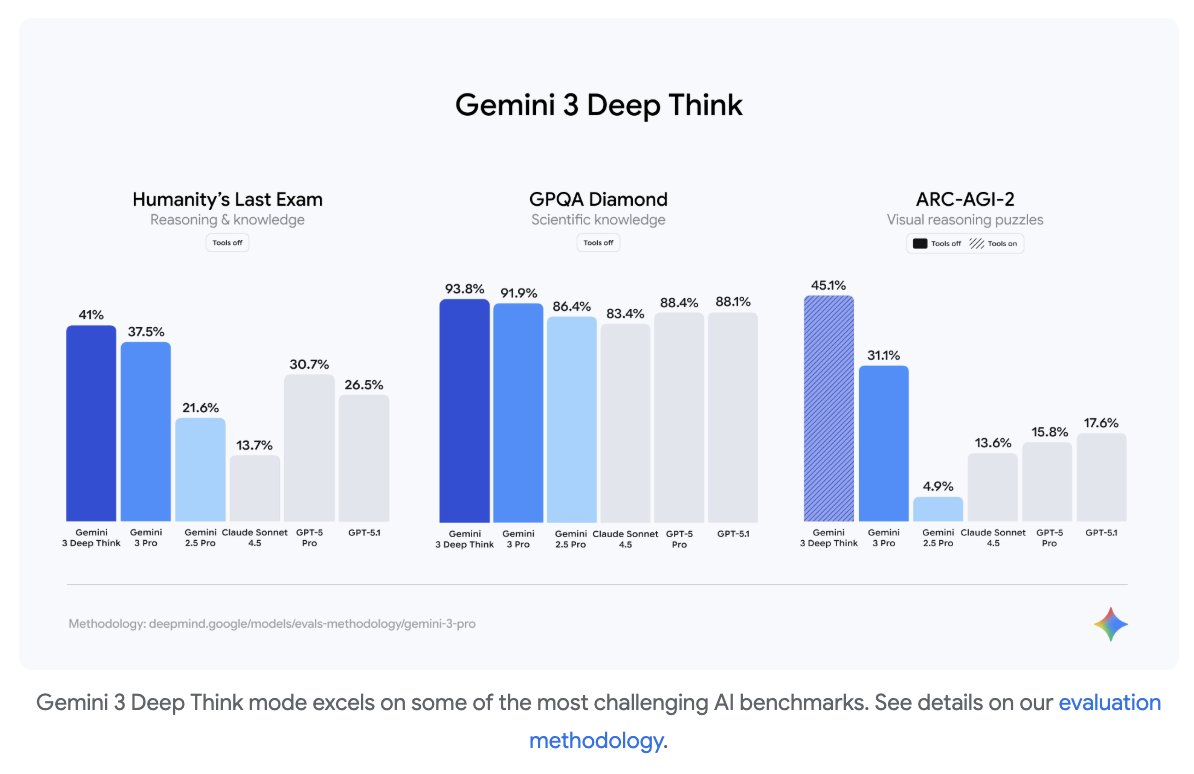
Gemini 3 Deep Think is next level. Deep Think was the the engine behind our gold medal-level wins at IMO and ICPC, and now powers an even stronger version of Gemini 3. SOTA above SOTA. More to come soon!
Last year, AlphaProof & AlphaGeometry reached a key landmark in AI by achieving silver medal level performance at the International Math Olympiad.
Today, @Nature is publishing the methodology behind our amazing agent AlphaProof! @GoogleDeepMind
Paper: https://t.co/eUGKeVrH3O
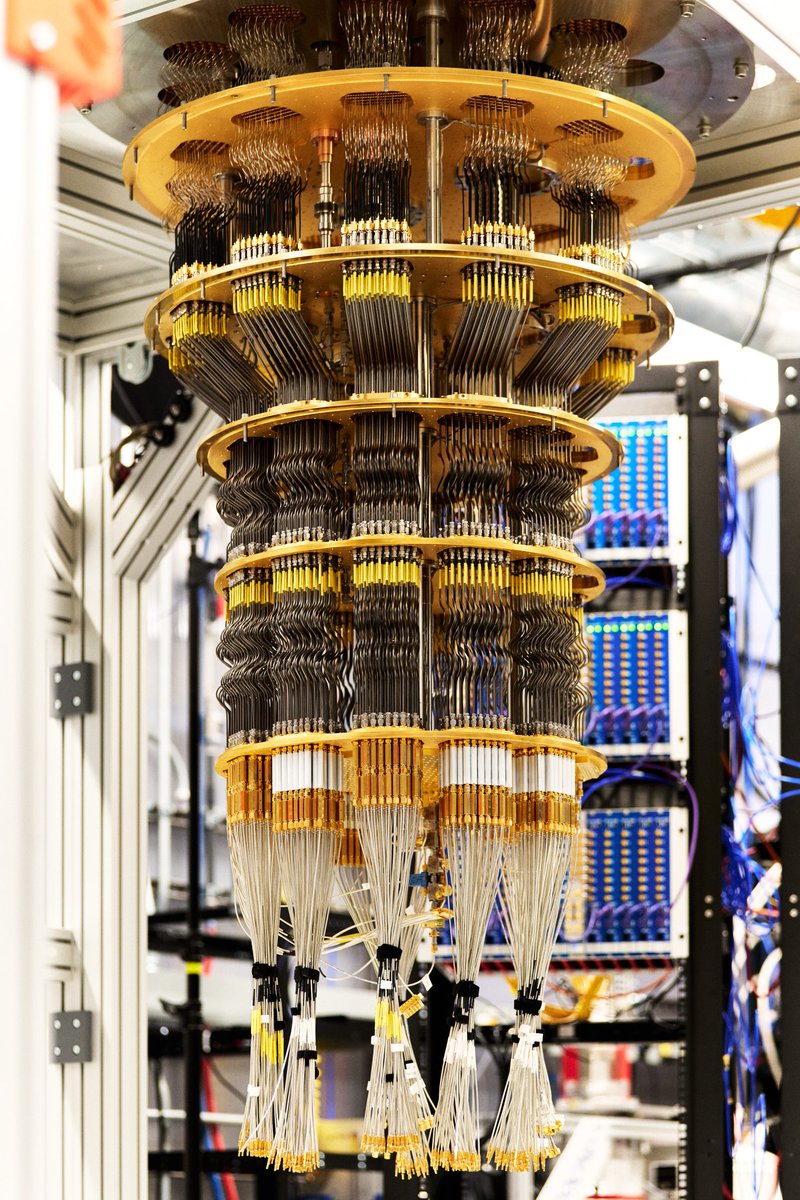
New breakthrough quantum algorithm published in @Nature today: Our Willow chip has achieved the first-ever verifiable quantum advantage.
Willow ran the algorithm - which we’ve named Quantum Echoes - 13,000x faster than the best classical algorithm on one of the world's fastest supercomputers. This new algorithm can explain interactions between atoms in a molecule using nuclear magnetic resonance, paving a path towards potential future uses in drug discovery and materials science.
And the result is verifiable, meaning its outcome can be repeated by other quantum computers or confirmed by experiments.
This breakthrough is a significant step toward the first real-world application of quantum computing, and we're excited to see where it leads.
We processed over 1.3 Quadrillion tokens last month - that's 1,300,000,000,000,000 tokens! or to put it another way that's 500M tokens a second or 1.8 Trillion tokens an hour... 🤯
Today we introduced Gemini Enterprise, built with our most advanced Gemini models. It allows you to chat with your company’s documents, data and apps as well as build and deploy AI agents, all grounded in your information and context.
Have a look at how it helps you build an agent for almost anything:
Today we're rolling out a whole slew of new capabilities for using contextual data relevant to you and your organization and for building and using agent-based systems on top of Gemini and @googlecloud!
Learn more at:
https://t.co/LHMDrVElSz
Using Gemini and agents to extract information or accomplish things based on data from your organization makes lots of things easier. For example:
(1) "Based on past meeting notes, what are the project's pending action items"
Using AI to advance our understanding of fundamental physics is the dream. Excited to see our latest AI model 'Deep Loop Shaping' help @LIGO and @Caltech detect the gravitational waves of intermediate-mass black holes better! Published in @ScienceMagazine
We've just upgraded Gemini 2.5 Flash image generation & editing! 🍌🍌🍌
Besides topping leaderboards, it topped my model usage this month. It keeps subjects consistent, you can make precise edits & combine creative elements. Have fun with it @GeminiApp@GoogleAIStudio
One word: relentless. just in the past two weeks, we’ve shipped:
🌐 Genie 3 - the most advanced world simulator ever
🤔 Gemini 2.5 Pro Deep Think available to Ultra subs
🎓 Gemini Pro free for uni students & $1B for US ed
🌍 AlphaEarth - a geospatial model of the entire planet
🏛️ Aeneas - deciphering ancient text (in @Nature)
🥇 Gemini gold-medal level at the IMO
🧸 Storybook - books w/art & audio @GeminiApp
♛ New @Kaggle Game Arena benchmark for LLMs
🐙 Jules, our asynchronous coding agent, out of Beta
🇬🇧 AI Mode for Search available in the UK
📔 NotebookLM Video Overviews
🔥 Gemma passed 200m downloads
Now you know why I don't get much sleep 🛌 - too busy pushing the frontier!
Building on more than 10 years of robotics research and engineering at @GoogleDeepMind, @GoogleResearch and @GoogleAI, we're delighted to announce our Gemini Robotics On-Device system. A really capable vision-language-action model that can run entirely without network access. ⬇️
Excited to announce AlphaEvolve
A powerful AI coding agent developed by our team in @GoogleDeepMind that is able to discover impactful new algorithms for important problems in Maths and Computing by combining the creativity of large language models with automated evaluators.
Ahead of I/O, we’re releasing an updated Gemini 2.5 Pro! It’s now #1 on WebDevArena leaderboard, breaking the 1400 ELO barrier! 🥇
Our most advanced coding model yet, with stronger performance on code transformation & editing. Excited to build drastic agents on top of this!
Very excited to share the best coding model we’ve ever built! Today we’re launching Gemini 2.5 Pro Preview 'I/O edition' with massively improved coding capabilities. Ranks no.1 on LMArena in Coding and no.1 on the WebDev Arena Leaderboard.
It’s especially good at building interactive web apps - this demo shows how it can be helpful for prototyping ideas. Try it in @GeminiApp, Vertex AI, and AI Studio https://t.co/7FbP3R1cmF
Enjoy the pre-I/O goodies !
Today, we are launching the first publicly available AI Scientist, via the FutureHouse Platform.
Our AI Scientist agents can perform a wide variety of scientific tasks better than humans. By chaining them together, we've already started to discover new biology really fast. With the platform, we are bringing these capabilities to the wider community. Watch our long-form video, in the comments below, to learn more about how the platform works and how you can use it to make new discoveries, and go to our website or see the comments below to access the platform.
We are releasing three superhuman AI Scientist agents today, each with their own specialization:
A general-purpose agent (Crow);
An agent to automate literature reviews (Falcon); and
An agent to answer the question “Has anyone done X before” (Owl).
We are also releasing an experimental agent, Phoenix, that has access to a wide variety of tools for planning experiments in chemistry. More on that below.
The three literature search agents (Crow, Falcon, and Owl) have benchmarked superhuman performance. They also have access to a large corpus of full scientific texts, which means that you can ask them more detailed questions about experimental protocols and study limitations that general-purpose web search agents, which usually only have access to abstracts, might miss. Our agents also use a variety of factors to distinguish source quality, so that they don’t end up relying on low-quality papers or pop-science sources. Finally, and critically, we have an API, which is intended to allow researchers to integrate our agents into their workflows.
Phoenix is an experimental project we put together recently just to demonstrate what can happen if you give the agents access to lots of scientific tools. It is not better than humans at planning experiments yet, and it makes a lot more mistakes than Crow, Falcon, or Owl. We want to see all the ways you can break it!
The agents we are releasing today cannot yet do all (or even most!) aspects of scientific research autonomously. However, as we show in the video, you can already use them to generate and evaluate new hypotheses and plan new experiments way faster than before. Internally, we also have dedicated agents for data analysis, hypothesis generation, protein engineering, and more, and we plan to launch these on the platform in the coming months as well. Within a year or two, it is easy to imagine that the vast majority of desk work that scientists do today will be accelerated with the help of AI agents like the ones we are releasing today.
The platform is currently free-to-use. Over time, depending on how people use it, we may implement pricing plans. If you want higher rate limits, especially for research projects, get in touch. @m_skarlinski, @andrewwhite01, @_tnadolski, Remo Storni, @semajazarb, @ludomitch, @MichaelaThinks, as well as @jasonjoyride and his team for making such fantastic videos of us!